✍️ 八十七 (Hachijūnana) — Cultural Context
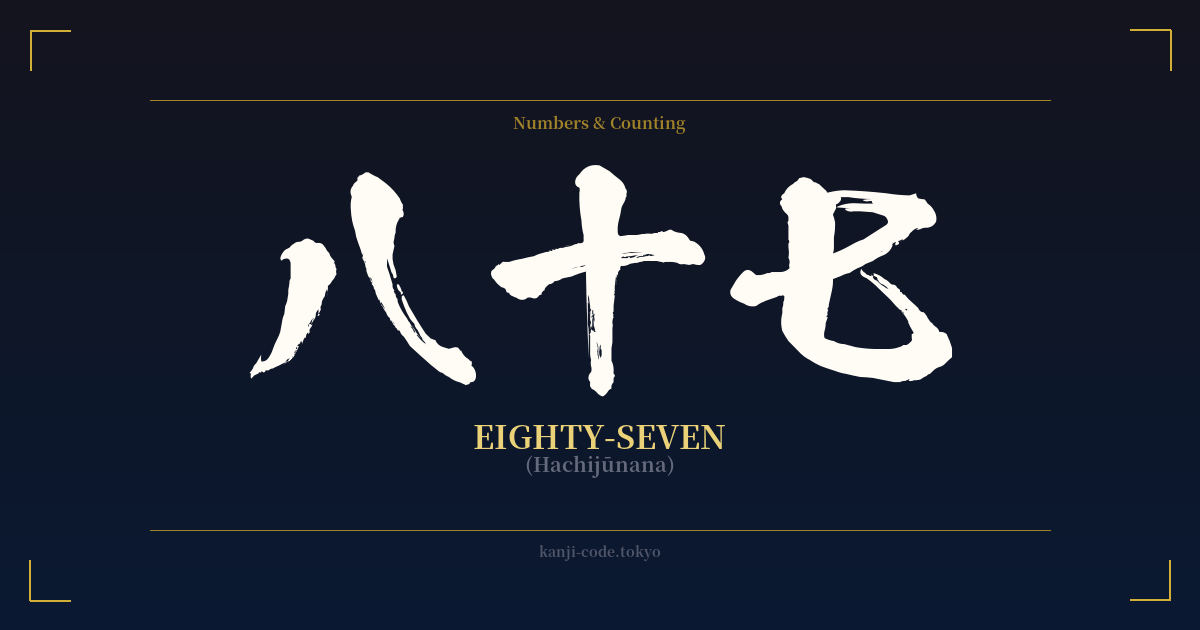
The Japanese word for eighty-seven, 八十七 (Hachijūnana), is a straightforward construction that reveals the elegant logic of the kanji number system. It is composed of three distinct characters: 八 (hachi, eight), 十 (jū, ten), and 七 (nana, seven). The structure reads literally as "eight tens plus seven," a beautifully simple and efficient way to represent the value.
While the number 87 itself doesn't hold a specific, widely recognized cultural significance in Japan, the individual characters that form it are rich with meaning. The number eight, 八 (hachi), is considered highly auspicious. The character's shape, which widens at the bottom, is called "suehirogari" (末広がり), evoking the image of an unfolding fan. This visual metaphor symbolizes growing prosperity and good fortune, making eight a popular number for celebratory gifts and business names.
The number seven, 七 (nana or shichi), is also steeped in positive connotations, mirroring its lucky status in many Western cultures. It is most famously associated with the 七福神 (Shichifukujin), the Seven Lucky Gods, a beloved group of deities from various Buddhist, Shinto, and Taoist traditions who are believed to grant good fortune. The number also appears in cultural events like Tanabata, the Star Festival, celebrated on the seventh day of the seventh month.
In modern Japan, numbers are often used in a form of wordplay called 'goroawase,' where digits can be read as various phonetic sounds to create words. For 87, one could read it as "ha-na" (using 'ha' from hachi and 'na' from nana), which is the same sound as 花 (flower) or 鼻 (nose). While this is more of a fun linguistic game than a deep cultural meaning, it shows the playful flexibility of the language.
It's also important to note the existence of 'daiji' (大字), which are more complex kanji used for numbers in legal and financial documents to prevent forgery. While 八十七 is the common way to write eighty-seven, its daiji form would be 捌拾漆. This demonstrates a practical aspect of Japanese writing, where different forms are used depending on the formality and security requirements of the context. Ultimately, the significance of 八十七 is usually personal—tied to an age, a year, or a specific memory—rather than a shared cultural symbol.
🖌️ Font Styles for 八十七
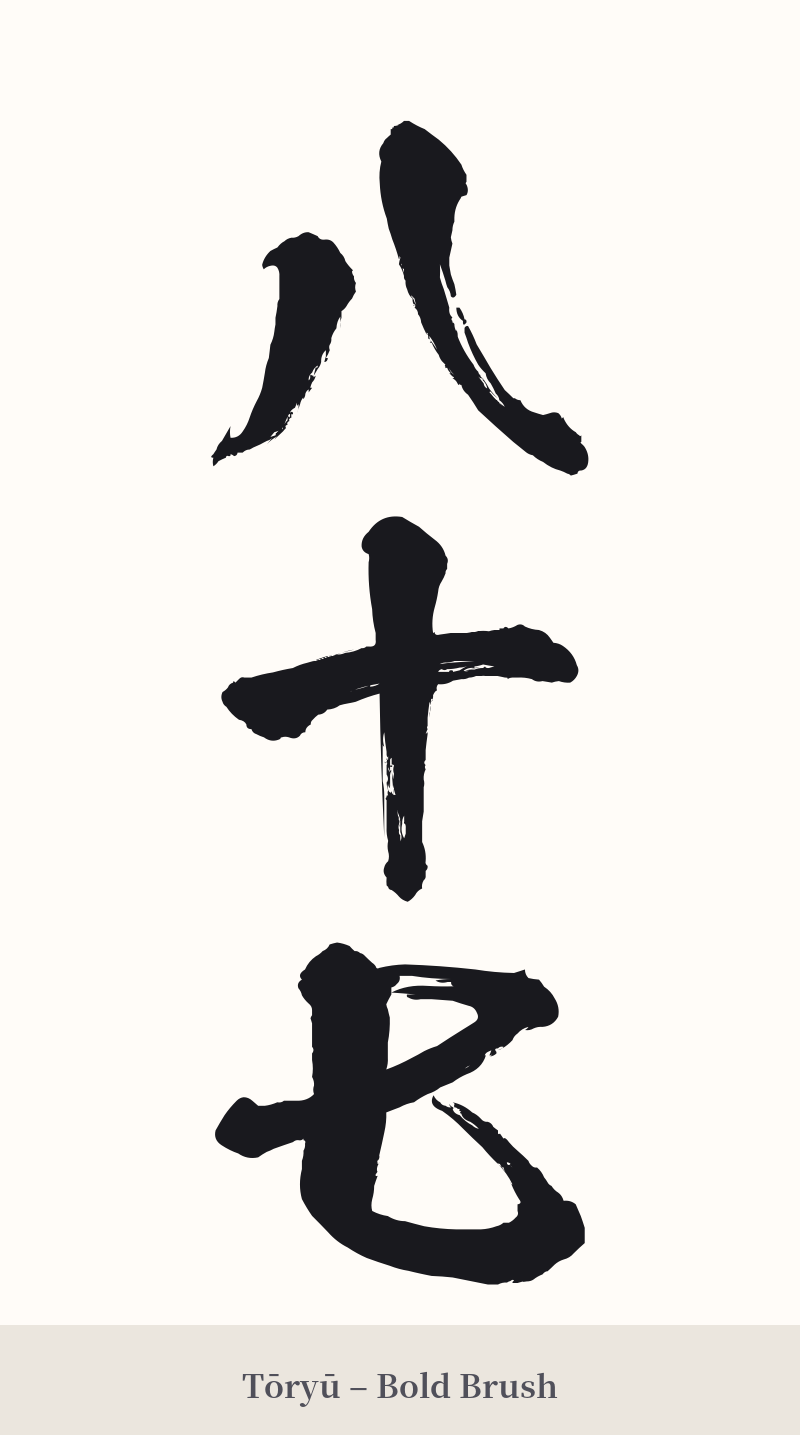
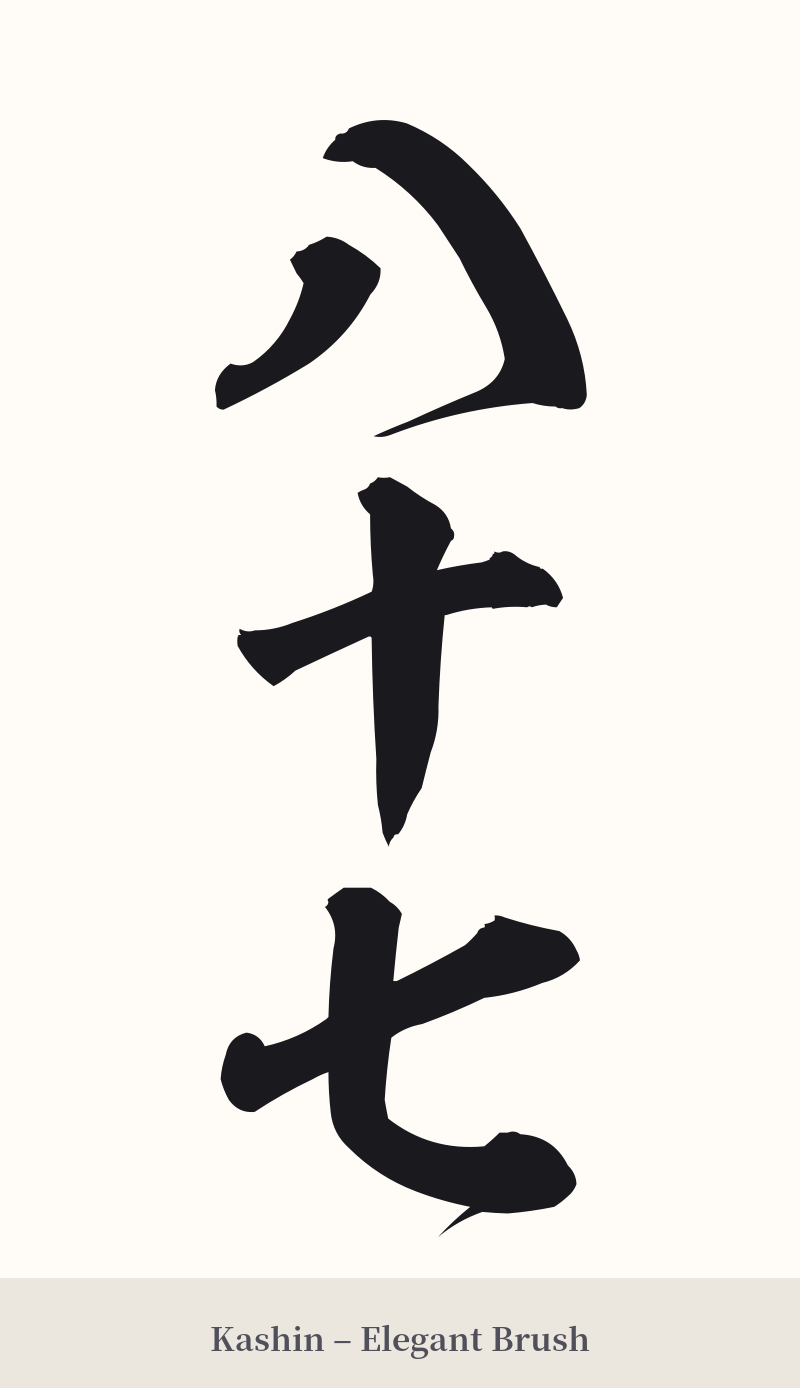
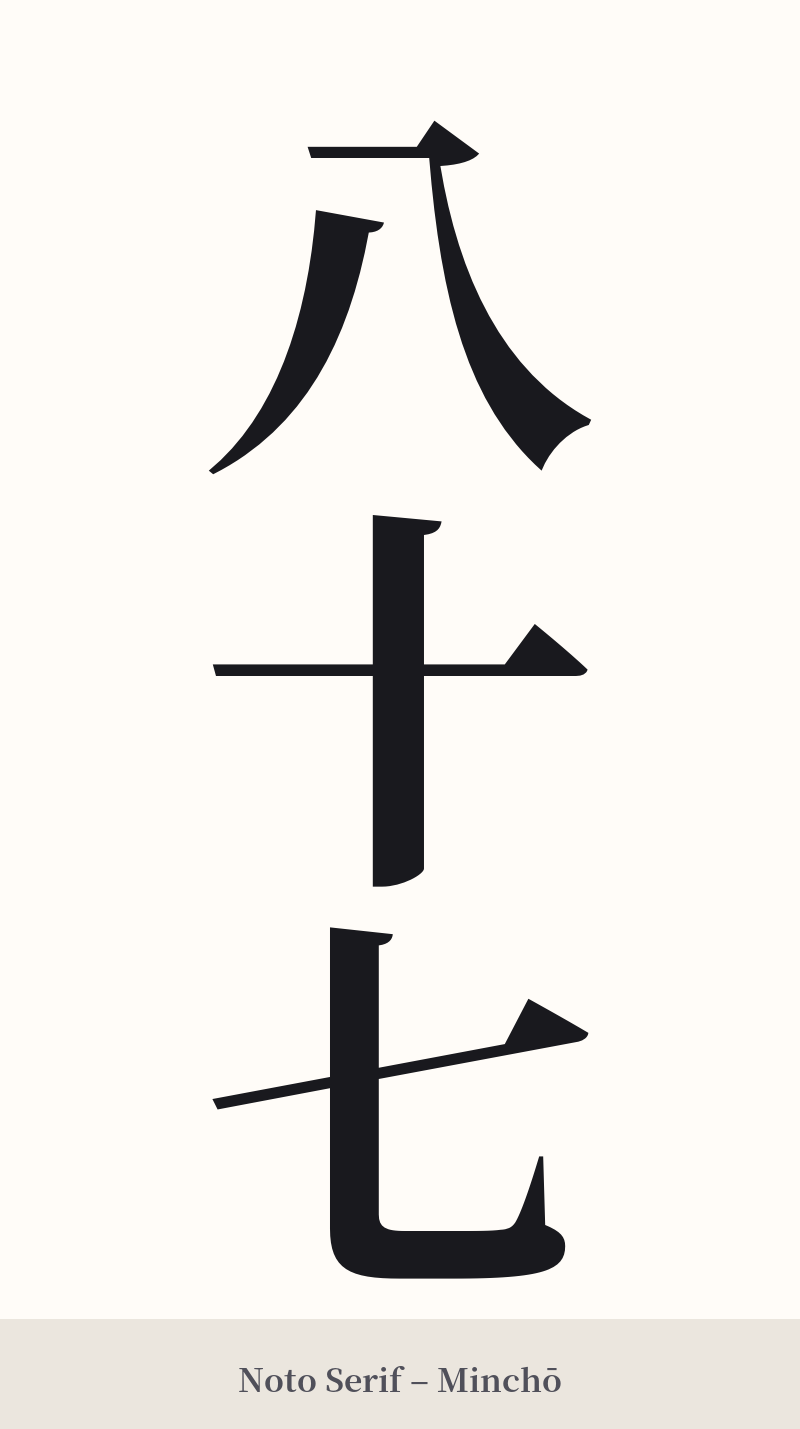
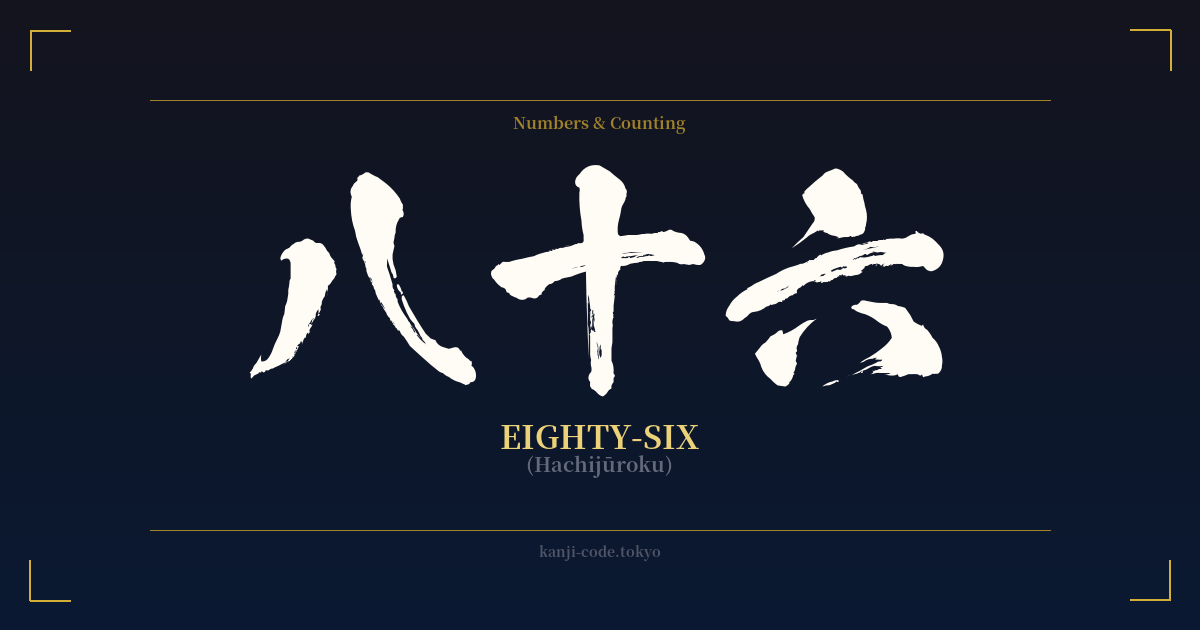
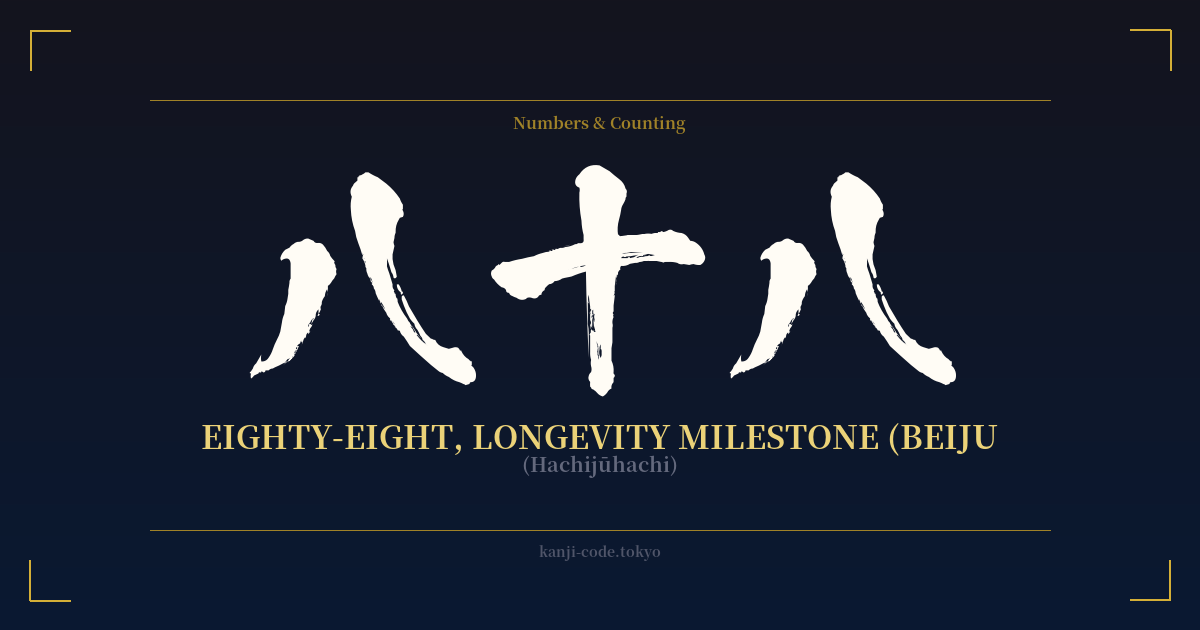
The same kanji can look dramatically different depending on the calligraphy style. Choose a font that matches the mood you want for your tattoo or design.
🎨 Tattoo Suitability
📐 Tattoo Design Guide
Given the simplicity of the characters in 八十七, the artistic style of the tattoo is paramount. A standard, blocky font will likely appear uninspired. To elevate the design, consider these recommendations:
– Vertical Placement: Traditionally, Japanese is written vertically. A vertical arrangement of 八, 十, and 七 along the spine, forearm, or calf creates a classic and aesthetically pleasing flow.
– Calligraphic Styles: The choice of script can dramatically change the feel. A dynamic, semi-cursive 'Gyōsho' or a fluid, abstract 'Sōsho' style can infuse the simple characters with energy and elegance, turning a plain number into a piece of art.
– Add Contextual Elements: Because the number itself lacks a story, consider incorporating a visual element that represents why the number 87 is significant to you. If it's a birth year, perhaps add the corresponding zodiac animal or a flower that blooms in your birth month. This provides the narrative that the kanji alone does not.
– Placement for Simplicity: If you prefer a minimalist look, the simplicity of these characters works well for small, discreet tattoos. The inner wrist, behind the ear, or on the ankle are good spots for a subtle and personal statement.
Comments