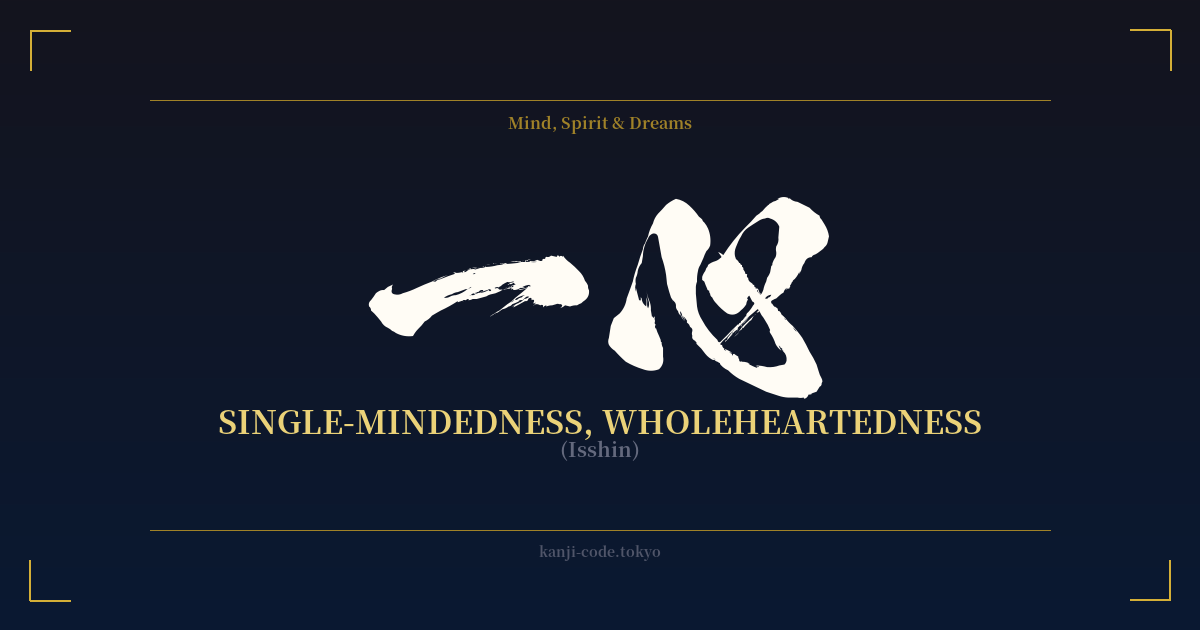
✍️ 一心 (Isshin) — Cultural Context
一心 (Isshin) is a word that cuts directly to the heart of Japanese philosophy, martial arts, and aesthetics. At its most basic, it translates to 'one heart' or 'one mind,' but its cultural resonance is far deeper. It represents a state of complete, unwavering focus and wholehearted devotion to a single task, path, or purpose. This is not merely 'concentration' in the Western sense of blocking out distractions; Isshin is a holistic state where the self, the action, and the goal merge into a single, unified entity.
The roots of Isshin are deeply entwined with Zen Buddhism. It echoes the concept of 'mushin' (無心), or 'no-mind,' a state of consciousness free from ego, fear, and distracting thoughts. When a martial artist achieves Isshin, their movements are no longer a product of conscious decision but a pure, instantaneous reaction. The swordsman doesn't 'decide' to strike; the strike simply happens, a perfect expression of intent. This is the spirit behind phrases like 'Kenzen Ichinyo' (剣禅一如), which means 'the sword and Zen are one.'
This ideal extends far beyond the dojo. It is the driving force behind the 'shokunin' (職人), the master artisan who dedicates their entire life to perfecting a single craft. The sushi chef who spends a decade just learning to make the perfect rice, the potter who throws thousands of bowls to understand the clay—they are all practicing Isshin. Their work becomes a form of meditation, a spiritual path where every action is performed with a singular, devoted heart.
In personal life, to pursue something 'isshin de' (一心で) means to do it with all your heart, pouring every ounce of your being into the endeavor. It speaks to a purity of intention and a powerful commitment that is highly valued in Japanese culture. It’s the spirit of the athlete training for a single moment of glory, the scholar lost in their research, or an individual devoted to a cause. Isshin is the beautiful, powerful state of losing yourself completely in what you love.
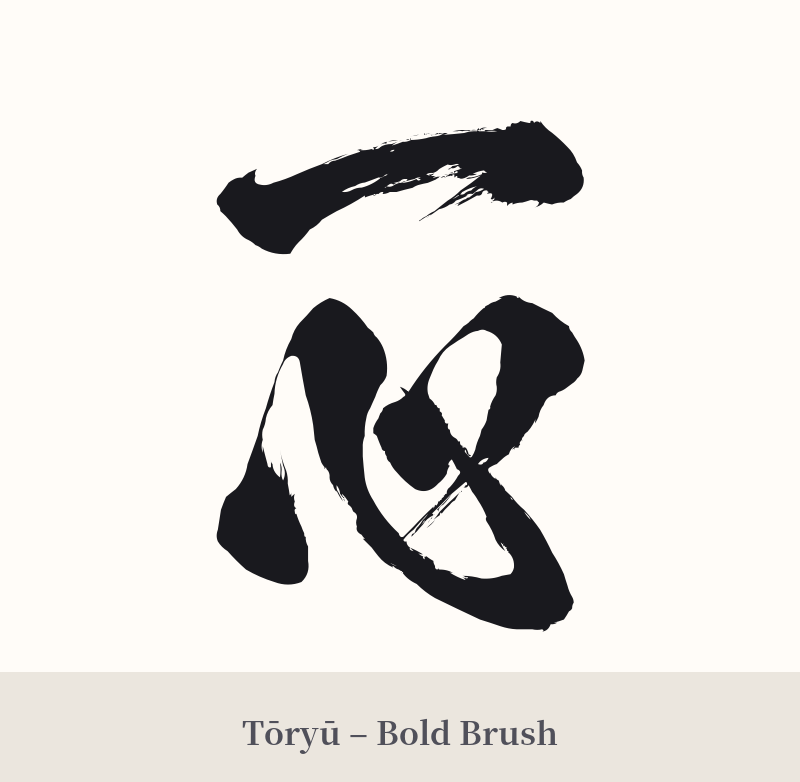
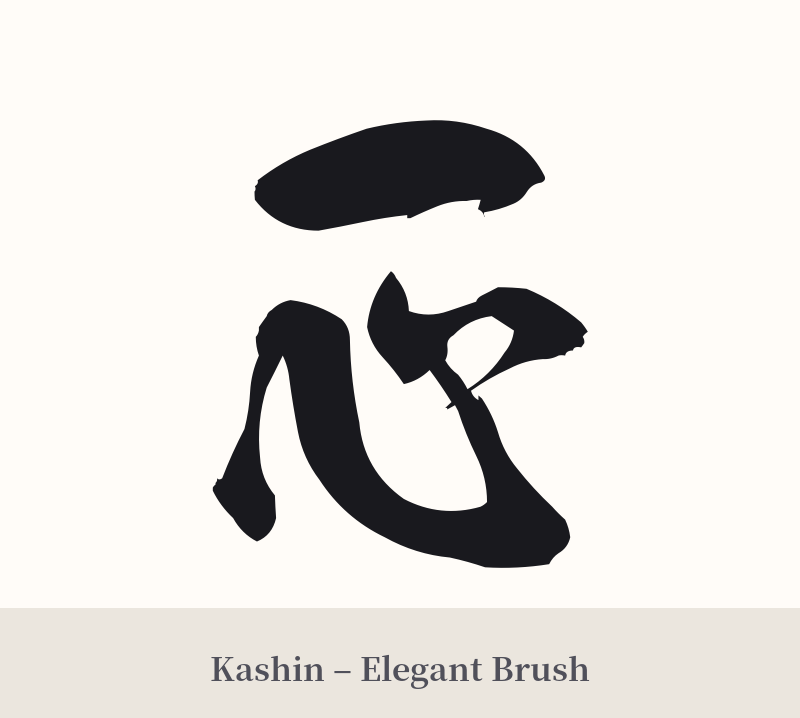
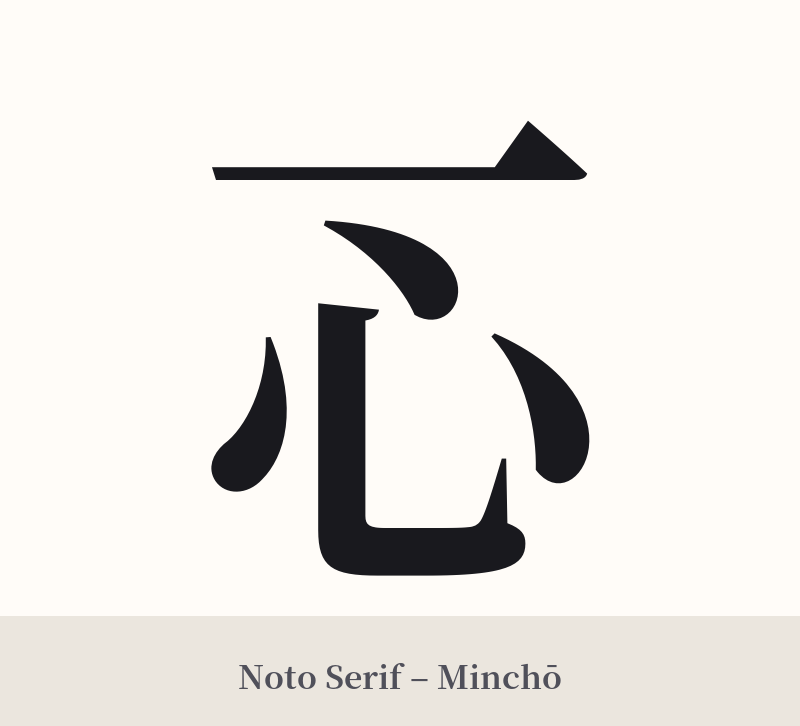
🖌️ Font Styles for 一心
The same kanji can look dramatically different depending on the calligraphy style. Choose a font that matches the mood you want for your tattoo or design.
🎨 Tattoo Suitability
📐 Tattoo Design Guide
The simplicity of 一心 offers surprising versatility in tattoo design. Its meaning of pure focus lends itself to clean and intentional placement.
– Placement: Consider areas that emphasize personal commitment. The inner forearm serves as a constant, visible reminder of your dedication. Placing it over the heart creates a literal connection to the kanji 心 (heart/mind). The back of the neck or along the spine suggests a foundational principle guiding you.
– Font Style: The choice of font can dramatically alter the feeling. A bold, blocky Kaisho (楷書) style emphasizes strength, stability, and unwavering resolve. A more fluid, semi-cursive Gyosho (行書) can represent the dynamic flow-state of being 'in the zone.' For a modern, minimalist aesthetic, a simple, unadorned font honors the kanji's inherent simplicity.
– Visual Tips: While powerful on its own, Isshin can be integrated with other symbols. Pairing it with an Enso circle (a Zen symbol of enlightenment and the void) can deepen its spiritual meaning. It could also be subtly incorporated into a larger piece that represents the focus of your devotion—for example, within a musical instrument, a paintbrush, or a sporting emblem.
Comments