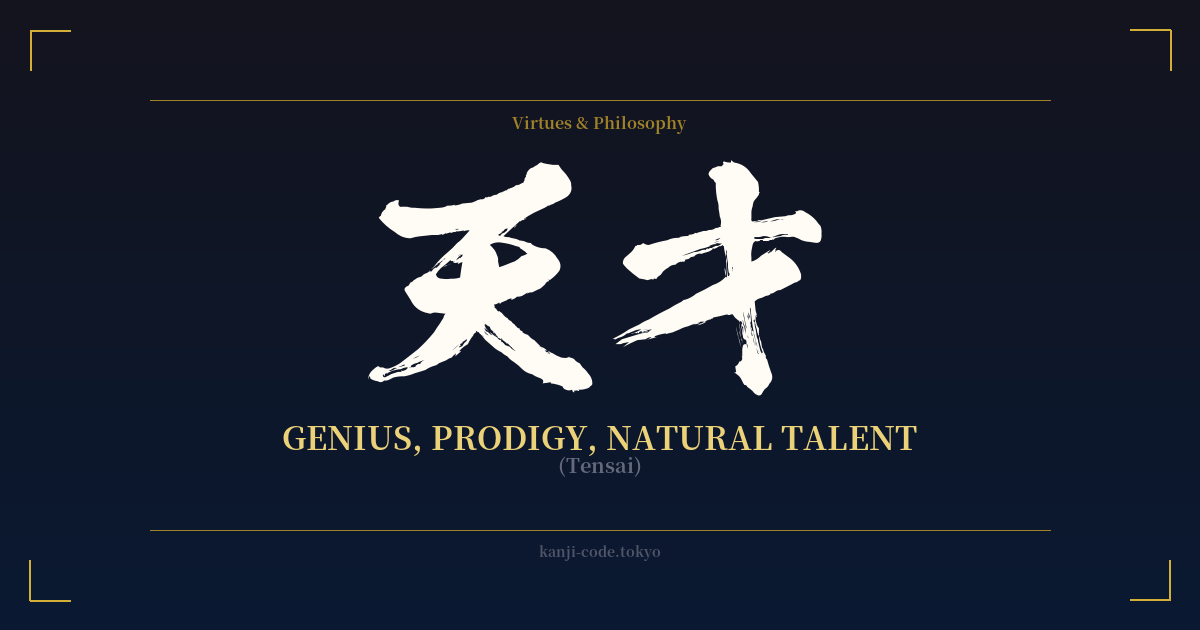
✍️ 天才 (Tensai) — Cultural Context
The Japanese word 天才 (Tensai) is a potent and evocative term that translates to 'genius,' 'prodigy,' or 'natural talent.' It goes far beyond simply meaning 'smart.' The key to its profound meaning lies in its constituent kanji: 天 (ten), meaning 'heaven' or 'sky,' and 才 (sai), meaning 'talent' or 'ability.' Combined, they create the powerful concept of a 'heaven-sent talent'—a gift bestowed by the divine.
In Japanese culture, there is a distinct difference between a 天才 (Tensai) and a 秀才 (Shūsai). A 'shūsai' is a brilliant person, an academic ace who achieves greatness through diligent study and hard work. Their success is earned. A 'tensai,' on the other hand, possesses an innate, almost effortless brilliance. They seem to understand complex concepts or master difficult skills with a natural ease that cannot be taught. Think of Mozart composing symphonies as a child or a chess prodigy who sees moves no one else can. This is the realm of the 'tensai.'
This concept is deeply woven into Japanese storytelling, especially in manga and anime. Countless characters are labeled as 'tensai' to establish their exceptional, often overwhelming, abilities. From the strategic genius L in 'Death Note' to the prodigious ninja Kakashi Hatake in 'Naruto,' the 'tensai' archetype is used to explore themes of talent versus effort, isolation, and the burden of expectation. These characters often grapple with the fact that their gifts set them apart from others.
Historically, the term would be applied to figures who revolutionized their fields, such as the master ukiyo-e artist Hokusai or the brilliant military strategist Oda Nobunaga. They weren't just skilled; they possessed a vision and ability that seemed to come from another plane of existence. The word carries a sense of awe and reverence for this kind of raw, uncultivated ability.
While Japanese culture famously values 努力 (doryoku), or hard work, there is also a deep appreciation for the unexplainable spark of genius. 天才 represents the peak of human potential, a reminder that some abilities are so extraordinary they feel like a direct gift from the heavens.
🖌️ Font Styles for 天才
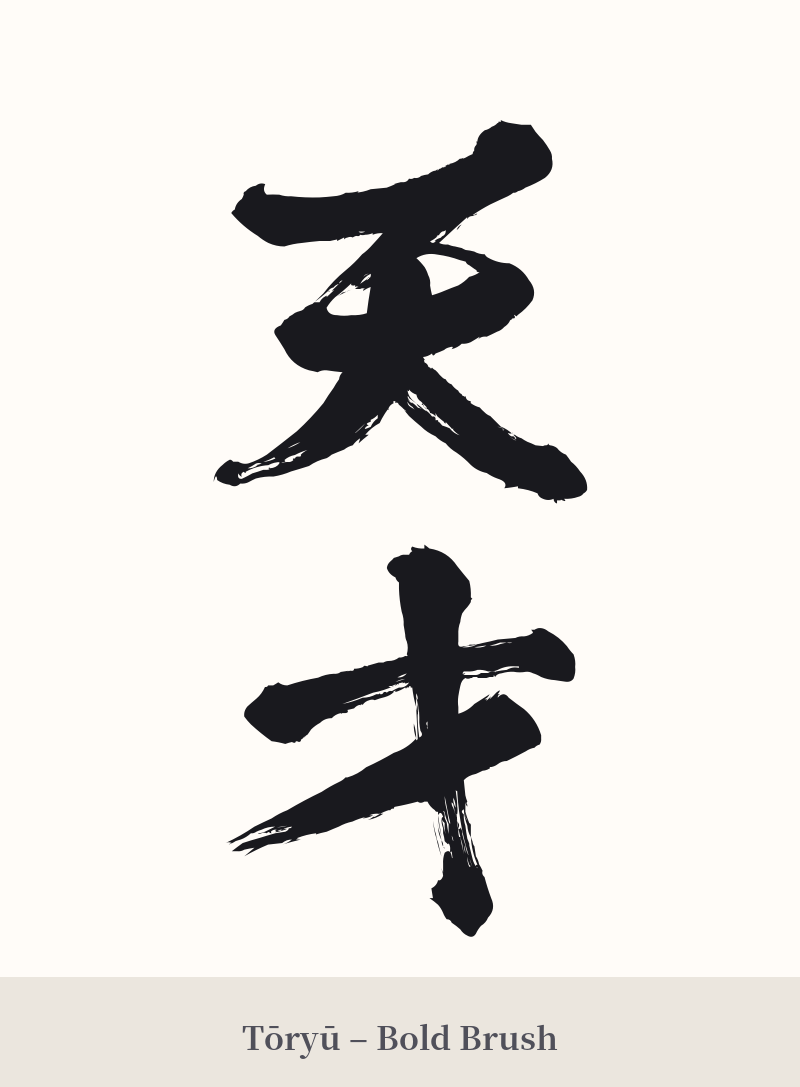
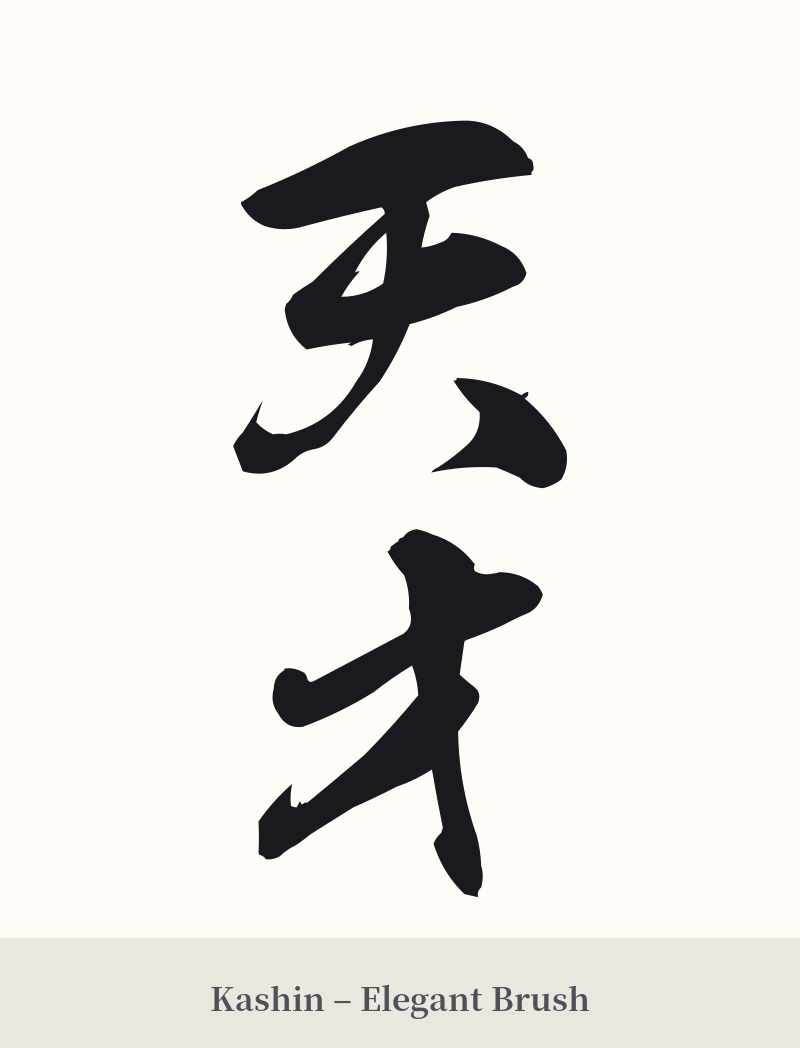
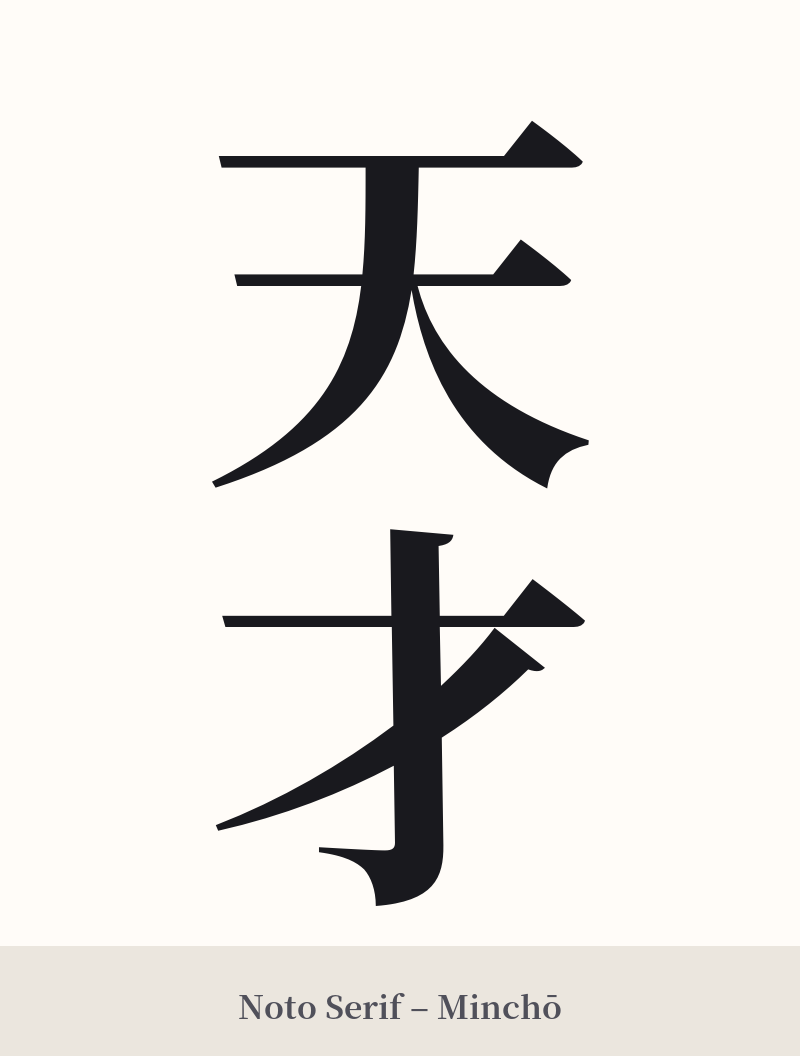
The same kanji can look dramatically different depending on the calligraphy style. Choose a font that matches the mood you want for your tattoo or design.
🎨 Tattoo Suitability
📐 Tattoo Design Guide
The kanji 天才 (Tensai) is composed of two very simple characters, so the design's impact relies heavily on font choice and placement.
– Placement: Vertical alignment works beautifully for this two-character word. Consider placing it along the spine, the forearm, or the calf to create an elegant, flowing line. For a horizontal design, it fits well across the chest, upper back, or inner bicep.
– Font Style: To compensate for the low stroke count, choose a font with personality. A dynamic, semi-cursive script (gyōsho) or a full cursive (sōsho) can inject energy and movement into the design. Conversely, a crisp, bold block script (kaisho) can emphasize its stark, powerful meaning.
– Visual Tips: Because the characters are simple, consider pairing them with a symbolic image that reflects your area of 'genius.' This could be a single brushstroke, a musical clef, a gear, or an abstract geometric pattern. This adds a layer of personal meaning and visual complexity to the overall tattoo.
Comments