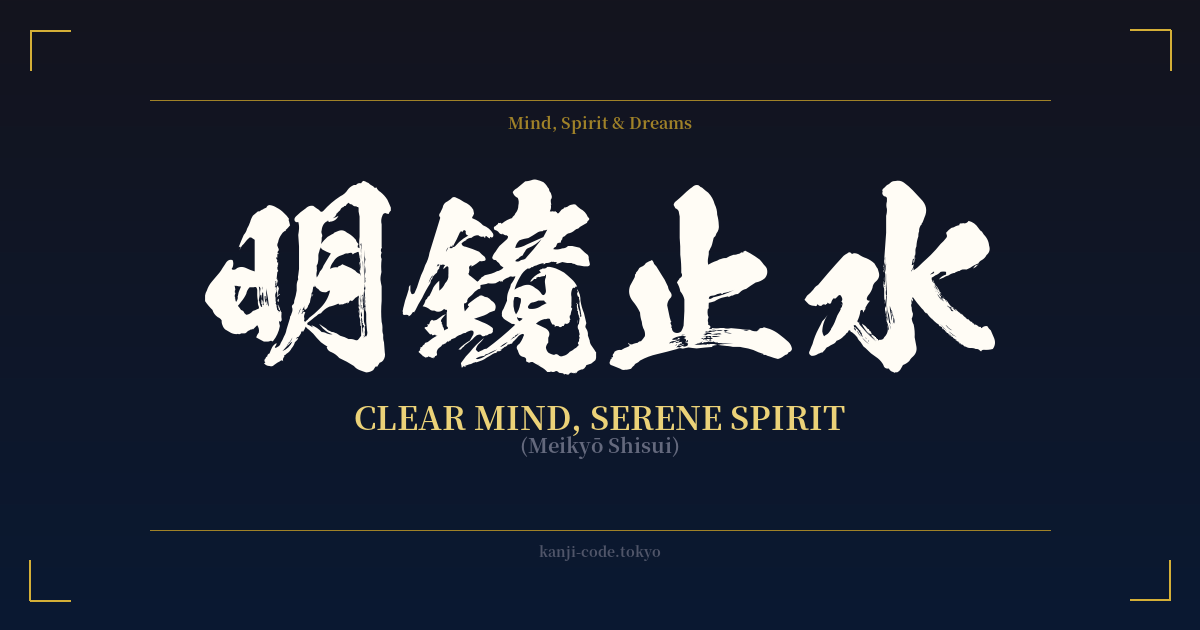
✍️ 明鏡止水 (Meikyō Shisui) — Cultural Context
明鏡止水 (Meikyō Shisui) is a four-character Japanese idiom, or 'yojijukugo,' that beautifully encapsulates a state of ultimate mental clarity and tranquility. Literally translating to "Clear Mirror, Still Water," the phrase is a powerful metaphor for a mind that is calm, pure, and unclouded by doubt, fear, or worldly desires.
The imagery is direct and profound. The 'clear mirror' (明鏡) represents a mind that can perceive the world exactly as it is, reflecting truth without distortion, judgment, or preconceived notions. The 'still water' (止水) symbolizes a spirit that is utterly serene, free from the ripples of emotional turmoil. When the water's surface is perfectly still, it too can act as a mirror, flawlessly reflecting the sky above. Together, they paint a picture of a consciousness in perfect equilibrium.
The concept has its roots in ancient Chinese Taoist philosophy, particularly in the writings of Zhuangzi (荘子). He used the metaphor of still water to describe the ideal state of the sage's mind—a mind so calm it becomes a perfect tool for reflecting the Tao, or the natural order of the universe. This idea was later absorbed into Japanese culture, finding a particularly strong resonance within Zen Buddhism.
In Zen, achieving Meikyō Shisui is a central goal of meditation (zazen). Practitioners strive to quiet the constant chatter of the mind, allowing thoughts and feelings to arise and pass without creating disturbances, much like clouds drifting across a clear sky reflected in a placid lake. This state is not one of emptiness, but of lucid awareness and profound peace.
This philosophy also became a cornerstone of Bushido, the way of the samurai. For a warrior, a mind in the state of Meikyō Shisui was a formidable weapon. In the heat of battle, a calm and clear mind allows for instantaneous, intuitive reactions, free from the hesitation caused by fear or anger. This mental state is closely related to 'Mushin' (無心), or 'no mind,' where action becomes effortless and instinctual. A samurai who had mastered this state could face life and death with equal composure.
Today, Meikyō Shisui remains a cherished ideal in Japan. It is a popular subject for calligraphy (shodo), a goal for martial artists, and a guiding principle for anyone seeking inner peace in a fast-paced, chaotic world. It represents not a passive state, but a dynamic and highly disciplined form of mental and spiritual mastery.
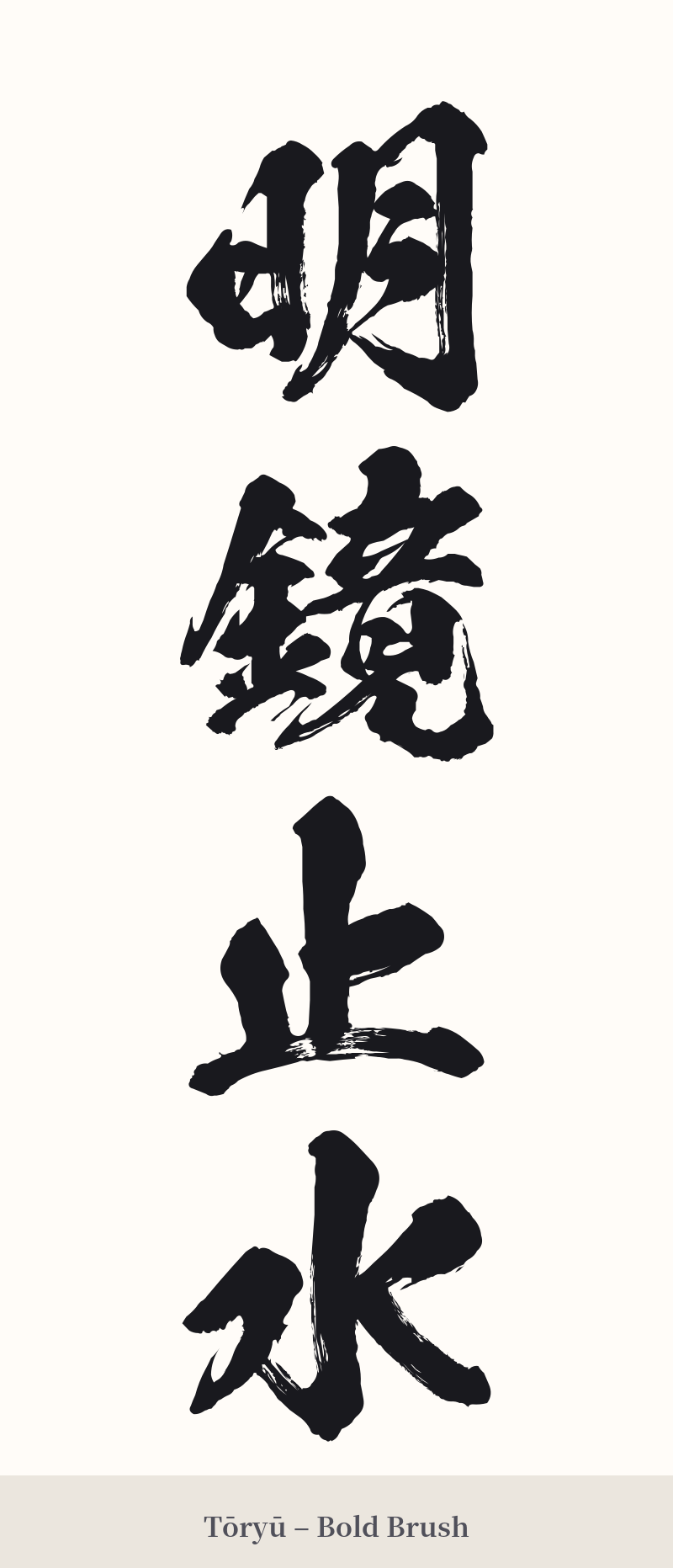
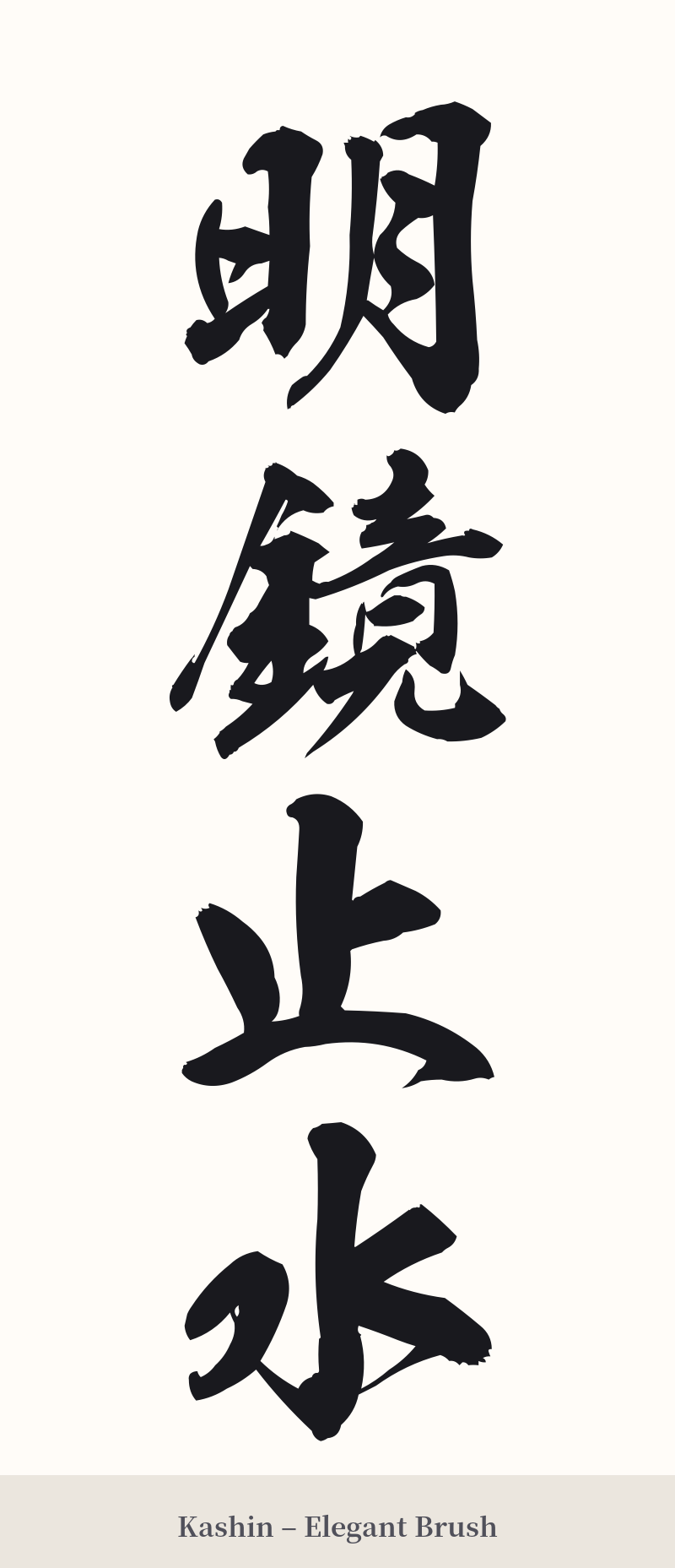
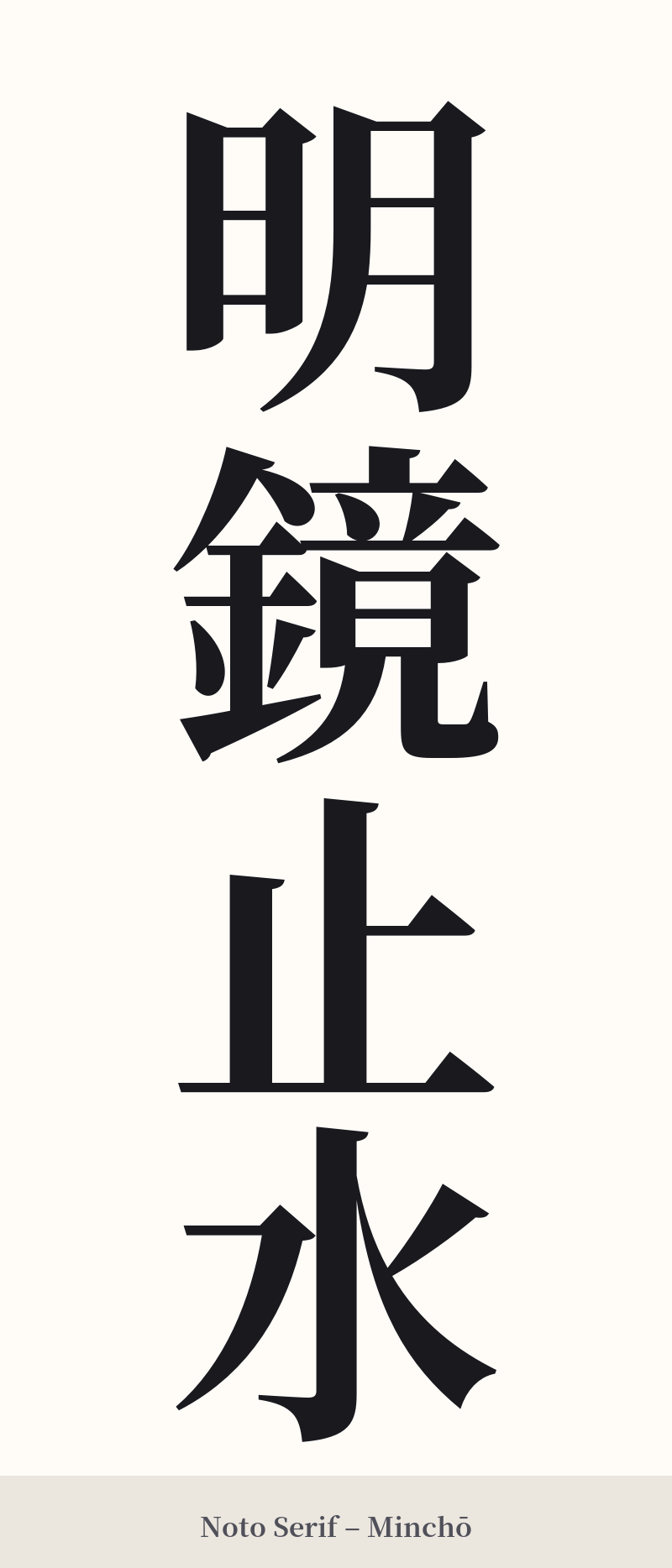
🖌️ Font Styles for 明鏡止水
The same kanji can look dramatically different depending on the calligraphy style. Choose a font that matches the mood you want for your tattoo or design.
🎨 Tattoo Suitability
📐 Tattoo Design Guide
For a 明鏡止水 tattoo, the design should reflect its philosophical weight and elegance. A vertical orientation is highly recommended, as it honors traditional Japanese writing and creates a powerful visual flow down the body.
– Placement: The spine, forearm, or calf are excellent choices for a vertical layout. This allows the four characters to stack naturally and creates a striking pillar of text.
– Font Style: Consider a dynamic, semi-cursive script like 'gyōsho' (行書) to capture the 'water' element's fluidity. For a more modern and sharp look, a clean and bold 'kaisho' (楷書) block script can emphasize the 'stillness' and 'mirror' aspects.
– Visual Tips: The complexity of the character '鏡' (kyō) is a key feature. Ensure your artist has experience with kanji to render its 19 strokes cleanly. You might consider complementing the kanji with minimalist imagery, such as a simple 'ensō' (Zen circle) or a subtle ripple-less water effect at the base of the design.
Comments