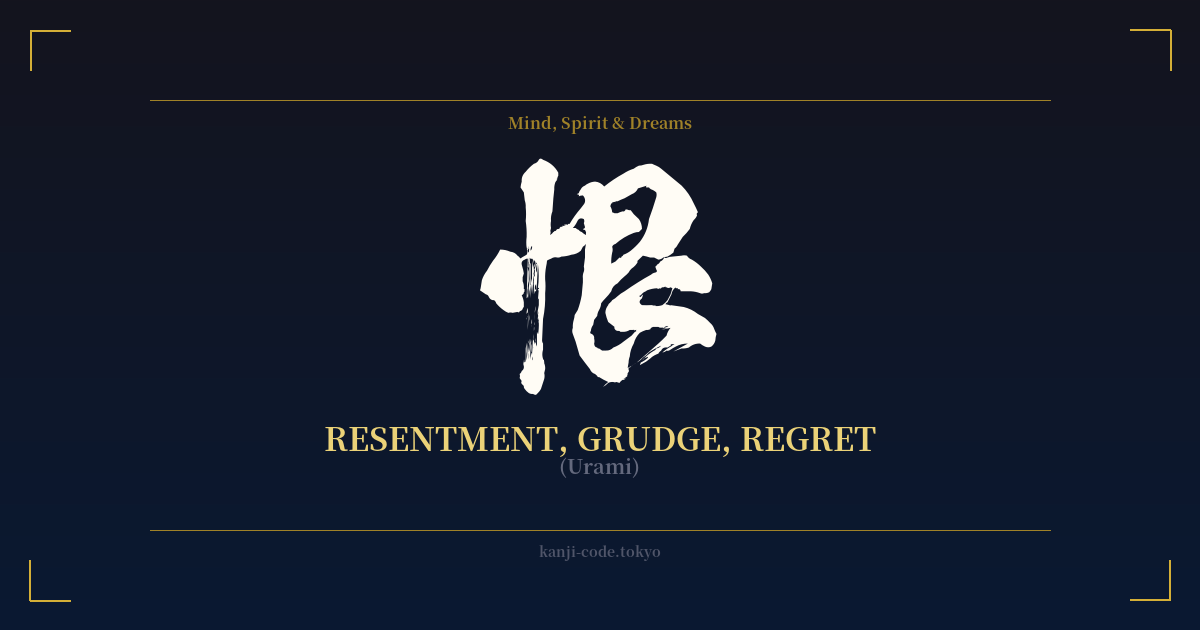
✍️ 恨 (Urami) — Cultural Context
The kanji 恨 (Urami) delves into one of the most potent and haunting human emotions: resentment. It's not the fleeting spark of anger, but a deep, lingering bitterness born from perceived injustice, betrayal, or profound loss. This is a feeling that festers, a wound that refuses to heal, tying a person's heart to a past wrong.
Etymologically, the character itself tells a story. It is composed of the heart radical (忄), a variant of 心 (kokoro), and the phonetic component 艮. This combination paints a powerful picture of a heart that is 'stopped' or 'fixated' on a grievance, unable to move forward. It captures the essence of being emotionally trapped by a past event.
In Japanese culture, Urami is a cornerstone of folklore, literature, and theatre, particularly in ghost stories known as 'kaidan'. It is the very engine that drives the actions of 'yūrei' (ghosts) and 'onryō' (vengeful spirits). These spirits, often those of individuals who were powerless in life, are bound to the mortal realm by the sheer force of their Urami. They cannot find peace until their grudge is acknowledged or their vengeance is exacted. The famous story of Oiwa in Yotsuya Kaidan is a classic example, where a betrayed and murdered wife returns as a terrifying specter fueled by an inextinguishable Urami.
This concept distinguishes Urami from other negative emotions. While 怒り (ikari) is immediate anger and 悲しみ (kanashimi) is sorrow, Urami is a chronic, corrosive state. It implies a personal target and a profound sense of having been wronged. It is the silent, burning hatred that can last a lifetime—or, in the world of folklore, an eternity.
Even today, the word carries immense weight. While it can be used in phrases like `urami-bushi` (a song of resentment) or in dramatic contexts in manga and anime, to express Urami in a real-life situation is to declare a very serious, deeply felt grievance. It is a powerful, dark, and complex part of the human emotional spectrum, explored with chilling depth in Japanese storytelling.
🖌️ Font Styles for 恨
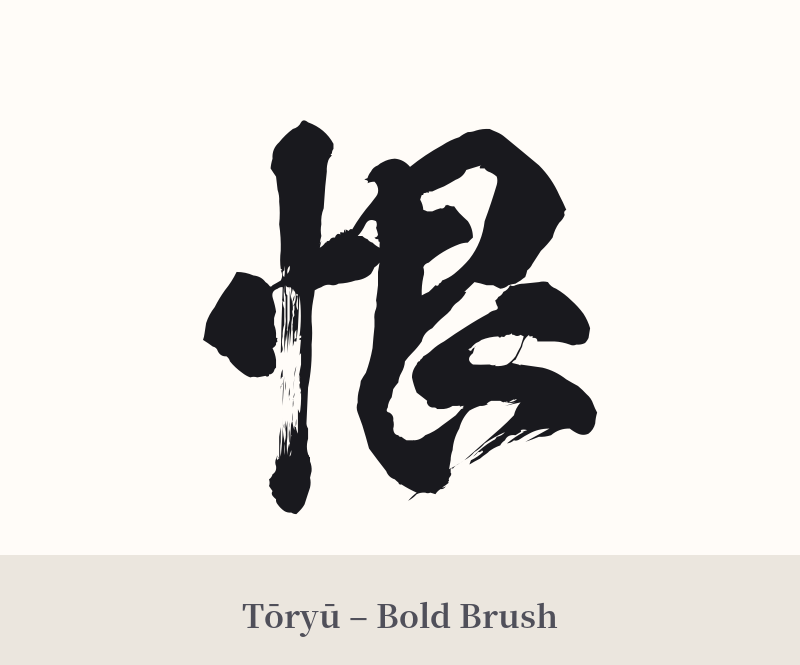
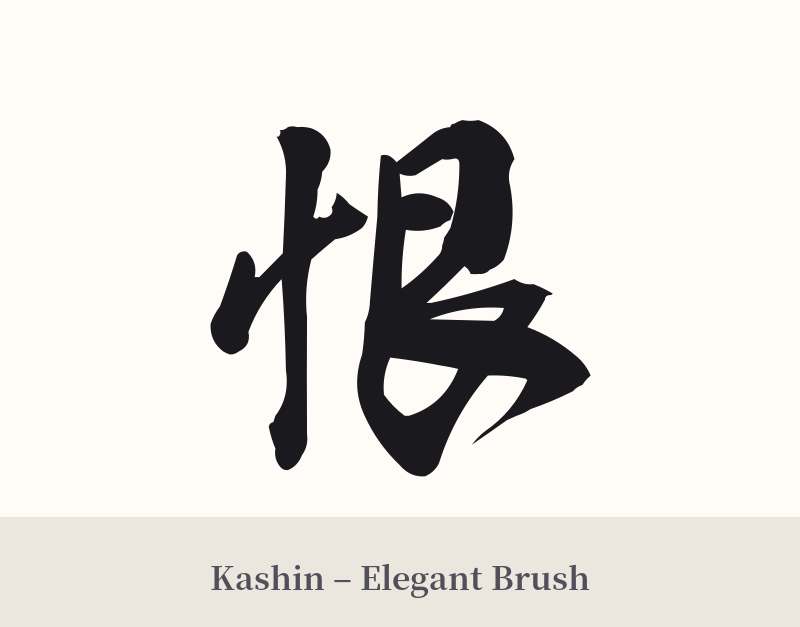
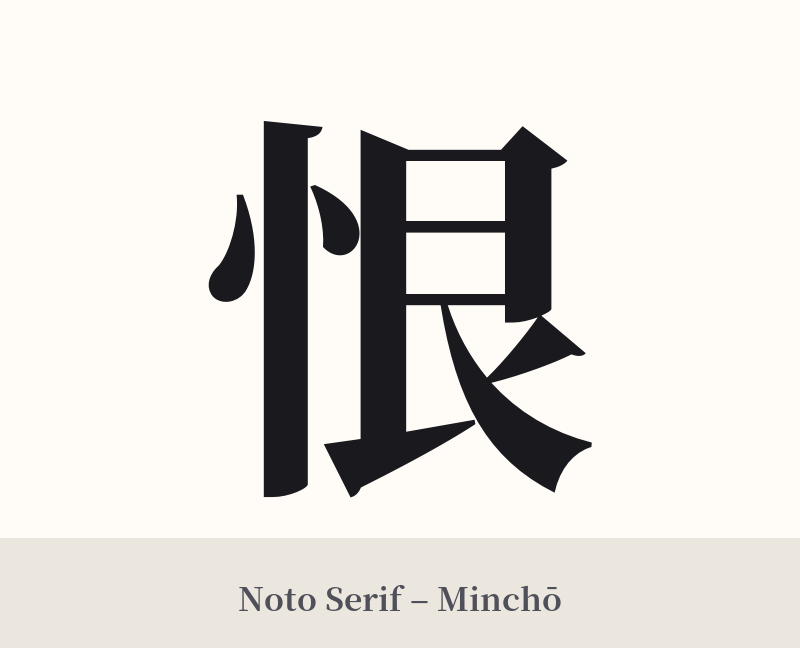
The same kanji can look dramatically different depending on the calligraphy style. Choose a font that matches the mood you want for your tattoo or design.
🎨 Tattoo Suitability
📐 Tattoo Design Guide
Given the dark nature of 恨 (Urami), the design should reflect its heavy emotional weight. This is not a character for a lighthearted or whimsical style.
– Placement: Consider personal, intimate placements like the ribs, back, or over the heart. These locations suggest a deeply held, personal feeling. Due to its negative meaning, highly visible placements like the forearm or neck are not recommended unless you intend to make a very bold and potentially confrontational statement.
– Font Style: An aggressive, scratchy calligraphy style (sōsho) can emphasize the feeling of rage and pain. Alternatively, a stark, rigid Mincho or Gothic font can convey a cold, unforgiving, and relentless grudge. A distorted or 'haunted' style, as if written by a ghostly hand, would also be highly effective.
– Visual Tips: To enhance the design, consider incorporating symbolic imagery. Red spider lilies (higanbana), which are associated with death and final goodbyes, are a classic pairing. Other ideas include a cracked or shattering effect around the kanji, wisps of smoke or ghostly energy, or a design that looks like it's been carved into the skin.
Comments