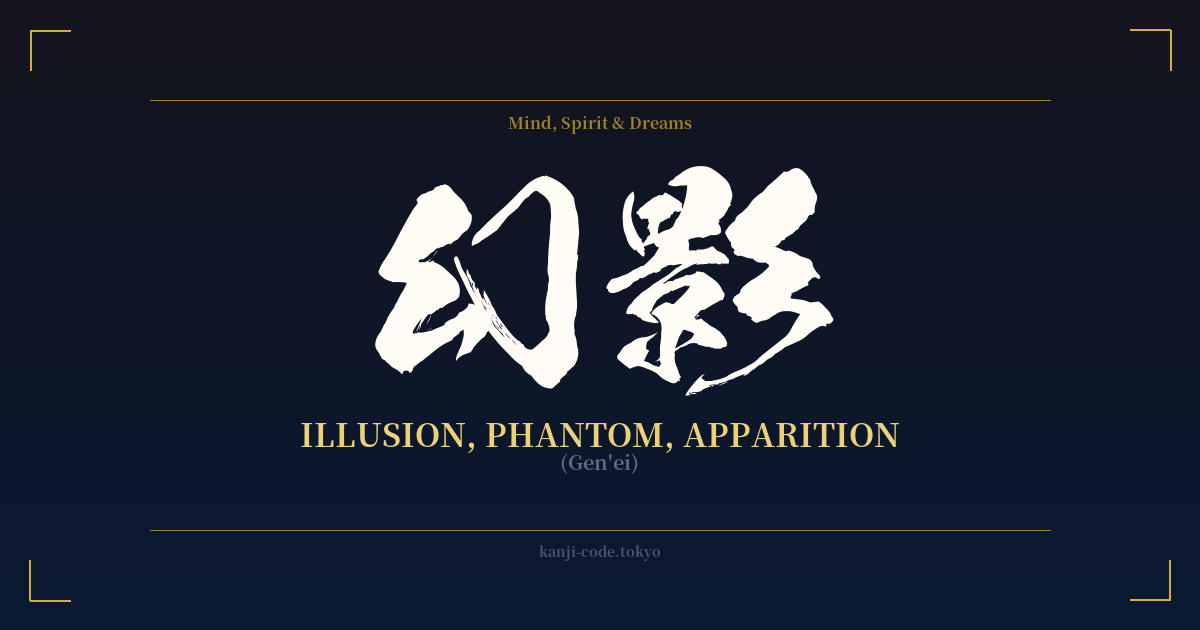
✍️ 幻影 (Gen'ei) — Cultural Context
幻影 (Gen'ei) is a beautifully poetic Japanese word that translates to phantom, illusion, or apparition. It captures the essence of something seen but not truly there—a fleeting image that tricks the senses, a ghost in the periphery, or a memory that feels deceptively real. It’s a word steeped in a sense of mystery and the ethereal.
To understand its depth, we must look at its components. The first kanji, 幻 (gen), means illusion or phantasm. It’s a simple, almost abstract character, suggesting something not fully formed or defined. The second kanji, 影 (ei), means shadow or silhouette. This character is far more complex, depicting a tangible darkness cast by an object. Together, 幻影 creates a powerful paradox: the 'shadow' (影) of a 'phantasm' (幻). It describes an intangible phenomenon with a tangible metaphor, giving form to the formless.
In Japanese culture, Gen'ei is deeply connected to aesthetic and philosophical concepts. It resonates with the Buddhist idea of impermanence (無常, mujō) and the belief that the material world is itself a kind of illusion. This word is not about a cheap trick or deceit; it’s about the profound and sometimes sorrowful beauty of things that are transient and unreal, a core tenet of the aesthetic known as 'mono no aware' (物の哀れ), the pathos of things.
You'll find Gen'ei used frequently in Japanese literature, anime, and video games. It might describe a literal ghost or yūrei, a mirage shimmering in the heat, or a ninja's afterimage technique. It's often used to name special abilities or swords, like 幻影剣 (Gen'ei Ken), the 'Phantom Sword'. This usage imbues the word with a sense of cool, dark power, making it a popular choice for those drawn to fantasy and Japanese pop culture.
Unlike a simple word for 'mistake' or 'trick', Gen'ei occupies a space between perception and reality. It acknowledges that we saw something, but questions its very nature. It is the perfect word for a flicker of movement in an empty room, the feeling of being watched, or the haunting presence of a past love. It is the poetry of a perception that cannot be proven.
🖌️ Font Styles for 幻影
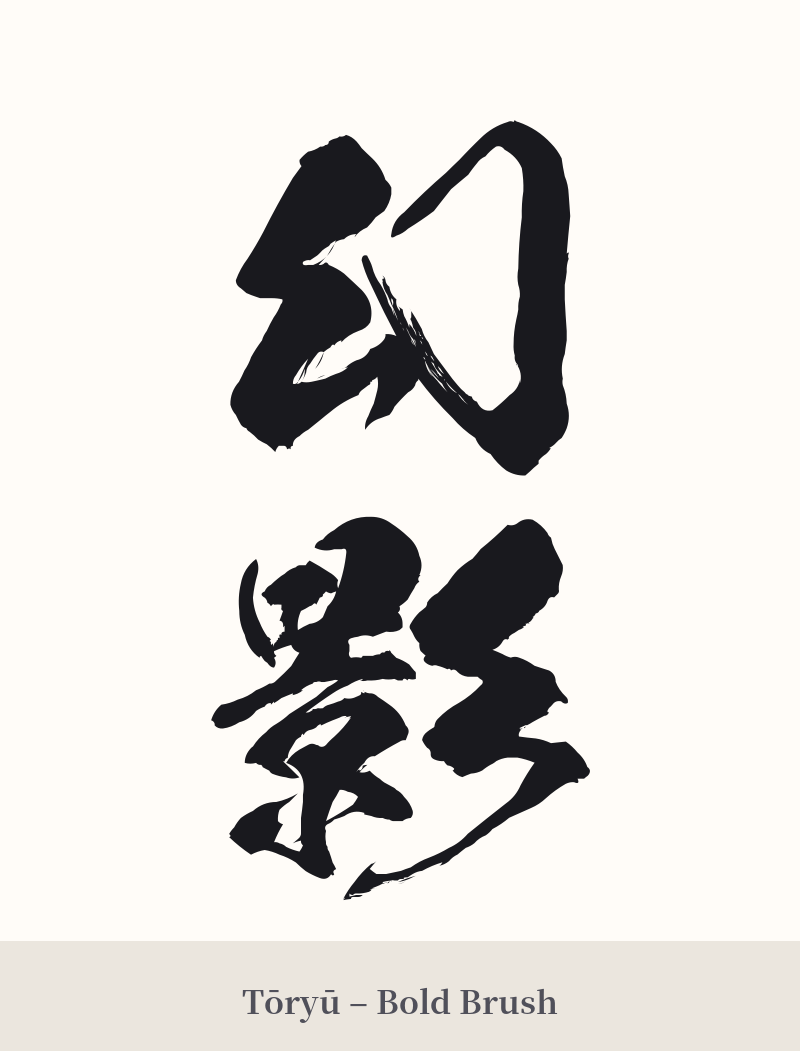
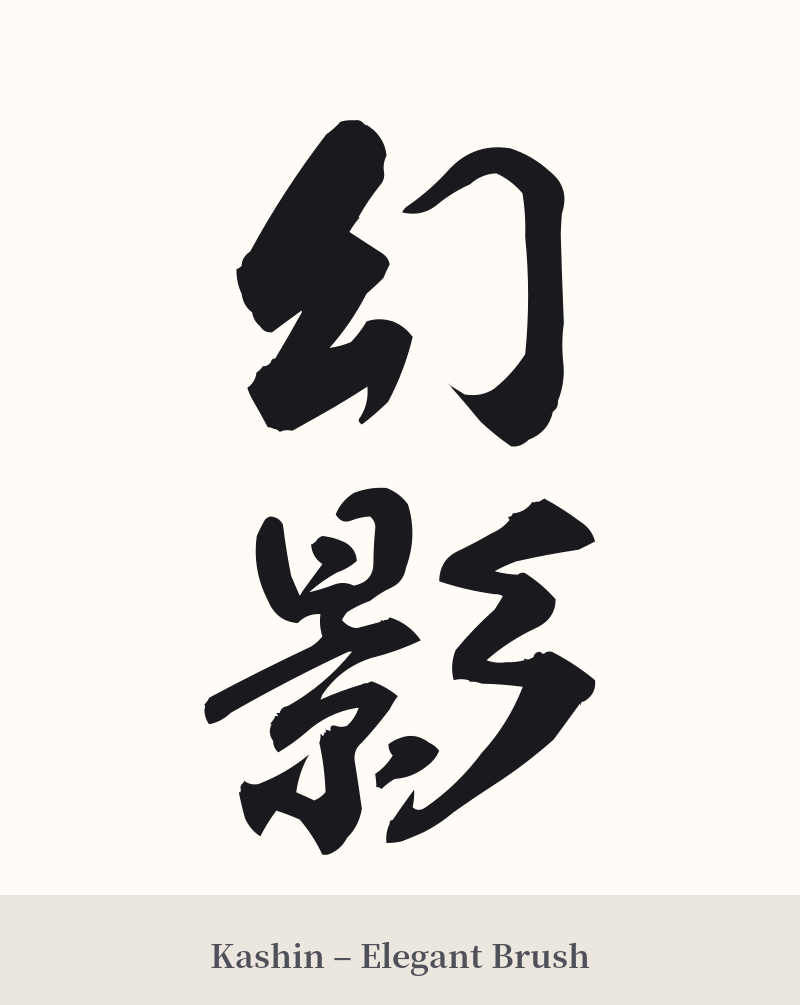
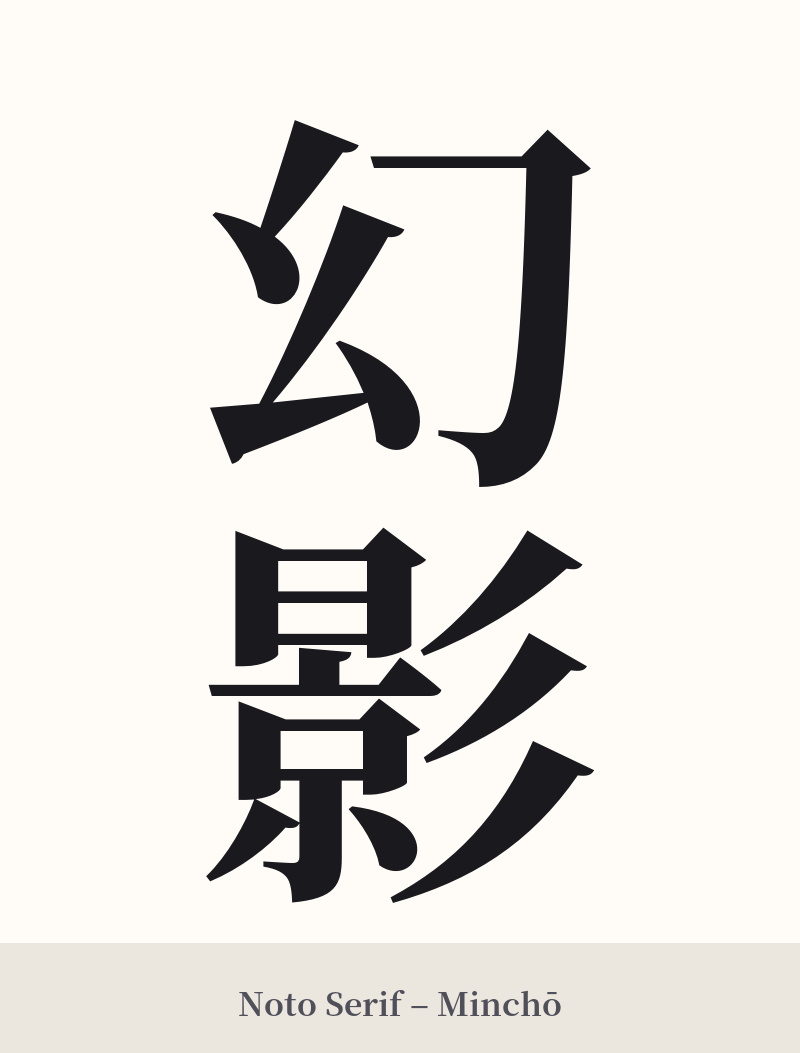
The same kanji can look dramatically different depending on the calligraphy style. Choose a font that matches the mood you want for your tattoo or design.
🎨 Tattoo Suitability
📐 Tattoo Design Guide
A 幻影 (Gen'ei) tattoo offers a lot of creative freedom due to its mysterious theme. A vertical alignment is highly recommended, as it follows traditional Japanese script and creates an elegant flow down a limb or the spine.
– Placement: The forearm, calf, or along the spine are excellent choices for a vertical design. A smaller, horizontal version could work on the wrist or behind the ear, but be mindful of the detail in the second character.
– Font Style: A wispy, flowing calligraphy style (gyosho or sosho) can beautifully capture the 'phantom' essence of the word. Alternatively, a sharp, clean Mincho or Kaisho font can provide a striking contrast, especially if you're aiming for a more modern or digital 'glitch' aesthetic.
– Visual Tips: Consider having the ink 'fade' or dissolve into smoke or mist at the bottom to visually represent the idea of an illusion disappearing. You could also use a watercolor style with soft, bleeding edges to enhance the ethereal quality. Another powerful idea is to have the first character (幻) rendered lightly and the second (影) more boldly, playing on the theme of an illusion casting a shadow.
Comments