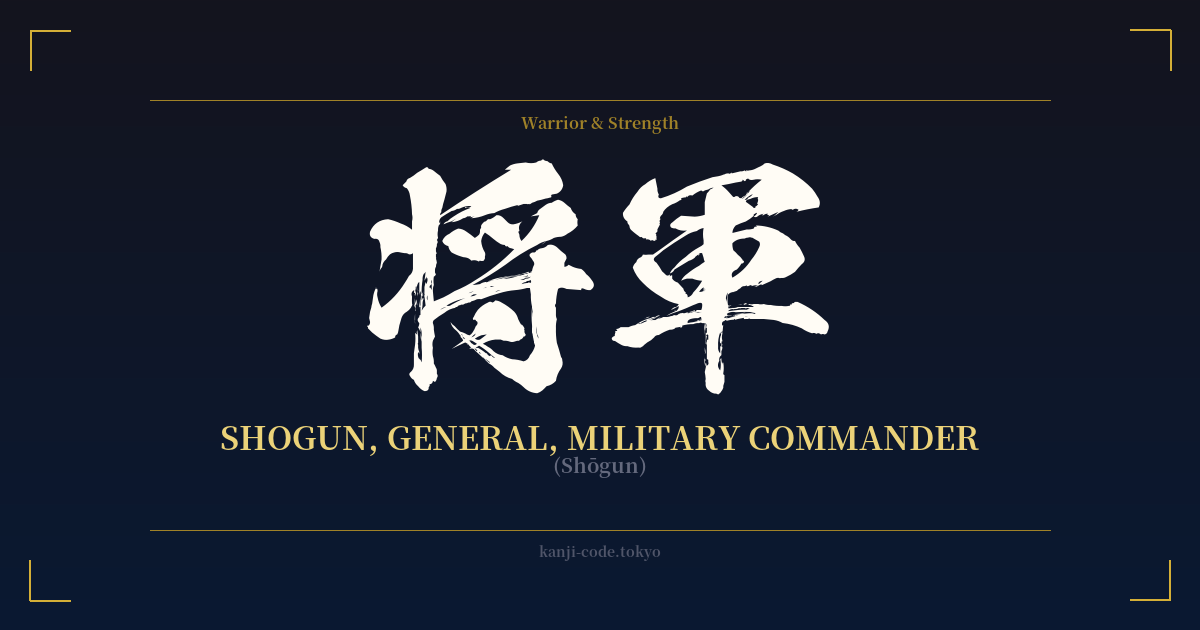
✍️ 将軍 (Shōgun) — Cultural Context
The word 将軍 (Shōgun) is one of the most evocative terms in Japanese history, immediately conjuring images of samurai warriors, feudal castles, and a time when military might dictated the fate of a nation. Literally translated, it means "commander of the army," but its historical significance goes far beyond this simple definition.
Originally, the title was a temporary designation granted by the Emperor to a general for a specific military campaign. The full title was 征夷大将軍 (Seii Taishōgun), which means "Great General who Subdues the Barbarians." The first to hold this title in a way that transformed its meaning was Minamoto no Yoritomo in 1192. He established the Kamakura shogunate, the first military government (bakufu) that would rule Japan for nearly 700 years.
Under the shogunate system, Japan had two rulers. The Emperor in Kyoto remained the spiritual and ceremonial head of state, a divine figure descended from the gods. However, the Shōgun, based in his own capital (first Kamakura, then Kyoto's Muromachi district, and finally Edo, modern-day Tokyo), held the real political and military power. The Shōgun was the ultimate leader of the samurai class, commanding the loyalty of powerful regional lords known as daimyō.
Three major shogunates governed Japan: the Kamakura (1192–1333), the Ashikaga (1336–1573), and the Tokugawa (1603–1868). The Tokugawa period, in particular, is famous for bringing about over 250 years of peace and stability, but also for its strict social hierarchy and isolationist policies. The Shōgun was the apex of this system, a figure of immense authority, strategic genius, and often ruthless power.
This era of the Shōgun and samurai came to a dramatic end with the Meiji Restoration in 1868, when power was officially returned to the Emperor, and Japan began its rapid modernization. Today, the word Shōgun is used almost exclusively in a historical context. It embodies a legacy of martial prowess, political strategy, and the unique dual-power structure that defined feudal Japan for centuries.
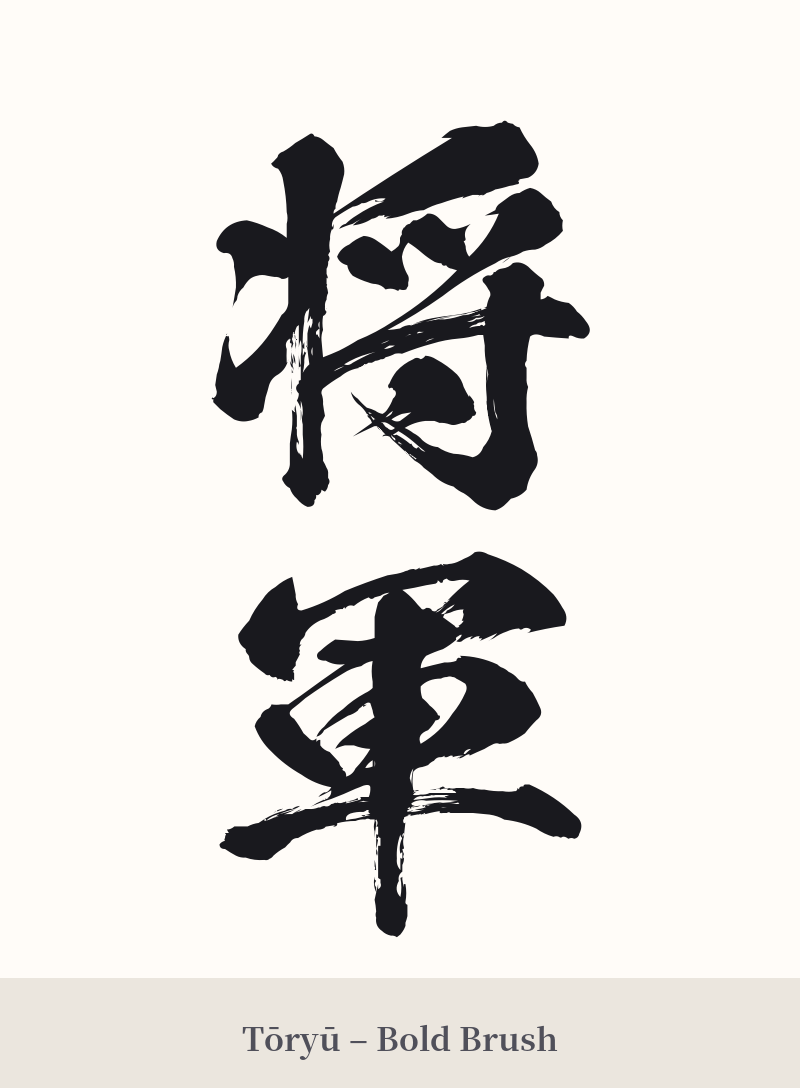
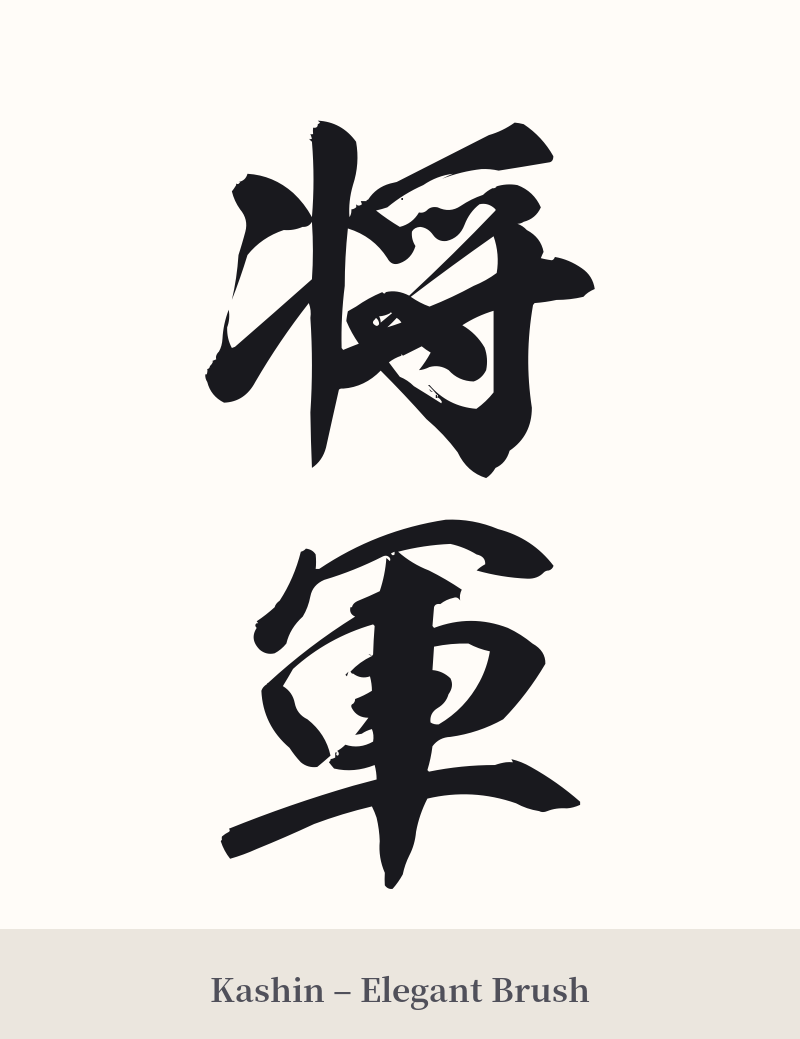
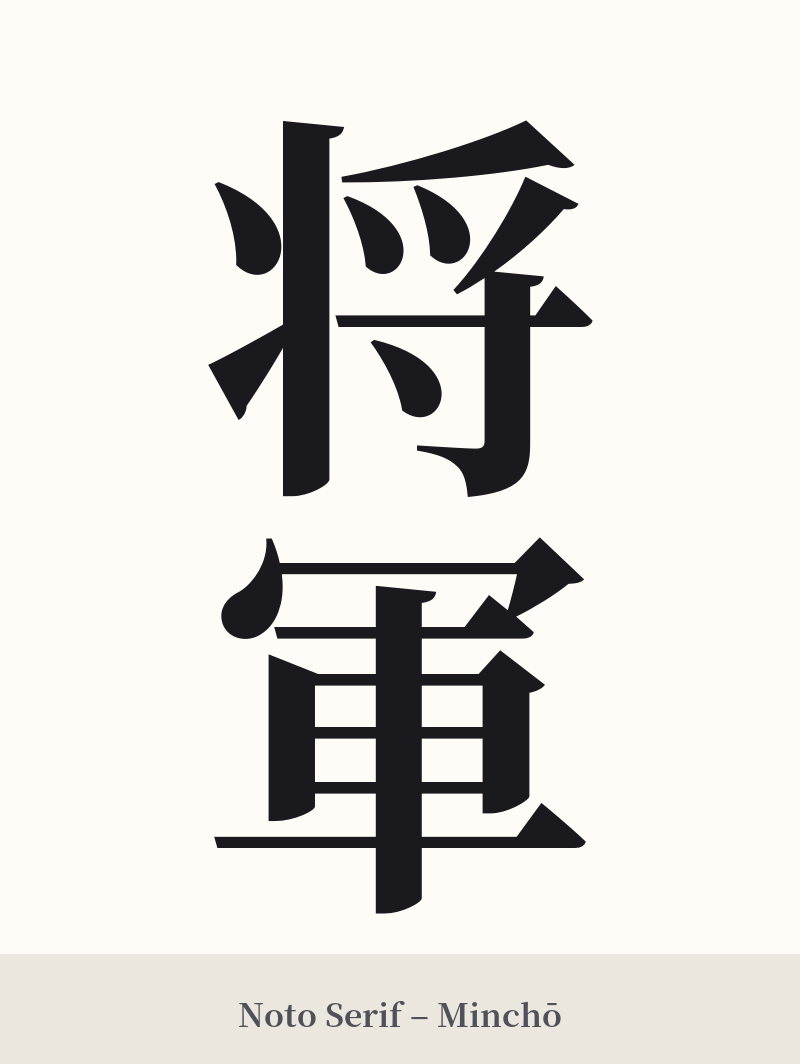
🖌️ Font Styles for 将軍
The same kanji can look dramatically different depending on the calligraphy style. Choose a font that matches the mood you want for your tattoo or design.
🎨 Tattoo Suitability
📐 Tattoo Design Guide
A tattoo of 将軍 (Shōgun) makes a powerful statement and deserves a design that reflects its historical weight.
– Placement: This two-character compound works best in larger, prominent areas where its details can be appreciated. A vertical orientation along the forearm, calf, or spine is classic and visually striking. A horizontal placement across the chest or upper back also conveys strength.
– Font Style: Traditional Japanese calligraphy styles are highly recommended. A bold, formal Kaisho (block) script emphasizes authority and structure. For a more fluid and dynamic feel, a Gyosho (semi-cursive) script captures the strategic and adaptive nature of a military leader.
– Visual Tips: Consider pairing the kanji with other elements from the same historical context. A background of a Japanese castle, a samurai helmet (kabuto), or even a stoic pine tree can add depth and narrative. Avoid mixing it with conflicting cultural symbols; let its Japanese origin be the focus.
Comments