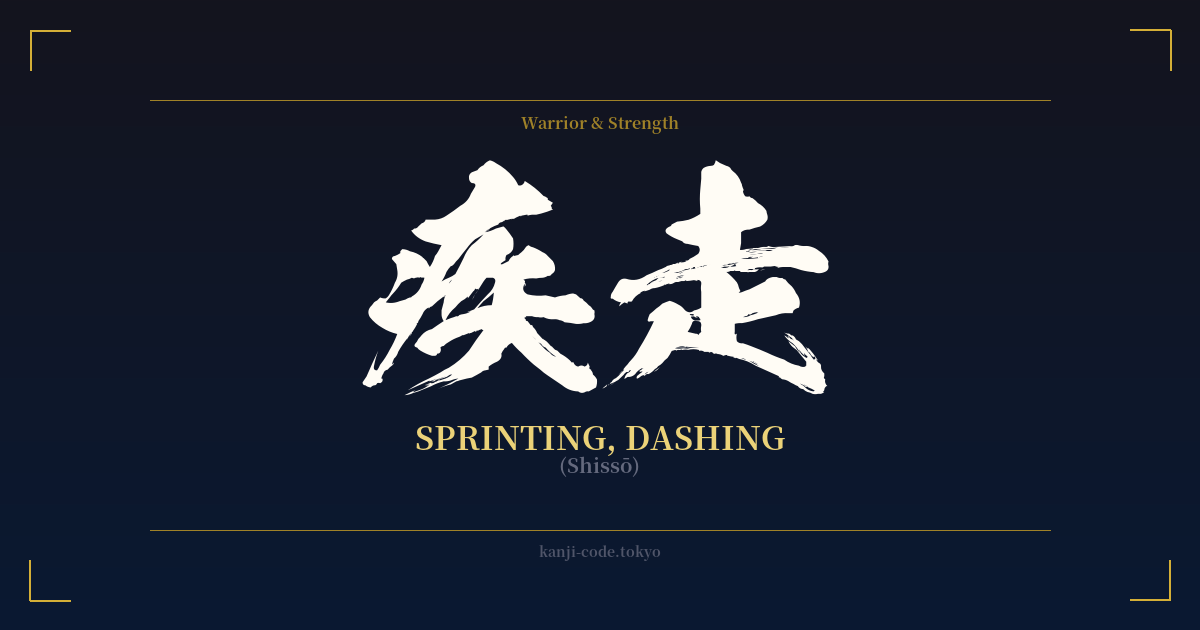
✍️ 疾走 (Shissō) — Cultural Context
疾走 (Shissō) is a Japanese word that paints a vivid picture of speed and urgency. It translates directly to 'sprinting' or 'dashing,' but it captures more than just the physical act of running; it embodies the explosive, all-out burst of energy directed towards a single point. It’s the difference between a leisurely jog and a full-tilt sprint for the finish line.
In Japan, 疾走 is a word you'll frequently hear in the context of sports. A sportscaster might yell it when a baseball player steals a base, a soccer player breaks away from the defense, or a track athlete explodes out of the blocks. It signifies a moment of peak performance, where every ounce of energy is converted into pure, unadulterated speed.
Beyond the athletic field, 疾走 has a powerful metaphorical resonance. It can describe a period in one's life characterized by intense effort and rapid progress. Someone 'sprinting' towards their career goals, an artist in a 'dash' of creative fervor, or a company experiencing a 'sprint' of rapid growth—all can be described using the feeling of 疾走. It represents a conscious decision to move forward with maximum velocity, leaving hesitation behind.
This sense of dynamic motion has made 疾走 a popular term in Japanese pop culture, especially in anime, manga, and music. The word itself evokes a feeling, often referred to as 疾走感 (shissō-kan), the 'feeling of sprinting.' It's the sensation of wind rushing past, the blur of the landscape, and the pounding of your heart. Many rock bands and anime opening themes strive to capture this very feeling, using fast tempos and driving rhythms to create an auditory 'sprint.' The word itself might appear in a song title, like the famous track "Shissou" by LAST ALLIANCE, or as a descriptor for a character known for their incredible speed.
The two kanji that form the word tell a story of their own. 疾 (shitsu) means 'rapidly' or 'swiftly.' Interestingly, its components are the 'sickness' radical (疒) and 'arrow' (矢), originally suggesting something that strikes as quickly and unavoidably as a sudden illness or a fired arrow. Over time, it came to represent this intense speed. The second character, 走 (sō), is a simple and beautiful pictogram of a person running. When you combine them, you get 疾走: 'rapid running.' It's not just running; it's running with the speed of a flying arrow.
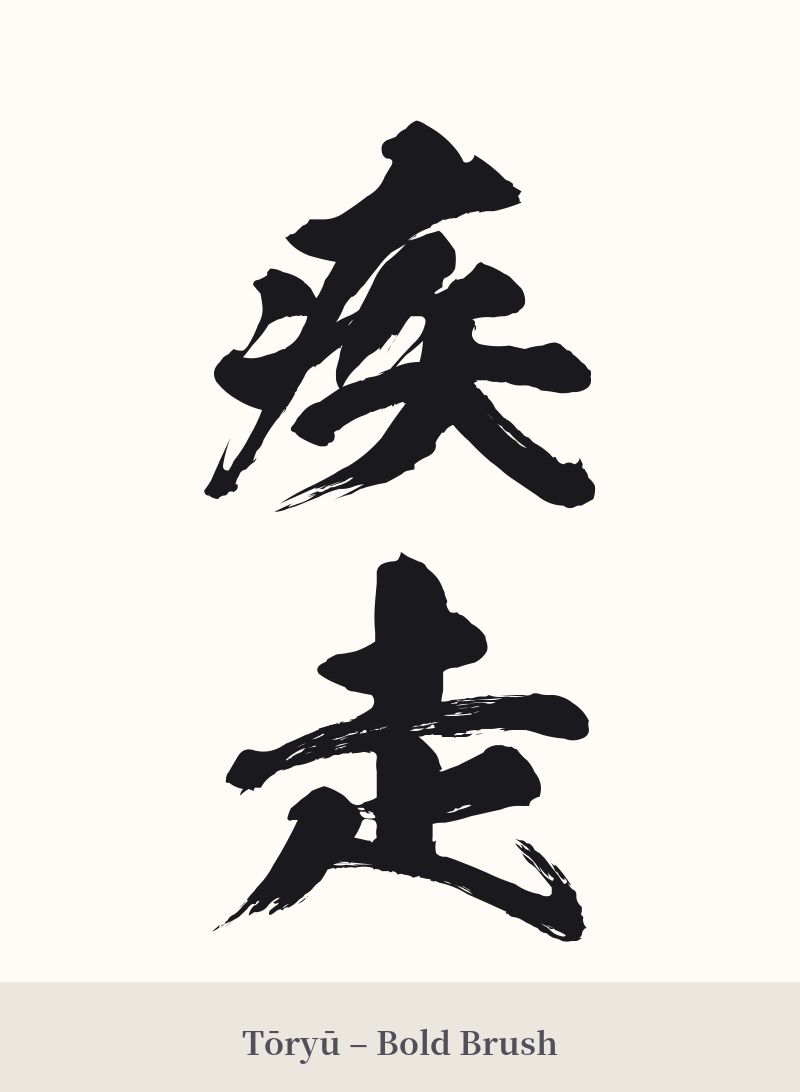
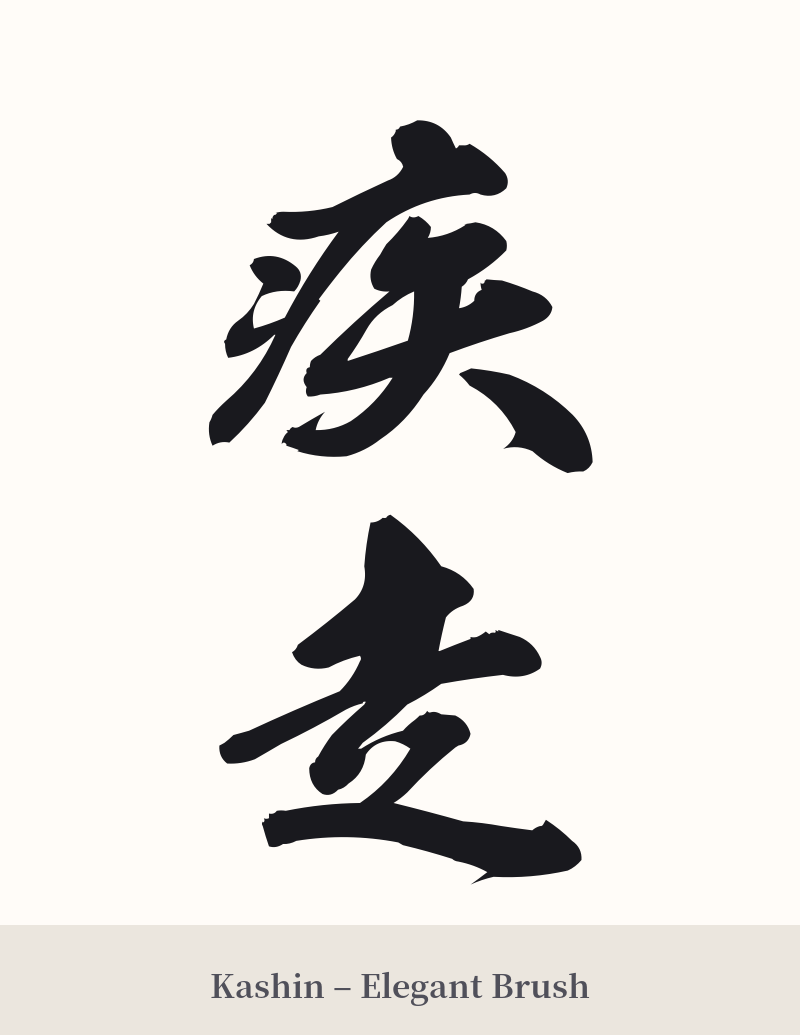
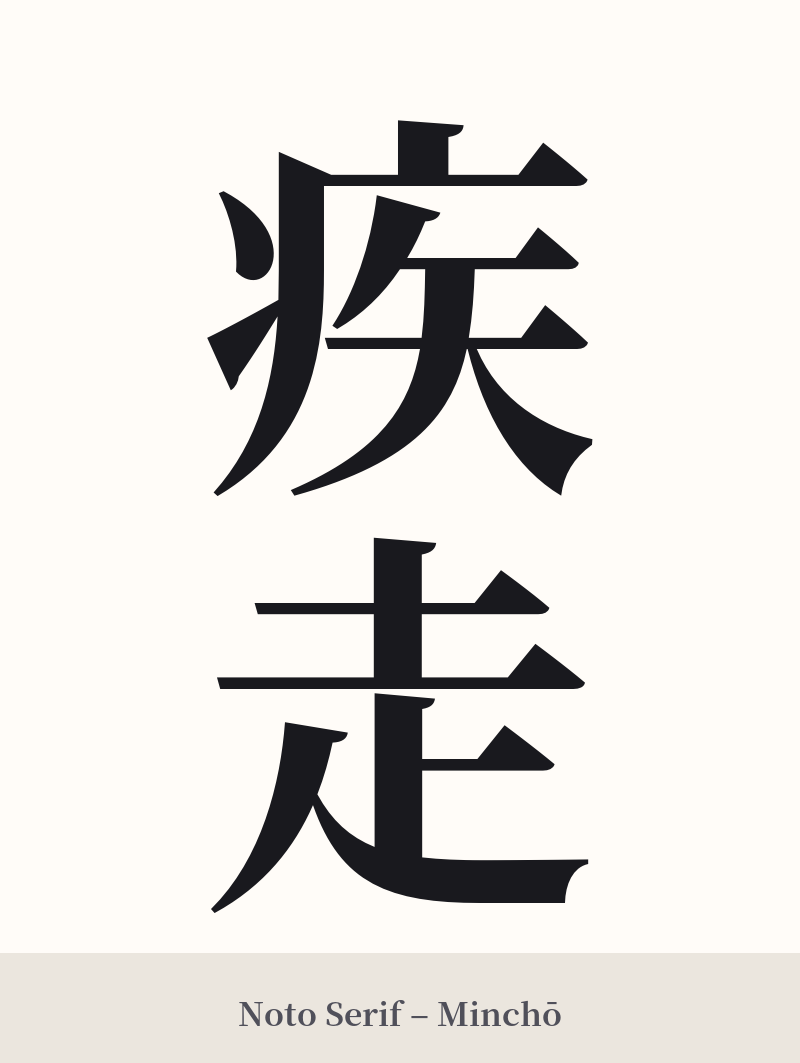
🖌️ Font Styles for 疾走
The same kanji can look dramatically different depending on the calligraphy style. Choose a font that matches the mood you want for your tattoo or design.
🎨 Tattoo Suitability
📐 Tattoo Design Guide
疾走 is a visually dynamic word that lends itself well to tattoo designs that emphasize movement and energy. It's a popular choice for those who want to represent personal drive, speed, or overcoming obstacles.
– Placement: Consider places on the body that suggest motion or length. The calf is a classic choice, as it's directly associated with running. A vertical placement down the forearm, spine, or ribs can also create a powerful, sleek look.
– Font Style: The font can dramatically alter the feeling. A bold, semi-cursive brushstroke style (gyōsho) can capture the raw energy and flow of movement. For a more aggressive and explosive feel, a sharp, angular kaisho (block) script works well. A highly stylized, almost abstract sōsho (cursive) script can make the kanji look like a blur of motion itself.
– Visual Tips: To enhance the theme of speed, consider asking your artist to incorporate subtle design elements. Fading or 'wind-swept' lines at the beginning or end of the strokes can create a sense of velocity. Placing the two characters at a slight diagonal can also break the static nature of a perfectly vertical or horizontal design, implying forward momentum.
Comments