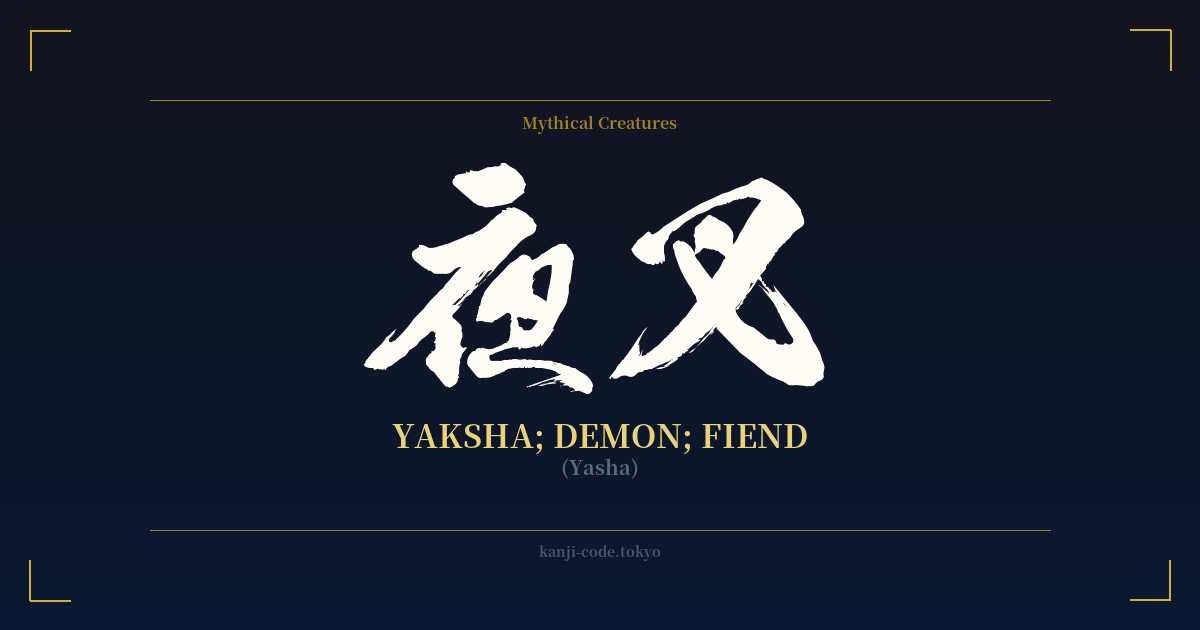
✍️ 夜叉 (Yasha) — Cultural Context
The term 夜叉 (Yasha) is a gateway into the complex and fascinating world of Buddhist and Hindu mythology, representing a class of beings far more nuanced than the simple translation of 'demon' or 'fiend' might suggest.
Originally, Yaksha (the Sanskrit origin) were nature spirits in ancient India, guardians of treasures hidden in the earth and the roots of trees. They possessed a dual nature: sometimes benevolent and bestowing wealth, other times malevolent and dangerous to travelers. Their power was raw, untamed, and deeply connected to the natural world.
As Buddhism spread, these powerful local deities were incorporated into its cosmology. Instead of being cast out, they were converted and given a new purpose. Yasha became protectors of the Dharma (the Buddhist teachings) and its followers. They are often included among the Eight Legions (八部衆, Hachibushū), a group of supernatural beings who pledged to defend Buddhism.
In Japanese depictions, Yasha are typically shown with ferocious expressions, sharp fangs, and wild, unkempt hair. They can wield weapons and possess immense strength, embodying a fearsome power. However, this ferocity is directed outward, against the enemies of enlightenment. They are the bouncers at the gates of the sacred, intimidating but ultimately on the side of good.
This is a key distinction from other supernatural figures in Japan. Unlike the chaotic and often malevolent 鬼 (Oni) of folklore, or the purely evil 悪魔 (Akuma) which aligns more with a Western devil, Yasha serve a righteous, albeit terrifying, purpose. They represent the idea that even fierce, aggressive energy can be harnessed for protection and spiritual progress.
This duality has made Yasha a popular subject in Japanese art and theatre for centuries, including famous Noh plays. In modern times, they are frequently featured in anime, manga, and video games, often as powerful anti-heroes or formidable allies who walk the line between light and shadow.
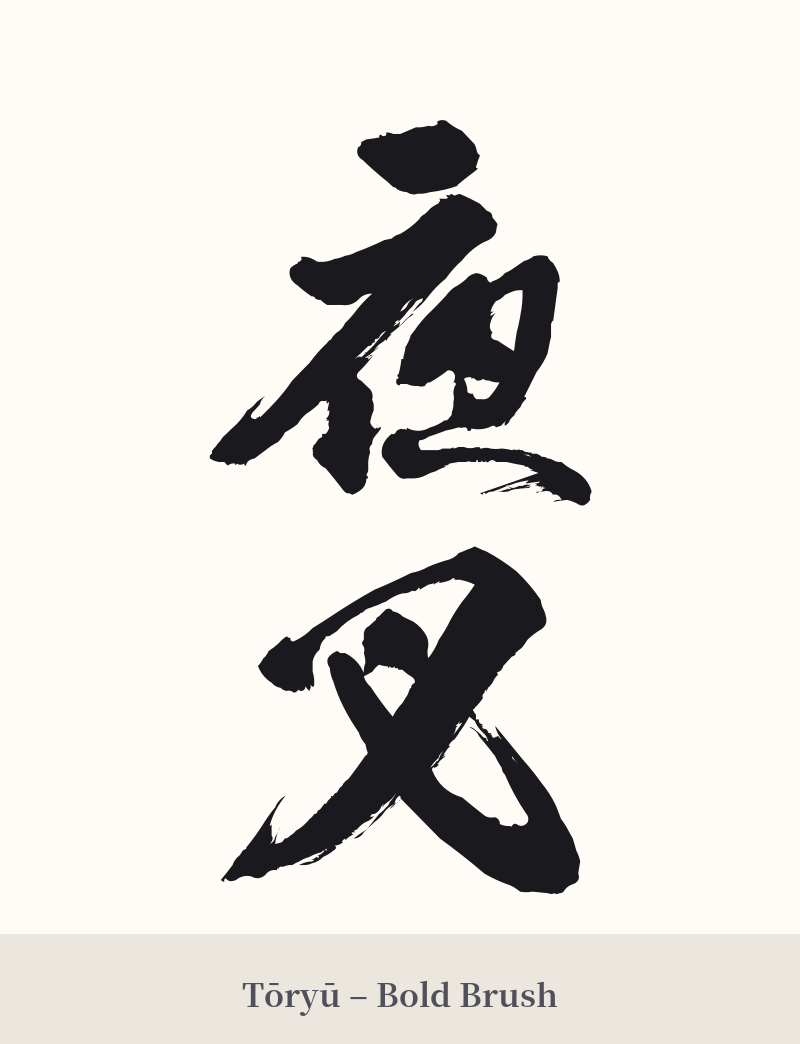
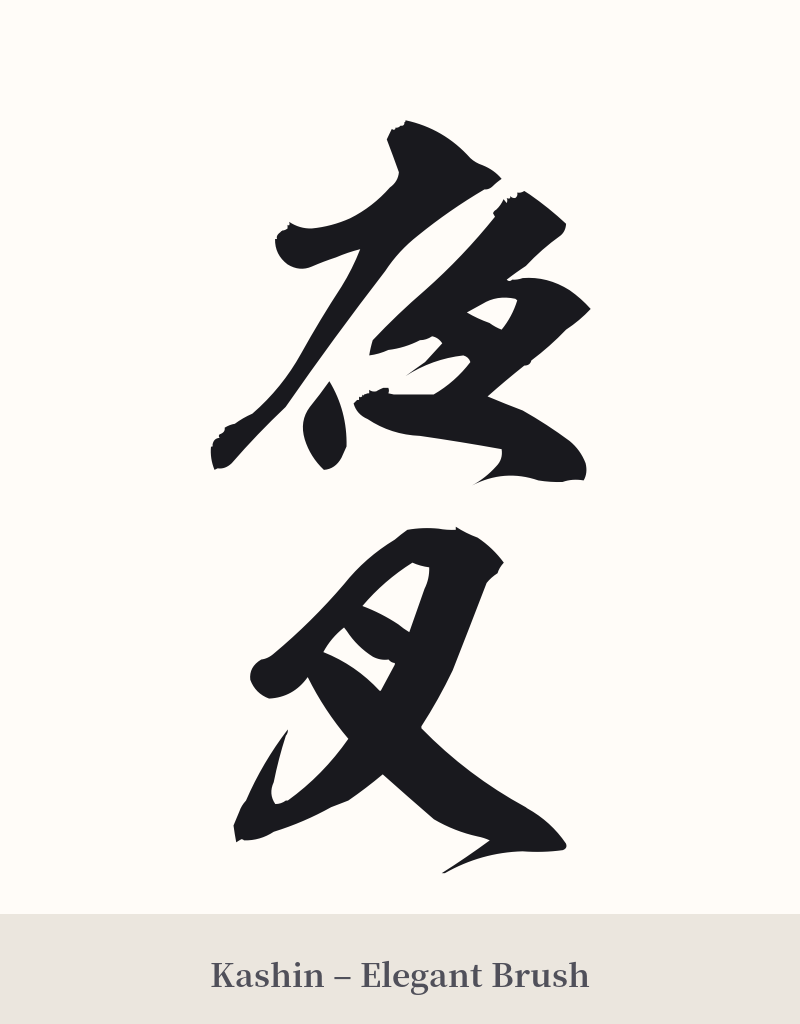
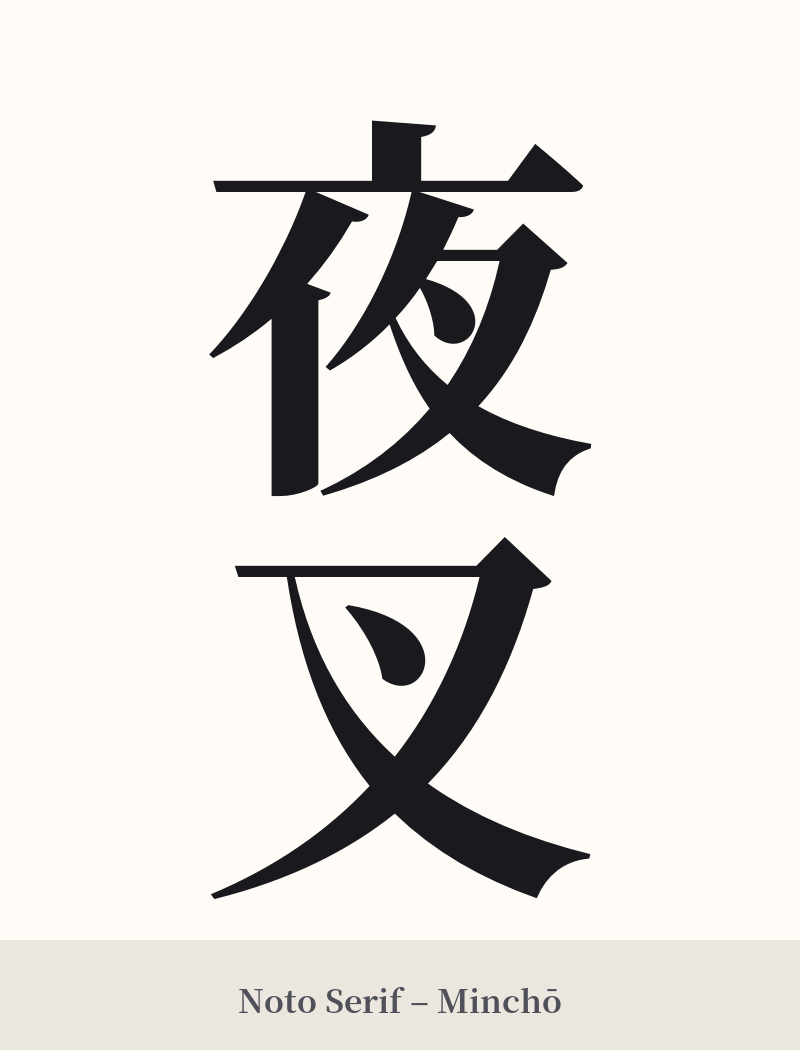
🖌️ Font Styles for 夜叉
The same kanji can look dramatically different depending on the calligraphy style. Choose a font that matches the mood you want for your tattoo or design.
🎨 Tattoo Suitability
📐 Tattoo Design Guide
A 夜叉 (Yasha) tattoo offers a lot of creative freedom to express its inherent power and duality.
– Placement: This is a strong choice for prominent placements that allow for vertical orientation, such as the forearm, shin, or along the spine. For a larger, more illustrative piece that includes a Yasha figure, the back or thigh provides an ideal canvas.
– Style: A bold, semi-cursive calligraphy style (Gyōsho) can capture the fierce and dynamic energy of the Yasha. For a more aggressive and untamed look, a wild, splashy Sōsho style is highly effective. Conversely, a crisp and angular Mincho font can emphasize the sharp, weapon-like quality of the characters.
– Visuals: Consider pairing the kanji with related imagery. A lotus flower can represent the Buddhist purity the Yasha protects. Surrounding the characters with swirling clouds or lightning can highlight their supernatural power. Placing it near or as part of a design featuring a Hannya mask or a fearsome guardian face can create a powerful thematic piece.
Comments