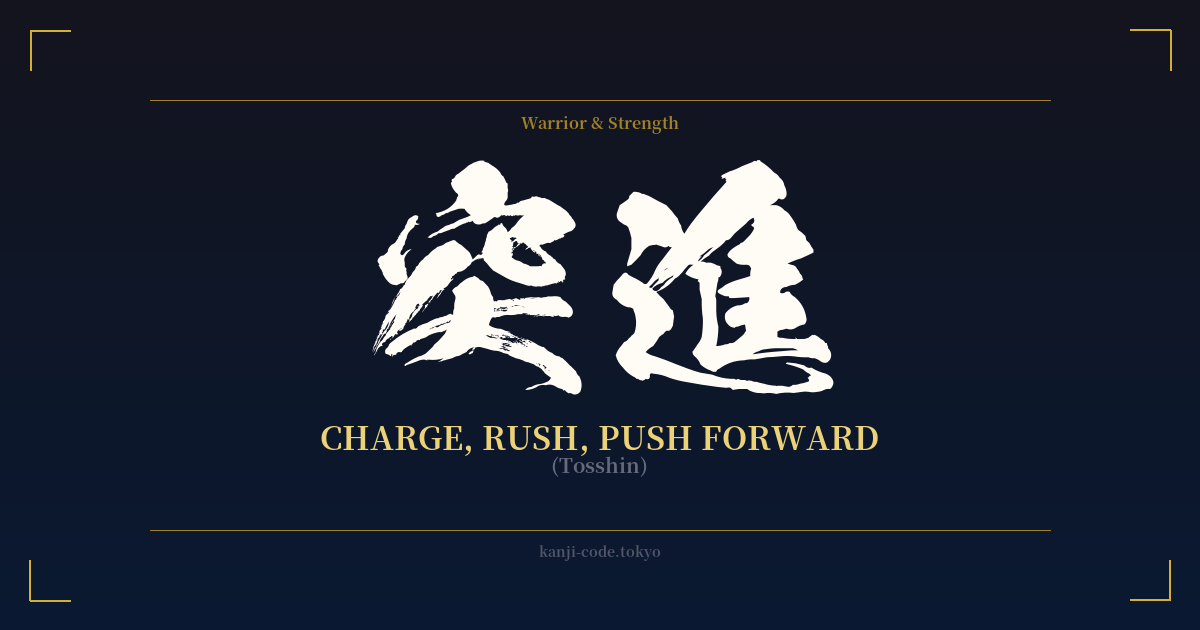
✍️ 突進 (Tosshin) — Cultural Context
突進 (Tosshin) is a word that immediately conjures images of raw, unfiltered forward momentum. It translates to "charge," "rush," or "dash," capturing the essence of an unstoppable force breaking through obstacles. It’s a visceral term, less about gentle progress and more about a powerful, decisive surge.
Historically, the concept of Tosshin is deeply intertwined with the samurai and the battlefield. It represents the critical moment of a charge, where warriors would rush headlong towards enemy lines. This wasn't just about chaos; it was a tactical maneuver requiring immense courage, a commitment to break the opponent's formation and spirit. The related term 突撃 (totsugeki), meaning a military assault or charge, carries this specific martial overtone. Imagining a line of samurai charging with spears leveled perfectly encapsulates the spirit of Tosshin.
This warrior spirit extends into the world of Japanese martial arts. In kendo, the thrusting technique known as "tsuki" uses the same kanji, 突, highlighting a sudden, piercing strike. In sumo, wrestlers use a series of rapid hand thrusts called "tsuppari" to drive their opponent back, a perfect physical manifestation of Tosshin. It’s about overwhelming your opponent with relentless forward pressure, leaving no room for them to think or recover.
Beyond the martial context, Tosshin is frequently used in modern Japan. In sports, you'll hear it used to describe a rugby player breaking through the defensive line or a soccer player making a powerful run towards the goal. It describes an explosive burst of speed and power.
Figuratively, the word is applied to business and personal life. A team might "tosshin" to meet a tight deadline, pushing forward with intense focus. An individual can embody the spirit of Tosshin when chasing a personal goal, charging through self-doubt and external challenges. It represents a mindset of pure determination, of refusing to be stopped once a path has been chosen. It’s the opposite of hesitation; it is the embodiment of decisive, forward-moving action.
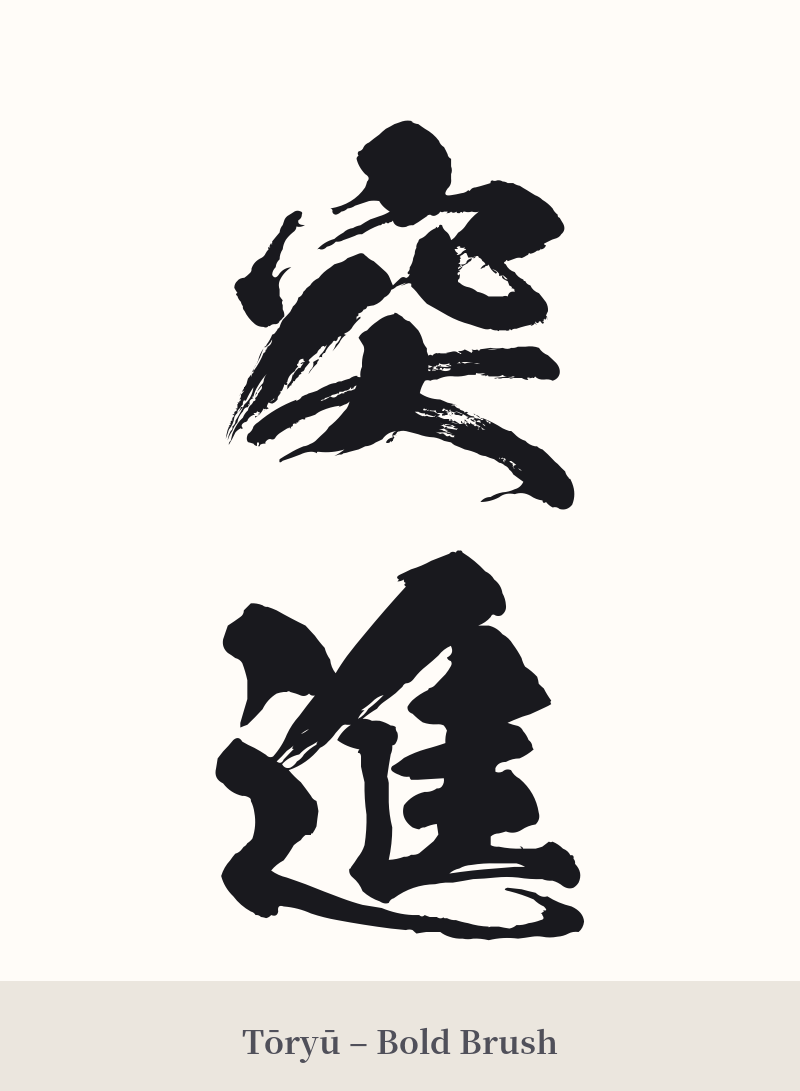
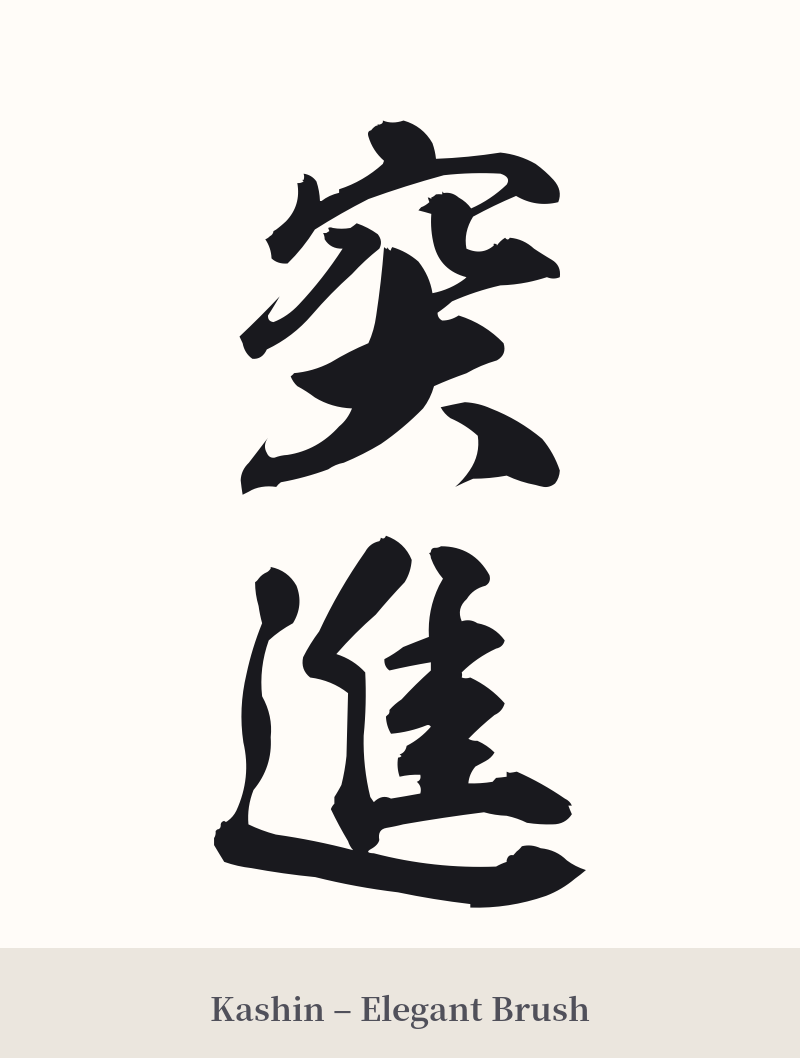
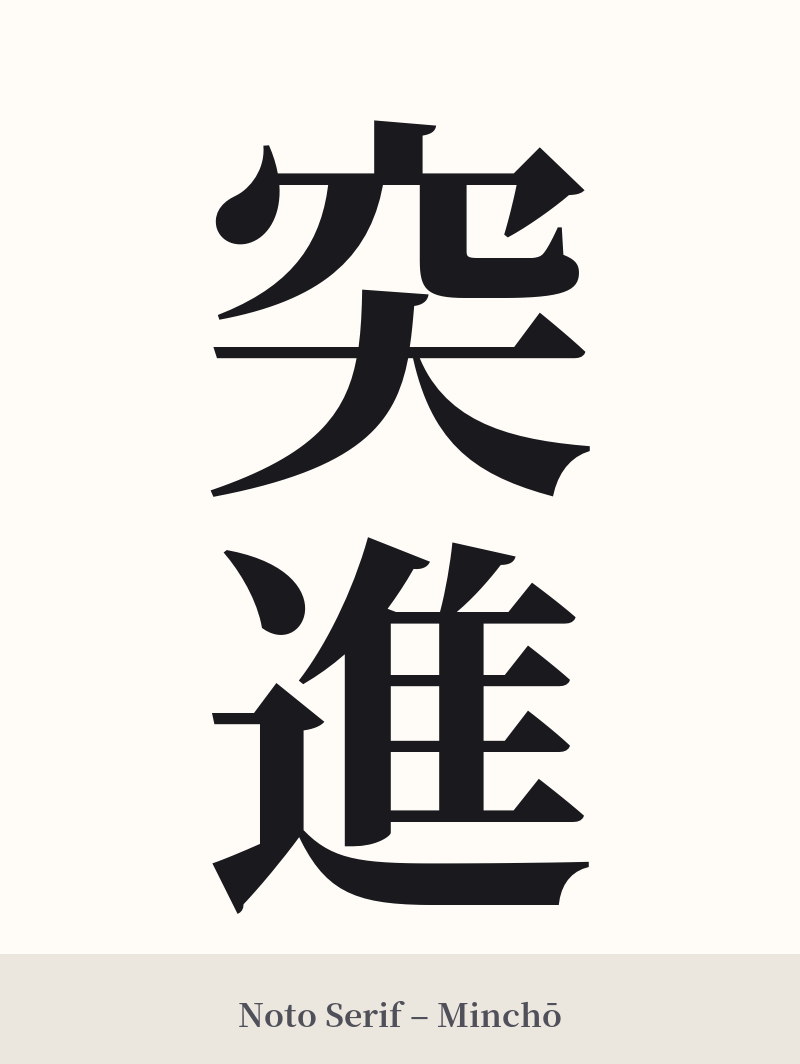
🖌️ Font Styles for 突進
The same kanji can look dramatically different depending on the calligraphy style. Choose a font that matches the mood you want for your tattoo or design.
🎨 Tattoo Suitability
📐 Tattoo Design Guide
For a 突進 (Tosshin) tattoo, the design should reflect its energetic and forceful nature.
– Placement: Vertical alignment works exceptionally well on the forearm, calf, or along the spine, visually enhancing the sense of forward motion. For a more grounded and powerful statement, a horizontal placement across the chest or upper back is effective.
– Font Style: An aggressive, semi-cursive calligraphy style (gyōsho) can capture the raw energy and speed of the charge. For a bolder, more impactful look, a thick, heavy brushstroke in the standard block script (kaisho) emphasizes strength and determination.
– Visual Tips: Consider incorporating abstract elements that suggest motion, like speed lines or a splash of ink behind the characters. For a more illustrative design, pairing the kanji with an image of a charging animal, like a boar or a bull, can powerfully amplify its meaning, echoing the related idiom 猪突猛進 (chototsu mōshin), which means to rush forward recklessly.
Comments