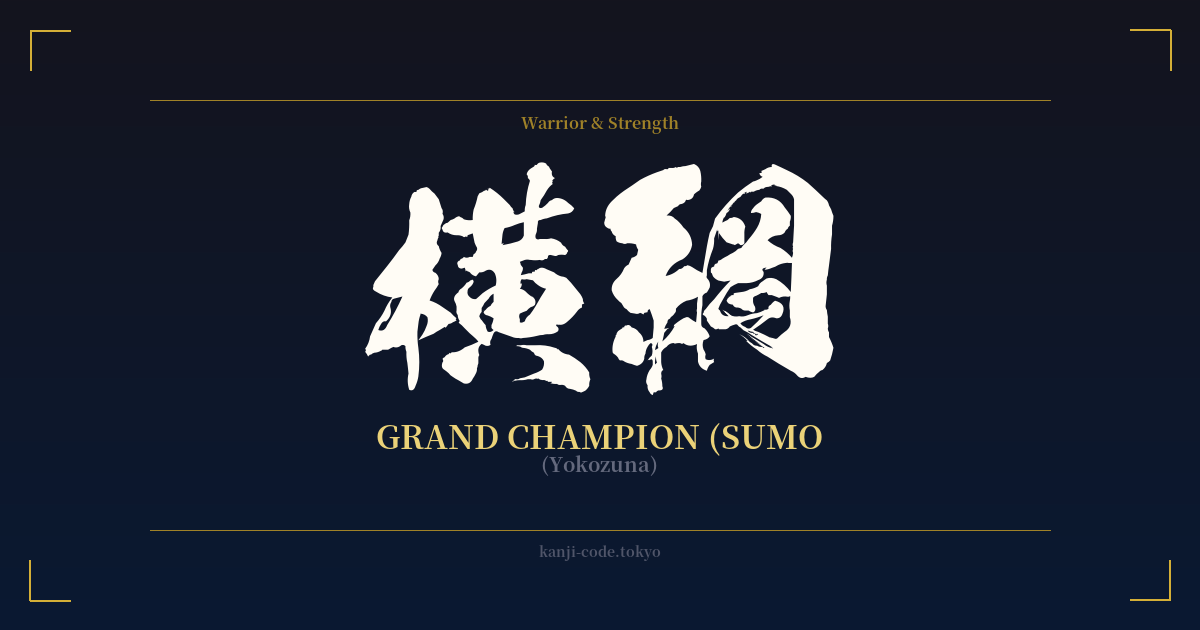
✍️ 横綱 (Yokozuna) — Cultural Context
The term 横綱 (Yokozuna) translates literally to 'horizontal rope,' a name that belies the immense power and prestige it represents. This is the highest, most revered rank a sumo wrestler can achieve, a title that elevates a man from a mere athlete to a living legend and a guardian of tradition.
The origin of the word comes directly from the most visible symbol of the rank: the thick, white braided rope (the 'tsuna') that a Yokozuna wears around his waist during the dohyō-iri, or ring-entering ceremony. This rope is not merely decorative; it is a sacred object with deep roots in Japan's native Shinto religion. It is reminiscent of the shimenawa ropes used to demarcate sacred spaces and objects, signifying that the Yokozuna himself is a vessel of purity and divine power, a yorishiro in which a kami (god) can reside.
Becoming a Yokozuna is an arduous journey. A wrestler must not only demonstrate overwhelming strength and consistent championship-level performance but also possess hinkaku—a profound sense of dignity, grace, and impeccable character. The decision to promote a wrestler is made by the Yokozuna Deliberation Council, a body that scrutinizes every aspect of a candidate's life, both on and off the dohyō (sumo ring).
Unlike any other rank in sumo, a Yokozuna cannot be demoted. This lifetime appointment comes with a heavy burden: if a Yokozuna's performance begins to wane and he can no longer compete at the highest level, he is expected to gracefully retire. This system ensures the rank remains the absolute pinnacle of the sport, untarnished by decline.
To be a Yokozuna is to be more than a champion. It is to be a symbol of Japanese culture, a role model, and a figure of immense national pride. The title embodies the ultimate fusion of physical power, mental fortitude, and spiritual responsibility, making it one of the most profound and respected terms in the Japanese language.
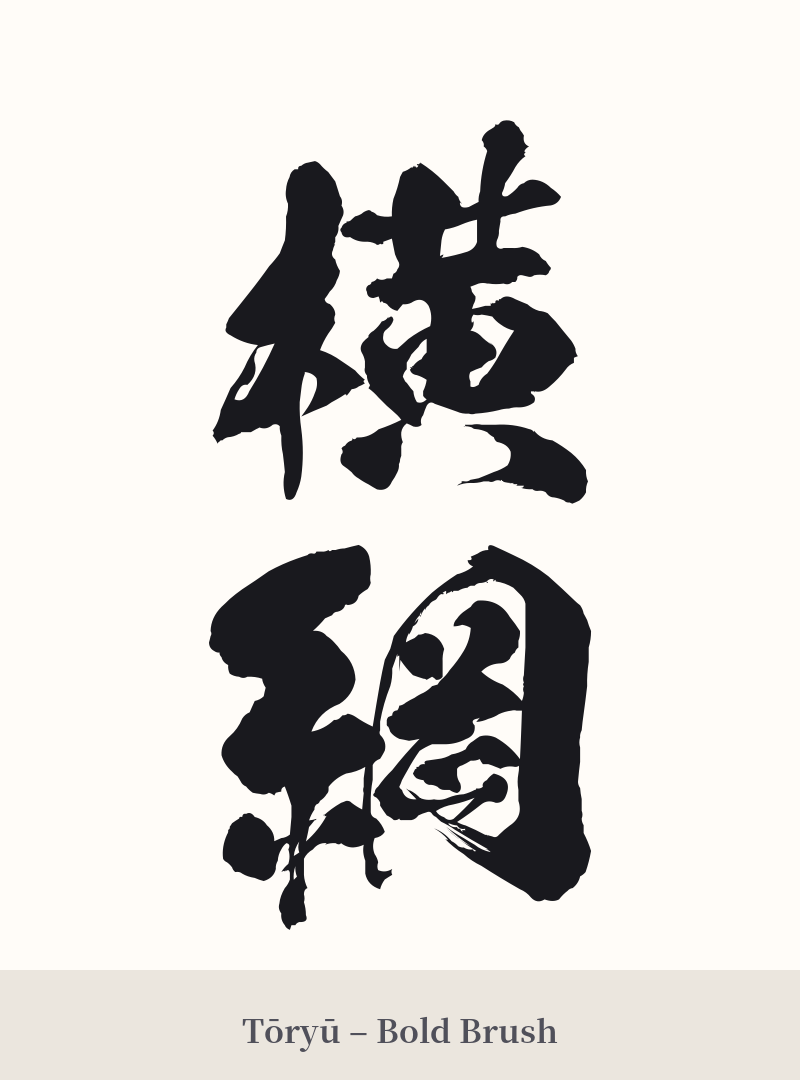
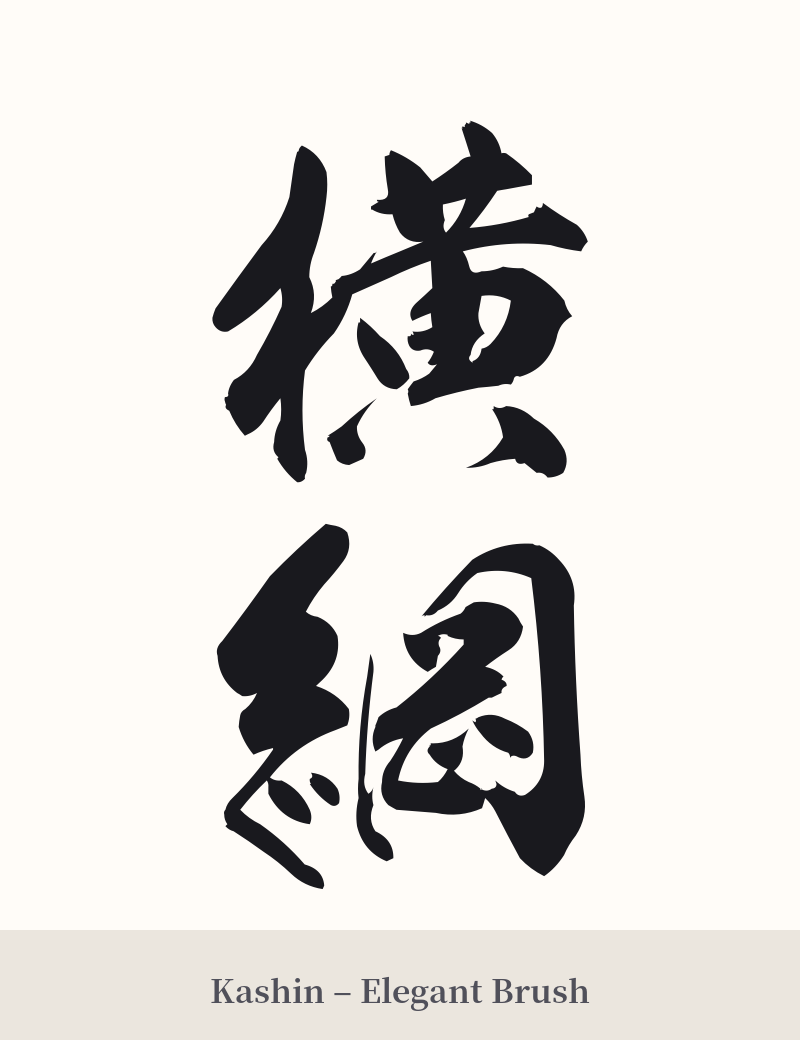
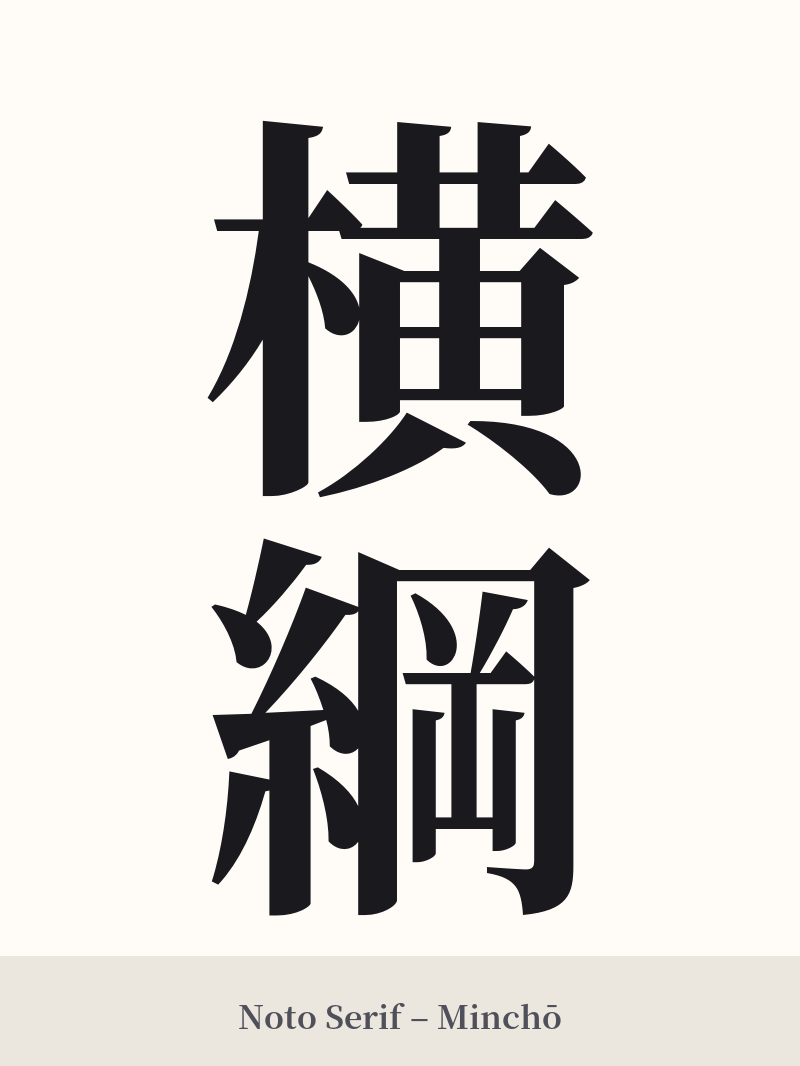
🖌️ Font Styles for 横綱
The same kanji can look dramatically different depending on the calligraphy style. Choose a font that matches the mood you want for your tattoo or design.
🎨 Tattoo Suitability
📐 Tattoo Design Guide
A tattoo of 横綱 (Yokozuna) should convey power and dignity. Given the complexity of the characters, it requires careful planning and a skilled artist.
– Placement: This design needs space to be legible and impactful. Consider larger areas like the back (either centered between the shoulder blades or running down the spine), the outer calf, or the upper arm.
– Style: A bold, semi-cursive calligraphy style (gyōsho) can capture the dynamic power and movement of sumo. For a more formal and stately look, a crisp, angular block script (kaisho) would emphasize the tradition and dignity of the rank.
– Visual Tips: A vertical orientation is highly recommended as it aligns with traditional Japanese writing and creates a strong, downward visual flow. Avoid making the tattoo too small, as the high stroke count of both kanji can blur together and become illegible over time. You could also consider incorporating an abstract image of the 'tsuna' rope itself woven into or around the kanji.
Comments