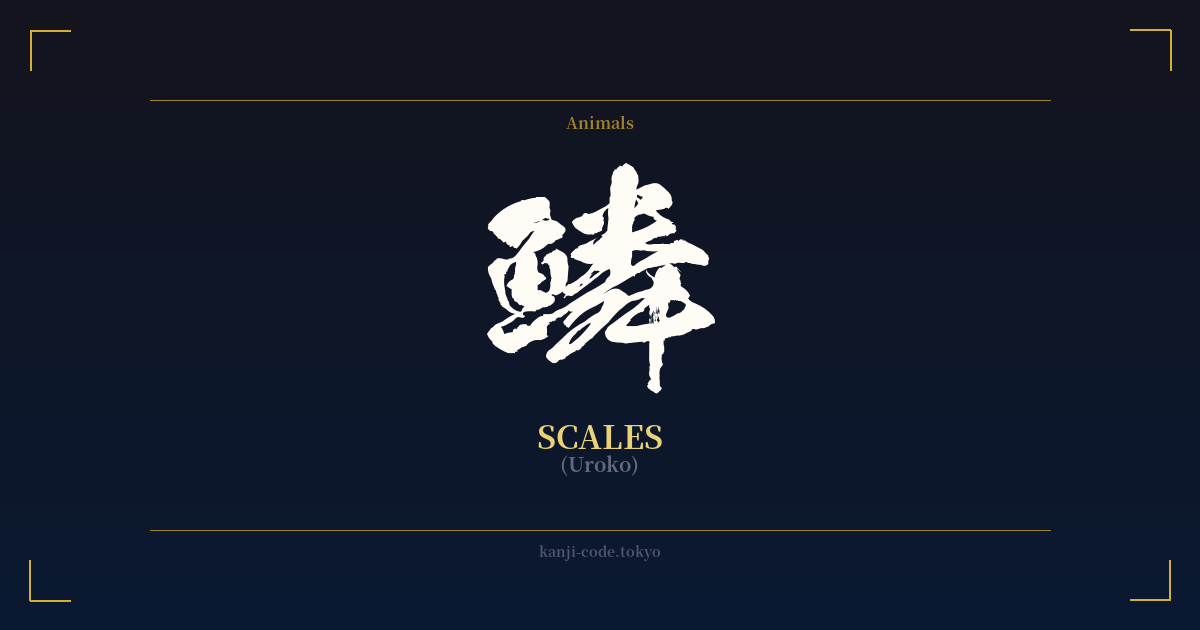
✍️ 鱗 (Uroko) — Cultural Context
The kanji 鱗 (Uroko) literally translates to 'scales,' the kind you would find on a fish, snake, or mythical dragon. Its composition gives a clue to its origin, combining the radical for 'fish' (魚) with a phonetic component (粦) that suggests a shimmering, repeating pattern. But in Japanese culture, the idea of 'scales' goes far beyond simple biology, embodying deep-seated concepts of protection, transformation, and spiritual power.
Perhaps the most potent association is with the dragon (龍, Ryū). In East Asian lore, dragons are benevolent, powerful water deities, and their scales are a symbol of their divine authority and impenetrability. A single dragon scale was often considered a magical talisman, capable of granting protection or wishes. To have the 'scales' of a dragon is to possess a fragment of this immense, mythical power.
This theme of strength extends to the koi fish (鯉). The famous legend tells of a koi that swims against the current up a waterfall, and as a reward for its perseverance, the gods transform it into a dragon. The scales of the koi, therefore, represent resilience, determination, and the potential for great transformation. In Japanese tattoos (Irezumi), koi are almost always depicted with prominent, detailed scales to emphasize this narrative of struggle and success.
Beyond mythical creatures, the concept of 'uroko' has a strong connection to the samurai warrior class. Traditional Japanese armor, known as 'kozane,' was constructed from thousands of small, lacquered iron or leather plates laced together. This overlapping construction strongly resembled fish scales and was sometimes even called 'uroko-gata' (scale-shaped). This directly links the kanji to the practical and symbolic act of protection and martial readiness.
Furthermore, 'uroko' is the name of a traditional Japanese geometric pattern (鱗文, uroko-mon) composed of interlocking triangles or diamonds. This pattern has been used for centuries on clothing, armor, and family crests. It was widely believed to ward off evil spirits and misfortune. The symbolism stems from the way snakes and dragons shed their skin and scales, representing purification, breaking curses, and rebirth. This protective, mystical quality makes the 'uroko' pattern a recurring motif in theater, art, and design.
🖌️ Font Styles for 鱗
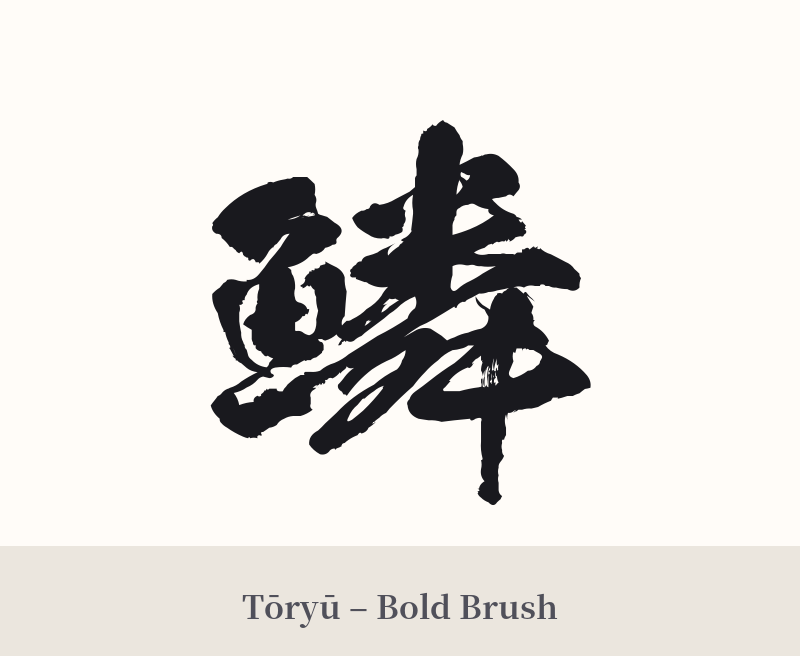
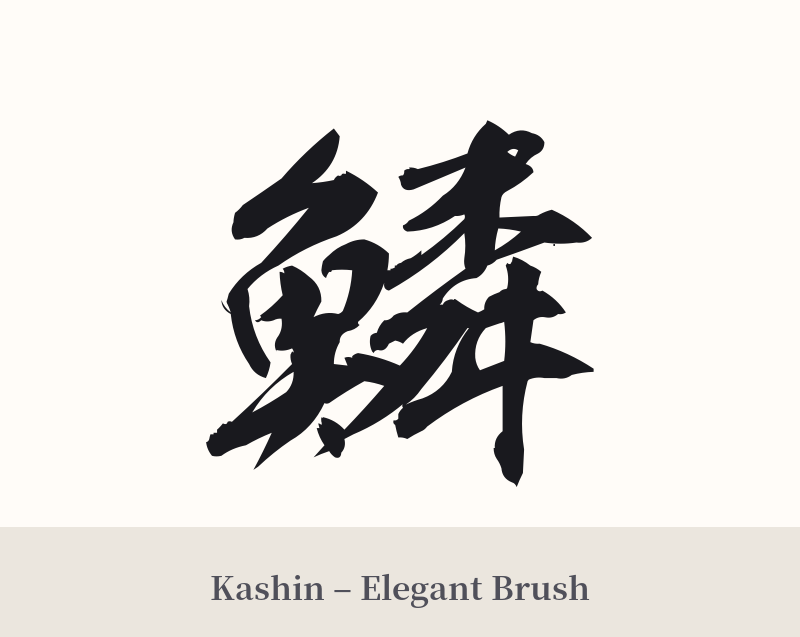
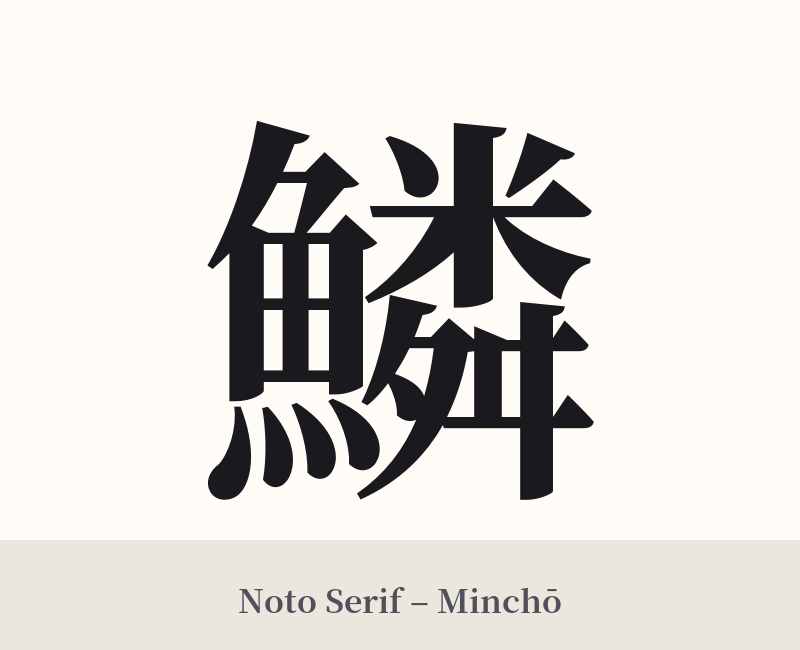
The same kanji can look dramatically different depending on the calligraphy style. Choose a font that matches the mood you want for your tattoo or design.
🎨 Tattoo Suitability
📐 Tattoo Design Guide
The kanji 鱗 (Uroko) is a visually complex and powerful choice for a tattoo, but its intricacy demands careful consideration of design and placement.
– Placement: Because of its high stroke count, this character is best suited for larger, flatter areas of the body where the details can be rendered clearly. Consider the back, thigh, calf, or outer forearm. Avoid small or highly curved areas like the wrist, ankle, or fingers, where the lines could blur and become illegible over time.
– Font Style: A bold, semi-cursive calligraphy style (Gyōsho) can capture the fluid, organic feeling of scales on a living creature. For a more rigid, armor-like feel, a classic block script (Kaisho) or Mincho font emphasizes its protective qualities. A highly abstract cursive script (Sōsho) could be used to evoke the 'uroko-mon' pattern in a dynamic way.
– Visual Tips: While it can stand alone, 鱗 is exceptionally powerful when integrated into a larger piece. It can be tattooed alongside a dragon or koi to explicitly connect to that symbolism. Alternatively, it can be used as a background texture, forming the 'uroko-mon' pattern behind a main subject to add a layer of protective meaning to the entire design.
Comments