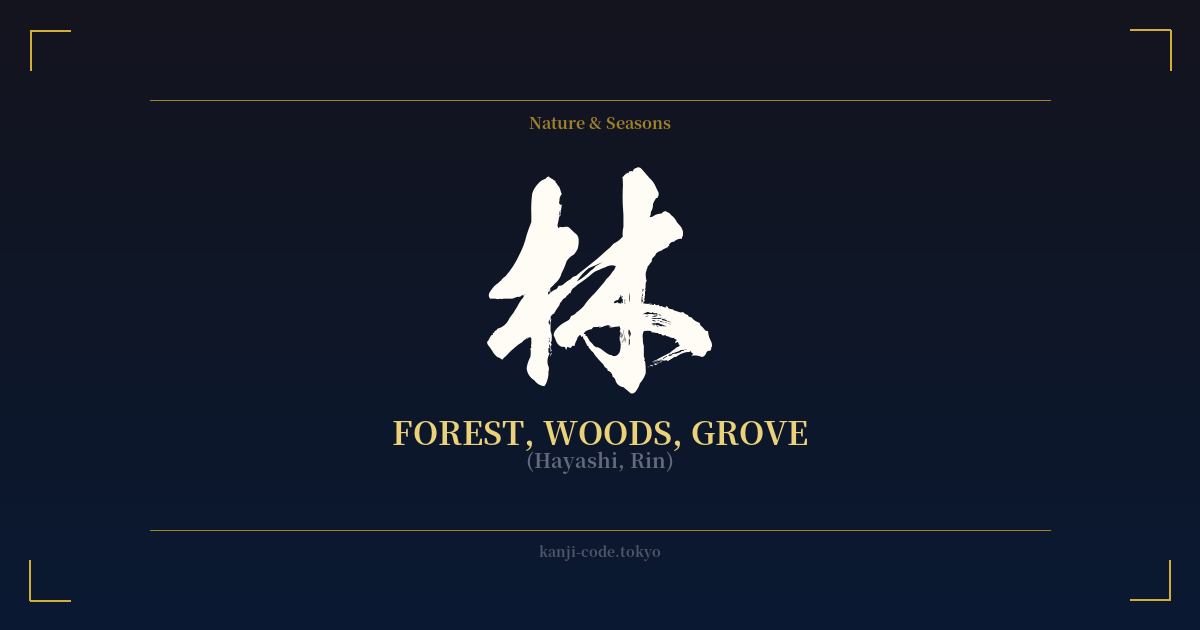
✍️ 林 (Hayashi, Rin) — Cultural Context
The kanji 林 (hayashi) is a beautiful and intuitive character, a perfect example of how Japanese writing can convey meaning through its very form. It is a pictograph composed of two trees, 木 (ki), standing side by side. This simple doubling immediately evokes the image of a small collection of trees—not a vast, dense wilderness, but a more manageable and accessible grove or woods.
This visual distinction is crucial in the Japanese language and psyche. While the kanji 森 (mori) depicts three trees and represents a larger, deeper, and often untouched forest or jungle, 林 (hayashi) suggests a woodland that is often closer to human civilization. It might be a cultivated grove, a small forest on the edge of a village, or a stand of trees within a park. It implies a place of calm and quietude, but one that doesn't feel overwhelmingly remote or intimidating.
In Shinto, Japan's indigenous religion, nature is revered as sacred, and specific trees and forests are often considered dwellings for kami (gods or spirits). While larger sacred forests are called 'chinju no mori' (using the kanji for mori), the spirit of reverence extends to all natural spaces. The feeling evoked by 林 aligns with this spiritual appreciation for nature's tranquility. It represents a place of peace, refuge, and gentle life, a space to find clarity and connect with the natural world.
This connection is embodied in the modern practice of 'shinrin-yoku' (森林浴), or "forest bathing." Although the term uses the kanji for a larger forest, the principle of immersing oneself in a wooded environment for therapeutic benefits perfectly captures the essence of 林. It is about finding restoration and peace among the trees, breathing in the quiet air, and detaching from the stress of daily life.
The character is also deeply woven into the fabric of Japanese identity through names. 'Hayashi' is one of the most common surnames in Japan, connecting millions of people to this symbol of nature. As a given name, 'Rin' is a popular and gentle-sounding choice for girls, further embedding the character into personal and familial contexts. This widespread use makes 林 a familiar and cherished part of the cultural landscape, symbolizing not just nature itself, but the deep, enduring relationship between the Japanese people and their environment.
🖌️ Font Styles for 林
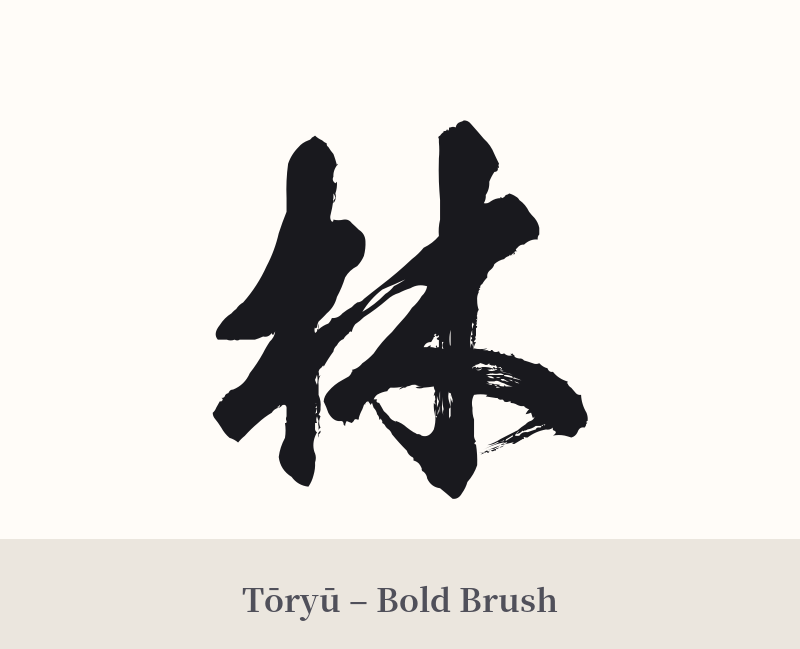
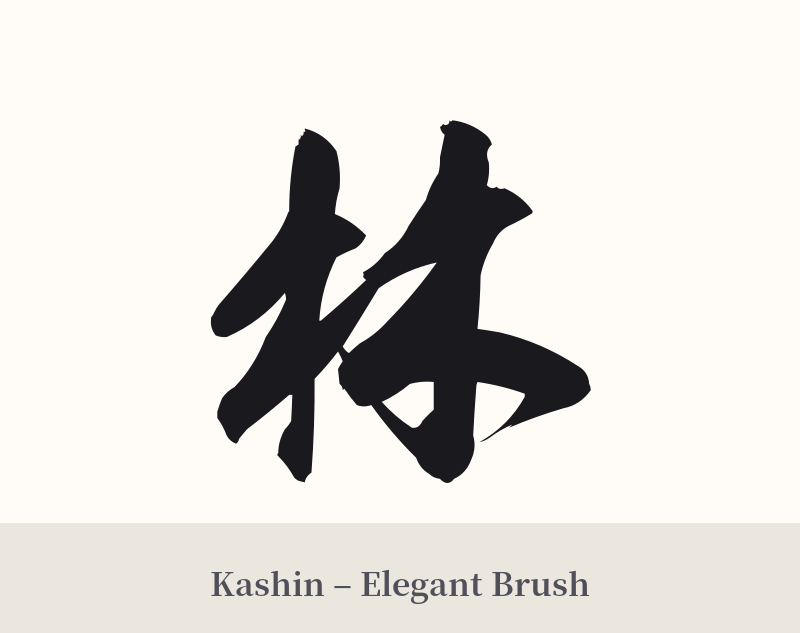
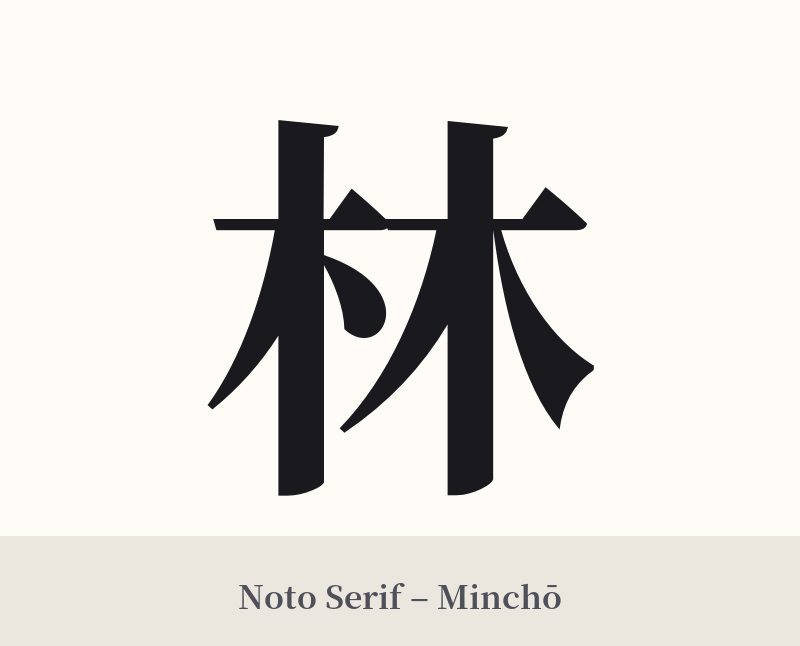
The same kanji can look dramatically different depending on the calligraphy style. Choose a font that matches the mood you want for your tattoo or design.
🎨 Tattoo Suitability
📐 Tattoo Design Guide
The kanji 林 offers wonderful versatility for a tattoo design due to its clean lines and symmetrical structure.
– Placement: Its balanced, squarish shape works well on the forearm, calf, back of the neck, or centered between the shoulder blades. It can also be a subtle and meaningful piece on the wrist or ankle.
– Font Styles: For a strong, classic look, a crisp 'Kaisho' (block script) emphasizes its architectural form. For a more organic and flowing feel, a semi-cursive 'Gyosho' or fully cursive 'Sosho' can make the character look as if it's swaying gently, like trees in the wind.
– Visual Tips: Because of its simplicity, the quality of the linework is paramount. Consider incorporating it with other natural elements. A few falling leaves, subtle roots extending from the base, or framing it within a delicate 'ensō' (Zen circle) can add depth and context. A watercolor background in green or earthy tones can also beautifully complement the black ink.
Comments