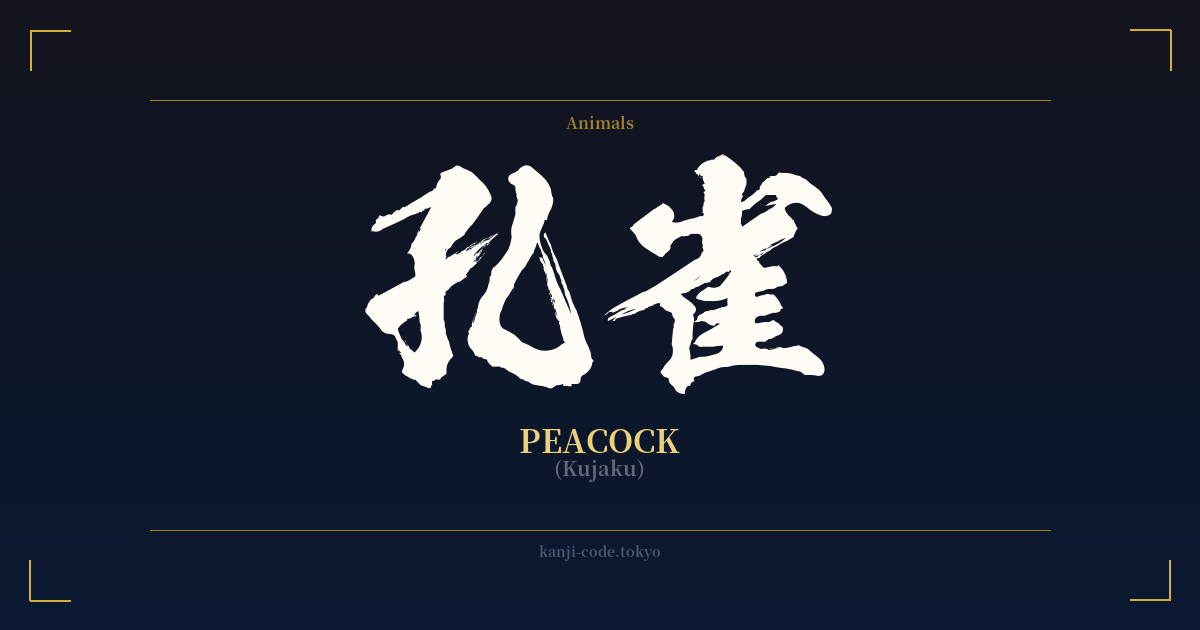
✍️ 孔雀 (Kujaku) — Cultural Context
孔雀 (Kujaku) is the Japanese word for the peacock, a bird revered not just for its breathtaking beauty but for its profound spiritual significance. While its iridescent plumage is universally admired, in Japan, the peacock's symbolism is deeply intertwined with Buddhist teachings, elevating it from a mere ornamental creature to a powerful emblem of wisdom and compassion.
The most significant cultural association is with Kujaku Myōō (孔雀明王), the Peacock Wisdom King. This deity is a revered figure in Esoteric Buddhism, often depicted riding a peacock. The origin of this belief lies in the peacock's natural ability to consume poisonous snakes and toxic plants without being harmed. This act was seen as a powerful metaphor for the spiritual path: the ability to absorb life's 'poisons'—greed, hatred, and ignorance—and transmute them into wisdom, beauty, and enlightenment. The peacock's feathers, with their 'all-seeing' eyes, symbolize awareness and the ability to see beyond illusion.
Because of this sacred connection, peacocks were historically kept in the gardens of temples and the estates of the nobility. They were living symbols of protection, purity, and divine power. Their feathers were used in rituals, and their image was woven into the finest textiles, including kimono and obi, signifying high status and refined taste. The bird represents incorruptibility and integrity, as it transforms poison into something beautiful.
Beyond its religious context, the peacock in Japanese culture also embodies love and attraction. The male's elaborate courtship dance, where he displays his magnificent tail feathers, is a potent symbol of passionate romance. As a design motif, it appears frequently in art, from traditional screen paintings (byōbu) to modern graphic design, consistently representing splendor, elegance, and a touch of the exotic.
Today, the Kujaku remains a beloved symbol. It reminds us that true beauty isn't just superficial; it can be a manifestation of inner strength and the power to overcome adversity. It speaks of turning challenges into opportunities and finding grace even in a world full of potential dangers.
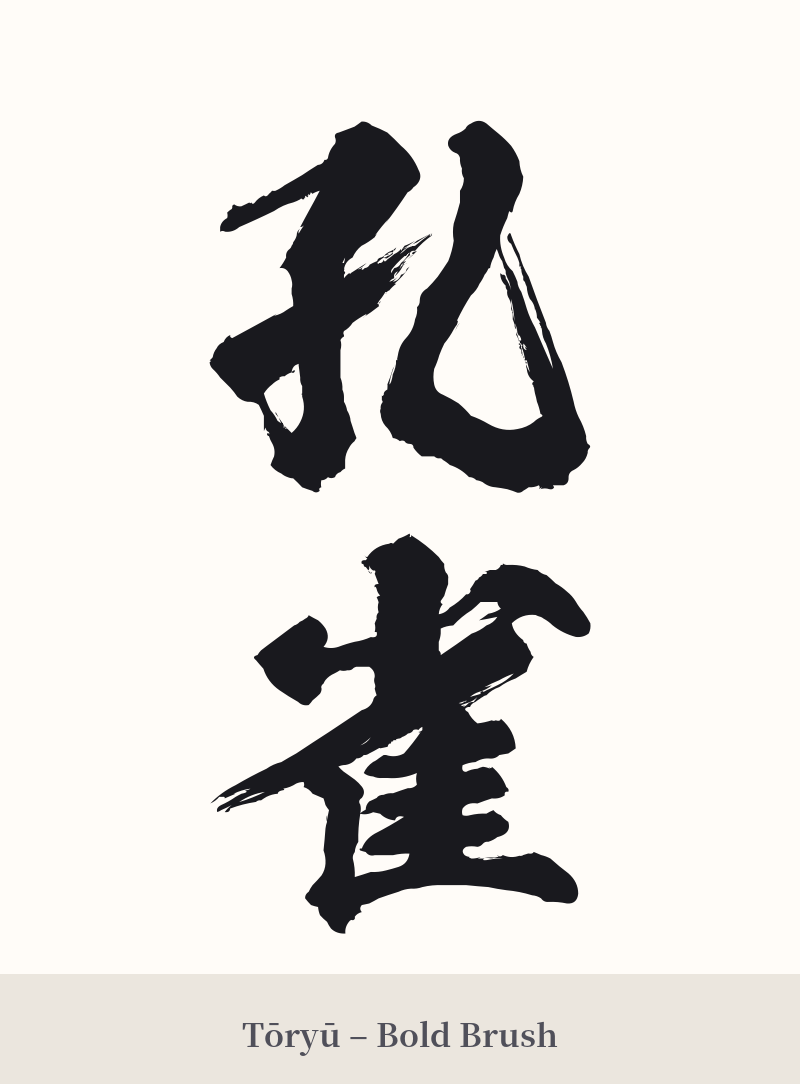
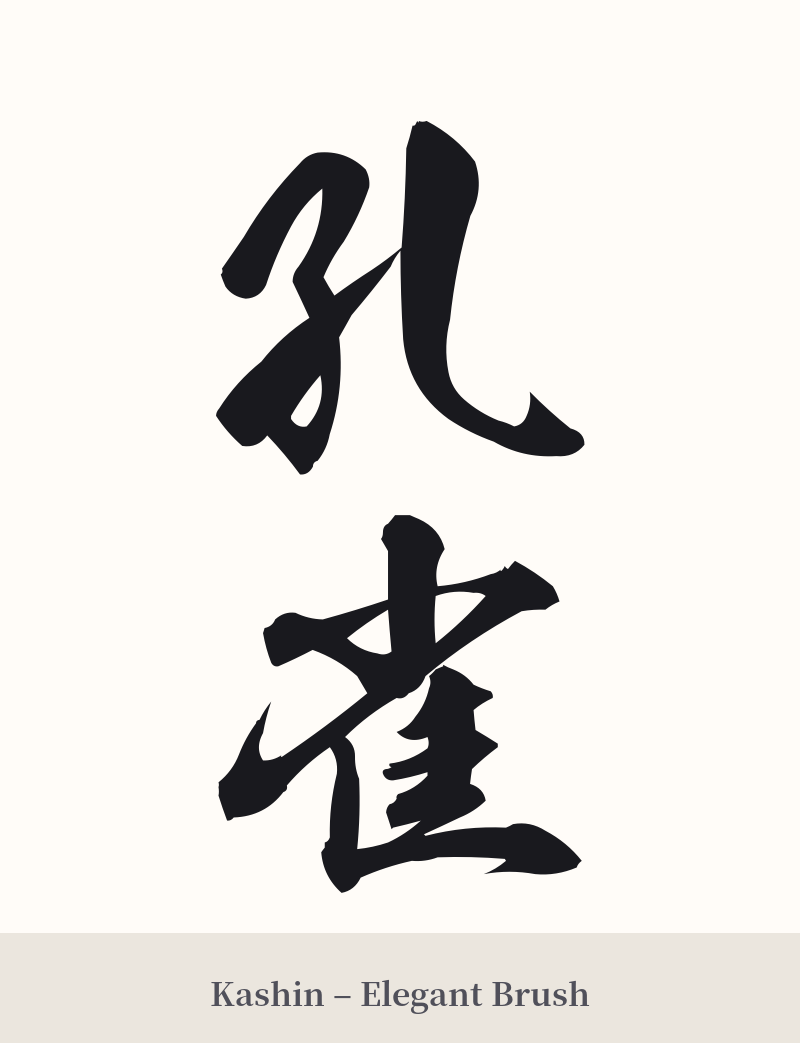
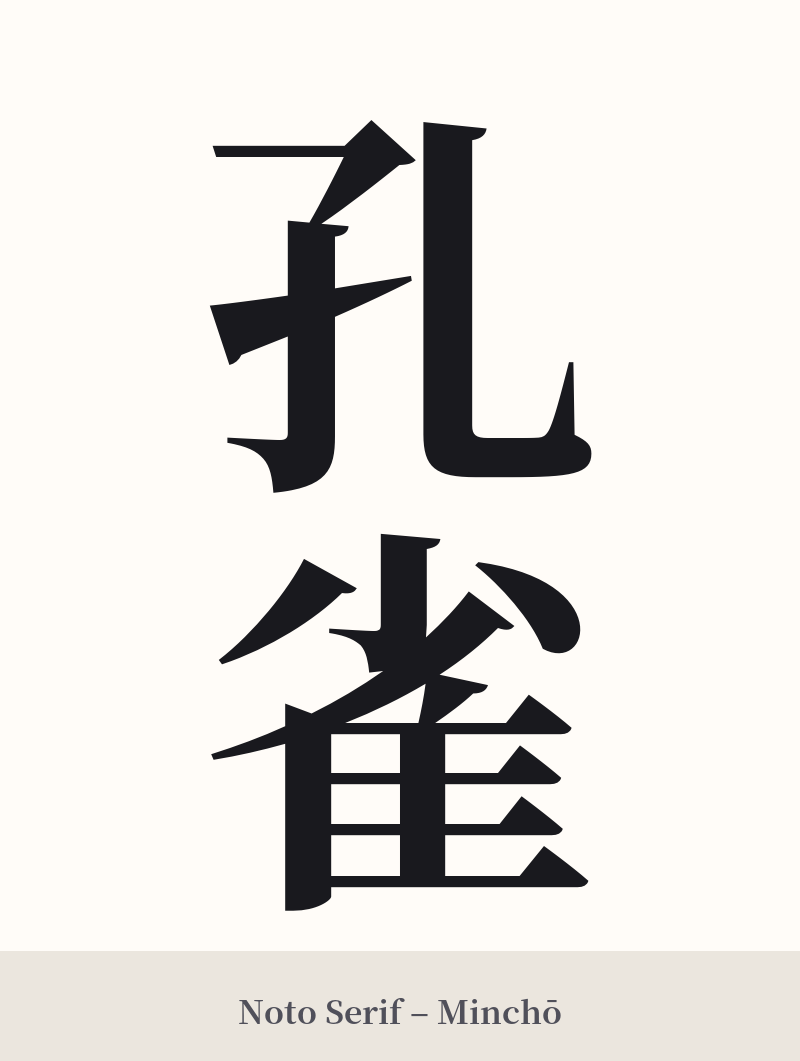
🖌️ Font Styles for 孔雀
The same kanji can look dramatically different depending on the calligraphy style. Choose a font that matches the mood you want for your tattoo or design.
🎨 Tattoo Suitability
📐 Tattoo Design Guide
The kanji for 孔雀 offers a graceful and visually appealing design for a tattoo.
– Placement: Its vertical structure is perfect for the forearm, calf, or running along the spine or bicep. For a horizontal layout, it works well across the chest, upper back, or below the collarbone.
– Style: A semi-cursive (Gyosho) or cursive (Sosho) script can beautifully mimic the flowing lines of a peacock's tail feathers, adding a sense of movement and elegance. For a more classic and bold statement, a traditional block script (Kaisho) provides clarity and strength.
– Visuals: Consider pairing the kanji with a single, stylized peacock feather. Another powerful design choice is to have the kanji integrated into a larger illustration of the bird itself. Using hints of deep blue, green, and gold can evoke the peacock's iconic coloring, even if the kanji itself is black.
Comments