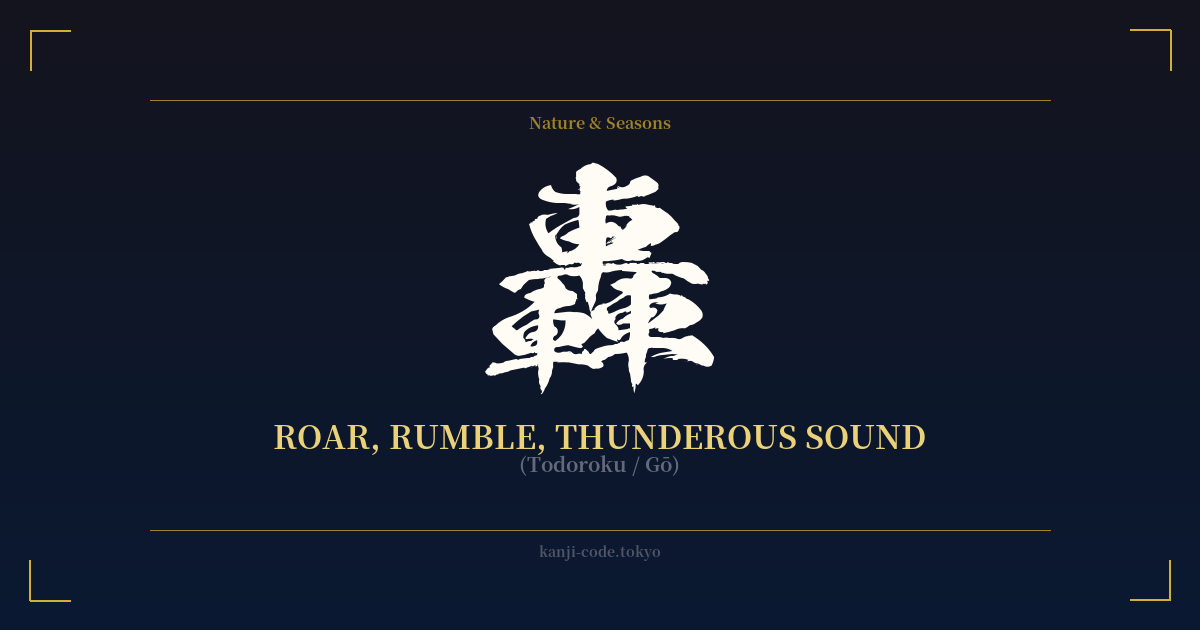
✍️ 轟 (Todoroku / Gō) — Cultural Context
The kanji 轟 (todoroku) is a masterclass in visual storytelling, a character that you don't just read, but feel. It is an ideogram that perfectly captures the essence of a deep, resonant, and overwhelming sound. Its very construction tells a story: three 車 (kuruma) characters, meaning 'car' or 'wheel,' stacked together. This isn't a random assortment; it's a depiction of a thundering noise that shakes the very ground.
Historically, the character harks back to ancient China, where the sound of countless war chariots rumbling across a battlefield was one of the most terrifying and awe-inspiring sounds imaginable. It was the sound of approaching power, of inevitable conflict. By tripling the character for a wheeled vehicle, ancient scribes created a symbol for a noise so immense it could be felt in your bones. This is the origin of 轟—the sound of many, many wheels.
Over time, the meaning of 轟 evolved from the specific rumble of chariots to encompass any powerful, thunderous sound. In Japanese, the verb todoroku can describe the roar of a waterfall (滝が轟く – taki ga todoroku), the boom of thunder, the growl of a powerful engine, or the deafening cheer of a stadium crowd. It’s a sound that isn't just heard, but experienced as a physical vibration. This connection to the raw power of nature gives it a primal, almost spiritual quality, aligning with Shinto beliefs where divine spirits (kami) inhabit powerful natural phenomena like waterfalls and mountains.
In modern culture, 轟 is frequently used in manga, anime, and literature to add dramatic, onomatopoeic effect. When a giant monster unleashes its roar, or a powerful energy blast is fired, the sound effect might be written as 轟 (gō). It instantly conveys a sense of immense scale and force that a simple description cannot match.
Beyond literal sound, the character can also be used metaphorically. To have one's name 'roar' or 'resound' throughout the world (名を世界に轟かせる – na o sekai ni todorokaseru) means to become famously and powerfully known. It implies a reputation so great that it echoes across lands, much like a thunderclap. This usage highlights the core concept of 轟: not just noise, but a powerful, far-reaching, and undeniable presence.
🖌️ Font Styles for 轟
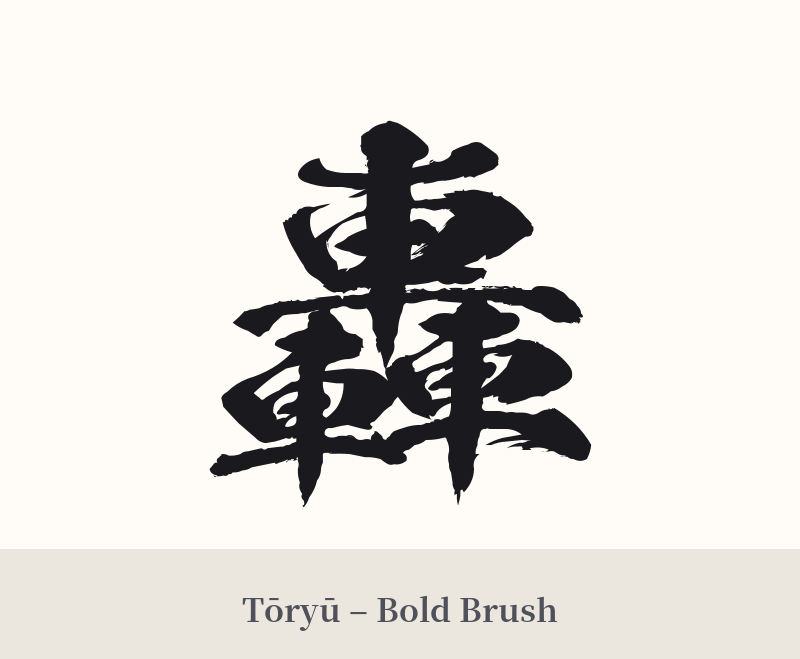
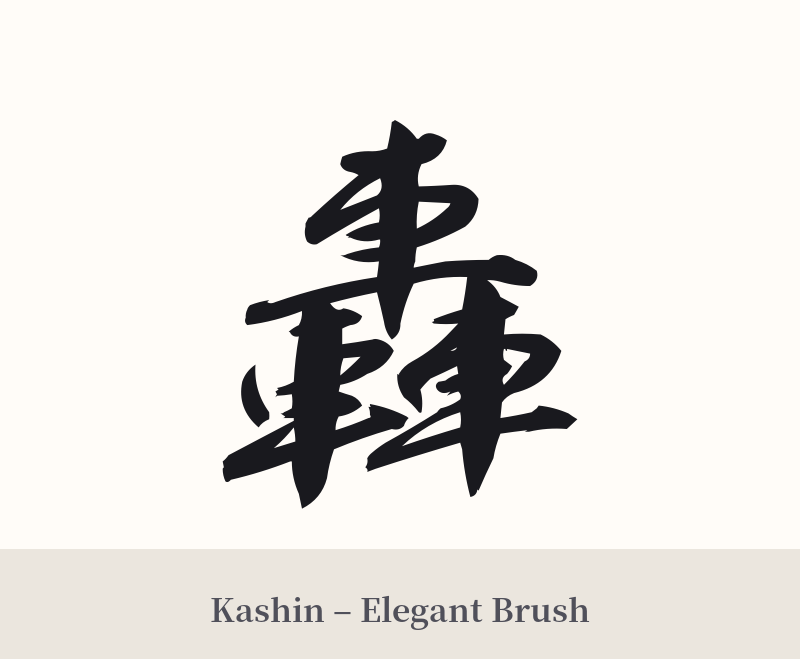
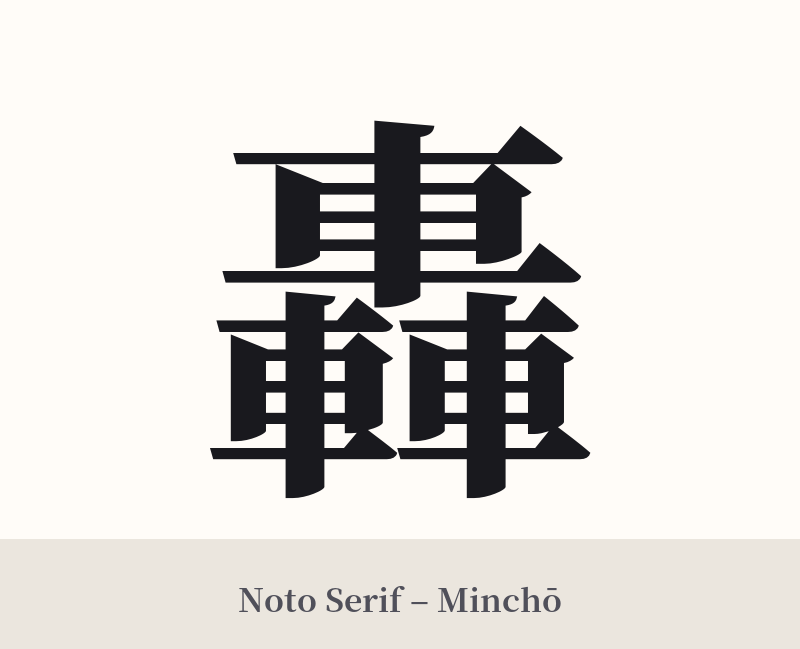
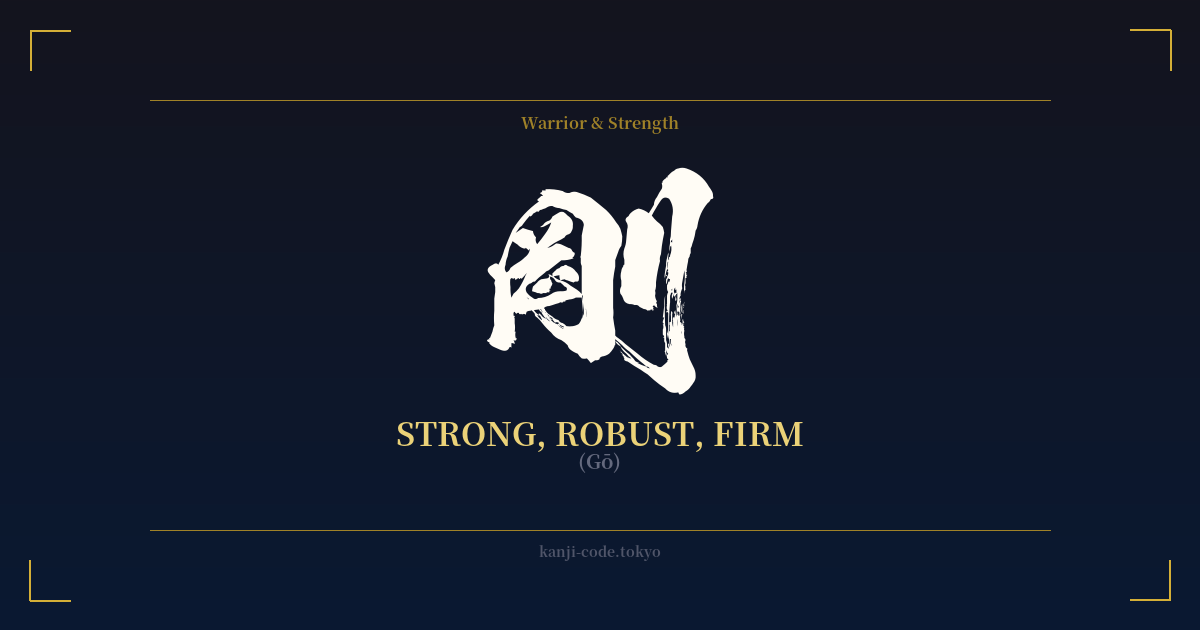
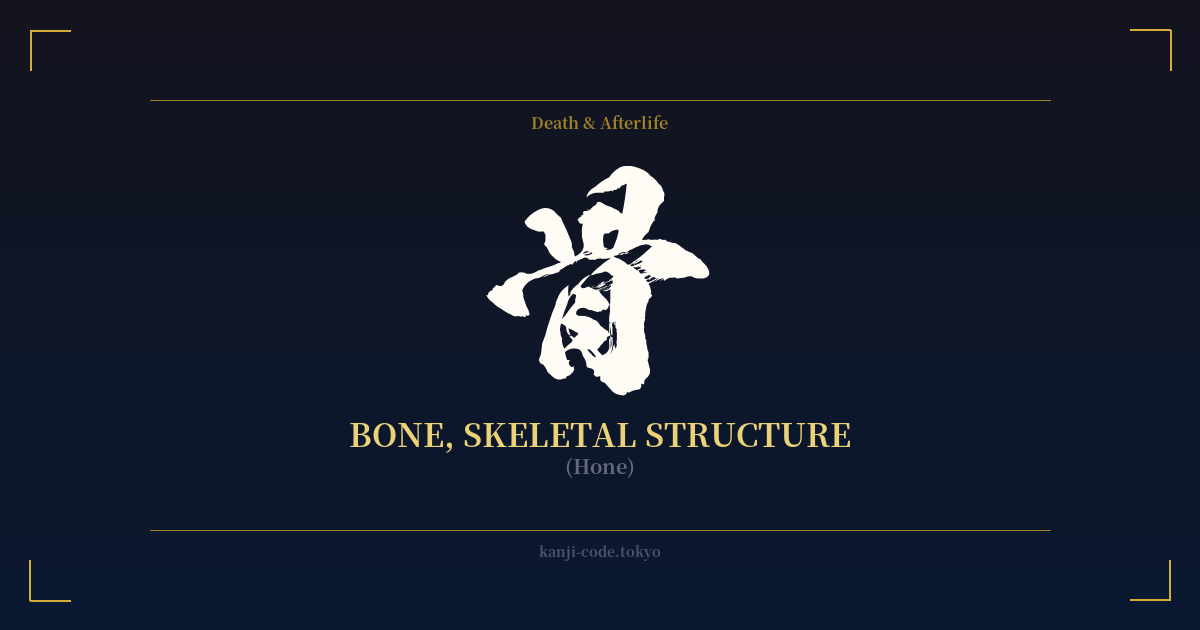
The same kanji can look dramatically different depending on the calligraphy style. Choose a font that matches the mood you want for your tattoo or design.
🎨 Tattoo Suitability
📐 Tattoo Design Guide
The kanji 轟 is a statement piece, and its design should reflect that inherent power.
– Placement: This character demands space to be appreciated. It works exceptionally well as a large-scale piece on the back, chest, or thigh, where its complex structure can be rendered in full detail. For a vertical placement, the calf or forearm can be effective, allowing the stacked 'cars' to create a sense of downward force.
– Font Style: A bold, impactful script is essential. A dynamic, semi-cursive gyōsho or a powerful, thick-brushed shodō (calligraphy) style would emphasize the feeling of a roaring soundwave. Avoid thin, delicate, or overly ornate fonts, as they would contradict the kanji's primal energy. A solid, blocky kaisho style can also work, giving it an architectural, machine-like sturdiness.
– Visual Complements: While 轟 is strong enough to stand alone, it can be integrated into larger designs. Consider pairing it with imagery of things that 'roar': a tiger, a dragon, a powerful ocean wave, or even the pistons of an engine. It could be used as a background element, emanating from a central figure to represent their power or spirit.
Comments