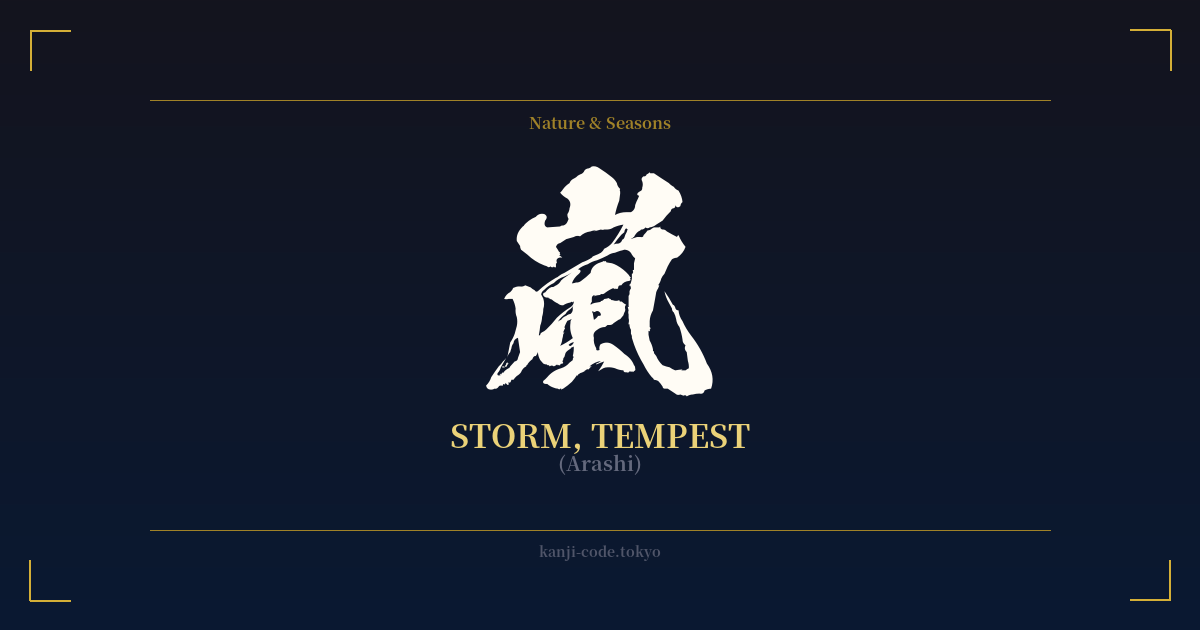
✍️ 嵐 (Arashi) — Cultural Context
The kanji 嵐 (Arashi) is a vivid and powerful character that encapsulates the raw, untamed force of a storm. Its visual construction tells a story in itself, combining the character for mountain (山) on top and wind (風) below. This composition beautifully illustrates the image of fierce winds descending from the mountains, a common and often destructive weather pattern in Japan's rugged landscape. It paints a picture of nature's power in its most dramatic form.
Beyond its literal meaning of a storm or tempest, 'arashi' carries deep metaphorical weight in Japanese culture. It is frequently used to describe a state of chaos, upheaval, or intense emotional turmoil. A 'storm of emotions' (感情の嵐, kanjō no arashi) or a 'storm of applause' (拍手の嵐, hakushu no arashi) are common expressions that borrow the kanji's intensity to describe overwhelming human experiences. This dual meaning, representing both the natural world and the inner self, makes it a profoundly resonant symbol.
Historically, the power of storms has been a central theme in Japanese art and literature. From the dramatic ukiyo-e woodblock prints of Hokusai and Hiroshige depicting travelers battling fierce winds, to its use in classical poetry, 'arashi' has always been a subject of both fear and awe. In haiku, the word serves as a kigo (season word) for autumn, evoking the turbulent transition between seasons. It speaks to the Japanese aesthetic of mono no aware—a gentle sadness for the transience of things, often highlighted by nature's powerful displays.
In a more modern context, the word 'Arashi' gained immense fame as the name of one of Japan's most successful and long-running pop idol groups. For an entire generation, hearing 'Arashi' immediately brings the band to mind, rather than the weather phenomenon. This has added a new layer of cultural meaning to the word, associating it with popularity, energy, and a specific era of Japanese pop culture. While distinct from its traditional meaning, this association is now an undeniable part of its identity in contemporary Japan.
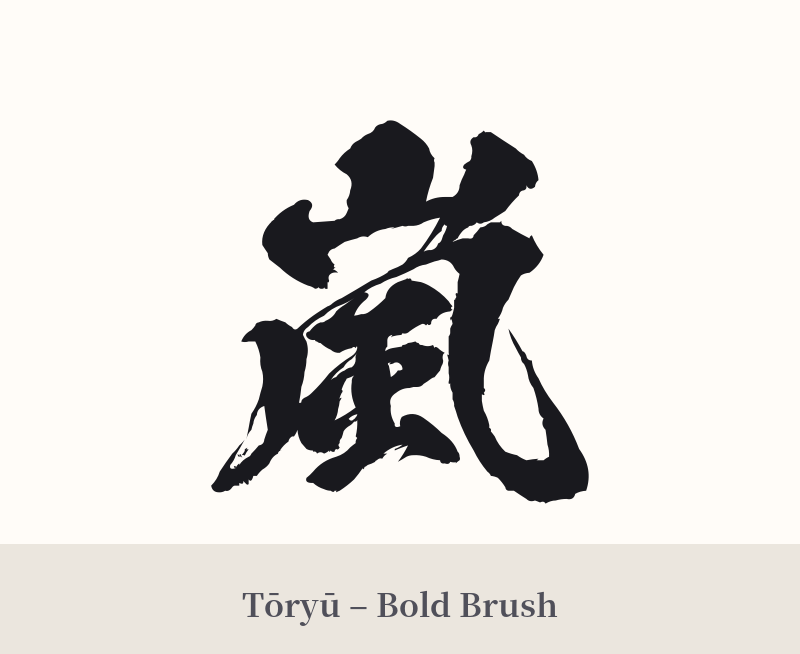
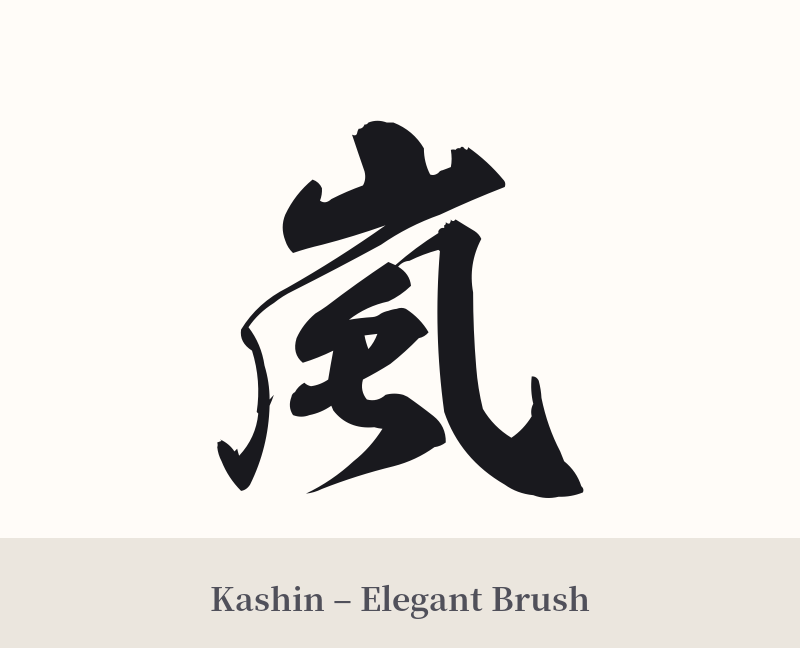
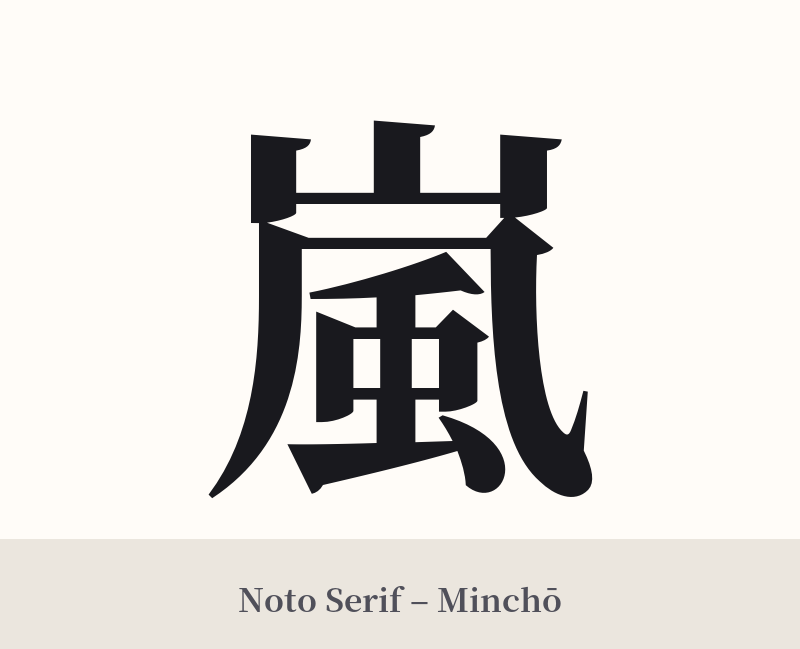
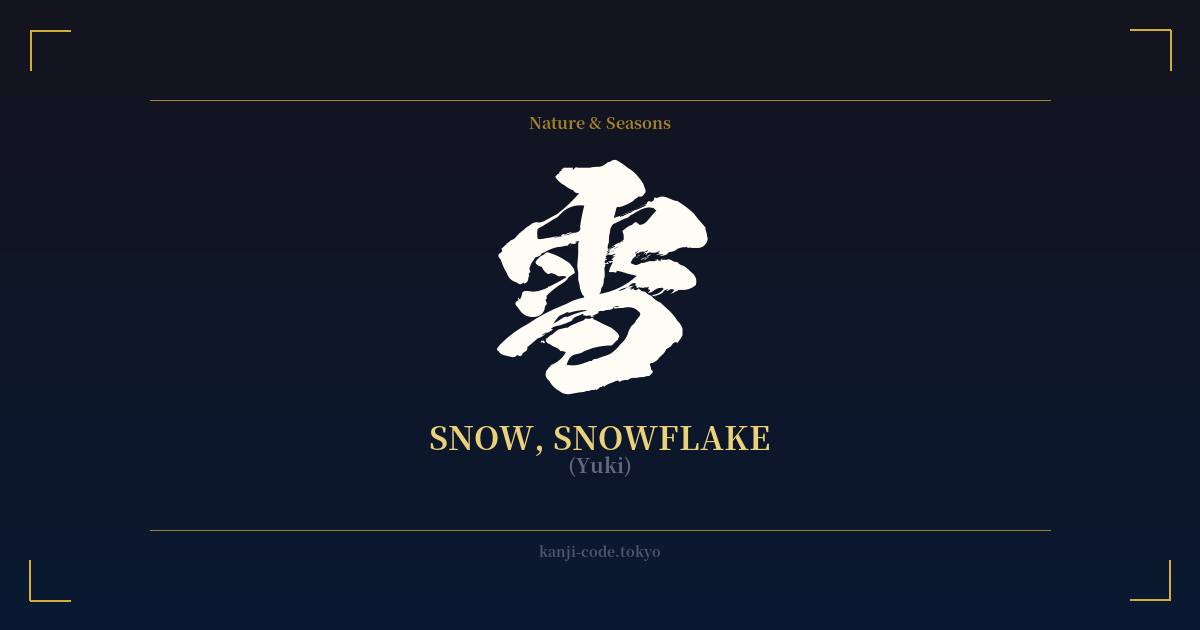
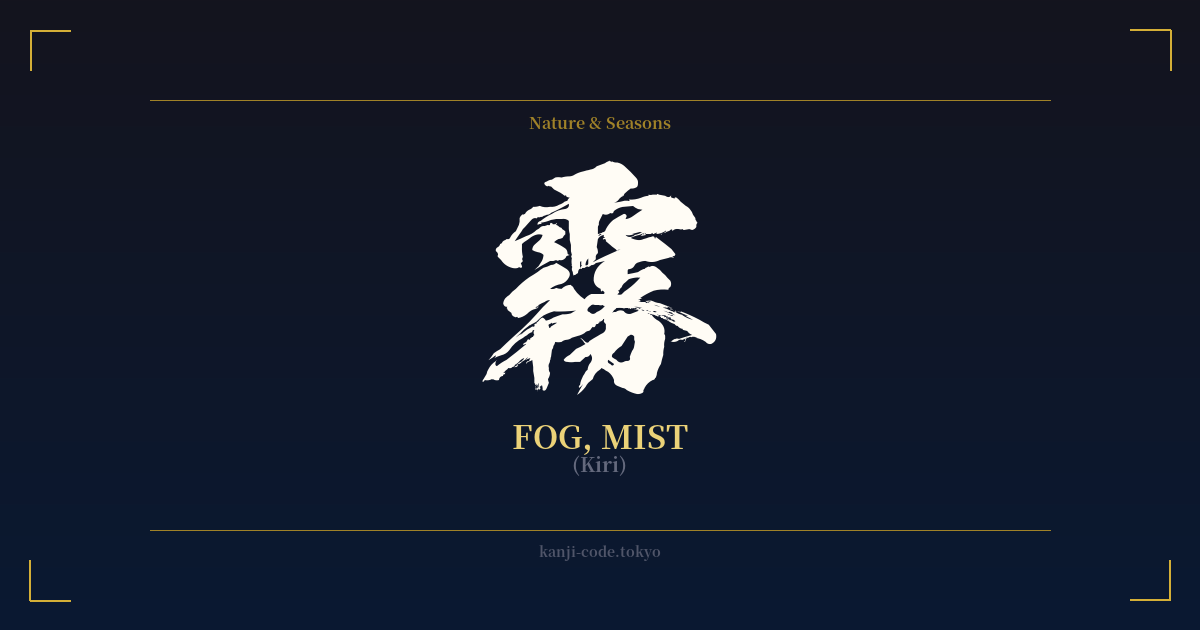
🖌️ Font Styles for 嵐
The same kanji can look dramatically different depending on the calligraphy style. Choose a font that matches the mood you want for your tattoo or design.
🎨 Tattoo Suitability
📐 Tattoo Design Guide
The kanji 嵐 (Arashi) is visually dynamic and well-suited for a variety of tattoo designs that aim to convey power and energy.
– Placement: This character works well in vertical spaces where its structure can flow. Consider the forearm, calf, or along the spine. For a larger, more impactful piece, the shoulder blade or back provides an excellent canvas, allowing it to be integrated with other elements.
– Style: A cursive, brushstroke (shodō) style is highly recommended. The wild, sweeping strokes can mimic the chaotic energy of a storm, making the character itself feel alive and tempestuous. A bold, angular script like kaisho can emphasize its strength and stability amidst the chaos.
– Visual Pairing: Complement 嵐 with imagery that enhances its meaning. Consider pairing it with wind bars, crashing waves, swirling clouds, or a lightning bolt (稲妻, inazuma). For a more symbolic design, placing it behind a stoic figure like a samurai or a resilient tree can represent enduring through turmoil.
Comments