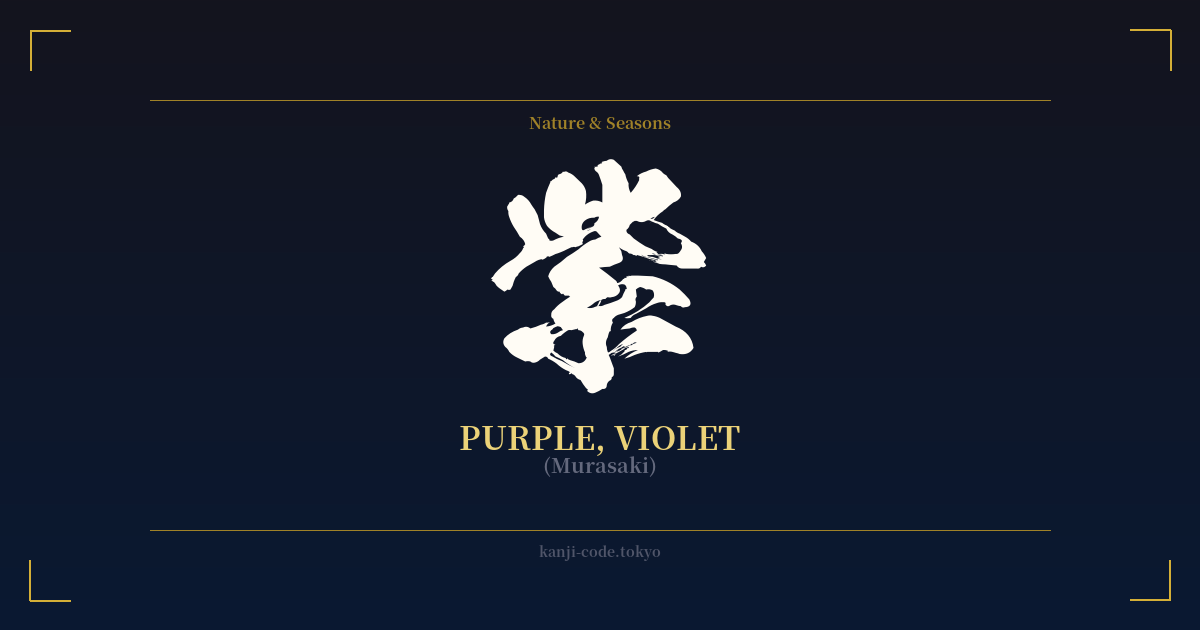
✍️ 紫 (Murasaki) — Cultural Context
In Japan, the kanji 紫 (murasaki) represents far more than just the color purple. It is a symbol steeped in centuries of history, imbued with notions of nobility, power, elegance, and spirituality. Its significance is so profound that it has shaped aspects of Japanese literature, art, and social structure.
The most critical context for 紫 comes from the Heian period (794-1185), an era renowned for its sophisticated court culture. During this time, the Cap and Rank System (冠位十二階, kan'i jūnikai) designated specific colors for the attire of court officials based on their rank. Deep purple, known as shishoku (紫黒), was the highest color, reserved exclusively for the Emperor and the highest-ranking aristocrats. This immediately cemented purple's association with ultimate power, status, and exclusivity.
The color's prestige was further enhanced by its rarity. The traditional purple dye was painstakingly extracted from the root of the gromwell plant (紫草, murasaki-sō). This process was incredibly labor-intensive and time-consuming, making the dye astronomically expensive. Owning purple-dyed textiles was a conspicuous display of immense wealth and influence, inaccessible to the common populace.
This air of unattainable beauty is famously captured in one of Japan's most important literary works, The Tale of Genji (源氏物語, Genji Monogatari). The central female character, the protagonist's greatest love, is named Murasaki no Ue (Lady Murasaki). Her name, directly referencing the color, symbolizes her ideal beauty, grace, and the deep, cherished love Genji holds for her. Through this literary masterpiece, the color purple became intertwined with themes of high romance, refined beauty, and an almost sacred femininity.
Beyond worldly power and romance, 紫 also carries spiritual weight. In some schools of Japanese Buddhism, purple is a sacred color associated with wisdom, enlightenment, and the highest spiritual realms. It can be seen on the robes of high-ranking priests and in temple decorations, representing a connection to the divine and the transcendence of earthly matters.
Today, while purple is accessible to everyone, the kanji 紫 still evokes these classical undertones of luxury, mystery, and sophistication. It remains a popular element in art and design, used to convey a sense of elegance and depth that few other colors can match.
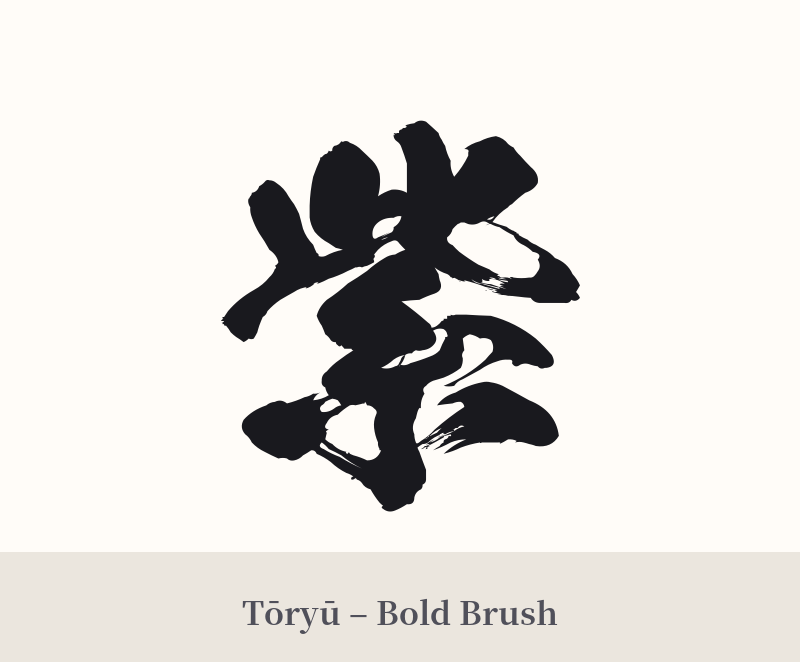
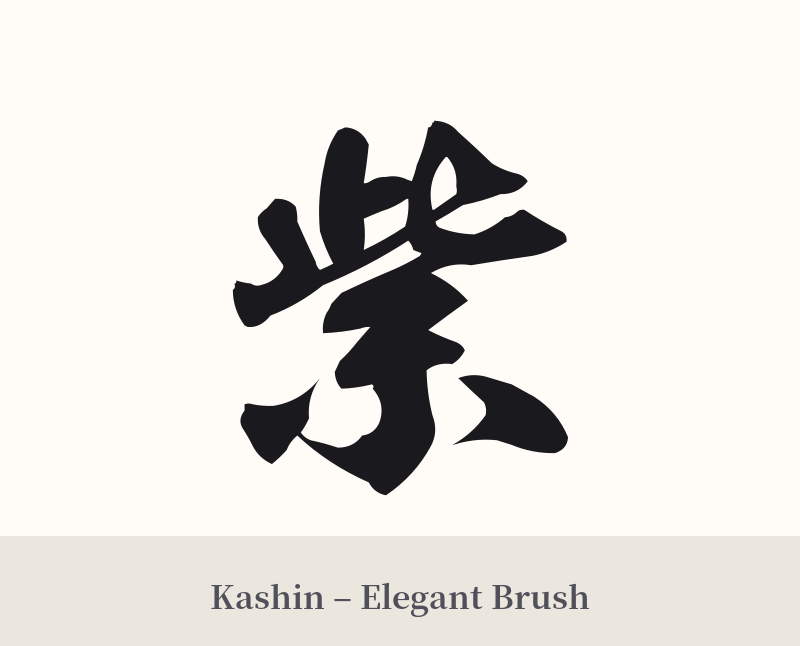
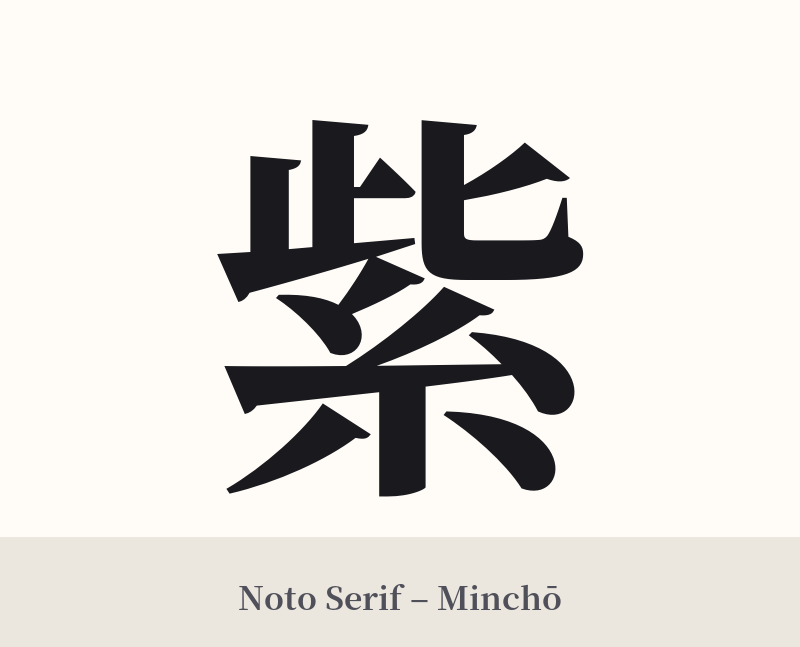
🖌️ Font Styles for 紫
The same kanji can look dramatically different depending on the calligraphy style. Choose a font that matches the mood you want for your tattoo or design.
🎨 Tattoo Suitability
📐 Tattoo Design Guide
The kanji 紫 offers wonderful versatility for a tattoo design, blending visual grace with deep meaning.
– Placement: For a small, personal piece, the inner wrist, behind the ear, or on the ankle can be very elegant. For a more prominent display, the forearm, calf, or the back of the neck below the hairline allows the character's form to be appreciated.
– Font Style: The choice of script can dramatically alter the feel. A flowing, cursive sōsho style emphasizes its romantic and artistic side, echoing the calligraphy of the Heian court. A more standard, balanced kaisho script highlights its connection to nobility and structure. A stylized, modern font can give it a contemporary edge.
– Visual Tips: Consider incorporating elements that enhance its meaning. Pairing 紫 with a wisteria flower (fuji), a gromwell plant (the source of the dye), or even a subtle watercolor background in shades of violet can create a beautiful and cohesive design. Using actual purple ink for the kanji itself is a bold, direct statement that can be visually stunning.
Comments