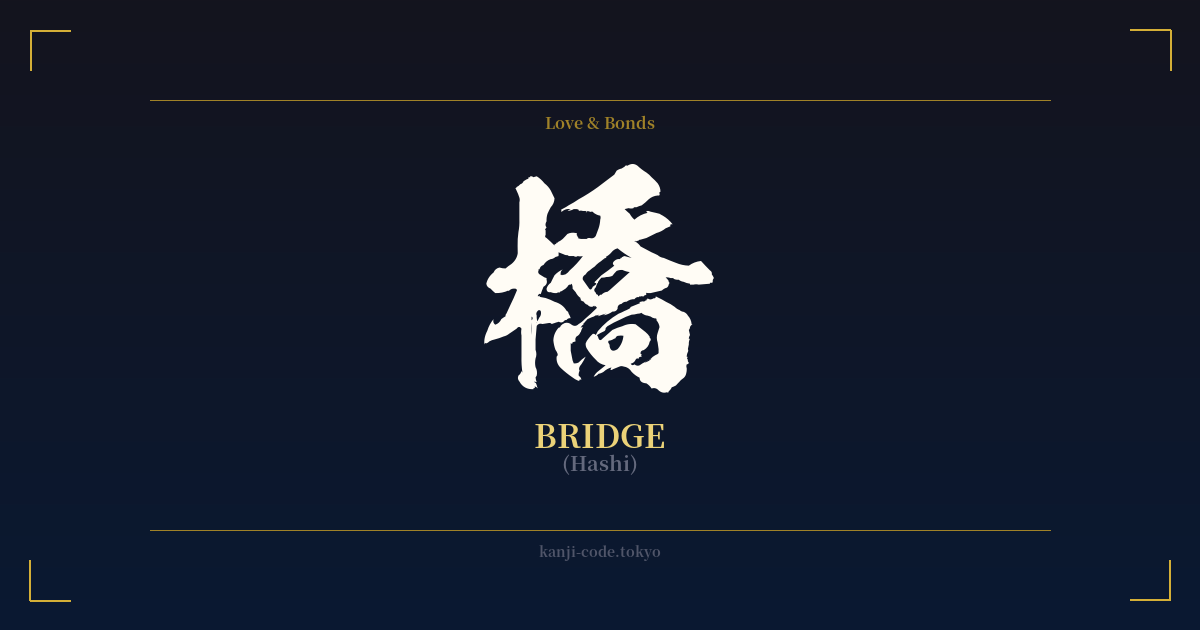
✍️ 橋 (Hashi) — Cultural Context
The Japanese kanji 橋 (Hashi) literally means 'bridge,' a structure built to span a physical obstacle. Yet, its true power lies in its profound and pervasive symbolism, which is deeply woven into the fabric of Japanese culture, mythology, and everyday language.
From its very structure, the character tells a story. It is composed of two main parts: the radical 木 (ki) on the left, meaning 'tree' or 'wood,' and the character 喬 (kyō) on the right, which means 'high' or 'tall.' This combination paints a vivid picture of early bridges—tall structures made of wood, reaching high to cross a divide. It’s a beautiful example of how kanji can be a form of visual poetry.
In Japanese mythology, the bridge holds a place of cosmic importance. According to the Kojiki, the oldest chronicle of Japan, the gods Izanagi and Izanami stood upon the Ame-no-ukihashi (天の浮橋), the 'Floating Bridge of Heaven,' and stirred the primordial ocean with a jeweled spear. The drops that fell from the spear formed the first island of the Japanese archipelago. In this context, the bridge is not merely a path; it is the very point of creation, the link between the divine and the terrestrial.
This theme of connection extends throughout Japanese art and literature. Bridges are a recurring motif in ukiyo-e woodblock prints, such as those by Hokusai and Hiroshige. They often represent a point of transition in a journey, a place of contemplation, or a vantage point from which to view the beauty of nature or the bustle of city life. The famous Nihonbashi ('Bridge of Japan') in Edo (old Tokyo) was the starting point for the five major roads of the country, making it the literal and symbolic heart of the nation's network.
Metaphorically, 橋 (Hashi) represents connection in all its forms. It symbolizes the bridging of gaps between people, ideas, and cultures. It can represent a transition from one stage of life to another—from ignorance to enlightenment, from conflict to peace, or from solitude to companionship. To cross a bridge is to undertake a journey and commit to what lies on the other side. This concept is so ingrained that the modern Japanese word 橋渡し (hashi-watashi), literally 'bridge-passing,' is used to mean 'mediation' or 'acting as an intermediary.' It signifies the act of bringing two separate parties together.
Choosing the kanji 橋 is to embrace a symbol of unity, progress, and the overcoming of obstacles. It is a reminder that divides can be crossed, connections can be forged, and there is always a way to get from where you are to where you want to be.
🖌️ Font Styles for 橋
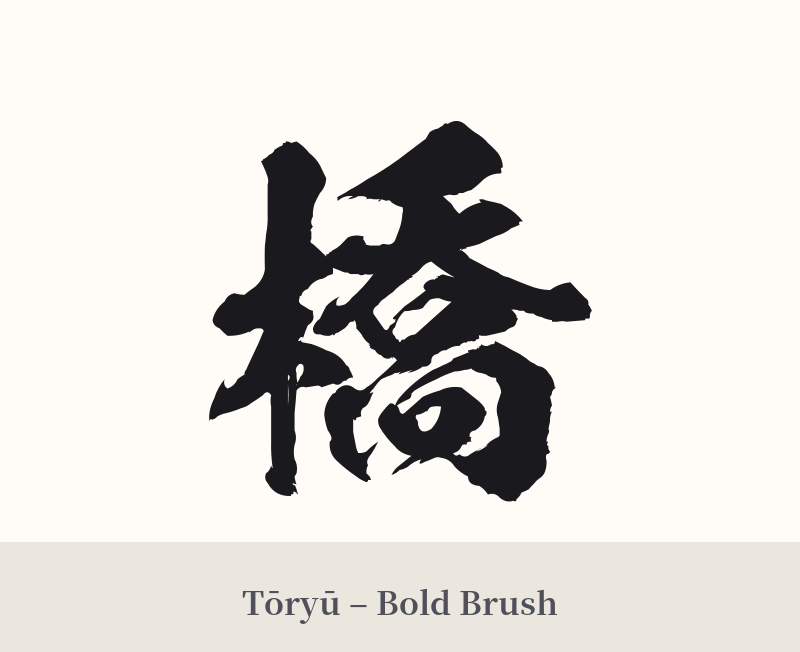
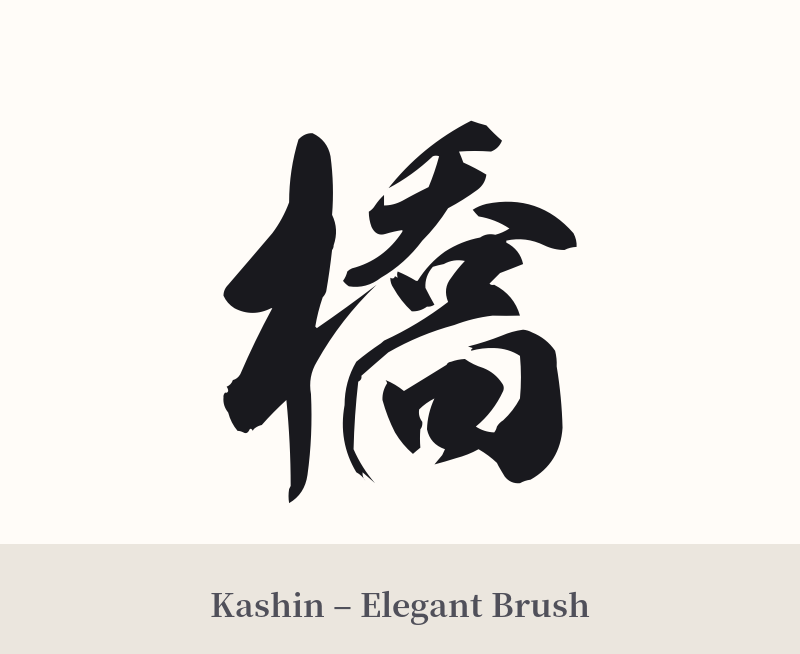
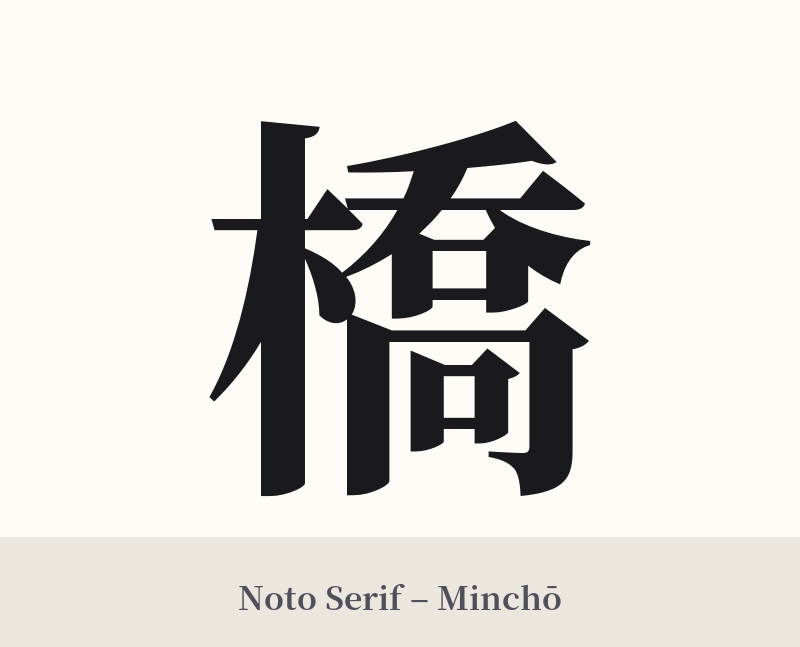
The same kanji can look dramatically different depending on the calligraphy style. Choose a font that matches the mood you want for your tattoo or design.
🎨 Tattoo Suitability
📐 Tattoo Design Guide
The kanji 橋 (Hashi) offers great flexibility for a tattoo design due to its balanced structure and powerful symbolism.
– Placement: Its vertical orientation makes it ideal for the forearm, calf, or along the spine. Placed horizontally, it works well across the collarbone or upper back, creating a sense of spanning a space.
– Style Suggestions: A bold, architectural Kaisho (block) script emphasizes its structural meaning, conveying stability and strength. Conversely, a flowing, semi-cursive Gyōsho or Sōsho script can highlight the idea of transition, movement, and the flow of water beneath a bridge.
– Visual Tips: Consider integrating the kanji into a larger scene. It pairs beautifully with elements like flowing water, koi fish swimming beneath it, or a gentle moon above it. For a more minimalist approach, the character alone is striking. Due to its 16 strokes, ensure the design is large enough to prevent the lines from blurring together over time.
Comments