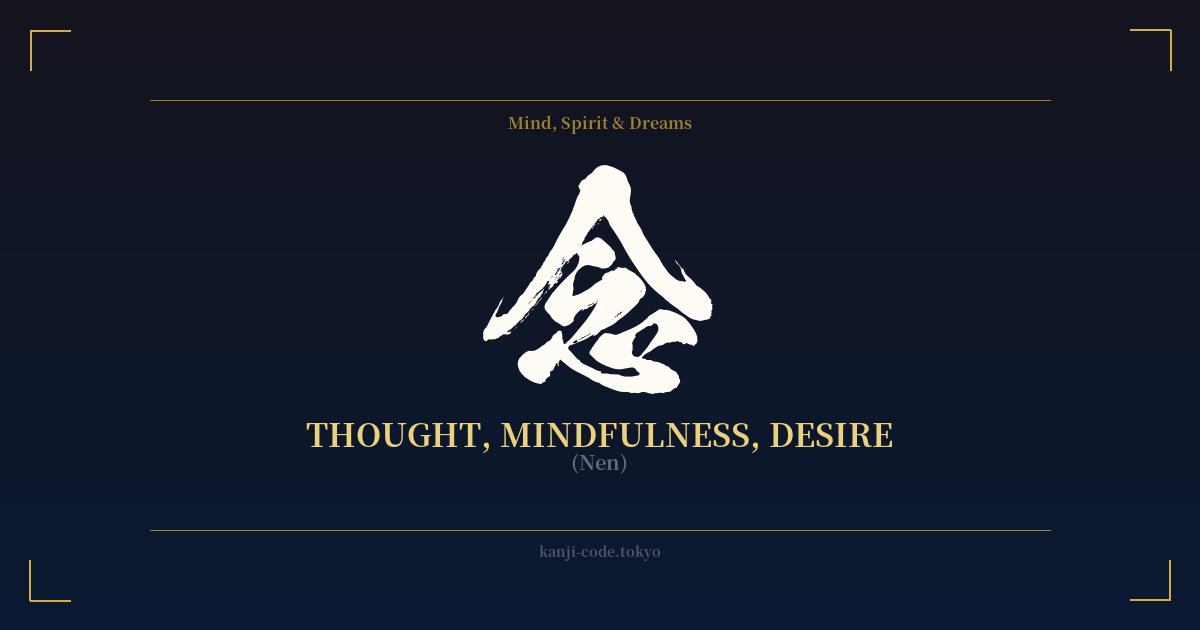
✍️ 念 (Nen) — Cultural Context
The kanji 念 (Nen) is a fascinating character that encapsulates the state of the human mind. Its construction offers a window into its meaning: the top part is 今 (ima), meaning 'now,' and the bottom is 心 (kokoro), meaning 'heart' or 'mind.' Together, they form a powerful image: the mind in the present moment. This is the essence of Nen—it is thought, but specifically a thought held and focused on right now.
This character is deeply rooted in Buddhist philosophy, where it is a key component of the concept of mindfulness. The Japanese practice of 念仏 (nenbutsu) is the mindful recitation of the Buddha's name, a core practice in Pure Land Buddhism. In this context, 念 is not just a fleeting thought but a focused, devotional concentration that aims to purify the mind and connect with the divine. It is the Japanese equivalent of the Sanskrit concept of smṛti or Pali sati, meaning mindfulness or awareness.
However, the power of a focused thought can be a double-edged sword, and the kanji 念 reflects this duality. While it can represent a pure, mindful state, it can also signify a thought that lingers, becoming a persistent desire, a worry, or even an obsession. For example, a cherished memory is a form of 念, but so is a burning regret (残念, zannen) or a deep-seated grudge (怨念, onnen). The character captures the idea that what we hold in our minds has a powerful, lasting presence.
In everyday Japanese, this idea of focused mental energy is very much alive. The phrase 念を入れる (nen o ireru) literally means 'to put in nen,' and it's used when you do something with meticulous care and attention to detail. It implies pouring your mental focus into a task to ensure it's done perfectly. Whether you are preparing a special gift or double-checking a critical report, you are 'putting in your nen.'
Modern audiences, particularly outside of Japan, often first encounter 念 through the popular manga and anime series Hunter x Hunter. In the series, 'Nen' is the name of the supernatural power system that allows characters to manipulate their own life energy, or aura. This creative adaptation brilliantly plays on the kanji's core meaning of focused will, concentration, and latent potential, introducing the concept to a global generation in a new and exciting way.
🖌️ Font Styles for 念
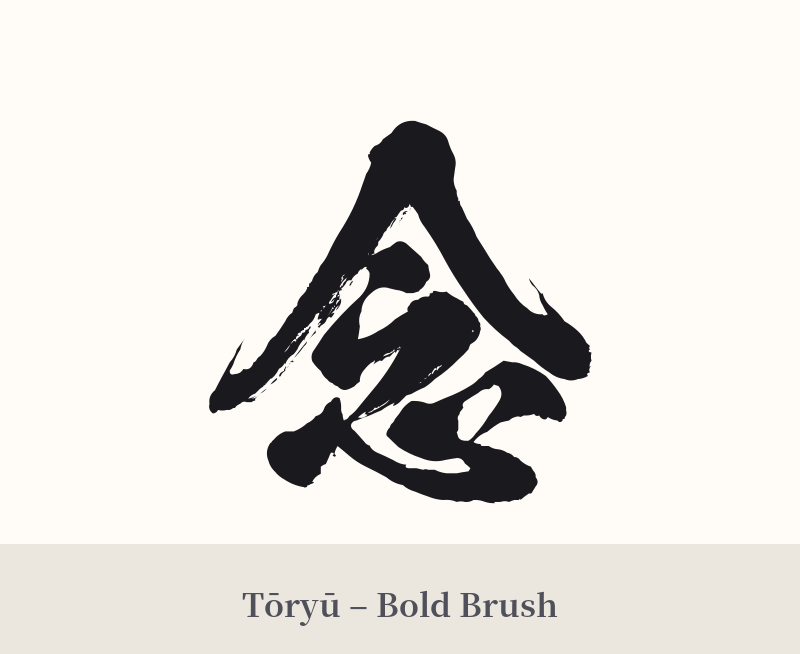
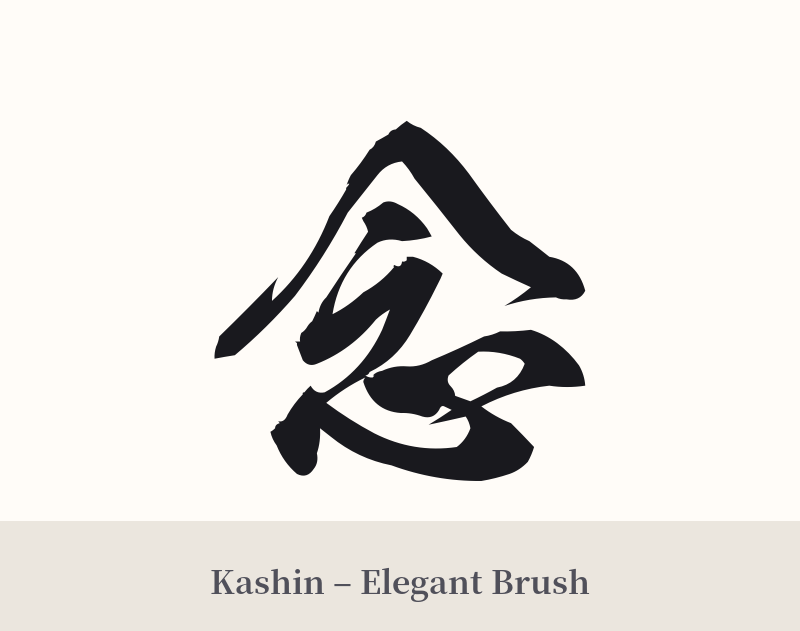
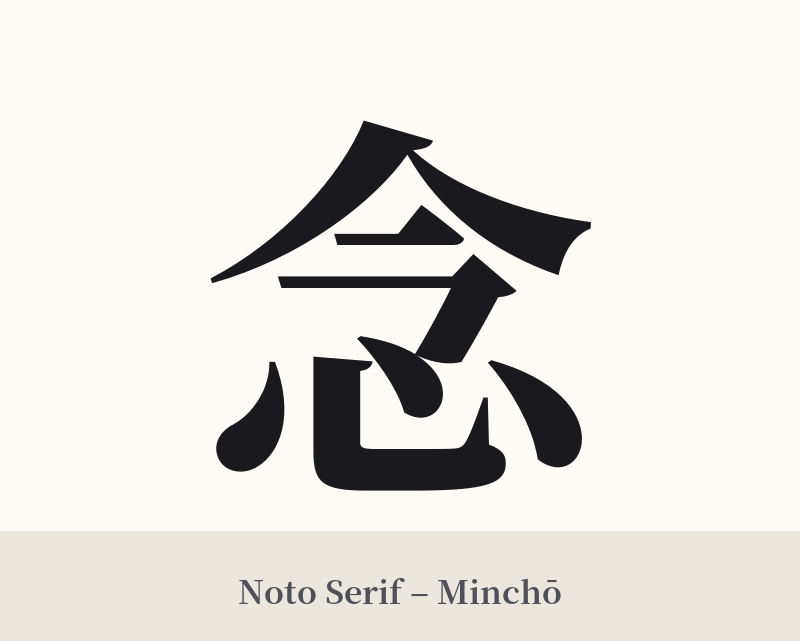
The same kanji can look dramatically different depending on the calligraphy style. Choose a font that matches the mood you want for your tattoo or design.
🎨 Tattoo Suitability
📐 Tattoo Design Guide
The kanji 念 offers a blend of simplicity and conceptual depth, making it suitable for various tattoo designs.
– Placement: For a personal reminder of mindfulness, consider intimate placements like the inner wrist, behind the ear, or over the heart. For a statement of will or conviction, the forearm, bicep, or upper back provides a stronger canvas.
– Font Style: The character's simple structure works well in multiple styles. A clean, crisp Kaisho (block) or Mincho font emphasizes clarity and intention. For a more fluid, dynamic feel that evokes the flow of thought, a semi-cursive Gyosho or fully cursive Sosho style can be very effective and artistic.
– Visual Tips: Due to its low stroke count, 念 is highly legible even at small sizes, making it perfect for a discreet and minimalist tattoo. It can also serve as a central element in a larger piece. Consider pairing it with an Enso circle to represent enlightenment and the present moment, or with a lotus flower to underscore its Buddhist connotations of purity and spiritual awakening.
Comments