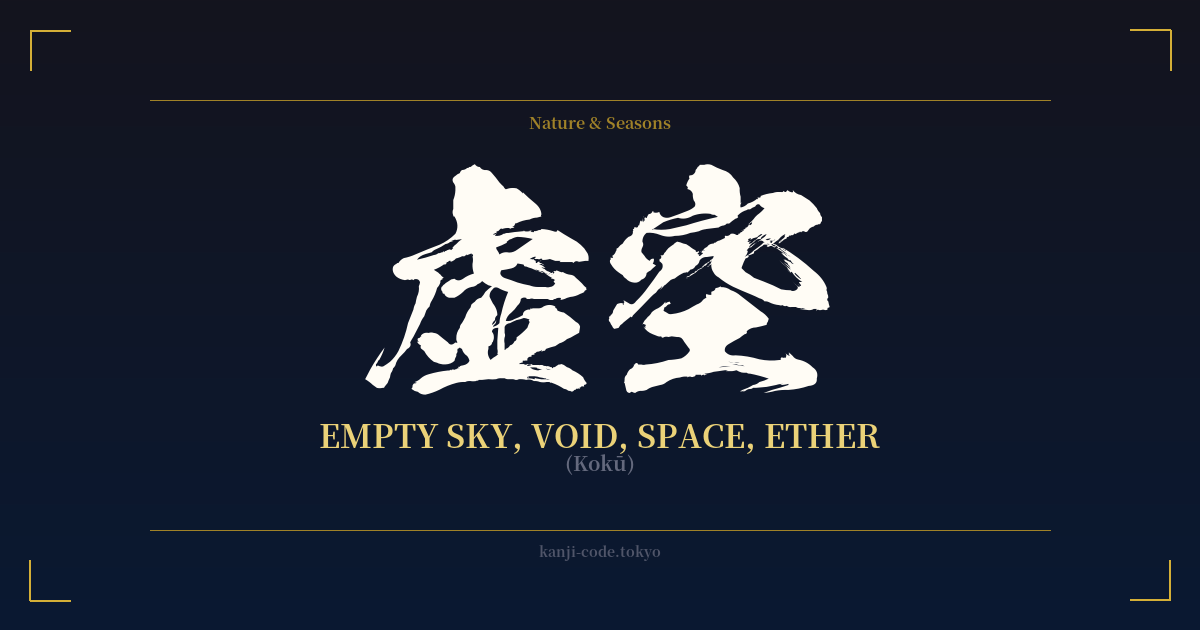
✍️ 虚空 (Kokū) — Cultural Context
虚空 (Kokū) translates literally to 'empty sky,' but its true essence is far more profound. It is a word that bridges the physical world with the metaphysical, capturing a concept central to Japanese philosophy and spirituality. While it can describe the vast, open expanse of the heavens, its more significant meaning is that of 'the void' or 'ether'—not a void of nothingness, but a space of infinite potential.
The concept of Kokū is deeply intertwined with Buddhism, which arrived in Japan from China and Korea. It expands upon the foundational idea of 空 (Kū), or śūnyatā in Sanskrit. Śūnyatā teaches that all phenomena are devoid of intrinsic, independent existence. Kokū takes this idea and applies it to the cosmos itself, portraying the universe as a boundless, formless container from which all things arise and to which they return.
This is not a nihilistic or depressing concept. In Japanese thought, this void is pregnant with possibility. It is the canvas upon which reality is painted, the silence from which sound emerges. This idea is beautifully personified in the figure of Kokūzō Bosatsu (Ākāśagarbha Bodhisattva), the Bodhisattva of the Void. This deity is revered as the embodiment of wisdom that is as boundless as space itself. Monks and scholars have prayed to Kokūzō for perfect memory and understanding, believing that the 'womb of the void' contains all knowledge.
Beyond religion, the idea of Kokū permeates Japanese arts and martial arts. In swordsmanship, the master swordsman Miyamoto Musashi wrote of the 'void' as a state of mind—unfettered, receptive, and ready for anything. In art, the use of negative space (ma) reflects this same principle: the empty areas of a painting or composition are just as important as the filled ones, creating balance and giving the subject room to breathe. Kokū is the ultimate negative space, the very fabric of existence that allows for form and substance to be perceived.
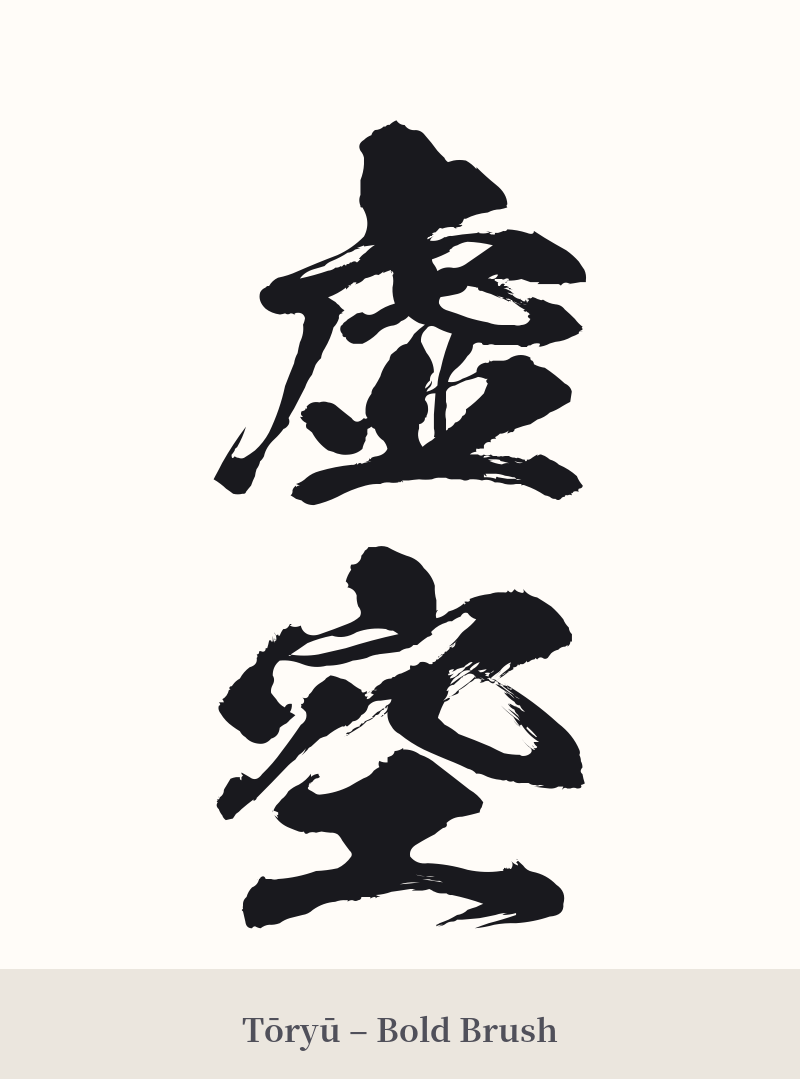
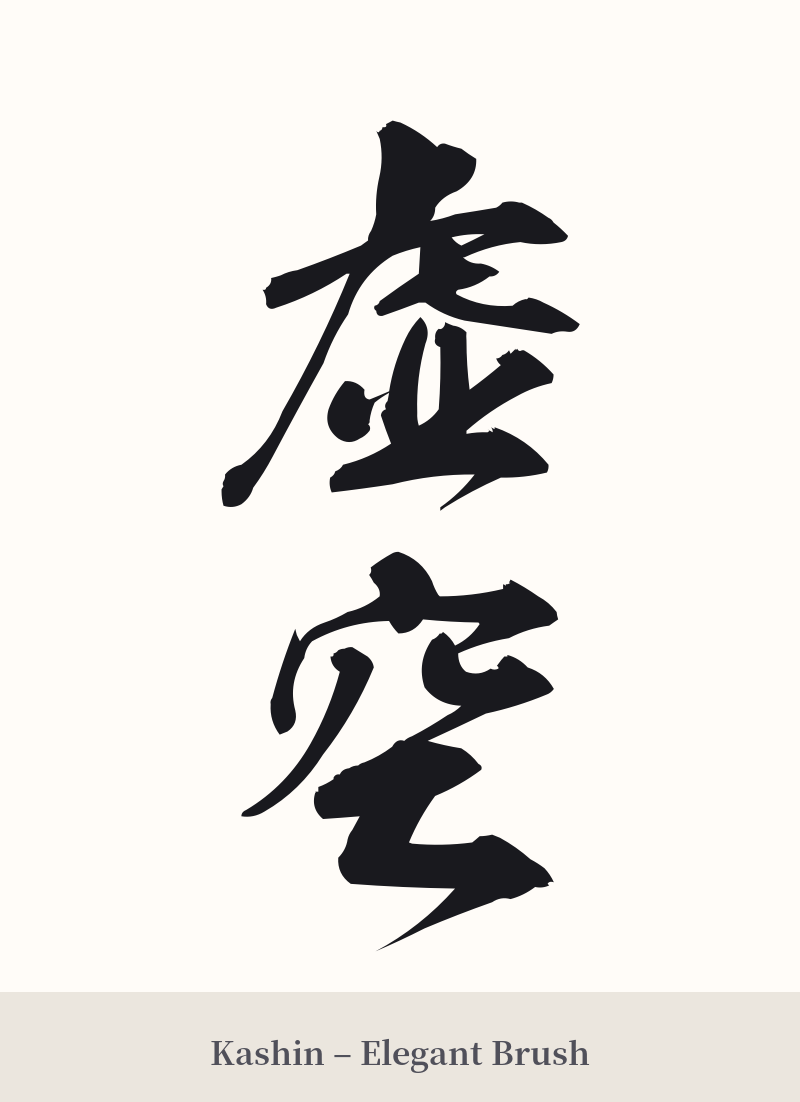
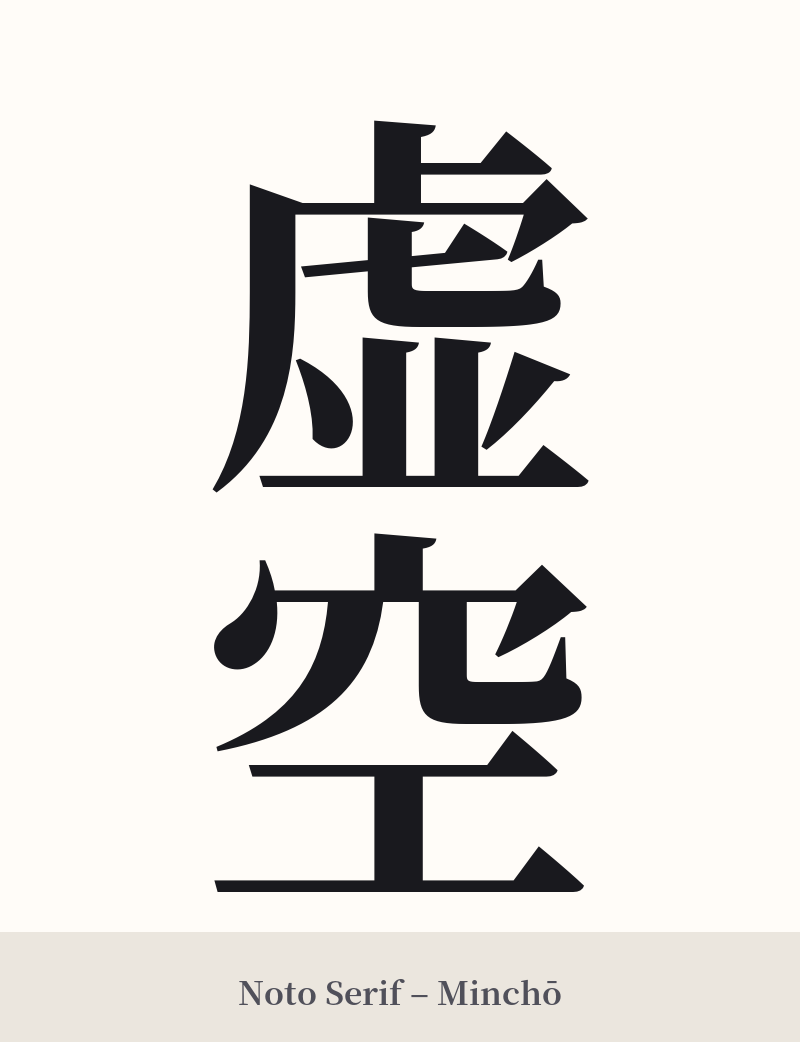
🖌️ Font Styles for 虚空
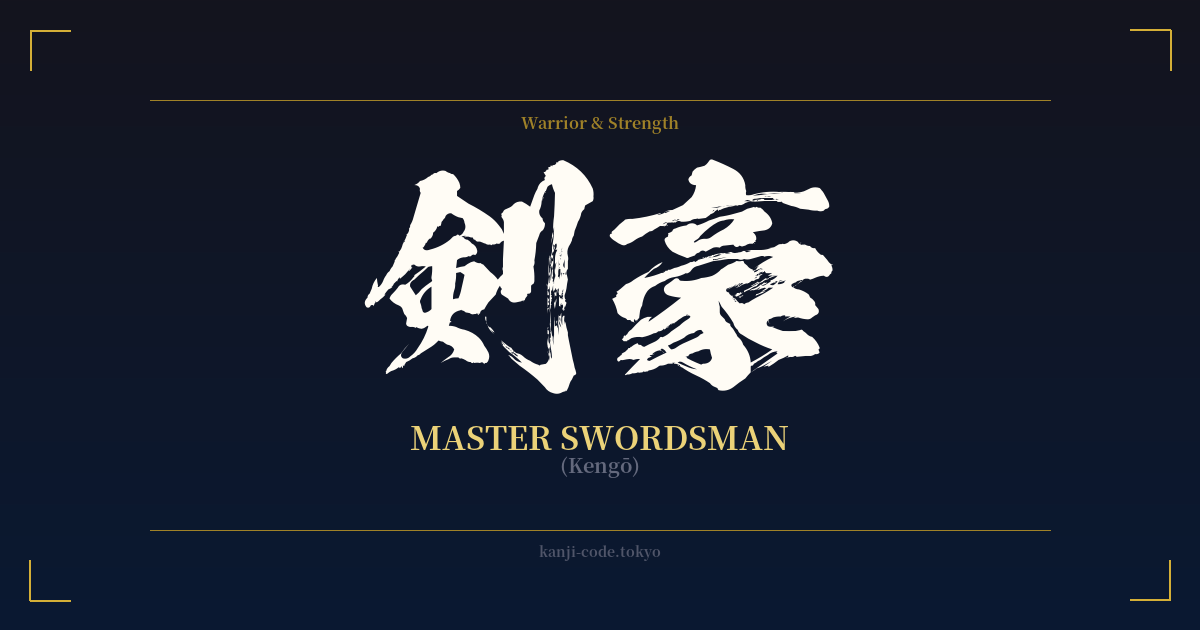
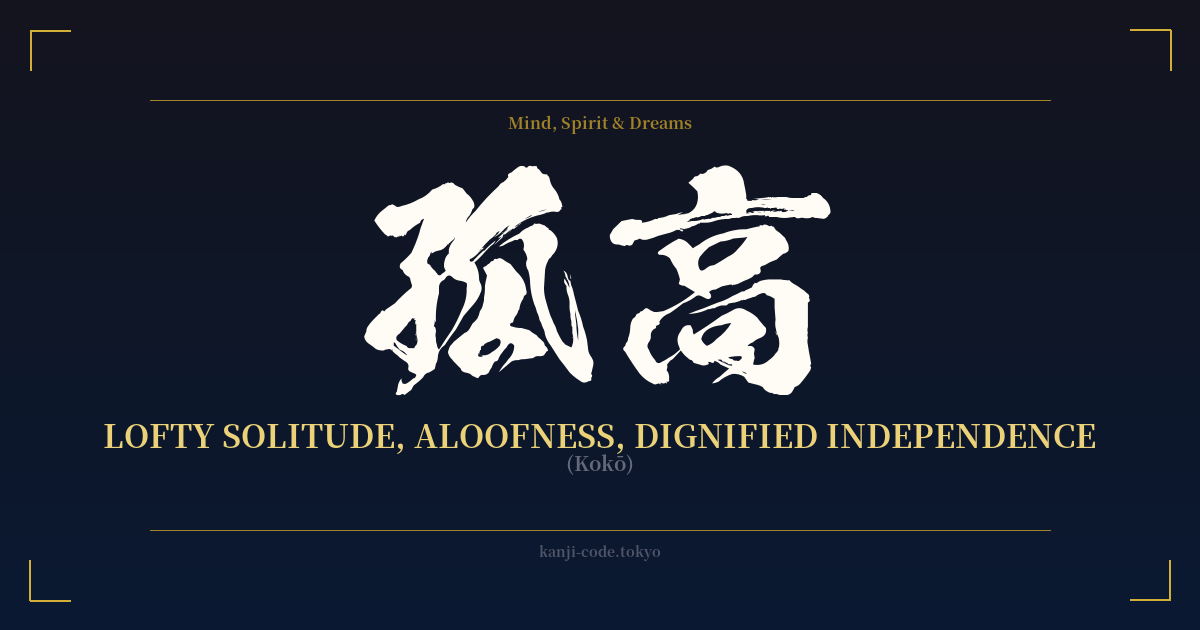
The same kanji can look dramatically different depending on the calligraphy style. Choose a font that matches the mood you want for your tattoo or design.
🎨 Tattoo Suitability
📐 Tattoo Design Guide
A tattoo of 虚空 (Kokū) is a statement of philosophical depth. The design should reflect this vast and serene concept.
– Placement: A vertical orientation is highly recommended to mimic a sense of descent or ascension. The spine, forearm, or along the calf are excellent choices. For a horizontal design, the chest or upper back provides a wide canvas that complements the meaning of 'expanse.'
– Font Style: The script can dramatically alter the feel. A flowing, semi-cursive gyosho style can evoke a sense of etherealness and movement. For a more grounded, solid interpretation, a clean and precise kaisho (block) script is ideal. Avoid overly aggressive or 'spiky' fonts that contradict the serene nature of the word.
– Visual Tips: Consider incorporating subtle elements that enhance the meaning. A design where the strokes of the kanji dissolve into a starfield or a faint nebula can be very effective. Pairing 虚空 with an Ensō (Zen circle) is another powerful combination, as both symbols point toward enlightenment, emptiness, and the universe.
Comments