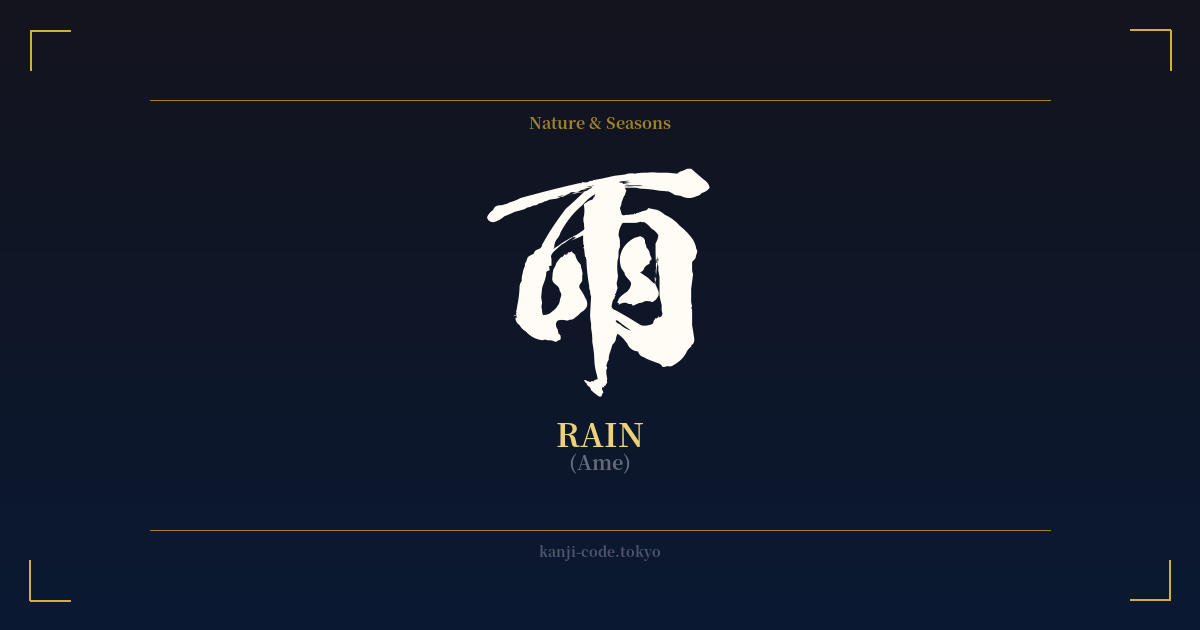
✍️ 雨 (Ame) — Cultural Context
In Japan, rain is far more than a meteorological event; it's a deep-seated cultural and aesthetic symbol. The kanji 雨 (Ame) itself is a beautiful example of a pictograph, its form derived from ancient drawings of a sky or cloud with four drops of water falling from it. This visual directness hints at its fundamental role in the Japanese psyche.
Rain holds a powerful duality. On one hand, it is the lifeblood of the islands. The seasonal rainy season, known as 梅雨 (tsuyu, literally 'plum rain'), is essential for the cultivation of rice, the nation's staple food. This perception casts rain as a symbol of fertility, cleansing, and renewal—a blessing from the heavens that washes away the old and nurtures new growth.
On the other hand, rain is inextricably linked to the Japanese aesthetic of 'mono no aware' (物の哀れ), a gentle, transient sadness for the impermanence of things. The quiet patter of rain on a temple roof, the mist obscuring a mountain view, or the sight of cherry blossom petals scattered by a spring shower all evoke this poignant, beautiful melancholy. It’s a feeling of quiet contemplation and introspection, a moment to pause and reflect on the fleeting nature of beauty and life itself.
This profound connection is woven into the fabric of Japanese art and literature. Countless haiku poems capture the specific mood of a certain type of rain. Ukiyo-e artists like Utagawa Hiroshige famously depicted scenes of daily life under sudden downpours, such as in his masterpiece 'Sudden Shower over Shin-Ōhashi bridge and Atake'. In modern times, films like Makoto Shinkai's 'The Garden of Words' use rain as a central character, facilitating connection and emotional depth.
The Japanese language itself reflects this nuanced appreciation, with dozens of words to describe different kinds of rain. There's 'samidare' (五月雨), the persistent rain of early summer; 'shigure' (時雨), a cold, intermittent drizzle in late autumn; and 'yūdachi' (夕立), a sudden, intense evening shower on a hot summer day. Each term carries its own specific emotional weight. Therefore, the simple character 雨 represents not just water from the sky, but a whole universe of feeling, art, and philosophy.
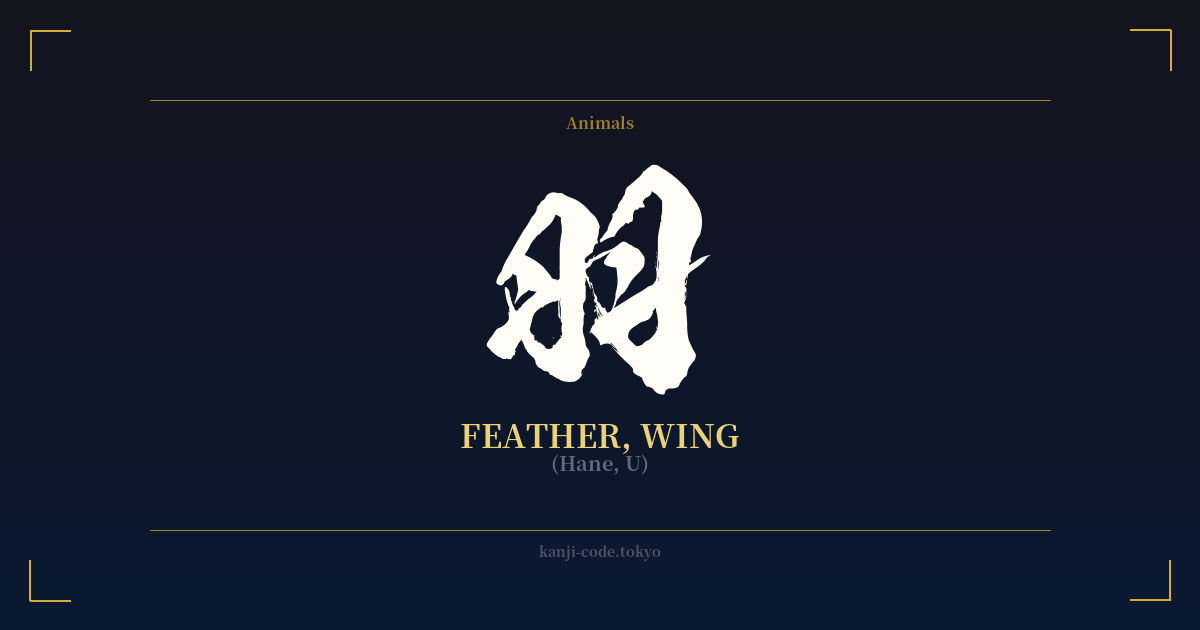
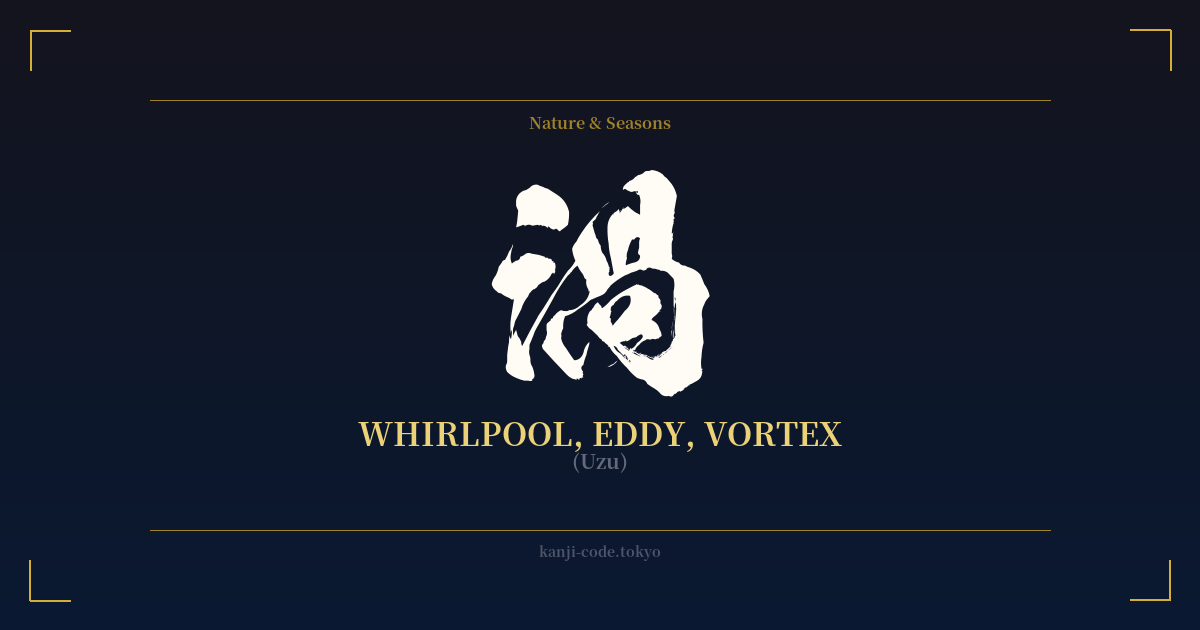
🖌️ Font Styles for 雨
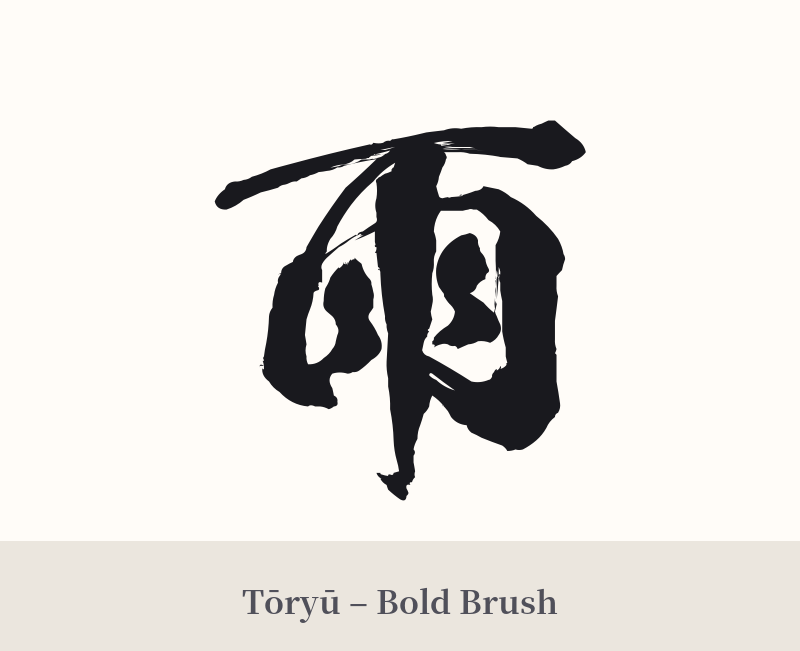
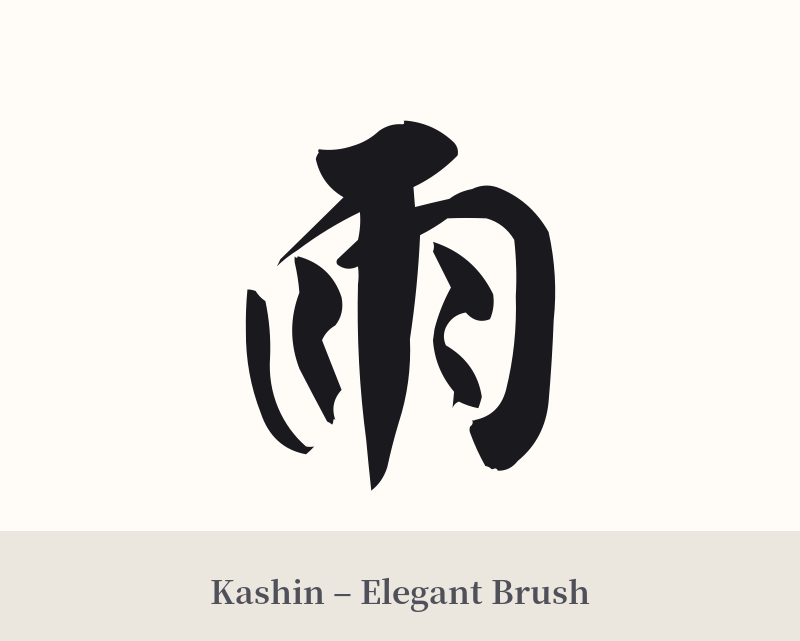
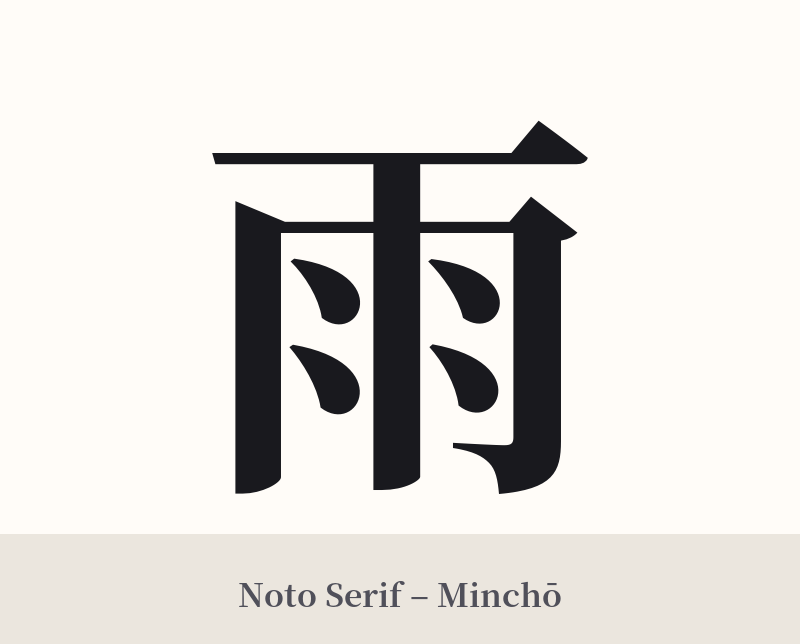
The same kanji can look dramatically different depending on the calligraphy style. Choose a font that matches the mood you want for your tattoo or design.
🎨 Tattoo Suitability
📐 Tattoo Design Guide
The kanji 雨 (Ame) offers a lot of versatility in tattoo design due to its balanced shape and profound meaning.
– Placement: Consider placements that evoke a sense of falling or flowing. The back of the neck, running down the spine, or along the forearm are excellent choices. For a more subtle design, the space behind the ear or on the inner wrist works well.
– Font Style: The style can dramatically alter the mood. A bold, classic 'Mincho' or 'Kaisho' style emphasizes its clarity and grounding presence. For a more fluid and artistic feel, a cursive 'Sosho' style can mimic the movement of falling rain.
– Visual Tips: While 雨 is strong enough to stand alone, it pairs beautifully with other elements. Consider integrating it with a lotus flower to symbolize purity rising through adversity, or with a koi fish to represent perseverance. Simple, fine-line 'raindrops' or abstract watercolor splashes in the background can enhance the theme without overpowering the kanji itself.
Comments