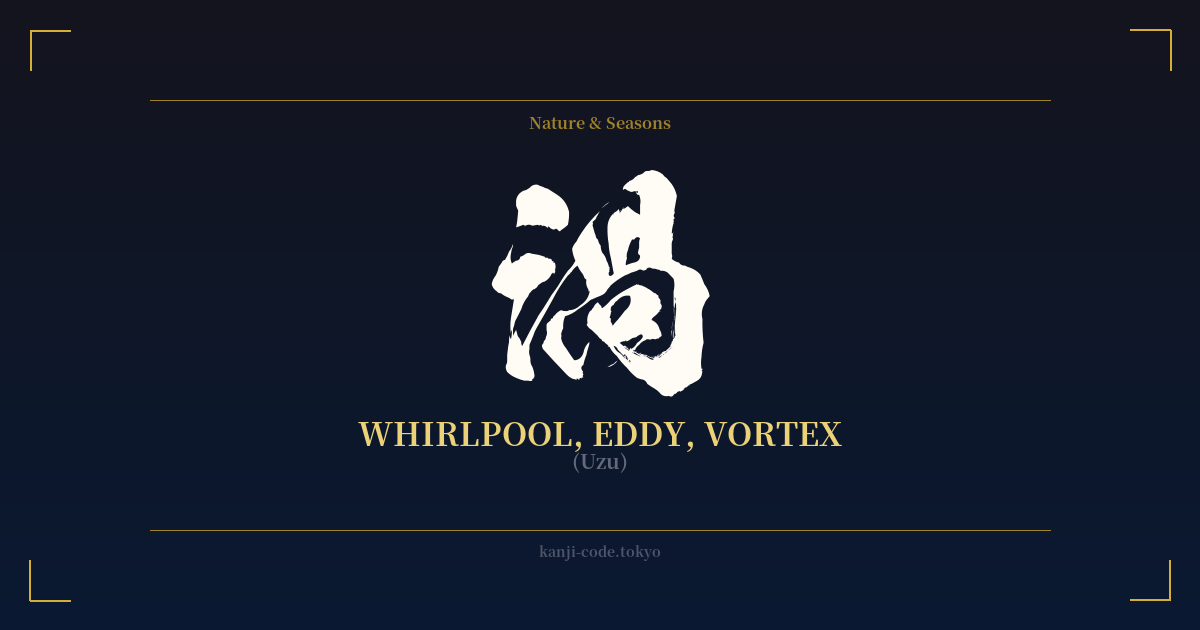
✍️ 渦 (Uzu) — Cultural Context
The kanji 渦 (Uzu) paints a vivid picture of one of nature's most mesmerizing and formidable displays: the whirlpool. Its primary meaning is a swirling vortex of water, an eddy, or any spiral motion that pulls things toward its center. This character captures not just the physical phenomenon but also the raw, untamable power it represents.
In Japan, the most famous example is the Naruto Whirlpools (鳴門の渦潮, Naruto no Uzushio). These are massive, fast-moving tides that form in the strait between Awaji Island and Shikoku. Reaching diameters of up to 20 meters, they are a powerful and awe-inspiring natural wonder, drawing tourists and inspiring artists for centuries. The character 渦 is inextricably linked to this real-world display of nature's force.
The character's construction itself is wonderfully illustrative. It is composed of the radical 氵(sanzui), which signifies water, and the phonetic component 咼 (ka), which is thought to depict a distorted or swirling shape. Together, they create a symbol that visually and conceptually means 'swirling water'.
Beyond its literal meaning, 渦 is a potent metaphor in Japanese culture and language. It can describe a vortex of emotions, such as being caught in a 'whirlpool of passion' (情熱の渦, jōnetsu no uzu) or a 'whirlpool of suspicion' (疑惑の渦, giwaku no uzu). It signifies being drawn into a chaotic situation, a state of confusion, or a cycle from which it is difficult to escape. This metaphorical depth gives the kanji a philosophical weight, representing the overwhelming forces in life, both internal and external.
Undoubtedly, the most significant modern cultural reference for 渦 comes from the world-famous manga and anime series, Naruto. The protagonist, Naruto Uzumaki, bears a name that literally translates to 'whirlpool'. His clan's symbol is a red spiral, representing an uzu, which is prominently displayed on his clothing. His signature jutsu, the Rasengan, is a spinning vortex of chakra held in the palm of his hand. This association has propelled the symbol of the whirlpool into global pop culture consciousness, making 渦 instantly recognizable to millions of fans worldwide.
🖌️ Font Styles for 渦
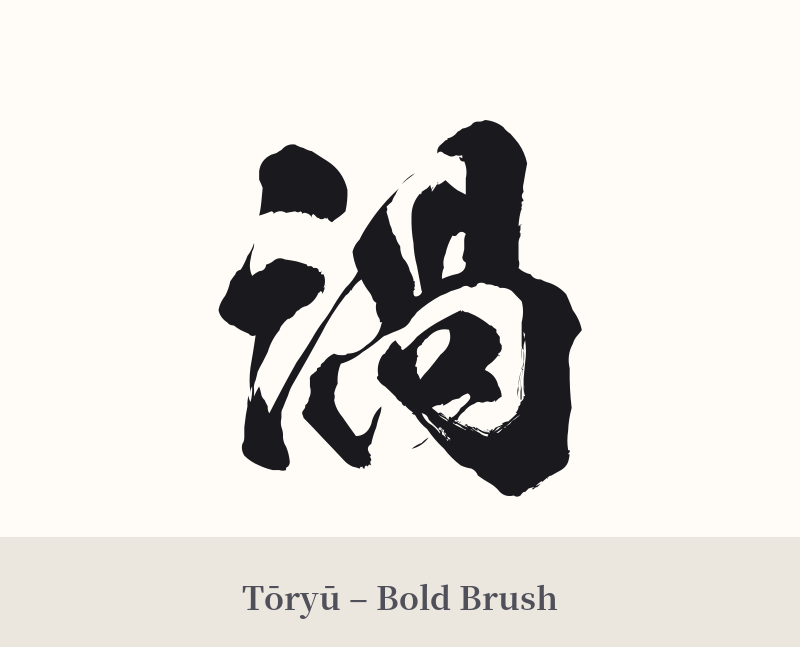
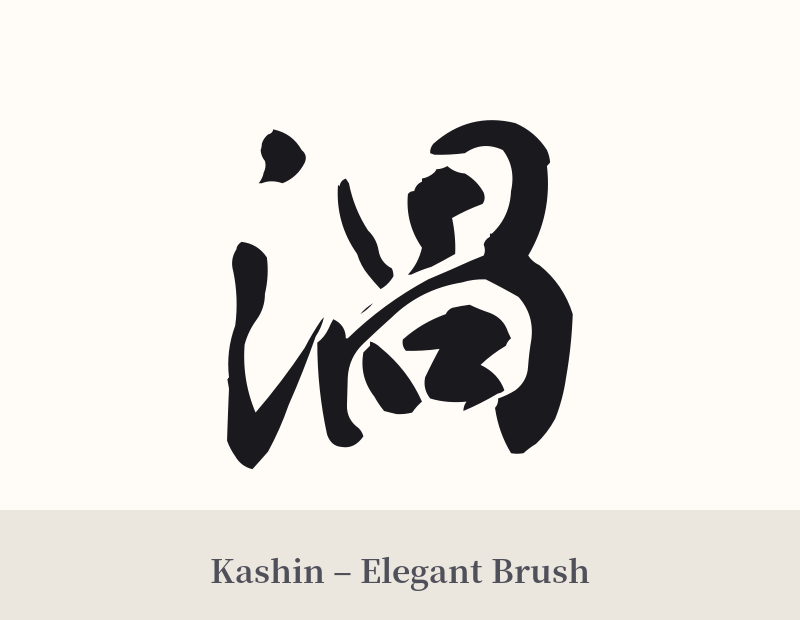
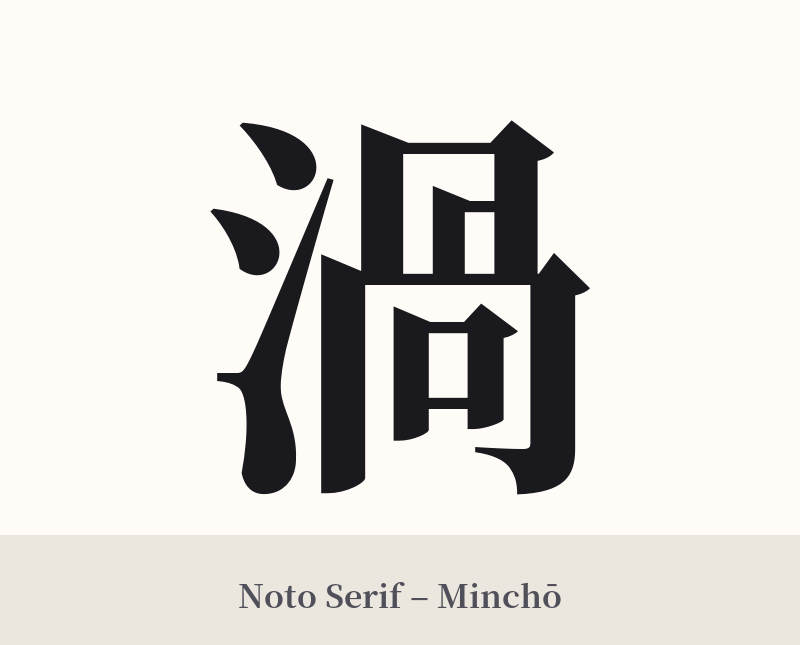
The same kanji can look dramatically different depending on the calligraphy style. Choose a font that matches the mood you want for your tattoo or design.
🎨 Tattoo Suitability
📐 Tattoo Design Guide
The kanji 渦 (Uzu) offers fantastic design possibilities due to its inherent sense of motion.
– Placement: This character works well in areas that can emphasize its circular nature. The shoulder cap, calf muscle, or the center of the back are excellent spots. For a smaller design, the forearm or wrist allows for visibility.
– Font Style: To capture the feeling of flowing water, a semi-cursive (gyōsho) or full-cursive (sōsho) calligraphy style is highly recommended. These styles use fluid, connected strokes that enhance the kanji's dynamic energy. For a design that emphasizes raw power and stability within the chaos, a bold, angular block script (kaisho) can provide a striking contrast.
– Visual Tips: Consider integrating the kanji into a larger image. The character 渦 could be the eye of a storm or the center of a stylized water whirlpool. Using blue or grey ink for the character, or having it emerge from a splash of water, can directly tie it to its elemental origin. The spiral motif can be extended outward from the character itself to create a beautiful, flowing composition.
Comments