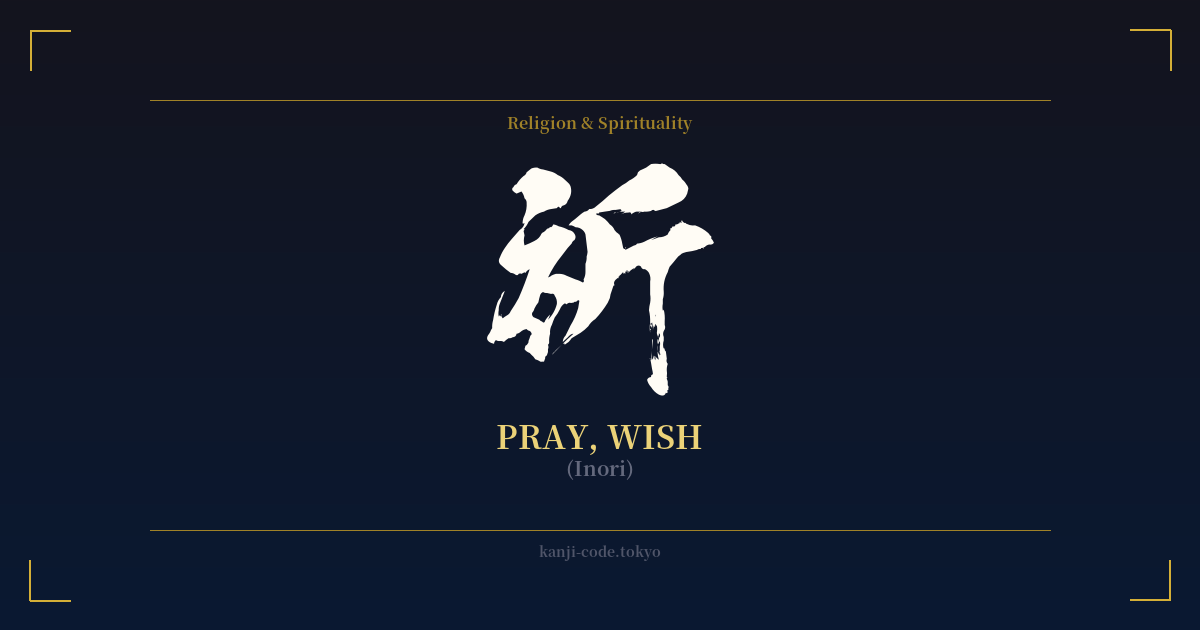
✍️ 祈 (Inori) — Cultural Context
The single character 祈, read as 'inori,' is the Japanese embodiment of prayer, wish, and supplication. It captures the quiet, profound act of turning one's heart and hopes towards a higher power, fate, or the universe itself. This kanji is deeply woven into the spiritual fabric of Japan, bridging ancient rituals with modern personal sentiments.
Etymologically, 祈 is a fascinating combination of two distinct radicals. On the left is 示 (shimesuhen), a radical derived from the image of an altar used for offerings to the gods. This component instantly grounds the character in the realm of the sacred and divine. On the right is 斤 (ono), which depicts an axe. The combination might seem unusual, but it's thought to represent the act of shaping wood for a ritual or making a definitive, 'cutting' appeal to the deities—a prayer made with sharp, clear intent.
In Japan, the act of 'inori' is a common sight at both Shinto shrines (神社, jinja) and Buddhist temples (お寺, otera). At a shrine, one might ring a bell, bow twice, clap twice to get the attention of the kami (deity), and then offer a silent prayer with hands held together. Visitors often write their wishes on small wooden plaques called 'ema' (絵馬) and hang them on the shrine grounds, a physical manifestation of 祈.
In a Buddhist context, prayer might involve lighting incense (お線香, osenko), chanting sutras, or simply sitting in quiet contemplation before a statue of Buddha or a Bodhisattva. In both traditions, 'inori' is an act of reverence, humility, and hope.
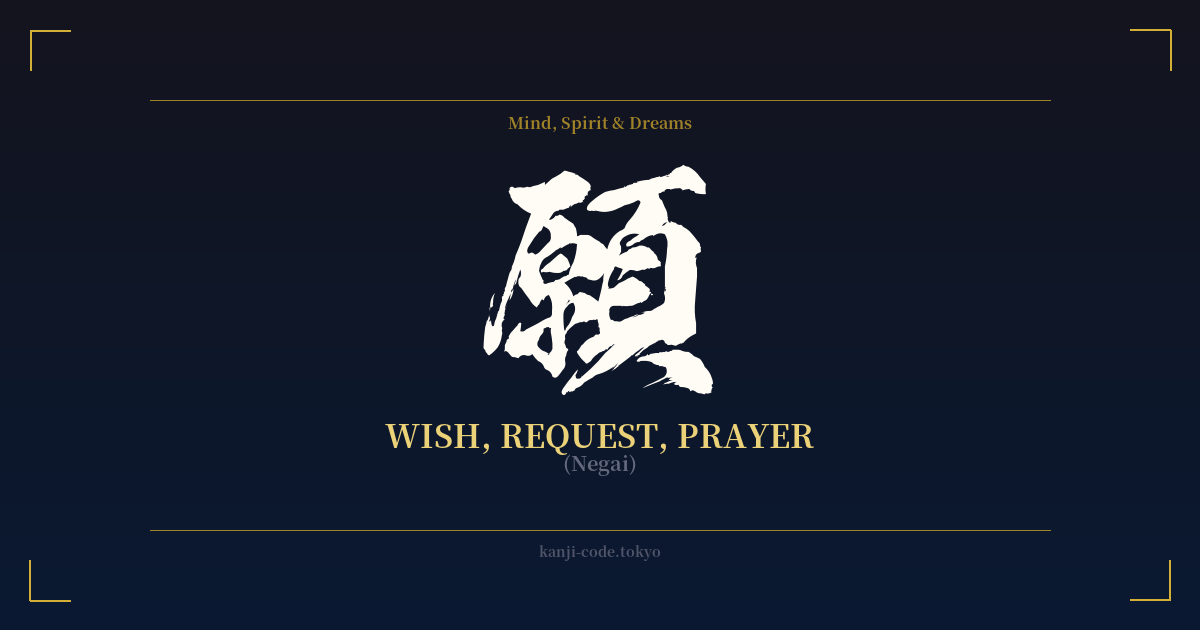
Beyond formal religion, 祈 permeates everyday Japanese language and culture. People say they 'pray for health' (健康を祈る, kenkō o inoru) or 'wish for success' (成功を祈る, seikō o inoru). It's a word of sincere hope, often used when wishing someone well on a journey or during a difficult time. It carries more weight and solemnity than the more general word for 'wish,' 願い (negai). While 'negai' can be a simple want or request, 'inori' implies a deeper level of sincerity and a connection to something greater than oneself. It is the silent, heartfelt plea for peace, protection, or a positive outcome.
🖌️ Font Styles for 祈
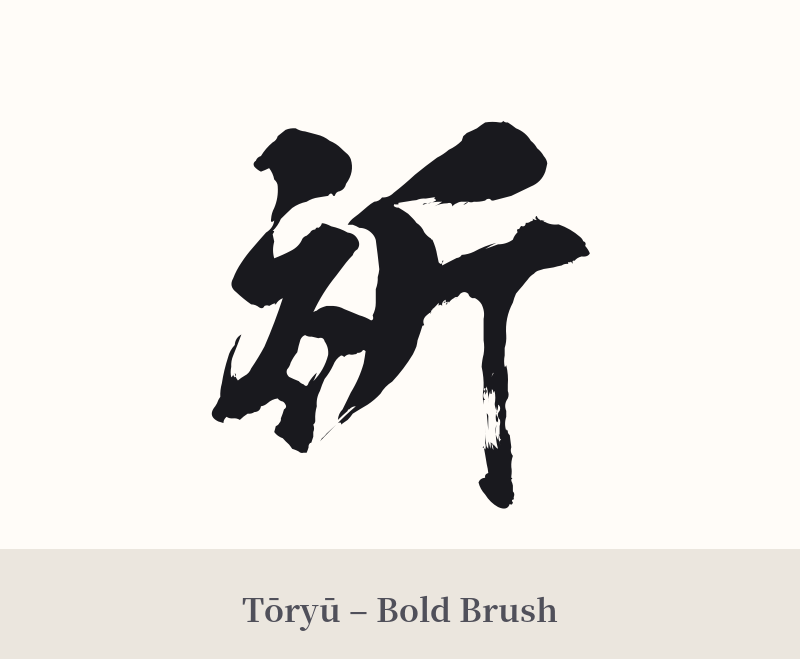
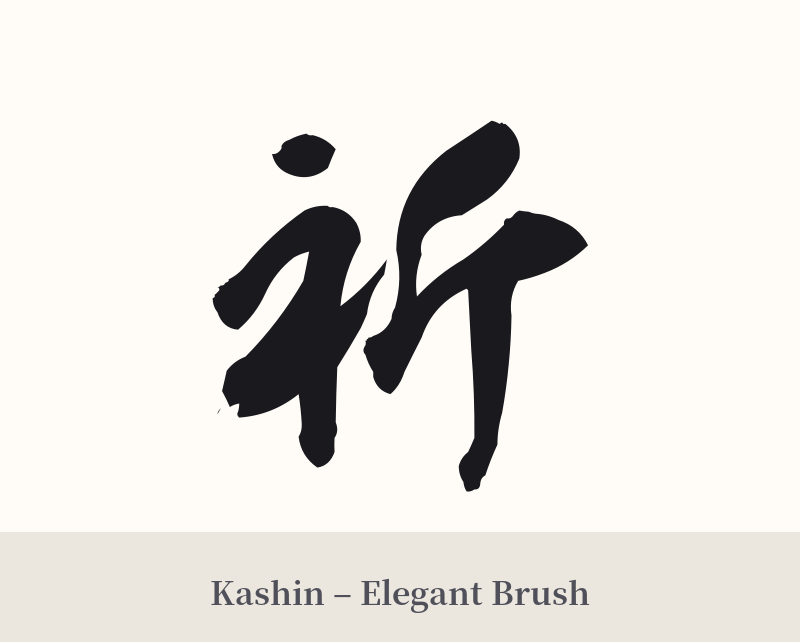
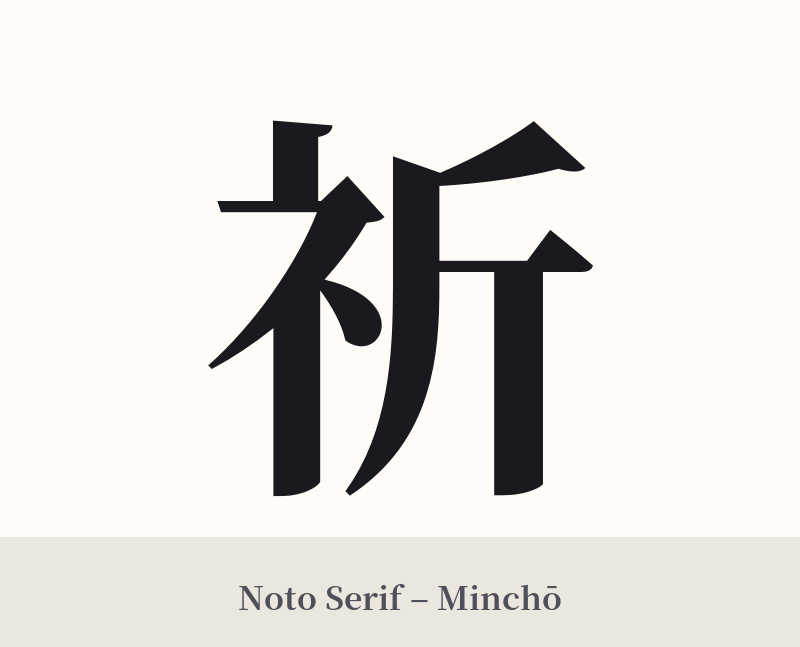
The same kanji can look dramatically different depending on the calligraphy style. Choose a font that matches the mood you want for your tattoo or design.
🎨 Tattoo Suitability
📐 Tattoo Design Guide
The kanji 祈 offers a blend of spiritual significance and elegant simplicity, making it a versatile choice for a tattoo design.
– Placement: Consider locations that feel personal and reflective. The inner forearm allows for private contemplation, while the back of the neck or between the shoulder blades can create a subtle, graceful statement. Placing it over the heart or on the ribs reinforces its meaning as a heartfelt wish.
– Font Style: An expressive, flowing calligraphy (shodō) style can emphasize the spiritual and emotional nature of the prayer. For a more modern and clean aesthetic, a crisp Mincho (serif) or Gothic (sans-serif) font provides a look of reverence and clarity.
– Visual Elements: While it stands beautifully on its own, 祈 can be paired with complementary imagery. Consider incorporating elements like a lotus flower to symbolize purity and enlightenment, a single cherry blossom for the beauty of a fleeting moment, or subtle wisps of incense smoke to represent the prayer ascending.
Comments