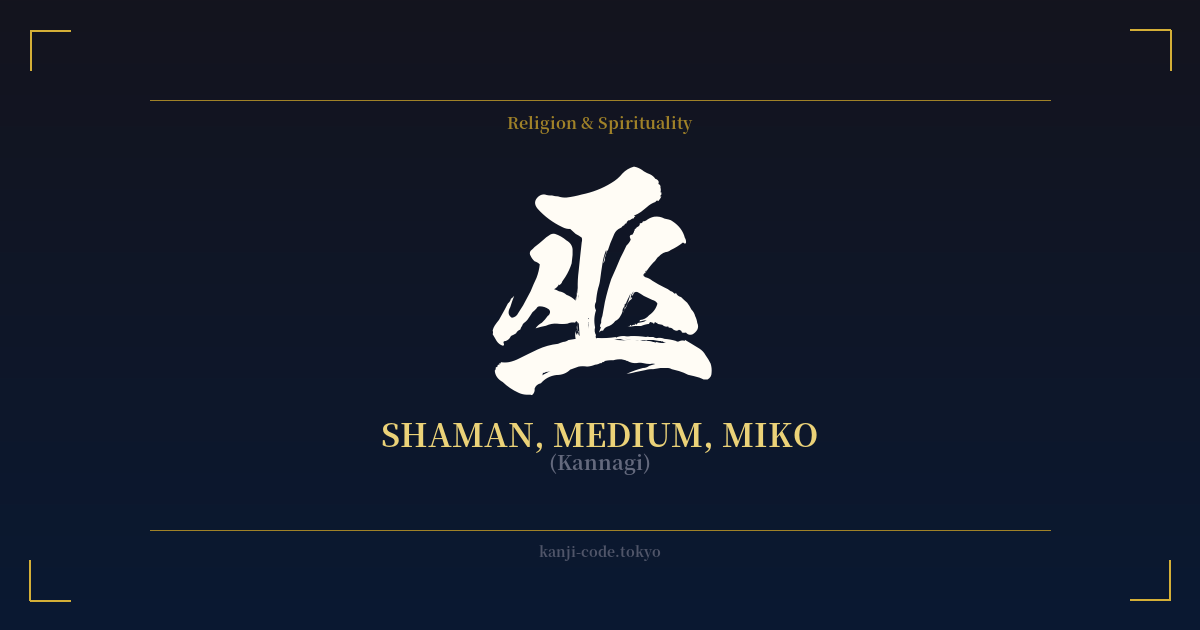
✍️ 巫 (Kannagi) — Cultural Context
The kanji 巫, read as 'kannagi,' is a window into the ancient spiritual landscape of Japan. It represents a shaman, medium, or oracle—a person who serves as a bridge between the physical world and the realm of the gods, or 'kami.' Its form is a pictograph, beautifully illustrating its function. The character is composed of the radical for 'work' (工) sandwiched between two depictions of a 'person' (人). This central element symbolizes an axis or tool that connects the human realm (the two people) to the divine, suggesting a sacred duty or craft.
Historically, the 'kannagi' were central figures in pre-Buddhist Japan. They were often women who would enter trance-like states to channel the voices of the kami, deliver prophecies, and perform purification rituals. The legendary Queen Himiko of the Yamatai kingdom, mentioned in ancient Chinese texts, is perhaps the most famous example of a powerful shamaness ruler whose spiritual authority was inseparable from her political power.
This character is the root of the more commonly known term 'miko' (巫女), which translates to 'shrine maiden.' While modern miko at Shinto shrines primarily perform ceremonial duties, such as sacred dances (kagura) and assisting priests, their role is a direct descendant of the ancient kannagi. The original shamanistic function has become more formalized over centuries, but the essence of serving the kami remains.
In contemporary Japan, the image of the miko is iconic, frequently appearing in anime, manga, and video games. These portrayals have made the white and red garments of the shrine maiden instantly recognizable worldwide. However, this pop culture familiarity often simplifies the deep history behind the 巫 character. It represents not just a charming figure in a pretty uniform, but a profound spiritual tradition of intuition, divination, and communion with nature and the divine.
Choosing 巫 is to embrace a symbol of spiritual sensitivity and a connection to Japan's animistic past. It speaks to the idea that there are worlds beyond our immediate perception and that some individuals possess the unique ability to mediate between them. It is a character of quiet power, balance, and deep mystery.
🖌️ Font Styles for 巫
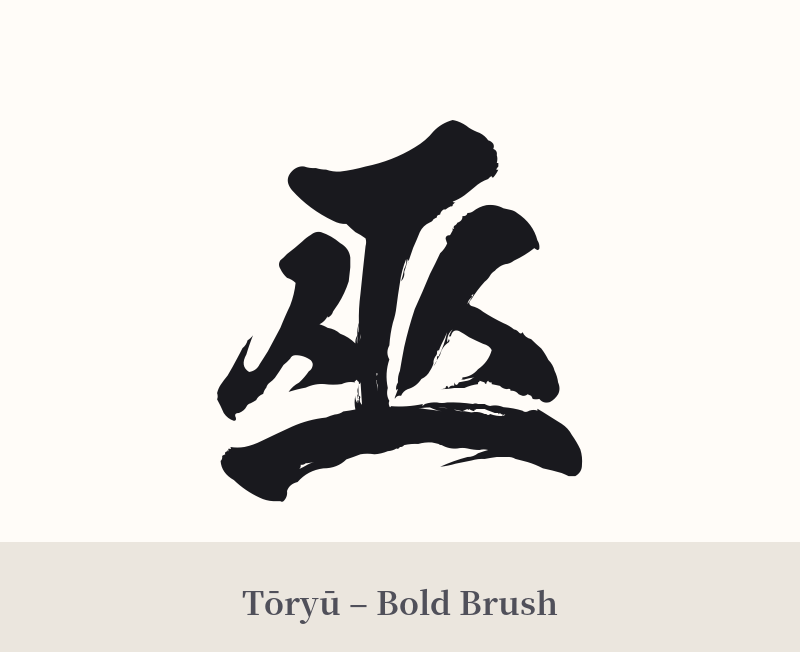
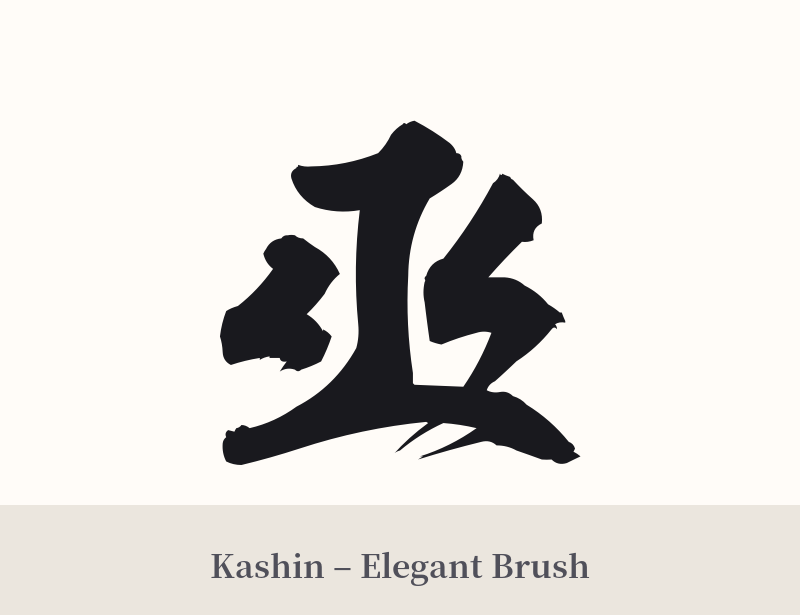
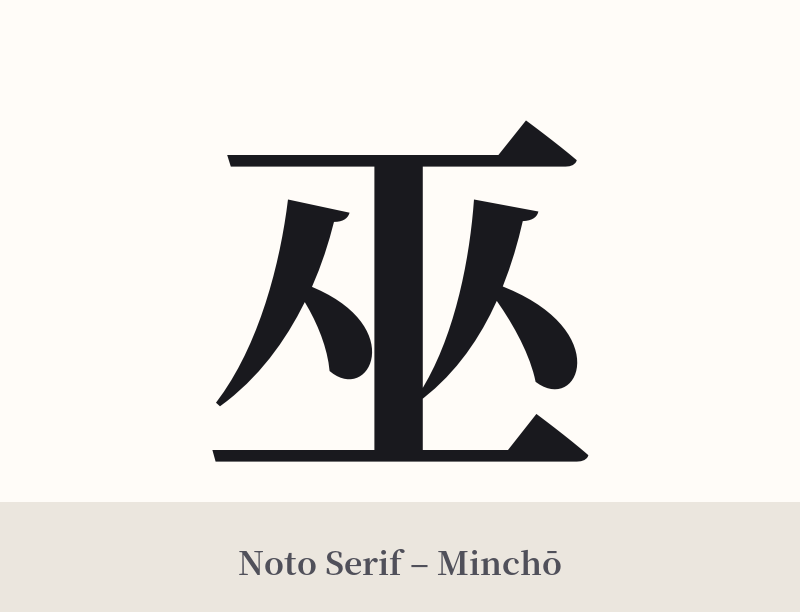
The same kanji can look dramatically different depending on the calligraphy style. Choose a font that matches the mood you want for your tattoo or design.
🎨 Tattoo Suitability
📐 Tattoo Design Guide
The kanji 巫 has a beautifully balanced and symmetrical structure, making it a versatile choice for a tattoo. Its simplicity lends itself well to a variety of styles and placements.
– Placement Suggestions: For a personal and centered feeling, consider placing it on the back of the neck, between the shoulder blades, or on the inner forearm. Its vertical symmetry also works well along the spine or on the sternum.
– Font Style Recommendations: A traditional calligraphy brushstroke (shodō) style is a perfect match, emphasizing its ancient origins and elegant form. A minimalist, clean-lined font would also highlight its simple geometry. Avoid overly complex or aggressive styles, which would clash with the character's serene and spiritual nature.
– Visual Tips: This kanji can stand powerfully on its own. If you wish to incorporate it into a larger piece, consider pairing it with other Shinto-related imagery like a torii gate, shimenawa (sacred rope), or subtle natural elements like flowing water or cherry blossom petals to create a cohesive spiritual theme.
Comments