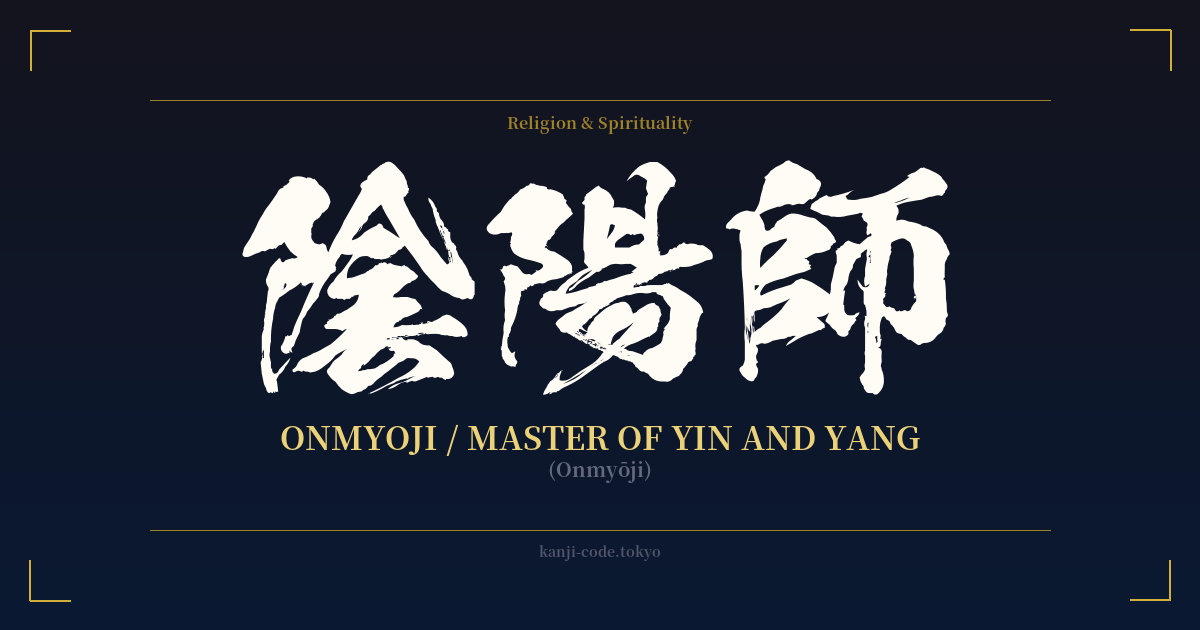
✍️ 陰陽師 (Onmyōji) — Cultural Context
The term 陰陽師 (Onmyōji) translates to "Master of Yin and Yang," but this simple title belies a rich and fascinating role in Japanese history. These figures were more than mere mystics; they were specialists in Onmyōdō, "The Way of Yin and Yang," a complex system of natural science, astronomy, and occultism imported from China.
During Japan's Heian period (794-1185), Onmyōji were esteemed civil servants working for the imperial court within the Bureau of Onmyō (陰陽寮, Onmyōryō). Their official duties were practical and vital to the state. They were tasked with creating calendars, tracking celestial bodies, interpreting auspicious and inauspicious omens, and performing divination to guide political decisions.
Beyond these bureaucratic functions, Onmyōji were believed to wield supernatural power. They were called upon to protect the capital and its noble inhabitants from malevolent spirits (oni), vengeful ghosts (onryō), and other supernatural threats (yōkai). They accomplished this through complex rituals, amulets (ofuda), and the summoning of servant spirits known as shikigami.
The most legendary Onmyōji of all time is Abe no Seimei (安倍晴明), a historical figure from the 10th century whose life has been embellished into folklore. Legends claim his mother was a powerful kitsune (fox spirit), granting him innate supernatural abilities. He became the ultimate archetype of the wise, powerful, and enigmatic spiritual protector, and his symbol, the Seiman pentagram, is still a powerful icon of protection in Japan.
After the Heian period, the official court status of Onmyōji declined, and they transitioned into a more folk-based role, serving common people as spiritualists and fortune-tellers. However, the figure of the Onmyōji never truly left the Japanese cultural imagination.
In modern times, the Onmyōji has experienced a massive resurgence in popular culture. They are central figures in countless manga, anime (like Jujutsu Kaisen, which draws heavily on Onmyōdō concepts), video games, and films. This has transformed the Onmyōji from a historical courtier into a powerful sorcerer archetype, a hero who battles demons and navigates the spirit world, ensuring their legacy continues to captivate audiences worldwide.
🖌️ Font Styles for 陰陽師
The same kanji can look dramatically different depending on the calligraphy style. Choose a font that matches the mood you want for your tattoo or design.
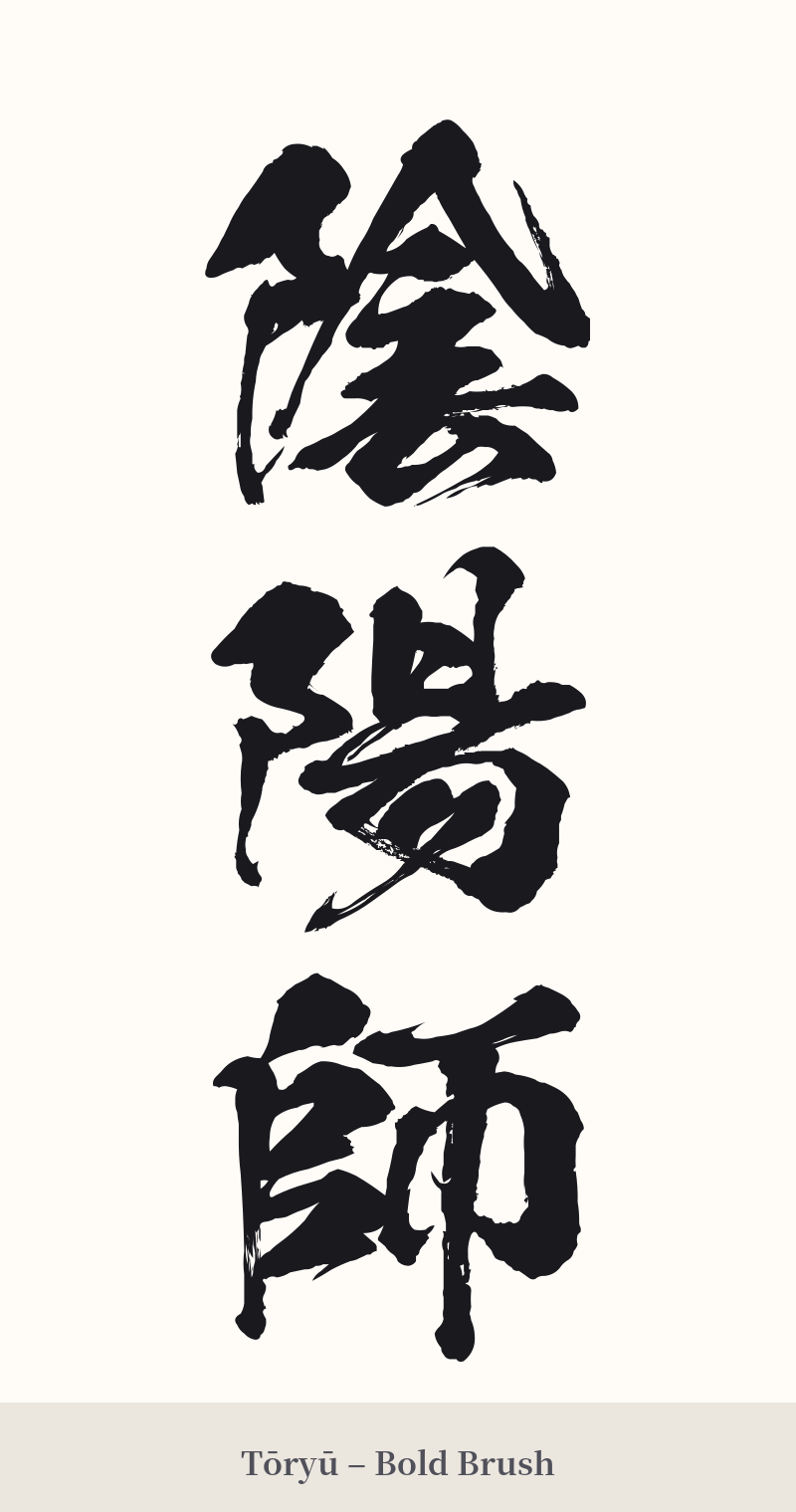
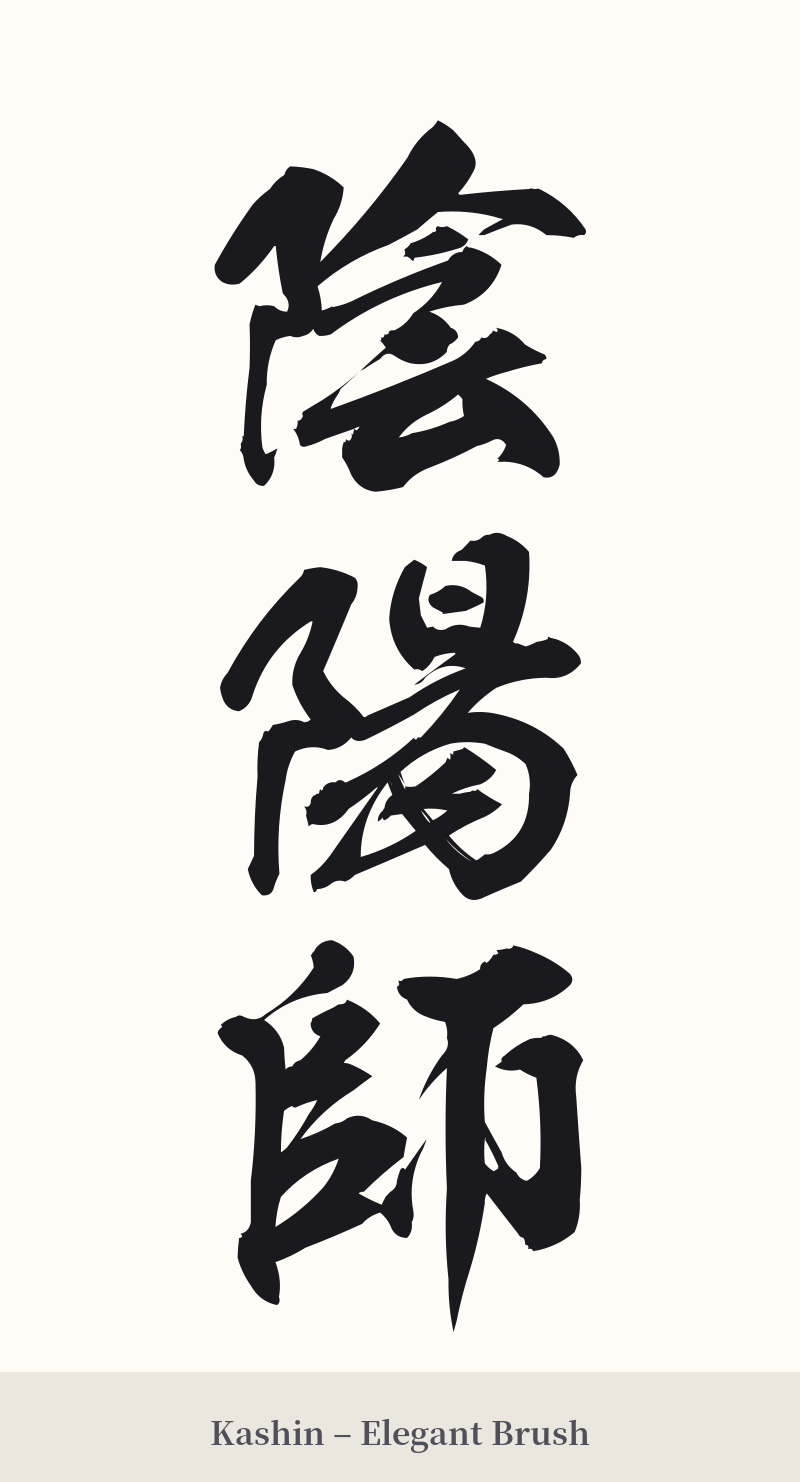
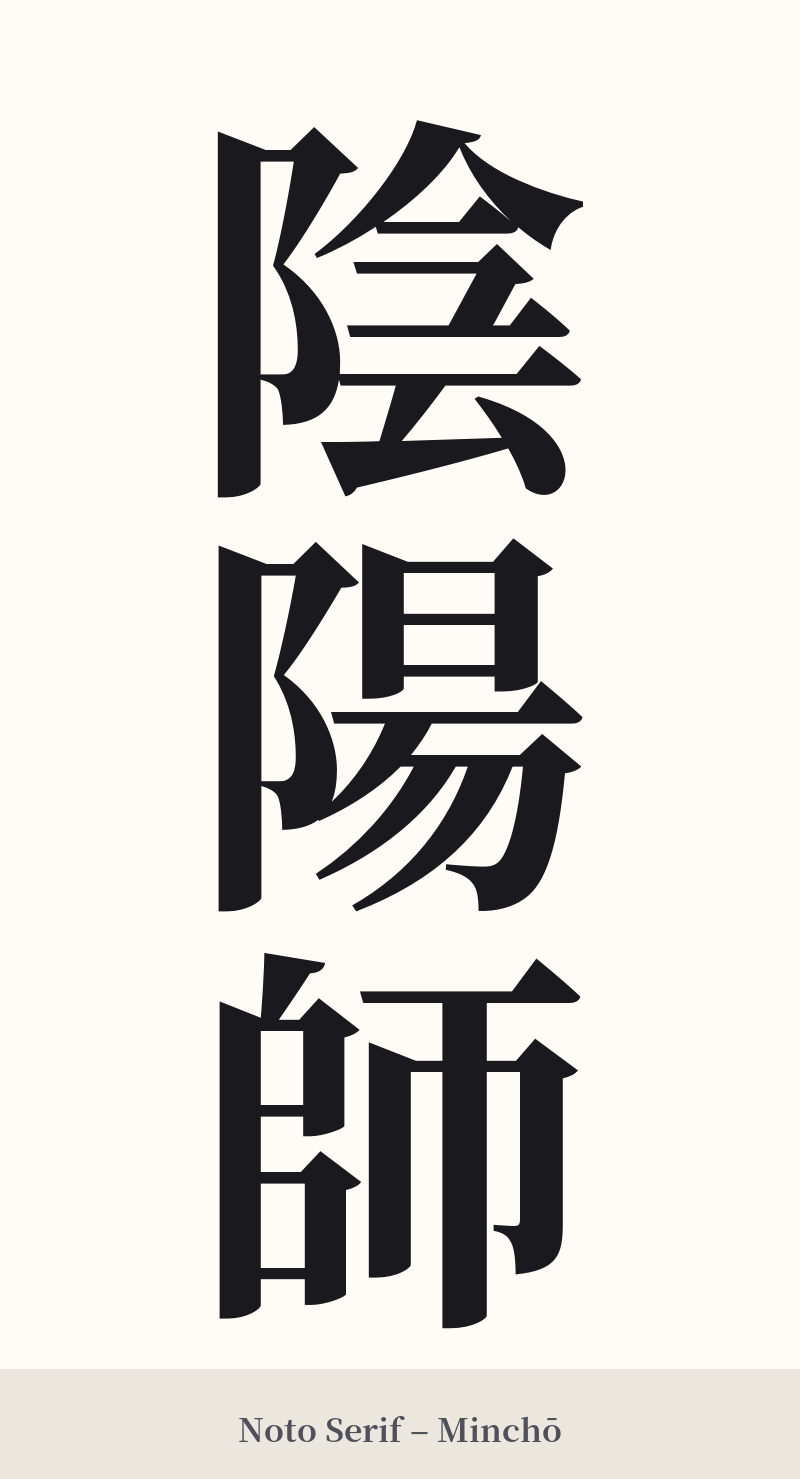
🎨 Tattoo Suitability
📐 Tattoo Design Guide
The three characters of 陰陽師 lend themselves beautifully to a tattoo, but thoughtful design is key to honoring their complexity.
– Placement: Due to the detail, this design works best on larger, flatter areas of the body. A vertical alignment on the forearm, calf, spine, or thigh is classic and visually powerful. For a horizontal design, the back of the neck or across the chest are good options.
– Style: A traditional Japanese calligraphy style (shodō) is highly recommended. A dynamic, semi-cursive gyōsho script can add a sense of magical energy, while a formal, blocky kaisho script emphasizes its historical authority. Avoid overly thin or simplistic fonts that fail to capture the weight of the characters.
– Visual Elements: Consider pairing the kanji with related imagery. The Seiman (pentagram) or Doman (lattice pattern) are classic Onmyōji symbols of protection. Other powerful additions could include swirling clouds, celestial maps, paper talismans (ofuda), or a guardian shikigami like a fox or crow.
Comments