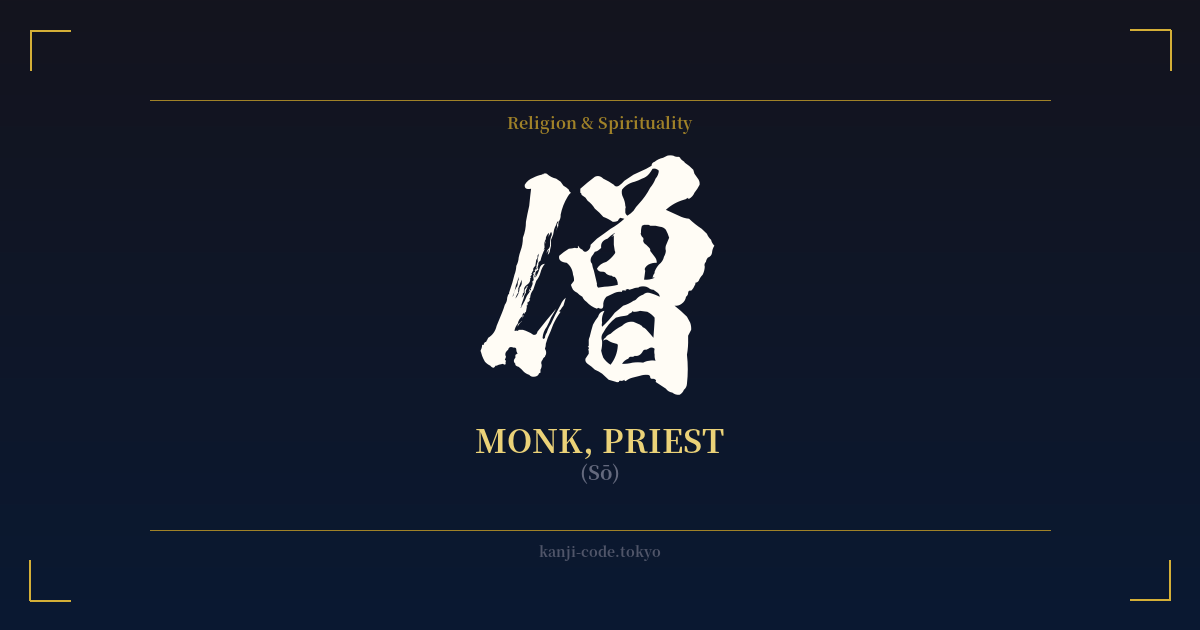
✍️ 僧 (Sō) — Cultural Context
The kanji 僧 (sō) is a single character that carries the weight of centuries of spiritual tradition in Japan. Its primary meaning is 'monk' or 'priest,' but its origins reveal a deeper connection to the very foundation of Buddhism. The character itself is a fascinating combination of the radical 亻, meaning 'person,' and the phonetic component 曾, which originally depicted layers. This subtly hints at a person who is part of a structured, layered community.
Indeed, 僧 is an abbreviation of the word 僧伽 (sōgya), which is the Japanese phonetic transliteration of the Sanskrit word 'Sangha.' In Buddhism, the Sangha is one of the Three Jewels (along with the Buddha and the Dharma) and refers to the community of ordained monks and nuns. Therefore, the character is not just about an individual but embodies the concept of the collective spiritual body, the community that upholds and transmits the teachings.
In Japanese history and culture, the monk holds a complex and revered position. From the ascetic hermits practicing Shugendō in the mountains to the scholarly monks of the great Nara and Kyoto temples, the figure of the 'sō' has been central. They were not only spiritual guides but also scholars, artists, poets, and sometimes even political advisors. Figures like Kūkai, the founder of Shingon Buddhism, or Ikkyū Sōjun, the eccentric Zen master, are legendary figures who have shaped Japanese culture far beyond religious circles.
It is crucial to understand that 僧 specifically denotes a Buddhist practitioner. It is not used for priests of Japan's other major religion, Shinto, who are called 'kannushi' (神主). This distinction is absolute. The image associated with 僧 is one of discipline, meditation (zazen), the pursuit of enlightenment (satori), and a life renounced of worldly attachments. This idealized image is powerful, though history also tells of 'sōhei' (僧兵), or warrior monks, who were formidable military forces, demonstrating the multifaceted role monks have played throughout Japan's feudal period.
Today, the kanji 僧 continues to be used to refer to Buddhist monks who run temples, perform funeral rites, and offer spiritual guidance. It represents a lineage of practice and a commitment to a path of inner cultivation, making it a character filled with gravity, serenity, and profound historical resonance.
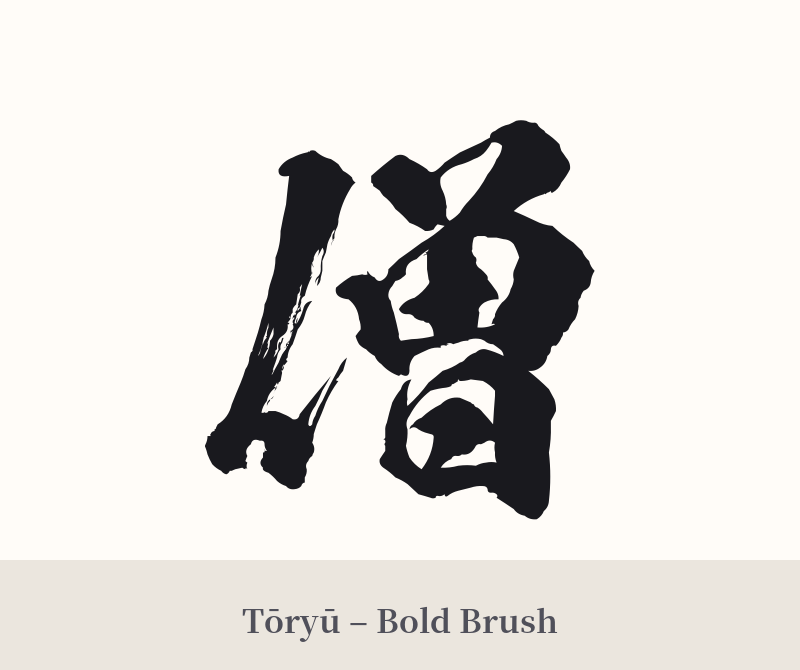
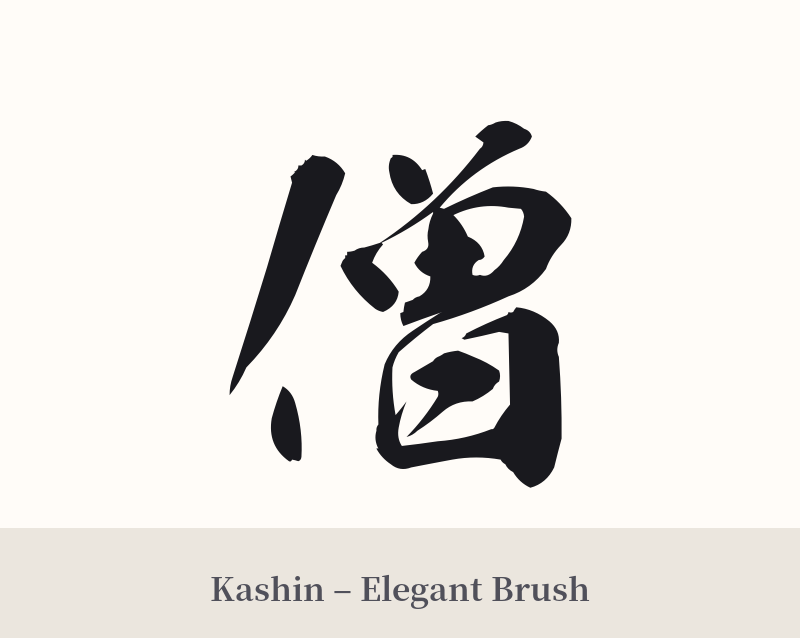
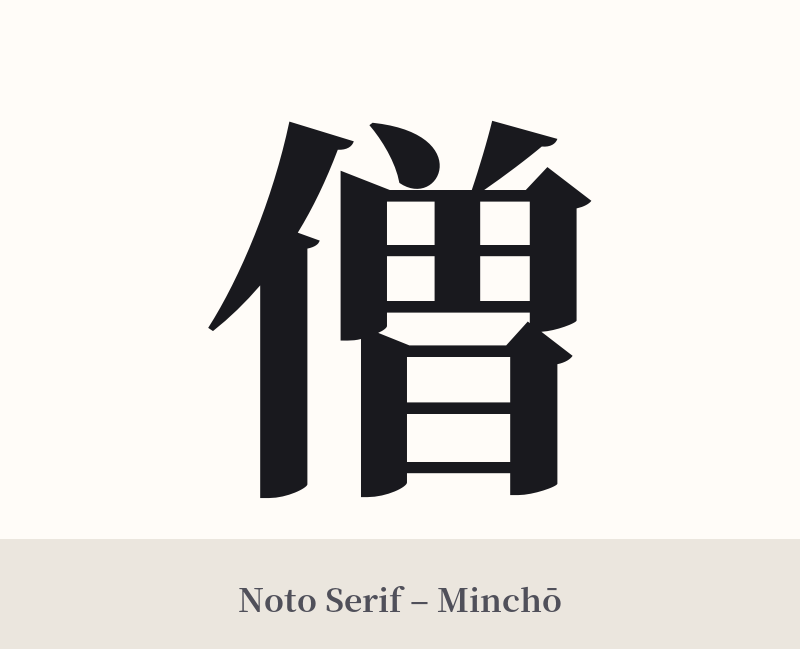
🖌️ Font Styles for 僧
The same kanji can look dramatically different depending on the calligraphy style. Choose a font that matches the mood you want for your tattoo or design.
🎨 Tattoo Suitability
📐 Tattoo Design Guide
The kanji 僧 offers a balanced and dignified aesthetic for a tattoo, reflecting its serious meaning.
– Placement: This character works well in vertical orientations. Consider the forearm, the calf, or along the spine. For a more contemplative placement, the inner bicep or across the ribs can be effective.
– Font Style: The choice of script can dramatically alter the feeling. A crisp, formal Kaisho (block) style emphasizes discipline and tradition. For a more fluid and artistic feel, a Gyōsho (semi-cursive) or Sōsho (cursive) style, reminiscent of Zen calligraphy, can evoke a sense of impermanence and spontaneity.
– Visual Tips: While 僧 stands powerfully on its own, it can be paired with complementary Buddhist symbols. A subtle lotus flower (蓮) below the character, or a faint Enso circle (円相) behind it, can add layers of meaning. However, avoid cluttering the design; the strength of this kanji lies in its focused simplicity and inherent meaning.
Comments