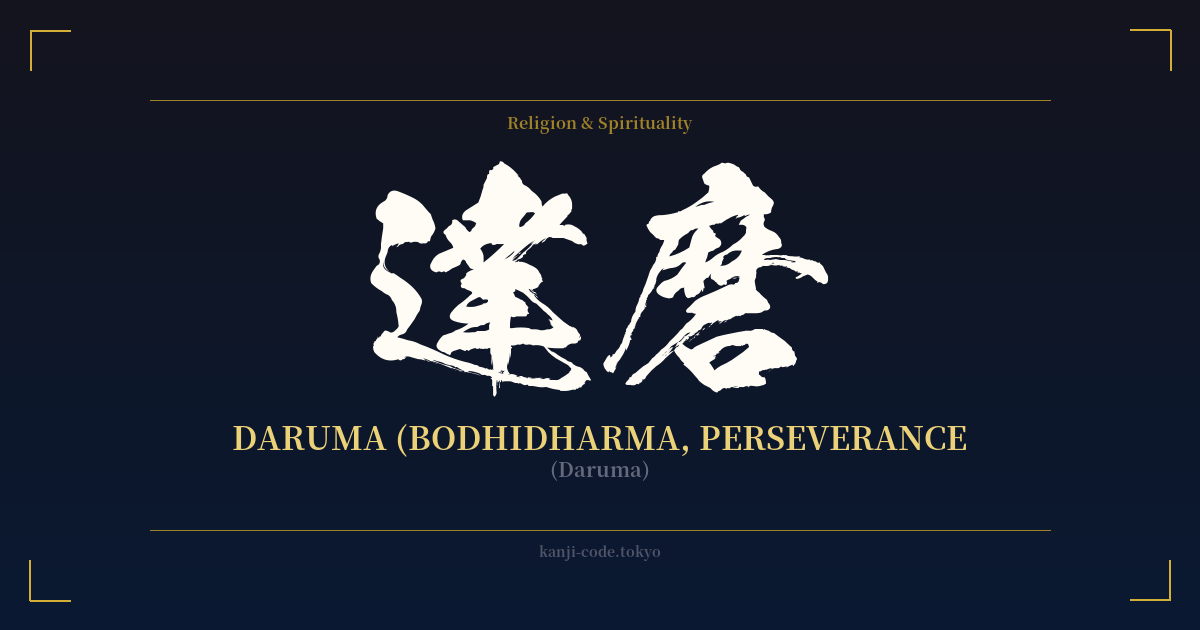
✍️ 達磨 (Daruma) — Cultural Context
The word 達磨 (Daruma) is more than just a name; it's a cornerstone of Japanese culture, embodying the spirit of resilience, determination, and the pursuit of goals. The kanji are a transliteration of 'Bodhidharma,' the semi-legendary Buddhist monk who is credited with transmitting Chan (Zen) Buddhism to China in the 5th or 6th century.
Legend tells of Bodhidharma's intense meditation in a cave, where he sat facing a wall for nine years without moving. This unwavering focus was so absolute that his arms and legs were said to have withered away from disuse. This powerful story of self-discipline and spiritual attainment is the direct inspiration for the iconic Daruma doll.
The Daruma doll is a spherical, hollow, and weighted papier-mâché figure, typically painted red, depicting the bearded face of Bodhidharma. Its rounded, limbless form is a direct reference to the legend. The doll is designed to be a roly-poly toy; no matter how many times you push it over, it will always return to an upright position. This physical characteristic perfectly illustrates the famous Japanese proverb, 七転び八起き (nanakorobi yaoki), which means "fall down seven times, get up eight."
In Japan, Daruma dolls are popular talismans for good luck and encouragement. When a person sets a new goal—be it for business, studies, or personal achievement—they purchase a doll with blank white eyes. They then paint in one of the doll's eyes while making their wish or committing to their goal. This act serves as a constant, visible reminder of their ambition. The doll sits, half-blinded, as a symbol of the unfinished journey.
Only when the goal is achieved is the second eye painted in, giving the Daruma its full sight and signifying the successful completion of the vow. This ritual is a powerful practice of focus and accountability. It transforms a simple wish into a tangible pact with oneself. For this reason, the word 達磨 itself is synonymous with perseverance, grit, and the unyielding spirit needed to overcome any obstacle.
🖌️ Font Styles for 達磨
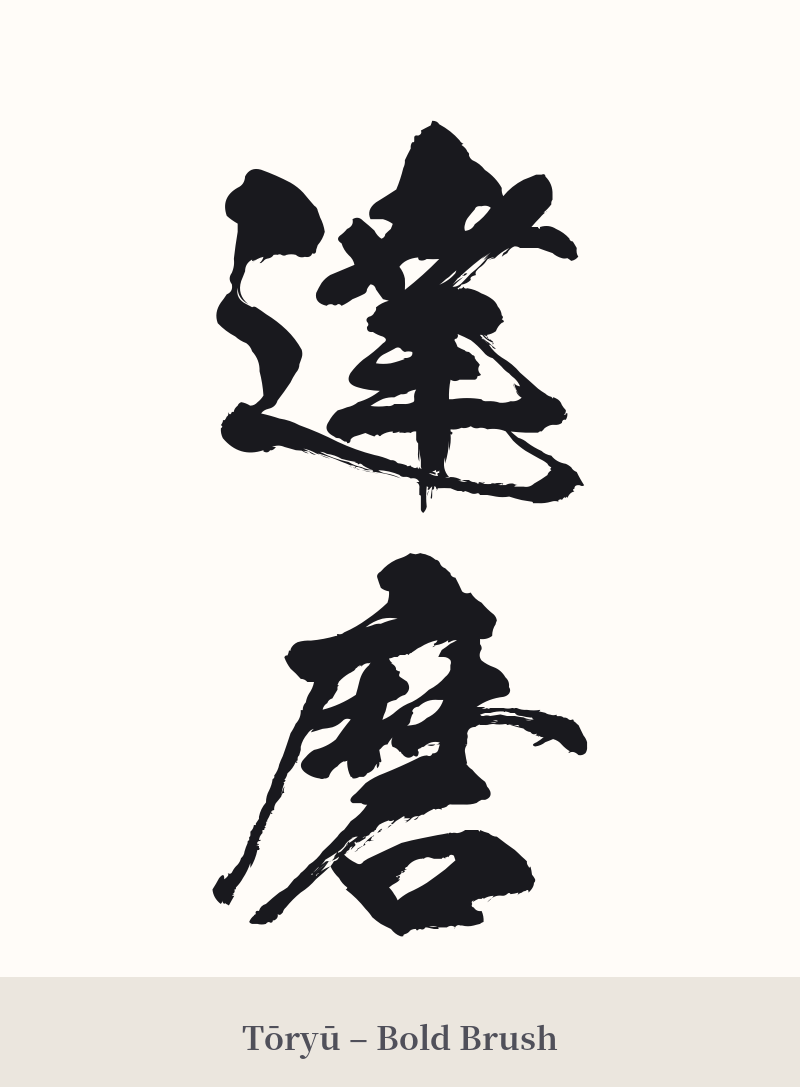
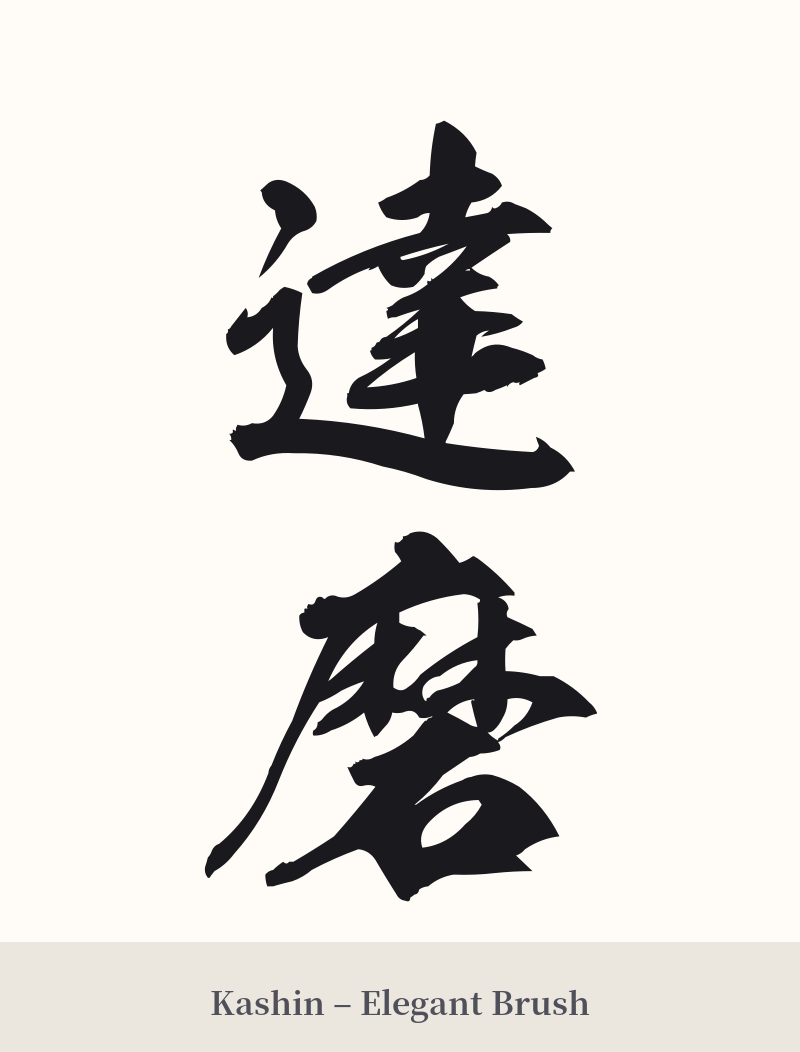
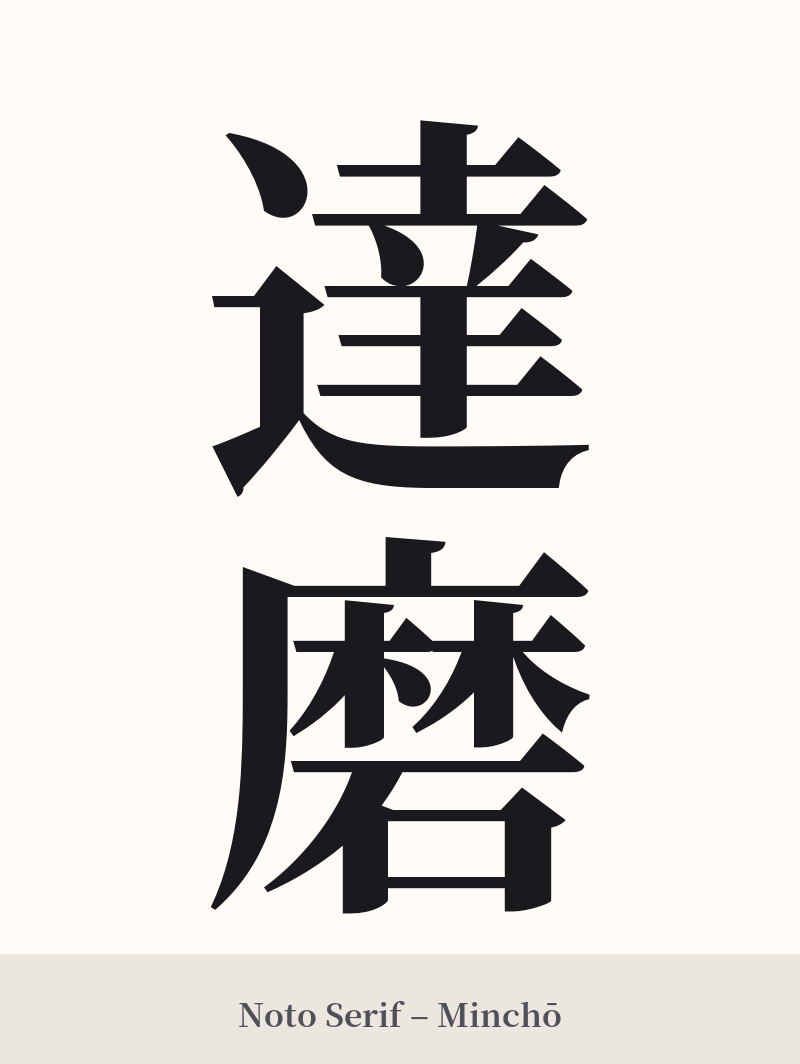
The same kanji can look dramatically different depending on the calligraphy style. Choose a font that matches the mood you want for your tattoo or design.
🎨 Tattoo Suitability
📐 Tattoo Design Guide
The kanji for Daruma offers a classic and powerful aesthetic. Its association with strength and focus makes it suitable for prominent placement.
– Placement: For a vertical orientation, the forearm, calf, or along the spine are excellent choices that complement the flow of the characters. For a horizontal or stacked design, the chest, back, or bicep provides a strong canvas.
– Font Style: A bold, expressive calligraphy style (shodō) works best. Gyōsho (semi-cursive) can convey a sense of dynamic energy, while a strong Kaisho (block script) emphasizes stability and power. Incorporating brushstroke effects like ink splatters (sumi-tobashi) can add a feeling of raw determination.
– Visual Complements: While the kanji stands strong on its own, it can be paired with an image of a Daruma doll, a lotus flower (symbolizing purity and enlightenment), or an enso circle (representing the void and enlightenment). To emphasize its core message, you could also incorporate the proverb 七転び八起き.
Comments