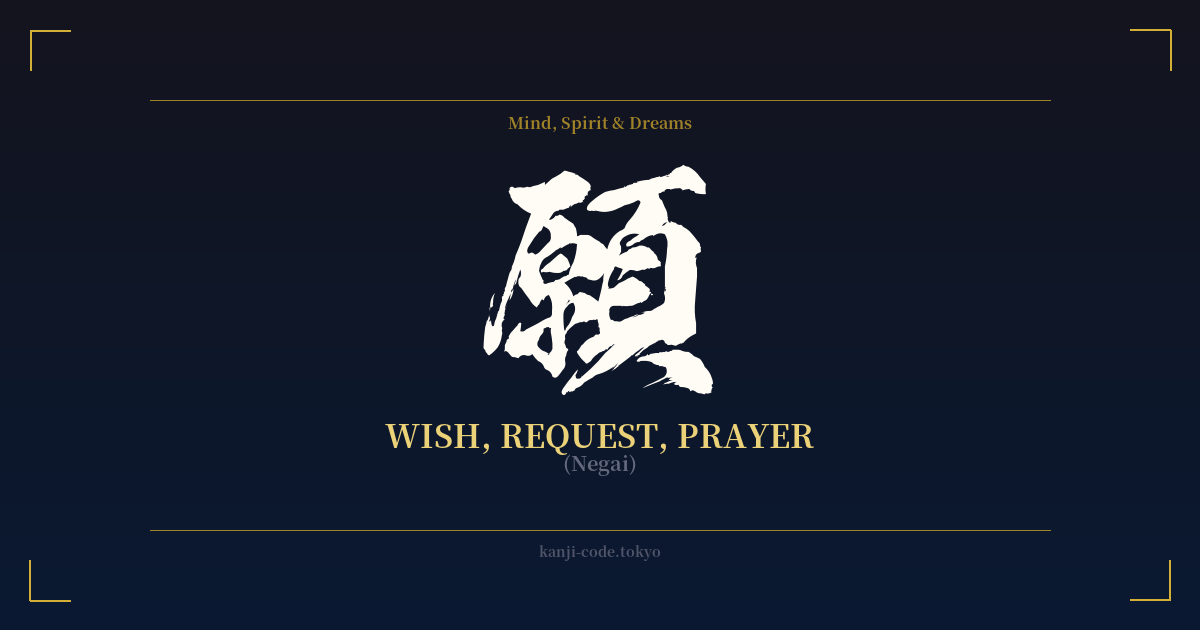
✍️ 願 (Negai) — Cultural Context
The kanji 願 (negai) is more than just a word in Japan; it's a cultural cornerstone, a vessel for the deepest hopes and desires of the human heart. It encapsulates everything from a child’s simple birthday wish to a profound spiritual prayer for peace or healing. This single character taps into a fundamental aspect of Japanese spirituality and daily life.
Etymologically, 願 is a fascinating combination of radicals. On the left is 原 (gen/hara), meaning 'original,' 'source,' or 'meadow.' On the right is 頁 (ōgai), a radical that depicts a head, representing the mind or a person. Together, they create a powerful image: a fundamental, original desire that springs forth from one's head or heart. It's not a fleeting thought, but a core aspiration.
This concept is woven into the fabric of religious and folk traditions. Visit any Shinto shrine or Buddhist temple in Japan, and you will see 願 in action. People write their wishes on small wooden plaques called ema (絵馬) and hang them for the gods, or kami, to see. These wishes range from passing an exam (gōkaku-kigan 合格祈願) to finding love or ensuring a healthy childbirth.
The character is also central to the concept of omamori (お守り), protective amulets sold at temples and shrines. Each amulet is dedicated to a specific type of wish, such as traffic safety or business prosperity, making the abstract idea of a 'wish' a tangible, personal object to carry.
Beyond the spiritual, 願 forms the root of one of the most common phrases in Japanese: onegai shimasu (お願いします). While often translated as a simple 'please' or 'I request,' its literal meaning is closer to 'I make a wish' or 'I offer a plea.' This imbues everyday requests with a layer of sincerity and humility, framing the interaction not as a demand, but as a heartfelt appeal. It shows how the deep, spiritual meaning of 願 has shaped even the most basic social interactions, lending them a sense of gravity and respect.
🖌️ Font Styles for 願
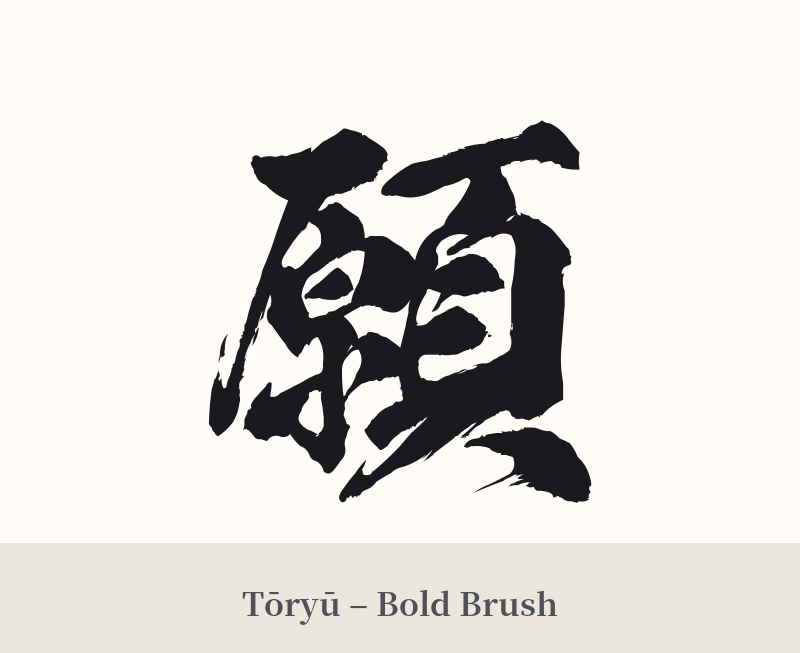
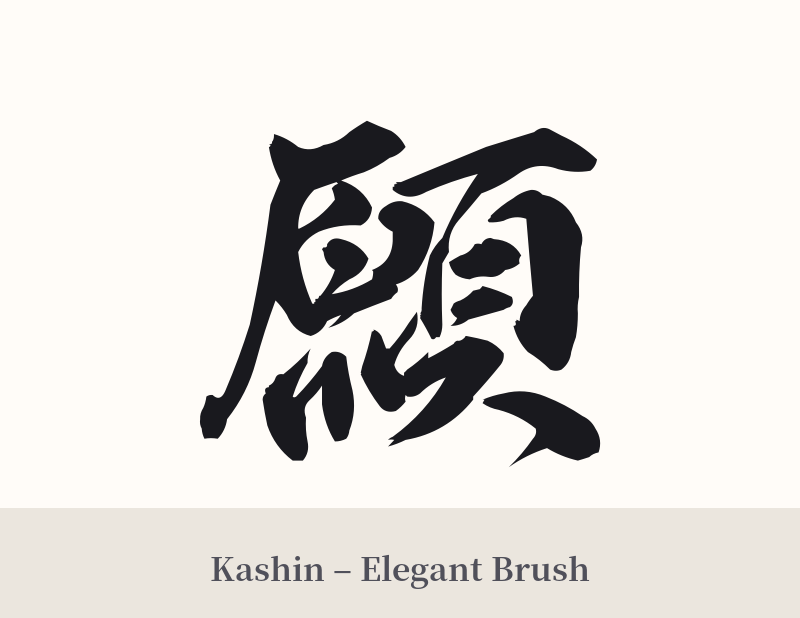
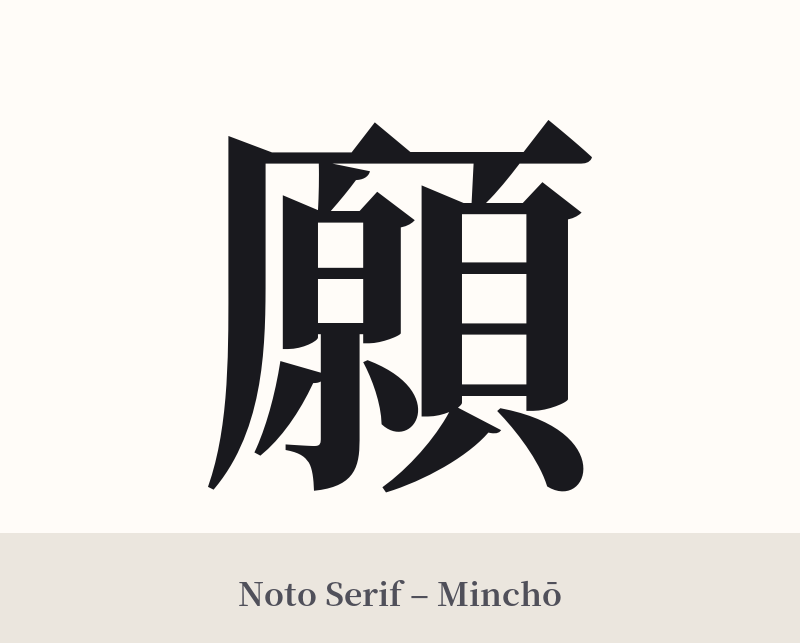
The same kanji can look dramatically different depending on the calligraphy style. Choose a font that matches the mood you want for your tattoo or design.
🎨 Tattoo Suitability
📐 Tattoo Design Guide
Due to its complexity, the design and placement of the 願 kanji are critical for a successful tattoo.
– Placement: Choose flat, larger areas of the body where the design won't distort. The forearm, calf, upper back, or shoulder blade are excellent choices. Avoid small, bony, or highly flexible areas like the wrist, fingers, or ankle, as the lines will likely blur over time.
– Size Matters: This is not a kanji for a small, discreet tattoo. To preserve the integrity of its 19 strokes, the design must be large enough for each line to have space. Discuss the minimum viable size with your artist.
– Font Style: A bold, clear script is essential. A strong Kaisho (block script) or a legible, flowing Gyōsho (semi-cursive script) can work well. Overly complex or thin-lined styles should be avoided as they will compromise long-term legibility.
– Complementary Elements: Consider pairing 願 with imagery that enhances its meaning. Cranes (symbolizing longevity and good fortune), a lotus flower (purity and enlightenment), or delicate cherry blossoms (the beautiful, transient nature of life and wishes) can frame the kanji beautifully.
Comments