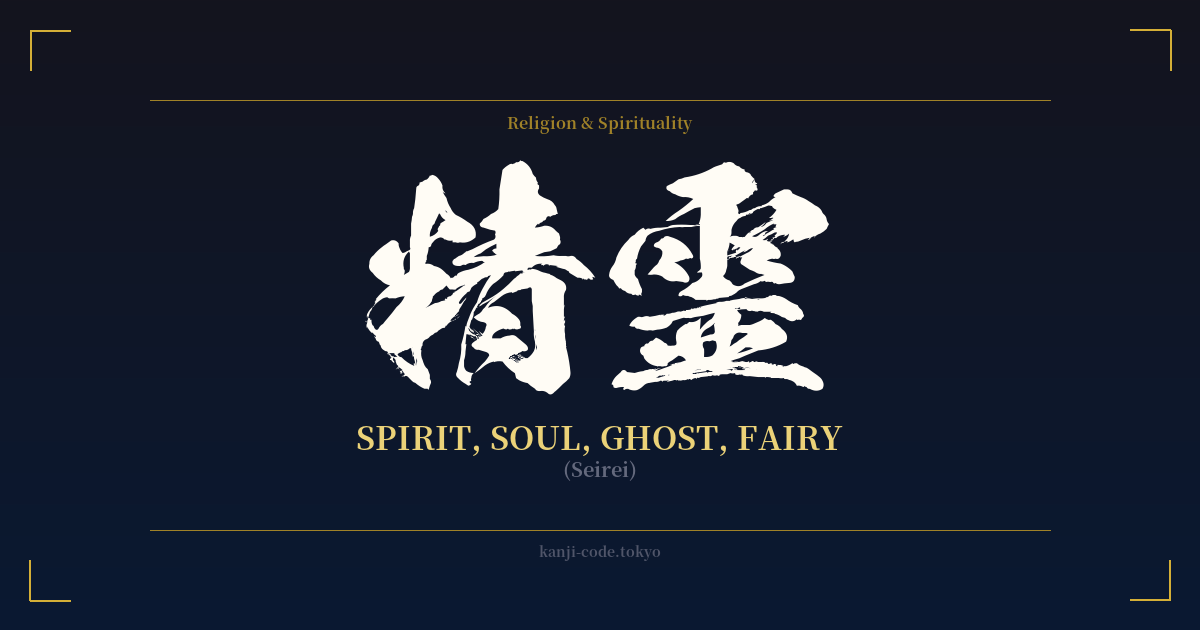
✍️ 精霊 (Seirei) — Cultural Context
The Japanese word 精霊 (Seirei) translates to 'spirit,' but this simple English word barely scratches the surface of its rich and nuanced meaning. It doesn't typically refer to the ghost of a deceased person, but rather to the spirits that inhabit the natural world—the essence of a mountain, the soul of an ancient tree, or the life force of a river.
This concept is deeply intertwined with Shinto, Japan's indigenous religion, which holds that divine spirits, or kami (神), exist in all things. Seirei can be seen as a broader category that includes these nature-bound entities. They are the invisible forces and presences that give a place its character, its sacredness, or its eerie atmosphere. Unlike the often malevolent ghosts of Western lore, seirei are typically neutral or benevolent, acting as guardians of their domain.
A crucial distinction must be made between 精霊 (Seirei) and 幽霊 (Yūrei). While both can be translated as 'ghost' or 'spirit,' they occupy very different spaces in the Japanese imagination. Yūrei are the lingering souls of humans who died with strong, unresolved emotions like anger or sorrow. They are the classic apparitions tied to a specific place of tragedy. Seirei, on the other hand, are more elemental and preternatural, existing as part of the world's fabric.
One of the most famous examples of seirei in Japanese folklore is the 木霊 (Kodama), or tree spirits. It was believed that echoes in forests were the voices of these spirits. If you've ever felt a sense of wonder or presence in a quiet, ancient forest, you've touched upon the feeling that seirei represents.
In modern Japanese culture, seirei are a staple of fantasy and animation. Studio Ghibli's masterpiece, Princess Mononoke, vividly portrays this concept with its forest spirits, especially the iconic Kodama. Similarly, the magical creatures and elementals found in video games like Final Fantasy and The Legend of Zelda are direct descendants of the seirei archetype. This modern representation has kept the ancient concept alive and relevant, introducing it to a global audience as a symbol of nature's mystical power.
🖌️ Font Styles for 精霊
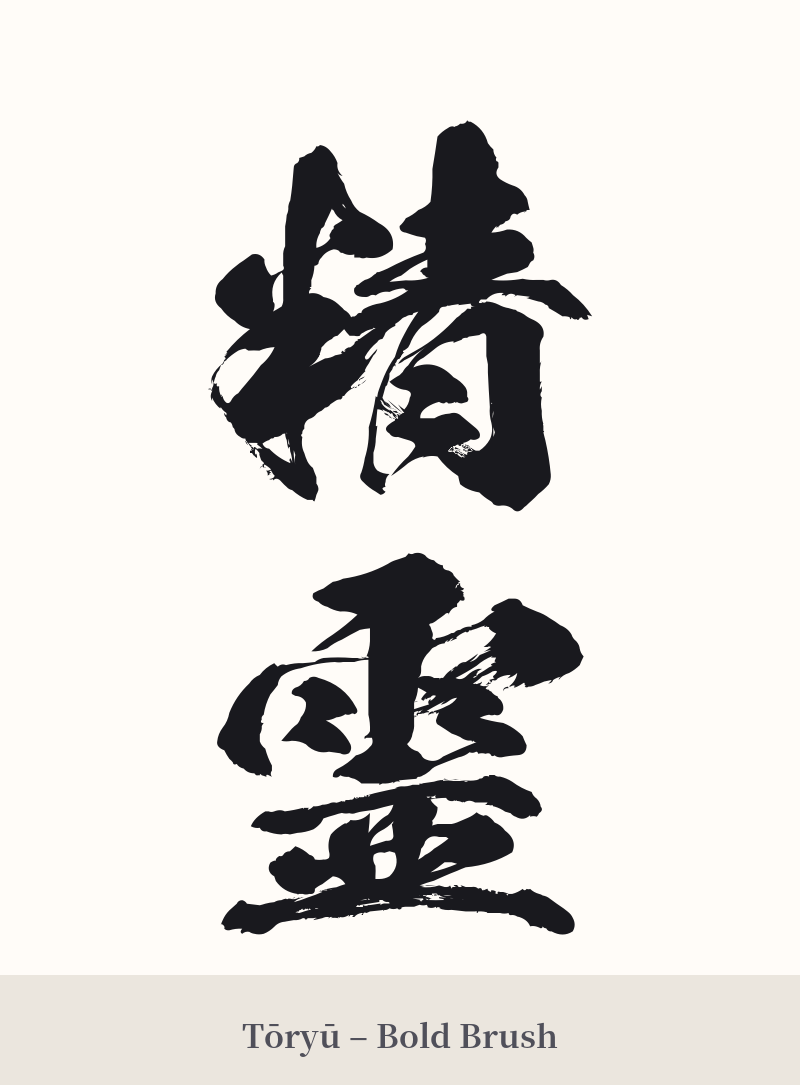
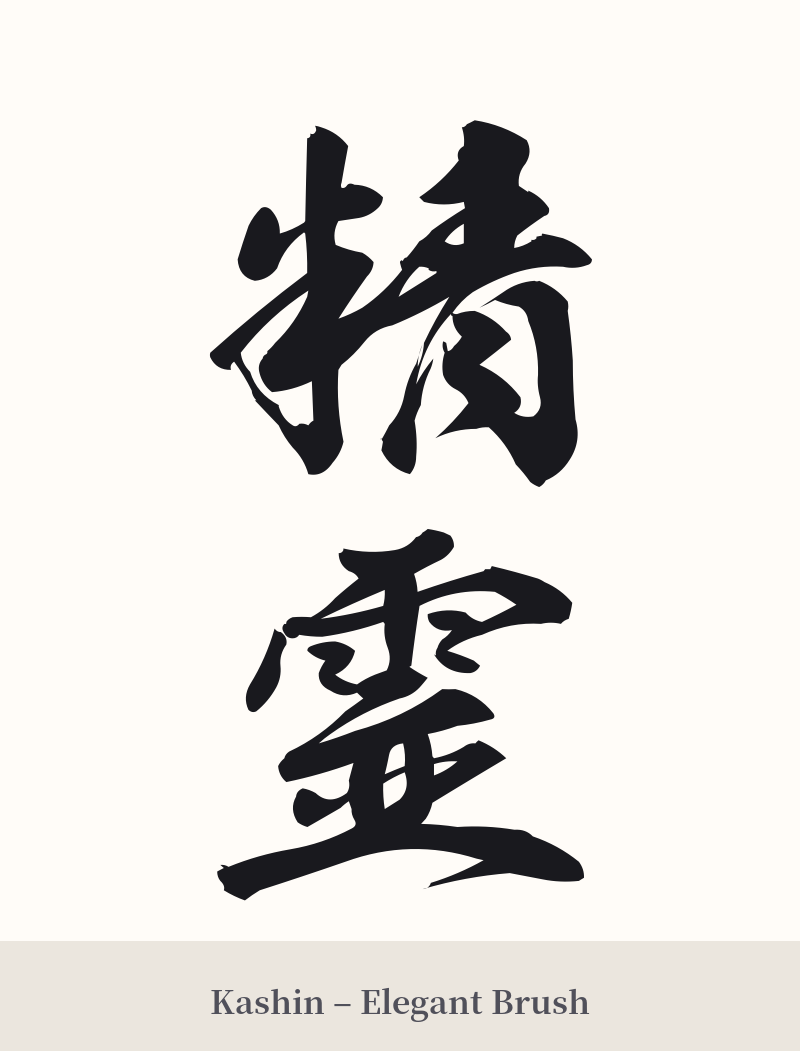
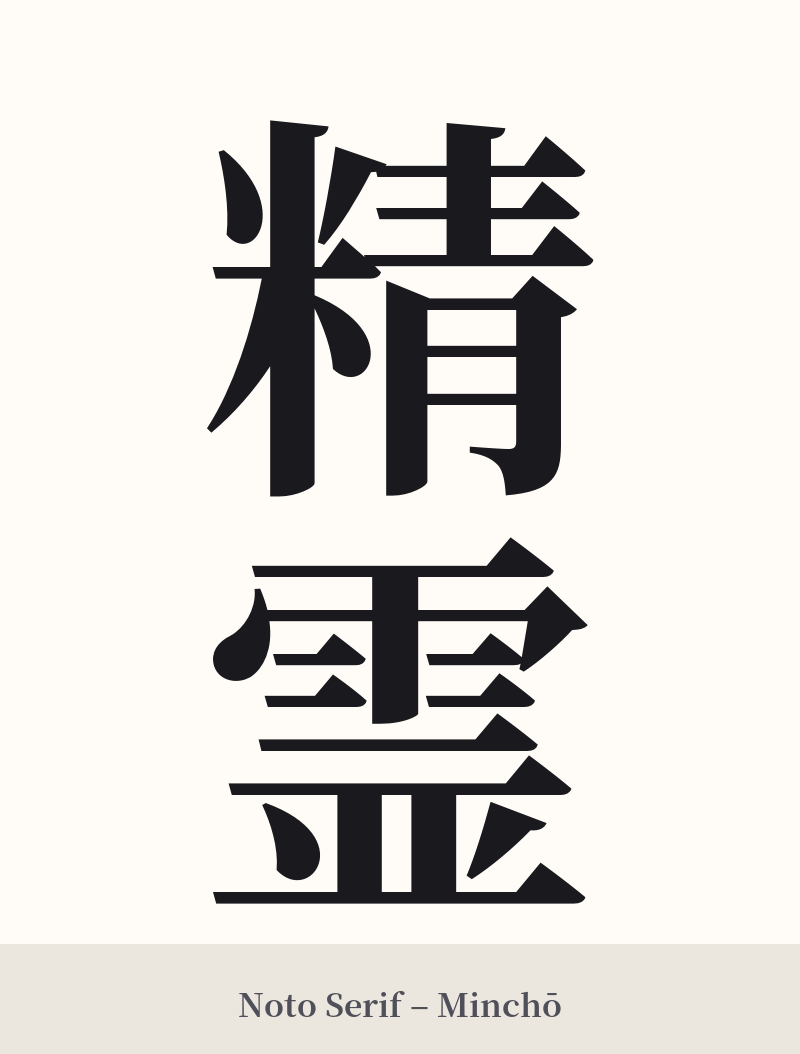
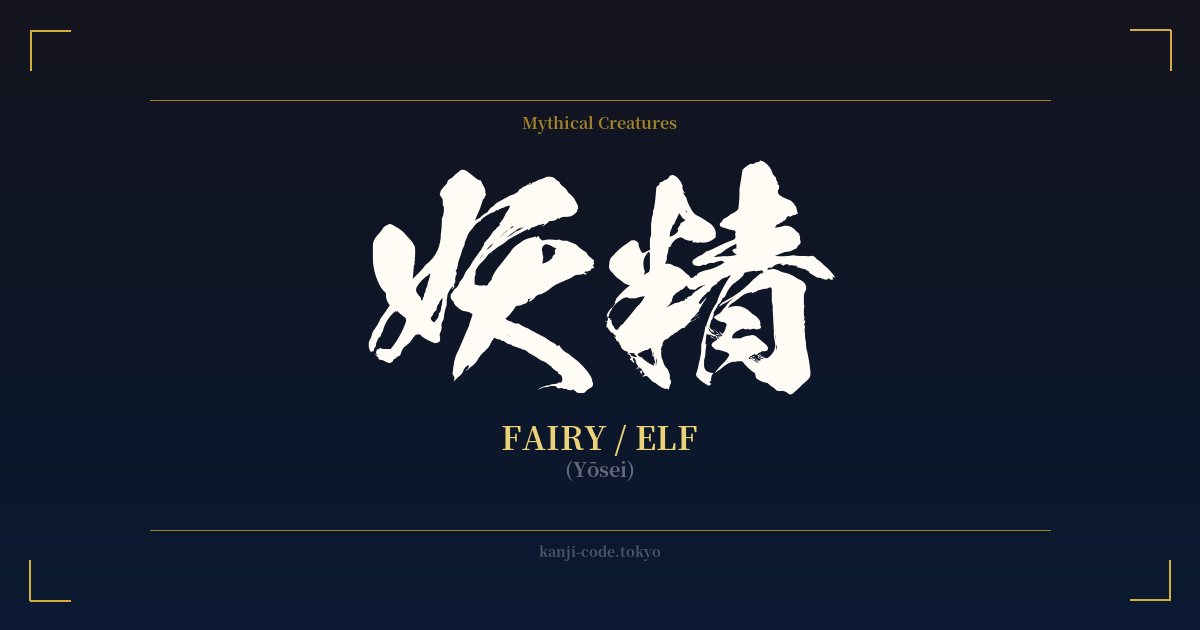
The same kanji can look dramatically different depending on the calligraphy style. Choose a font that matches the mood you want for your tattoo or design.
🎨 Tattoo Suitability
📐 Tattoo Design Guide
When choosing a 精霊 tattoo, size and placement are paramount due to the complexity of the characters.
– Placement: A vertical orientation is traditional and visually striking. Consider the forearm, calf, or along the spine to give the characters room to breathe. These locations allow for the necessary size to preserve detail.
– Style: Avoid overly rigid or blocky fonts. A semi-cursive (Gyosho) or fully cursive (Sosho) calligraphy style works beautifully, as the flowing lines can evoke the ethereal, non-physical nature of a spirit. A brushstroke effect with some 'splatter' can also enhance this feeling.
– Visual Elements: To emphasize the 'nature spirit' meaning, consider incorporating elements like winding tree roots, flowing water, leaves, or misty clouds around the kanji. This contextualizes the word and creates a more dynamic and personalized piece.
Comments