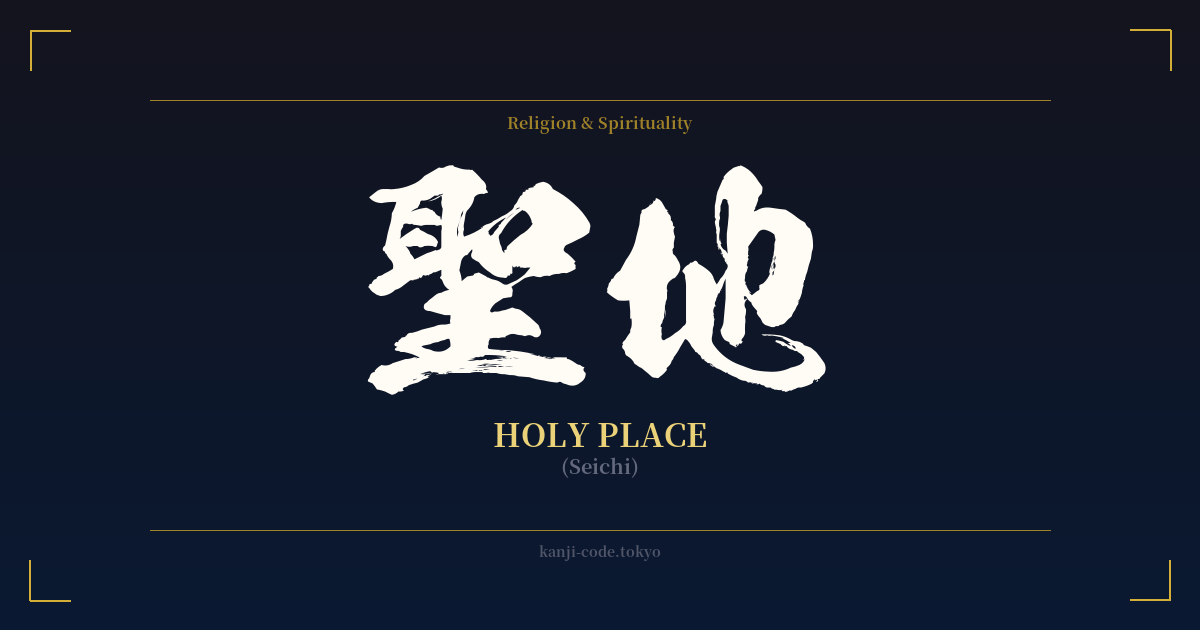
✍️ 聖地 (Seichi) — Cultural Context
聖地 (Seichi) literally translates to 'holy ground' or 'sacred place,' but its cultural resonance in Japan extends far beyond a simple definition. It is a concept deeply embedded in the nation's spiritual and, more recently, pop-cultural landscape. Historically, the term is tied to the sacred sites of Japan's two primary religions, Shinto and Buddhism.
In Shintoism, Japan's indigenous faith, certain natural locations—majestic mountains, ancient forests, waterfalls, and unique rock formations—were considered to be dwellings of the gods (kami). These places, imbued with a powerful and pure energy, became the original 'seichi.' Later, grand shrines like the Ise Grand Shrine or Izumo Taisha were built to formally consecrate these areas, becoming focal points for worship and national identity.
Buddhism, arriving from the mainland, brought its own concept of sacred spaces. Temple complexes like those on Mount Kōya or the entire island of Shikoku, with its 88-temple pilgrimage route, are quintessential seichi. For centuries, Japanese people have undertaken arduous pilgrimages (巡礼, junrei) to these locations, seeking spiritual purification, healing, or enlightenment. The journey itself is as important as the destination, a physical manifestation of an inner spiritual path.
However, in the 21st century, the word 'seichi' has undergone a fascinating evolution. It has been enthusiastically adopted by modern subcultures, most notably anime and manga fans. 'Seichi Junrei' (聖地巡礼), or 'holy site pilgrimage,' now describes the act of visiting the real-world locations that serve as settings for popular media. A quiet rural town, a specific train station, or even a particular staircase in Tokyo can become a 'seichi' for fans of the work it inspired.
This phenomenon has become a significant cultural and economic force. The town of Ōarai in Ibaraki Prefecture became a seichi for fans of 'Girls und Panzer,' and the historic city of Kyoto is a seichi for countless series. These modern pilgrimages are driven by a desire to connect more deeply with a beloved story, to stand in the same spot as a favorite character, and to share that experience with a community of like-minded fans. It transforms a fictional world into a tangible reality.
Ultimately, whether referring to an ancient shrine or a modern anime location, 'seichi' captures the essence of a place that holds transformative power. It's a location that transcends the mundane, where an individual can connect with something larger than themselves—be it a deity, a historical legacy, or the magic of a shared story.
🖌️ Font Styles for 聖地
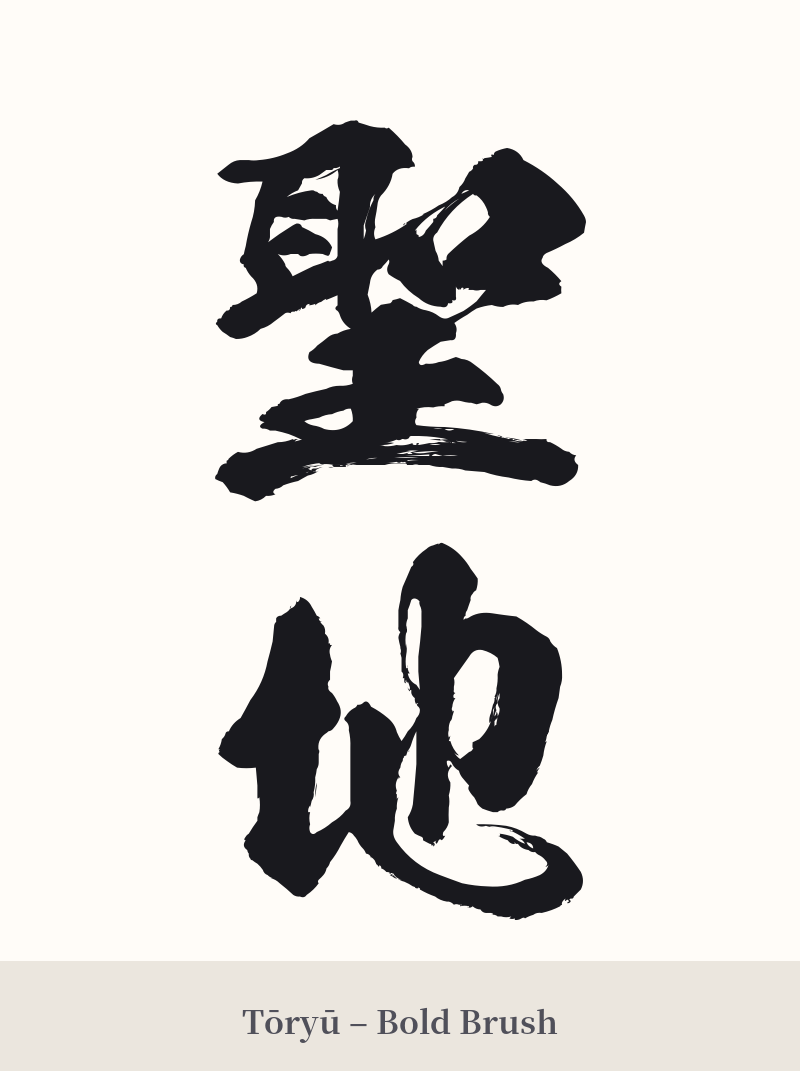
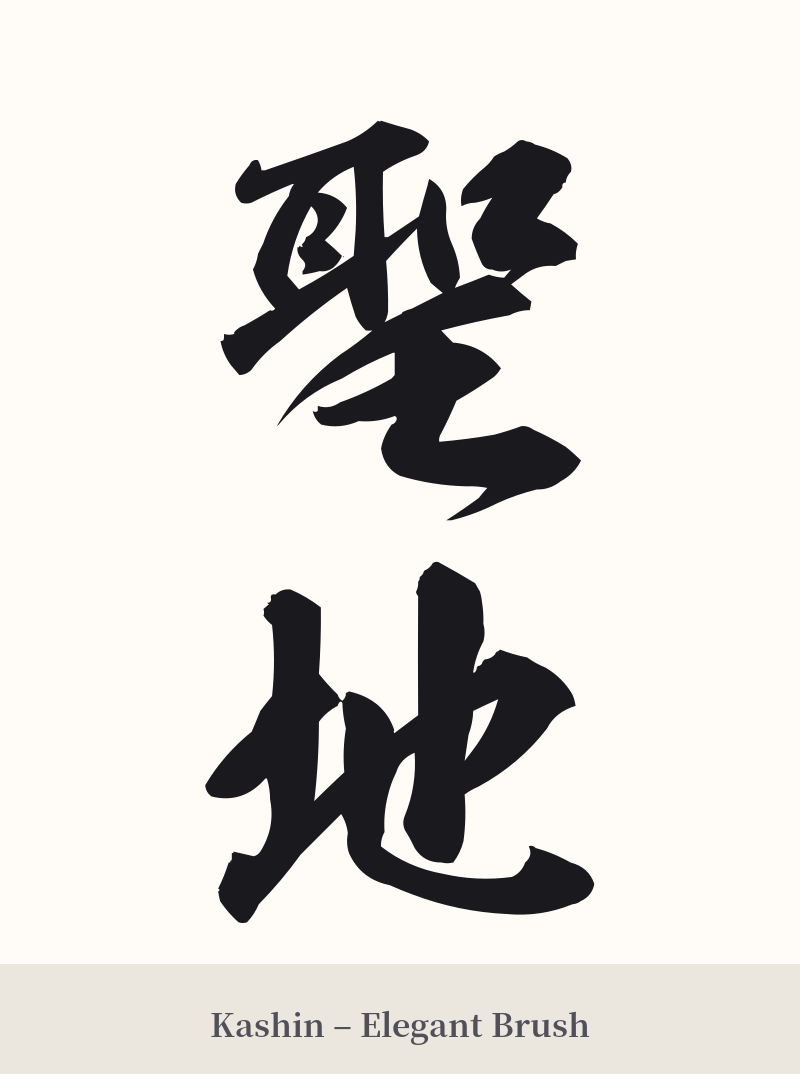
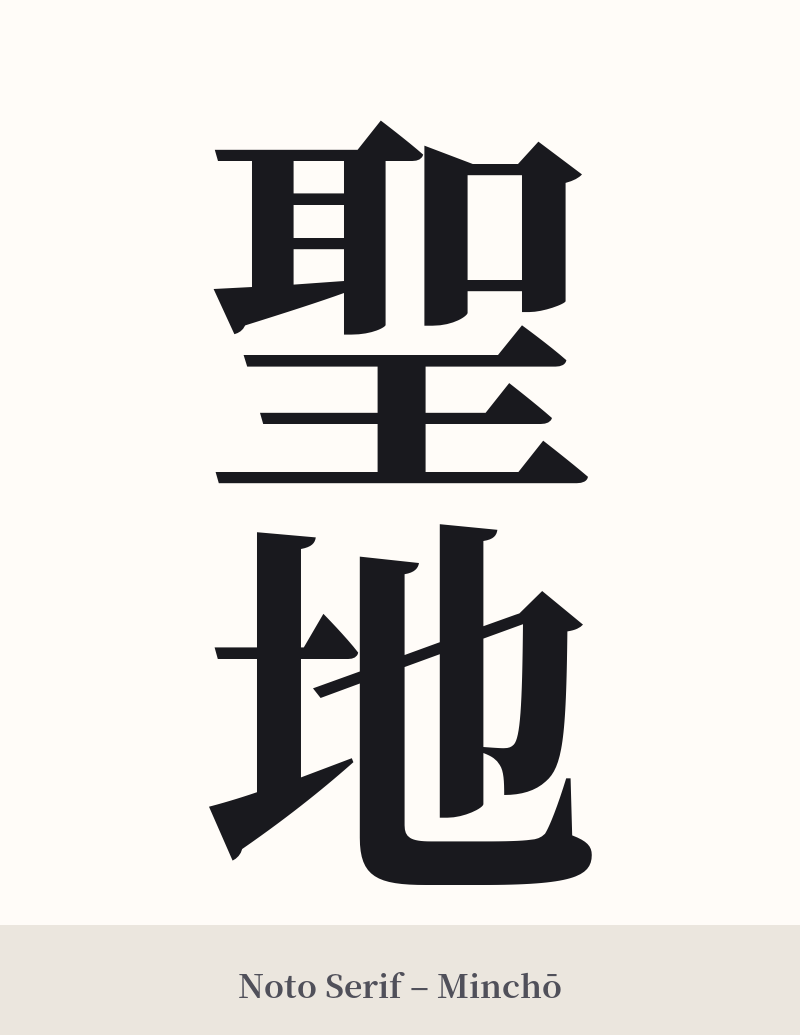
The same kanji can look dramatically different depending on the calligraphy style. Choose a font that matches the mood you want for your tattoo or design.
🎨 Tattoo Suitability
📐 Tattoo Design Guide
A 聖地 tattoo powerfully represents a personal connection to a place of meaning, whether spiritual or secular.
– Placement: A vertical orientation is classic for Japanese calligraphy and looks excellent running down the forearm, along the bicep, or on the calf. For a more central piece, the spine is a striking choice. Horizontally, it fits well across the chest or on the upper back.
– Font Style: To honor the traditional meaning, a dynamic calligraphy script like Gyosho (semi-cursive) or Sosho (cursive) conveys a sense of history and spiritual energy. For those embracing the modern, otaku-centric meaning, a clean and sharp Mincho (serif) or Gothic font can reflect the aesthetic of manga and anime.
– Visual Elements: Consider pairing the kanji with an element that specifies your personal 'seichi.' This could be a small Torii gate for a connection to Shinto, a lotus flower for Buddhism, or even a subtle silhouette of a specific landmark from a favorite movie or game. This adds a layer of personal narrative to the design.
Comments