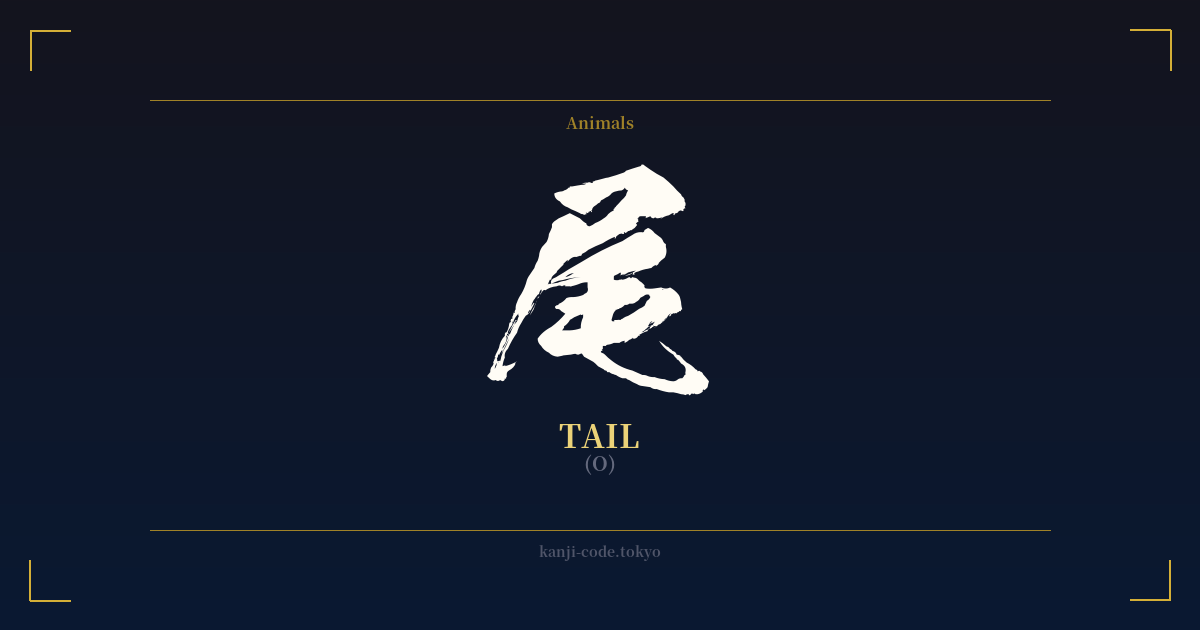
✍️ 尾 (O) — Cultural Context
The kanji 尾 (o) is one of the most straightforward characters in the Japanese language, literally meaning 'tail.' Its origins are pictographic, evolving from a drawing that depicted a person with a tail-like object or simply emphasizing the rear appendage of an animal. The character is composed of the radical 尸, which relates to the body, and 毛, meaning 'hair' or 'fur,' vividly painting a picture of a furry tail.
While its primary meaning is the physical tail of an animal, 尾 extends into fascinating metaphorical territory. It commonly signifies 'the end' or 'the last part' of something. For instance, a queue or line is a 行列 (gyōretsu), and the very end of that line is the 末尾 (matsubi). The end of a word or sentence is the 語尾 (gobi). This concept of 'endings' is a fundamental aspect of the character's use.
Beyond endings, 尾 carries the nuance of 'following' or 'trailing behind.' The word 追尾 (tsuibi) means to pursue or trail something, like a police car tailing a suspect. This captures the physical action of a tail following the main body, extending it to a broader concept of pursuit and consequence. The expression 尾を引く (o o hiku), literally 'to drag a tail,' means for something to have lingering effects or repercussions, much like a scent trail left behind.
In Japanese folklore and culture, the tail is often a symbol of power, magic, and identity, especially in animals. The most famous example is the 九尾の狐 (Kyūbi no Kitsune), the Nine-Tailed Fox. In these legends, a fox gains a new tail for every hundred years it lives, with the ninth tail signifying immense wisdom and supernatural power. The tails are not just appendages; they are a direct measure of the creature's spiritual might.
Similarly, the tail of a koi fish is crucial to its symbolism. The koi is celebrated for its strength in swimming upstream, and its powerful tail is the engine of this perseverance. In this way, 尾 is not just a body part but an instrument of power, a marker of age and wisdom, and a symbol of the lingering consequences of action.
🖌️ Font Styles for 尾
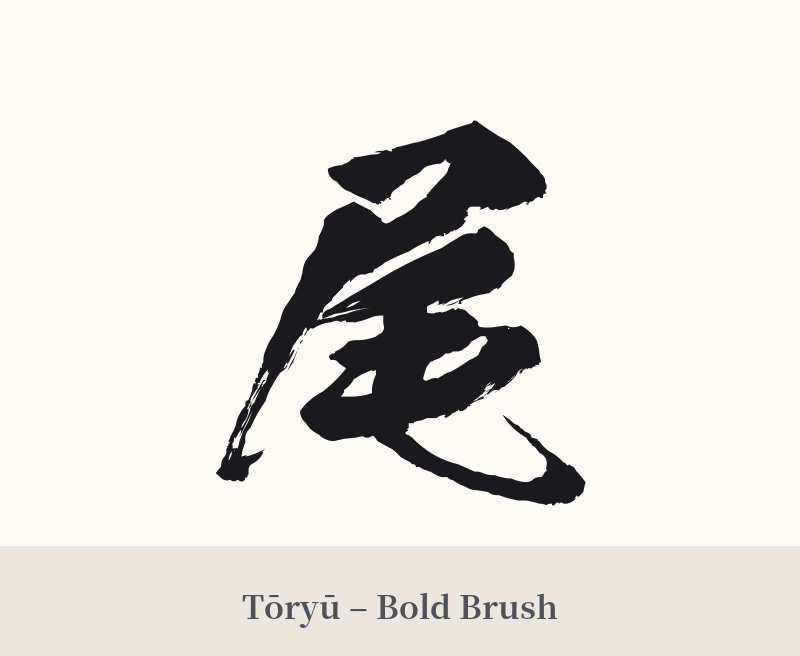
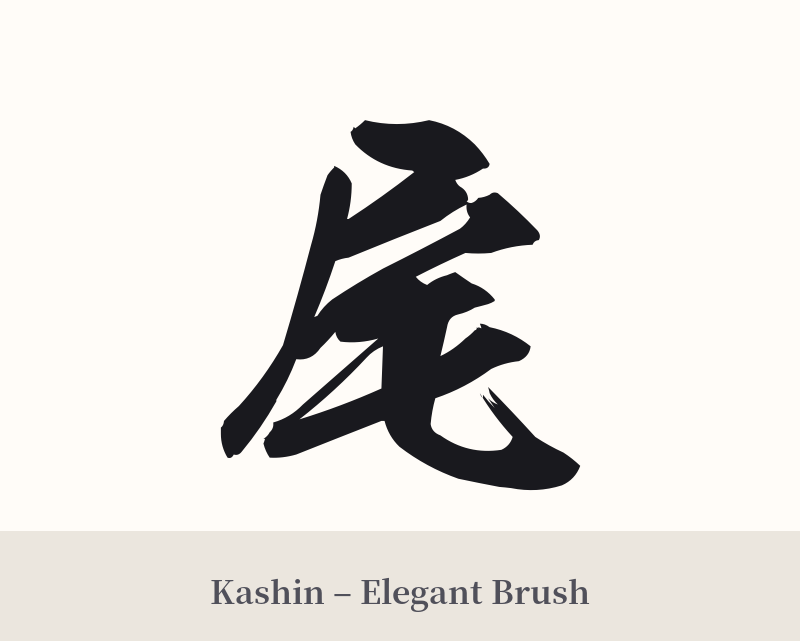
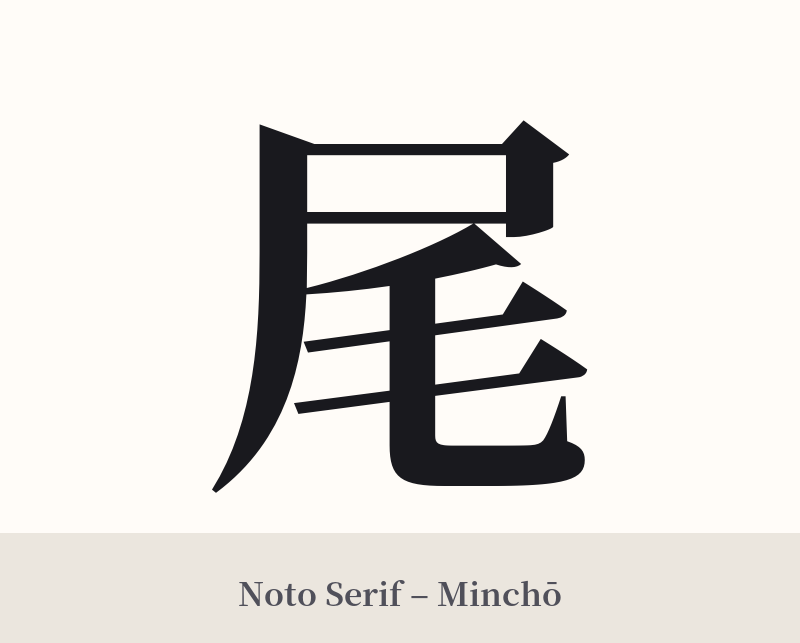
The same kanji can look dramatically different depending on the calligraphy style. Choose a font that matches the mood you want for your tattoo or design.
🎨 Tattoo Suitability
📐 Tattoo Design Guide
While a standalone 尾 tattoo is uncommon, it can work with the right approach. Its visual balance makes it aesthetically pleasing, but context is key.
– Placement: Due to its vertical nature and simple form, 尾 works well in smaller, more discreet locations. Consider the back of the neck, the ankle, or along the forearm. It could also be placed near a larger illustrative tattoo of an animal, acting as a label or a conceptual anchor.
– Style: A flowing, cursive script (gyōsho or sōsho) can emphasize the 'tail' like movement and grace of the character, making it feel more organic and alive. Conversely, a bold, angular font like a traditional kaisho or a modern block script can highlight its meaning as 'the end,' giving it a more definitive and impactful feel.
– Visual Integration: The best way to use 尾 in a tattoo is often to pair it with another element. Imagine a design of a fox or a dragon where the kanji 尾 is subtly integrated into the flow of the animal's actual tail. This creates a clever, layered design that is both visually and conceptually rich.
Comments