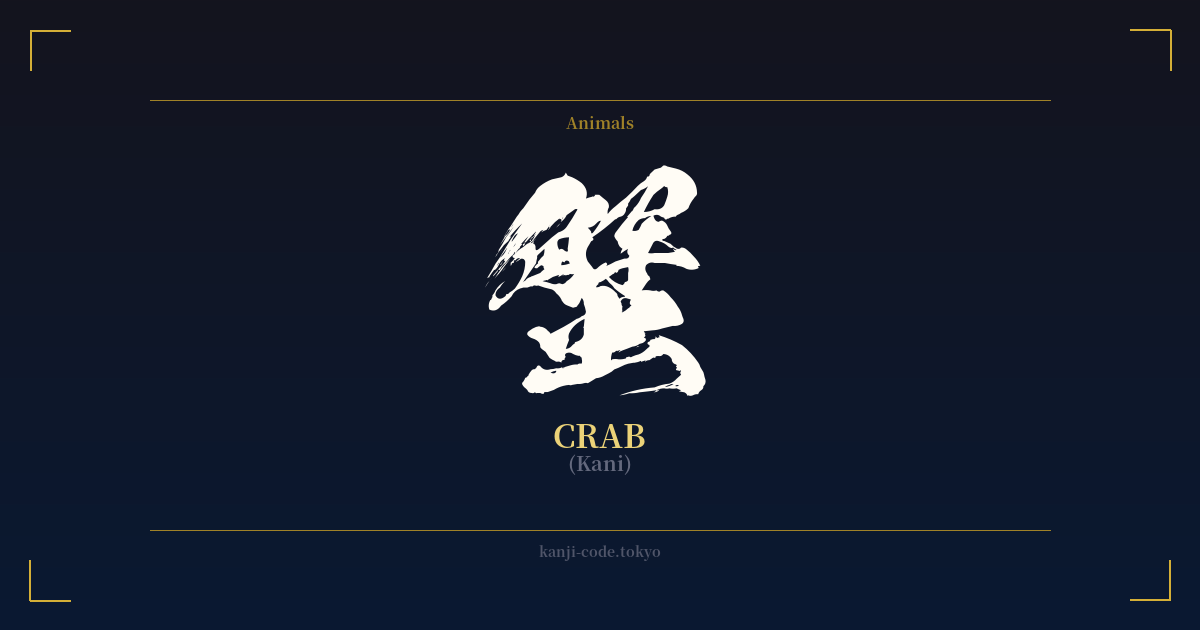
✍️ 蟹 (Kani) — Cultural Context
The kanji 蟹 (kani) represents the crab, a creature deeply embedded in the landscape and culture of Japan. As an island nation, Japan's connection to the sea is profound, and the crab is a celebrated part of its marine bounty. More than just a word, 蟹 evokes images of bustling fish markets, steaming winter hot pots, and the delicate art of Japanese cuisine.
In Japan, different types of crab are regional delicacies, each with its own season and flavor profile. The hairy crab (毛蟹, kegani) from Hokkaido is prized for its rich innards, while the snow crab (ズワイガニ, zuwaigani) is a winter luxury along the Sea of Japan coast. The sight of these crabs in restaurants and homes signals the arrival of cold weather and festive gatherings, making 蟹 a symbol of seasonal abundance and shared meals.
Beyond the dinner table, the crab carries fascinating cultural symbolism. The most famous example is the Heike crab (平家蟹, heikegani), a species found in the Seto Inland Sea. Legend holds that these crabs contain the reincarnated spirits of the Taira (Heike) clan warriors who were defeated in the historic Battle of Dan-no-ura in 1185. The patterns on their shells are said to resemble the angry faces of the drowned samurai, a somber and powerful reminder of Japan's feudal past.
This connection to warriors, however indirect, gives the crab an aura of resilience and tenacity. Its hard exoskeleton is a natural symbol of protection and defense, while its sideways scuttling walk (横這い, yokobai) can be a metaphor for taking an unconventional path. The crab also features in classic folklore, most notably in the tale "Saru Kani Gassen" (The Crab and the Monkey), a story about cunning and karmic justice that is taught to children across Japan. Thus, 蟹 is a character that connects the culinary, the historical, and the mythological.
🖌️ Font Styles for 蟹
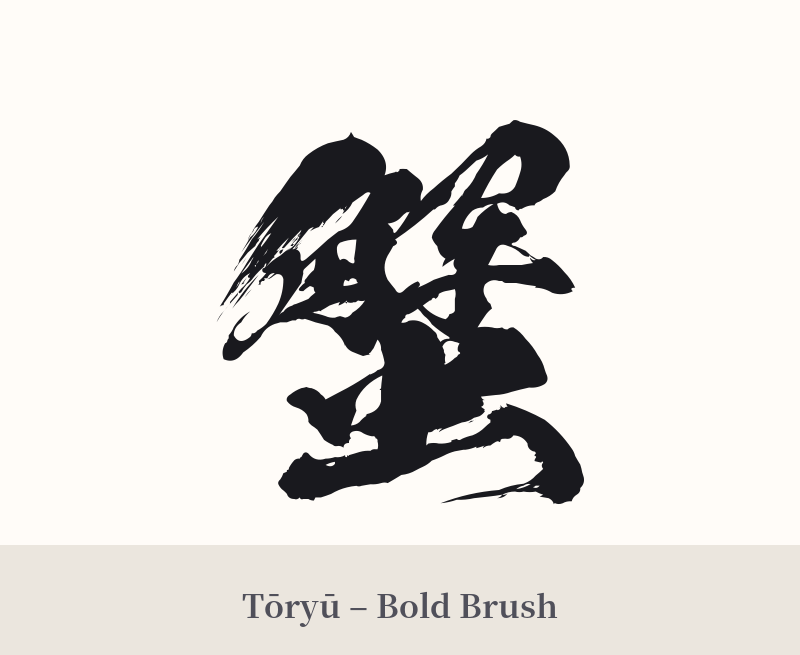
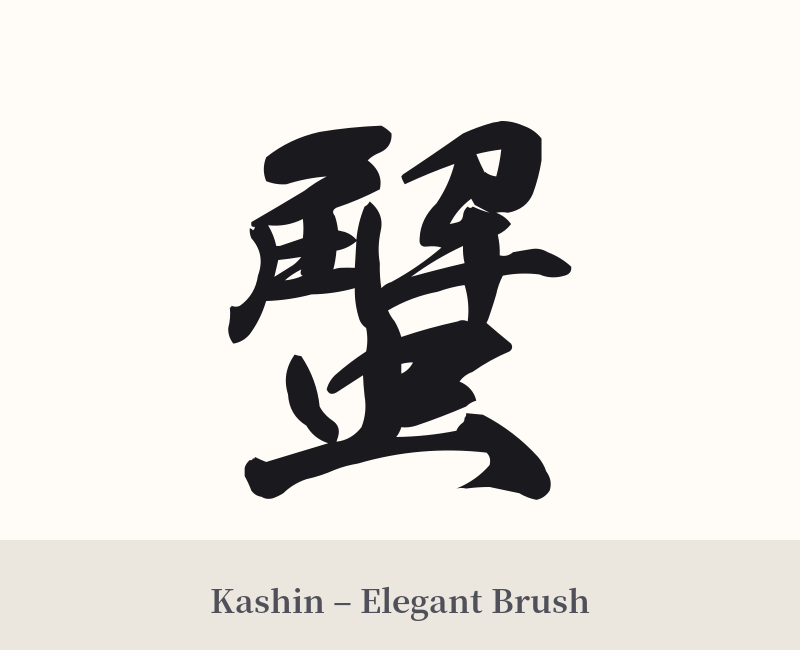
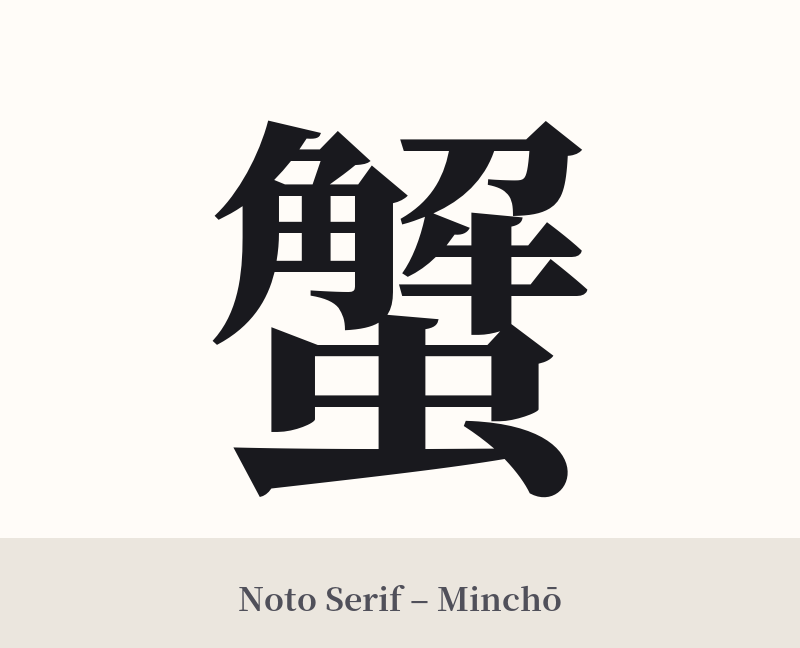
The same kanji can look dramatically different depending on the calligraphy style. Choose a font that matches the mood you want for your tattoo or design.
🎨 Tattoo Suitability
📐 Tattoo Design Guide
The kanji 蟹 (kani) is visually intricate, making it a fantastic centerpiece for a tattoo. Its complex structure, with 19 strokes, looks best when given enough space to be appreciated.
– Placement: Consider larger, flatter areas like the calf, forearm, back, or thigh. This allows the artist to render the details clearly, preventing the strokes from bleeding together over time.
– Style: A dynamic, semi-cursive brush script (gyōsho) can capture the organic, creature-like feel of the kanji. For a more solid and architectural look, a classic block script (kaisho) emphasizes its shell-like structure and complexity.
– Visual Elements: Complement 蟹 with other Japanese motifs. Pairing it with stylized waves (nami), rocks, or a moon can create a complete marine scene. For a design inspired by the Heikegani legend, you could subtly incorporate elements of a samurai helmet (kabuto) or crest within the composition.
Comments