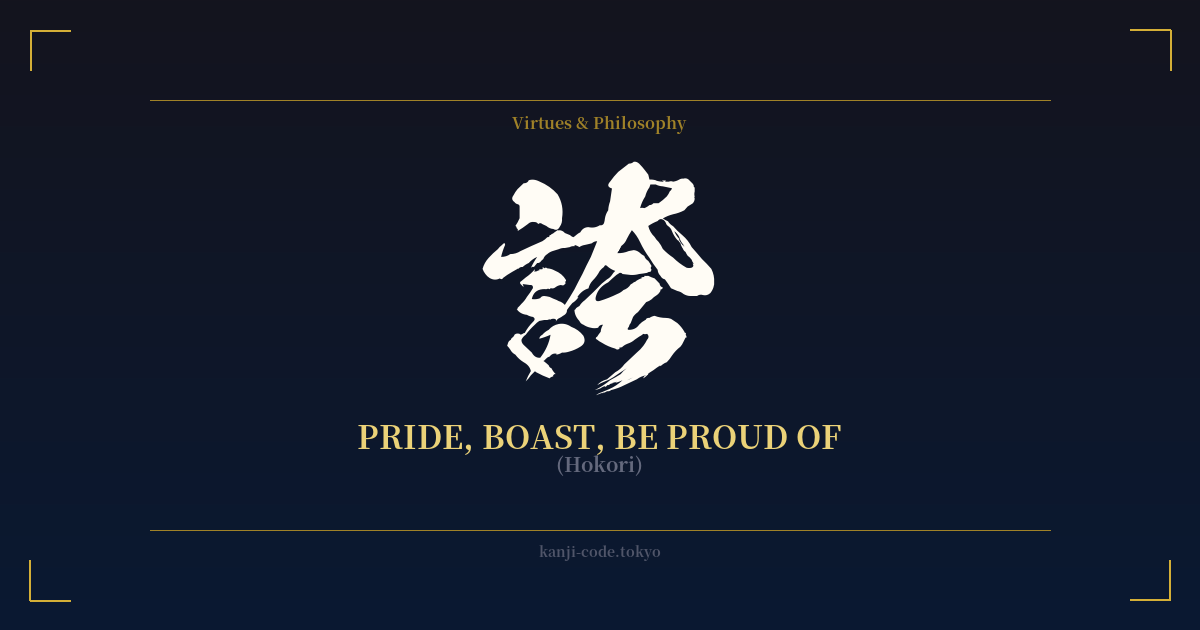
✍️ 誇 (Hokori) — Cultural Context
The kanji 誇, read as 'hokori', embodies the complex and deeply nuanced concept of pride in Japanese culture. It is not a simple, one-dimensional idea but a spectrum that ranges from profound, quiet dignity to overt, hollow arrogance. Understanding this duality is key to appreciating its significance.
On one end of the spectrum is 誇り (hokori), the noun for pride. This form carries a deeply positive and respected connotation. It is the pride of a master craftsman in their work, the pride of a nation in its heritage, and the personal pride that comes from upholding one's honor and integrity. This is not a loud or boastful feeling; rather, it is a quiet, internal sense of self-worth and dignity earned through dedication, perseverance, and adherence to one's principles. It is closely tied to the spirit of Bushido, where a samurai's pride was linked directly to their honor and their unwavering commitment to their duty. To have 'hokori' is to have self-respect.
The character's etymology offers a clue to its other side. 誇 is composed of the radical 言 (gonben), meaning 'speech' or 'words', and the character 夸, which means 'to boast' or 'big'. Literally, it suggests 'big words' or 'to speak in a grand manner'. This points to the negative aspect of the kanji: hubris, boasting, and empty arrogance. The verb form, 誇る (hokoru), can easily slip into this negative territory, describing someone who brags about their accomplishments or status. In a culture that traditionally values humility and collective harmony, such overt self-praise is often viewed with disdain.
This tension between earned, internal pride and proclaimed, external arrogance is central to the meaning of 誇. Japanese proverbs and literature often warn against the dangers of excessive pride, seeing it as a path to ruin. It is a reminder that true strength and honor do not need to be announced. They are demonstrated through action, consistency, and a quiet confidence that requires no external validation.
Therefore, 誇 serves as a powerful symbol of balance. It represents the noble pursuit of excellence and the dignity that comes with it, while simultaneously acting as a cautionary tale against the ego's pitfalls. It asks us to consider the source of our pride: is it rooted in substance and character, or is it merely a performance for others?
🖌️ Font Styles for 誇
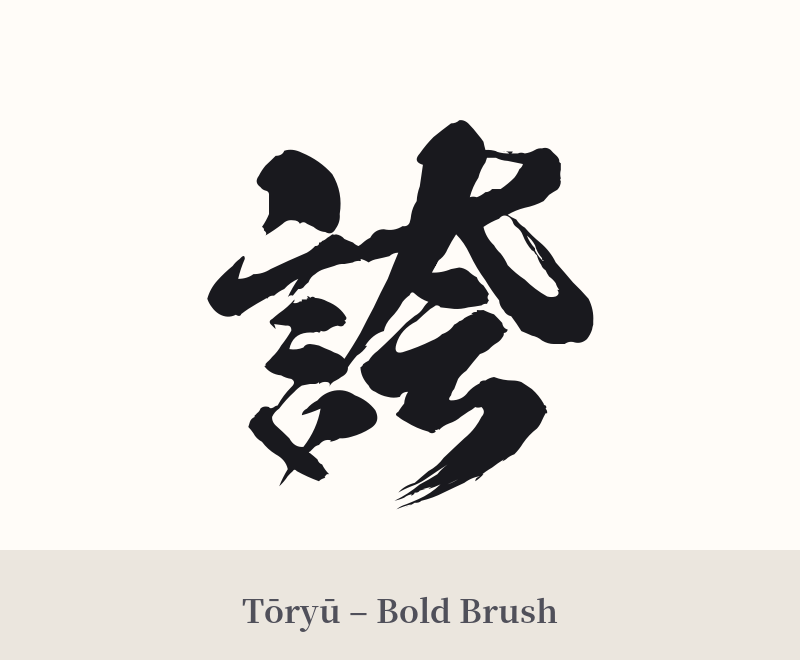
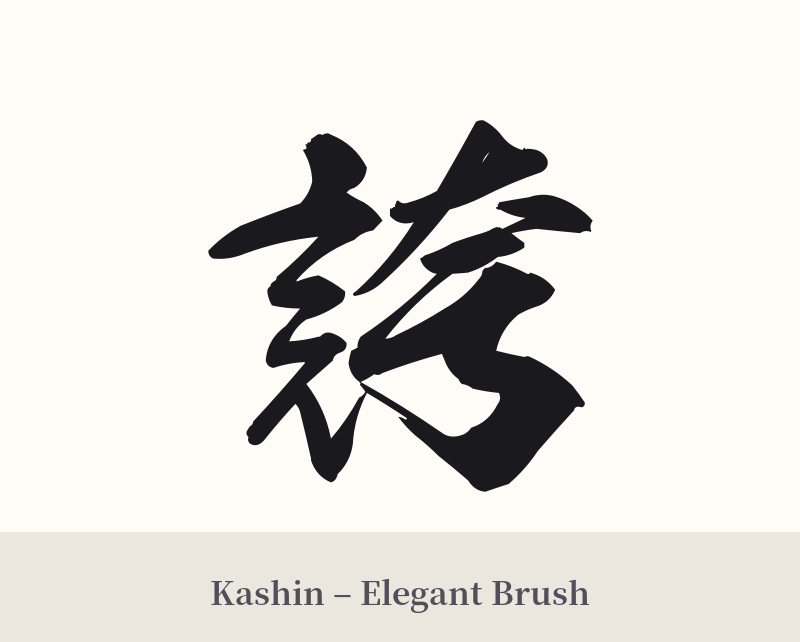
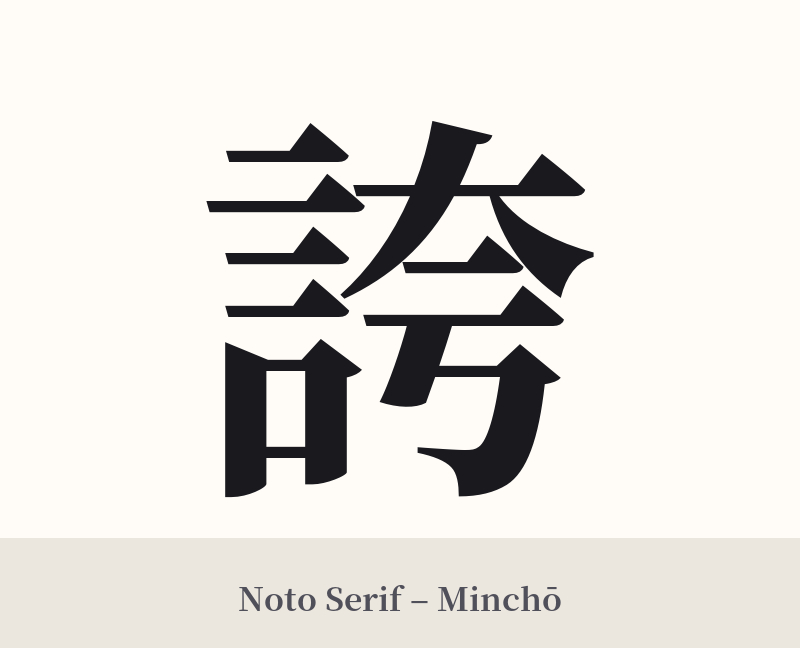
The same kanji can look dramatically different depending on the calligraphy style. Choose a font that matches the mood you want for your tattoo or design.
🎨 Tattoo Suitability
📐 Tattoo Design Guide
The kanji 誇 (Hokori) carries a strong, dignified presence, making it a compelling choice for a tattoo if its dual meaning is embraced.
– Placement: Consider areas that reflect personal conviction and strength. The chest, over the heart, can symbolize a deeply held pride. The forearm makes for a visible declaration of self-respect, while the upper back or between the shoulder blades can represent a foundational principle you carry.
– Font Style: The style can significantly influence the intended meaning. A strong, angular script like Kaisho (block script) emphasizes the honor, stability, and unshakeable nature of pride. A slightly more fluid Gyosho (semi-cursive) script can introduce a sense of humanity and earned grace. For this kanji, it's often best to avoid overly thin or delicate fonts that might not convey its inherent strength.
– Visual Tips: While 誇 is powerful enough to stand alone, you can pair it with other elements to clarify its meaning. A lotus flower can represent pride that has risen from adversity. A dragon could symbolize a powerful, almost sovereign pride. However, a simple, masterful execution of the character itself is often the most impactful choice, letting the complex meaning speak for itself.
Comments