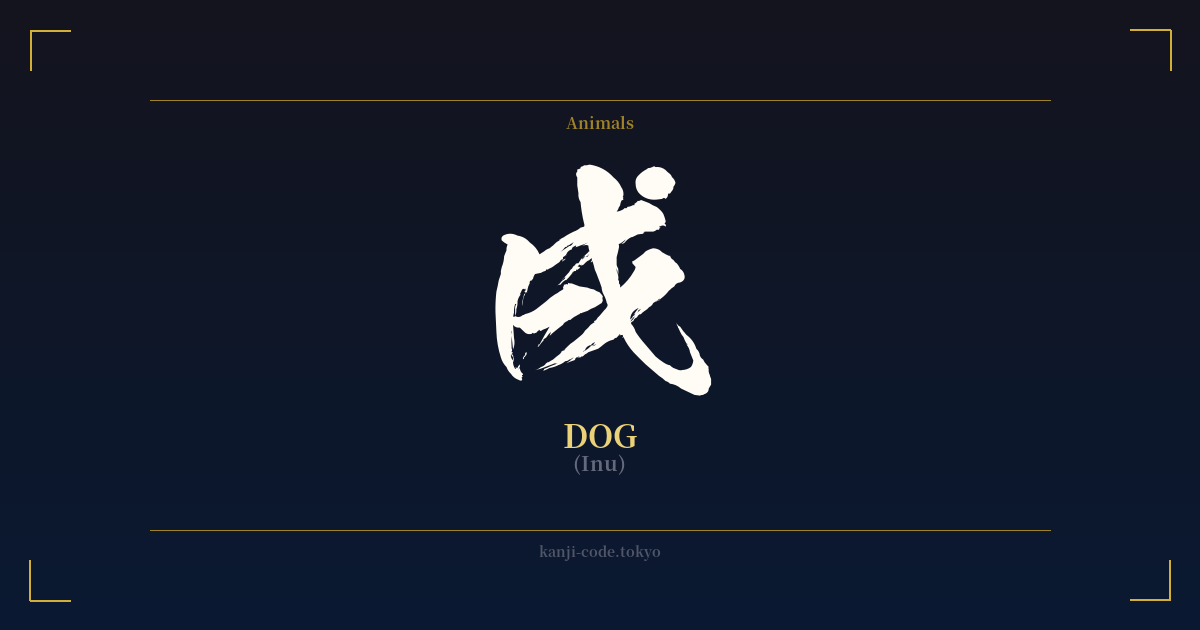
✍️ 戌 (Inu) — Cultural Context
The kanji 戌 (inu) represents the Dog, the eleventh of the twelve animals in the East Asian Zodiac, known in Japan as the Jūnishi (十二支). While it shares a reading with the more common character for dog, 犬, its significance is almost exclusively tied to this ancient calendrical and astrological system.
In the Zodiac, the Dog is a symbol of loyalty, honesty, and diligence. People born in the Year of the Dog are often seen as possessing a strong sense of justice, being trustworthy friends, and having a protective nature. They are considered dependable and sincere, though sometimes prone to anxiety and stubbornness. This character doesn't just represent an animal; it embodies a constellation of human virtues.
The origins of the character itself are fascinating and somewhat disconnected from its modern Zodiac meaning. Etymologically, 戌 is a pictogram of a weapon, specifically a type of halberd or battle-axe. Its original meaning was related to concepts of cutting, destroying, or harvesting. Over millennia, as it was incorporated into the Zodiac system (a practice originating in ancient China), this original meaning has faded almost completely, replaced by its role as the celestial Dog.
This system was used not only for years but also for marking directions and time. The 'Hour of the Dog' (戌の刻, Inu no koku) corresponded to the period from approximately 7 PM to 9 PM, a time when watchdogs would be on alert, guarding the home as night fell. This reinforces the animal's association with protection and vigilance.
Today, the influence of 戌 is felt throughout Japanese culture. During a Year of the Dog, temples and shrines often sell special charms (omamori) featuring the character for good fortune. It appears in fortune-telling, personality analyses, and is a key part of celebrating the New Year. For many, identifying with their Zodiac animal, like the Dog, is a meaningful way to connect with tradition and understand one's place in a larger cosmic cycle.
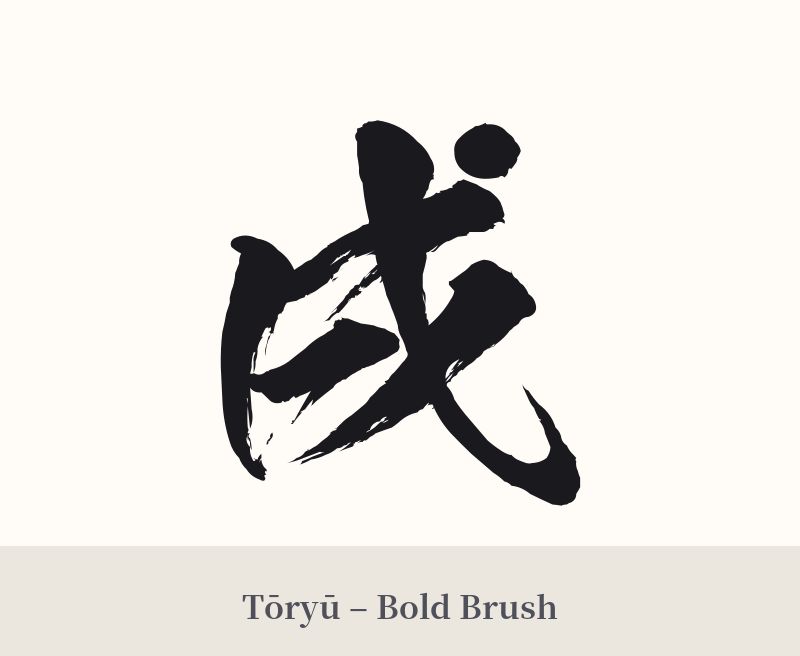
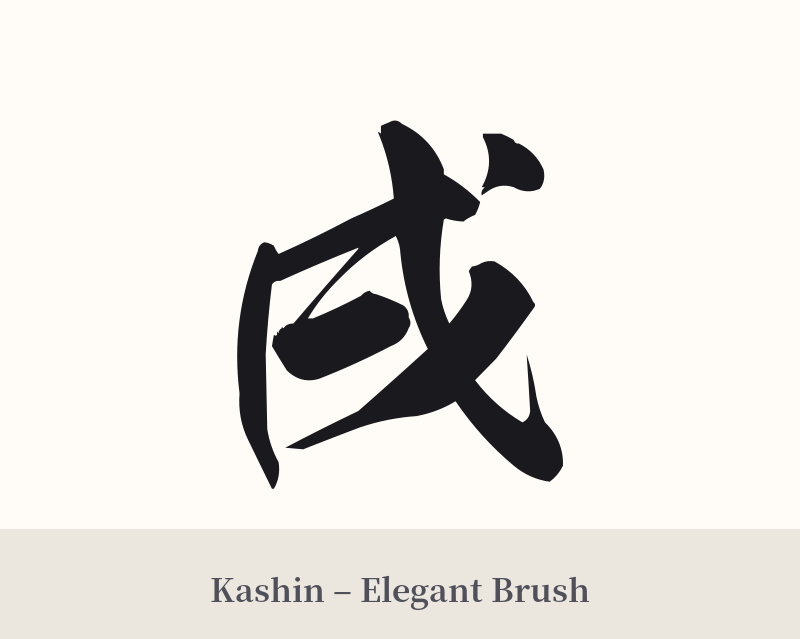
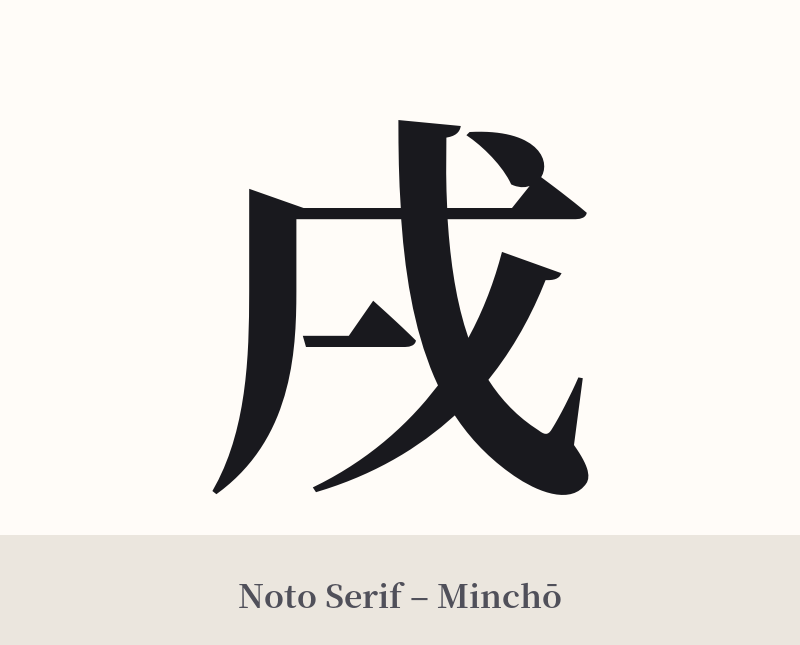
🖌️ Font Styles for 戌
The same kanji can look dramatically different depending on the calligraphy style. Choose a font that matches the mood you want for your tattoo or design.
🎨 Tattoo Suitability
📐 Tattoo Design Guide
The kanji 戌 offers a simple, strong, and symbolic design choice with a unique story.
– Placement: Due to its simplicity, it works well in smaller, more discreet locations. Consider the wrist, ankle, behind the ear, or the nape of the neck. For a larger statement, it could be placed on the forearm or shoulder blade, perhaps as part of a larger piece.
– Style: A bold, blocky Kaisho (楷書) or Gothic-style font will emphasize its ancient, weapon-like origins and its symbolic strength and stability. Conversely, a more stylized, abstract, or calligraphic script could give it a more personal and fluid feel.
– Pairings: This kanji is perfect for pairing with other imagery. Consider integrating it with a realistic or traditional illustration of a dog—perhaps a Japanese breed like an Akita or Shiba Inu. It also works beautifully as one element in a full Zodiac-themed tattoo, alongside other animal symbols.
Comments