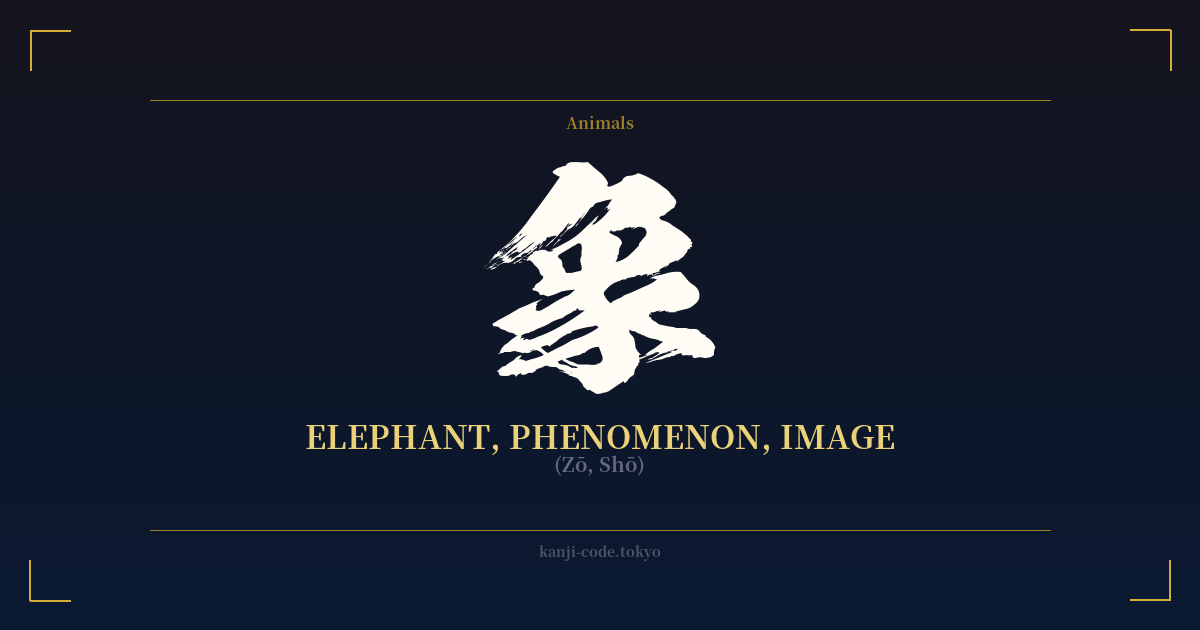
✍️ 象 (Zō, Shō) — Cultural Context
The kanji 象 (Zō) is a fascinating character whose story travels from the concrete world of the animal kingdom to the highest levels of abstract thought. Its origin is one of the most visually direct in the entire kanji system: it began as a pictograph of an elephant, complete with a long, curving trunk, a head, and four legs. In ancient China, where the character originated, elephants were more common and were revered as symbols of power, wisdom, and gentle strength.
This reverence for the elephant carried over into other Asian cultures, including Japan. In Buddhism, the white elephant is a sacred animal, believed to have appeared in a dream to Queen Maya, the mother of Gautama Buddha, to herald his birth. As such, the elephant symbolizes auspiciousness, mental fortitude, and a calm, unshakable power.
So how did a character for an animal come to mean something as abstract as 'image' or 'phenomenon'? This is a classic case of a phonetic loan, a common process in the development of Chinese characters. In Old Chinese, the word for 'elephant' (now zō in Japanese) sounded very similar to the word for 'image' or 'likeness.' As there was no character for this abstract idea, scribes borrowed the character for 'elephant' to represent it, relying on context to make the meaning clear. Over time, this secondary meaning became firmly established.
This dual nature is evident in modern Japanese. While 象 on its own still means 'elephant,' it serves as a fundamental building block for many critical abstract concepts. You see it in words like 現象 (genshō – phenomenon), 印象 (inshō – impression), 対象 (taishō – object or target), and 想像 (sōzō – imagination). In these compounds, the character 象 imparts a sense of 'form,' 'shape,' or 'appearance'—the very 'image' of a thing.
Therefore, 象 embodies a beautiful duality. It is at once a mighty, grounded creature and a key to unlocking concepts of perception, reality, and the mind's eye. It represents the journey of language itself, from drawing pictures of the world around us to describing the world within.
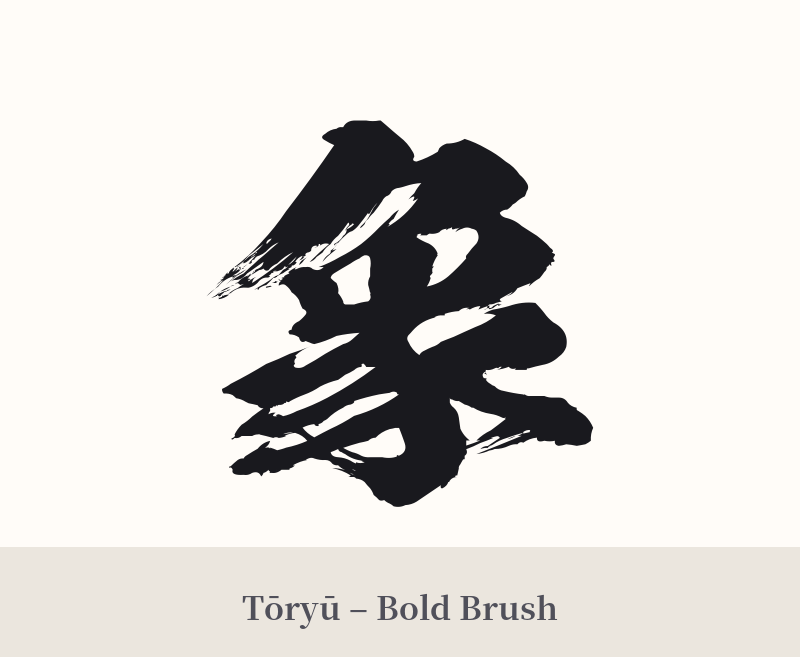
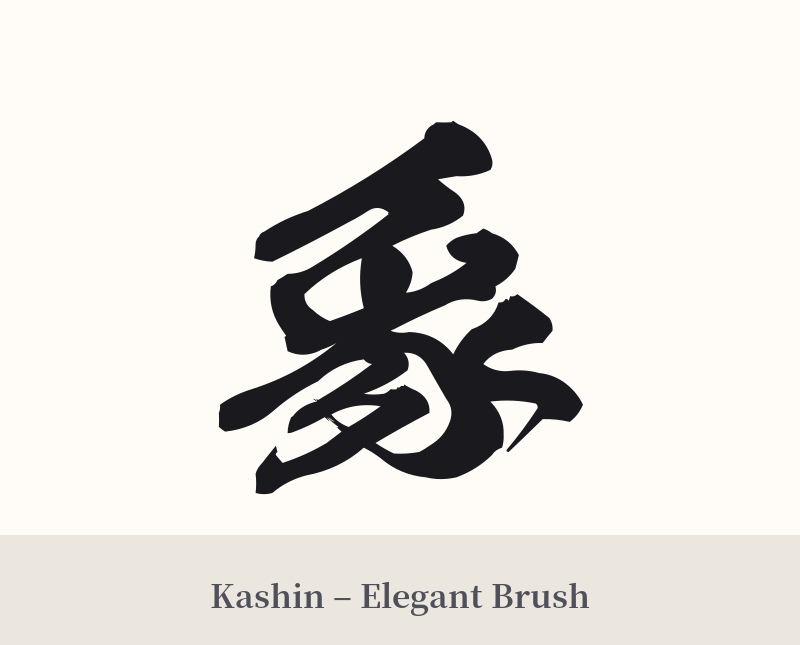
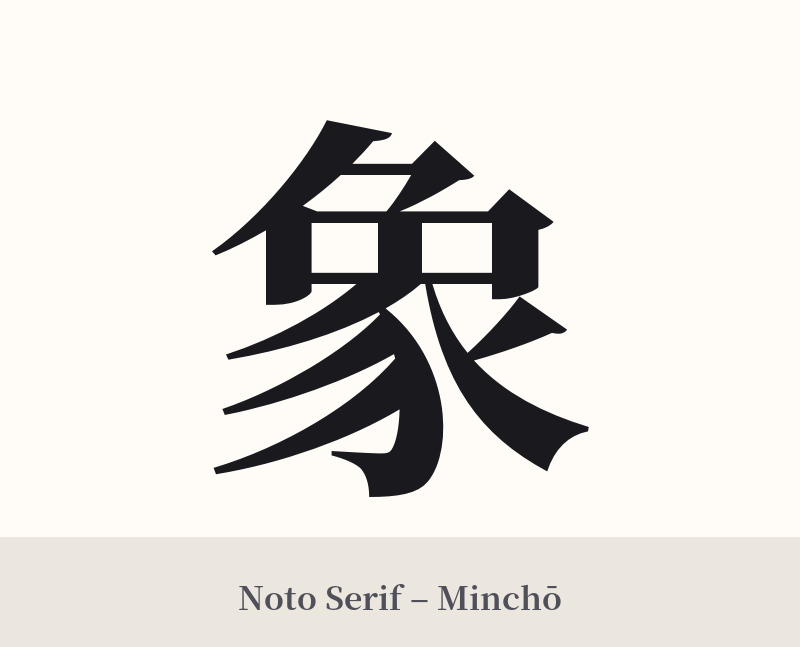
🖌️ Font Styles for 象
The same kanji can look dramatically different depending on the calligraphy style. Choose a font that matches the mood you want for your tattoo or design.
🎨 Tattoo Suitability
📐 Tattoo Design Guide
The kanji 象 is visually complex and balanced, offering great potential for an impactful tattoo design.
– Placement: Due to its 12 strokes and internal details, this kanji benefits from a larger canvas to prevent the lines from blurring over time. Consider placements like the calf, thigh, forearm, or upper back.
– Style: A thick, bold calligraphy style (shodō) can emphasize the 'elephant' meaning, conveying a sense of weight and power. For a more modern or philosophical take hinting at 'phenomenon,' a finer, more geometric or even a minimalist brushstroke style could work well.
– Visuals: To avoid ambiguity, you could pair the kanji with a visual element. A traditional design might incorporate the kanji into the body of an illustrated elephant. A more abstract piece could place the kanji within a nebula or a pattern of swirling shapes to evoke the idea of 'phenomenon.'
Comments