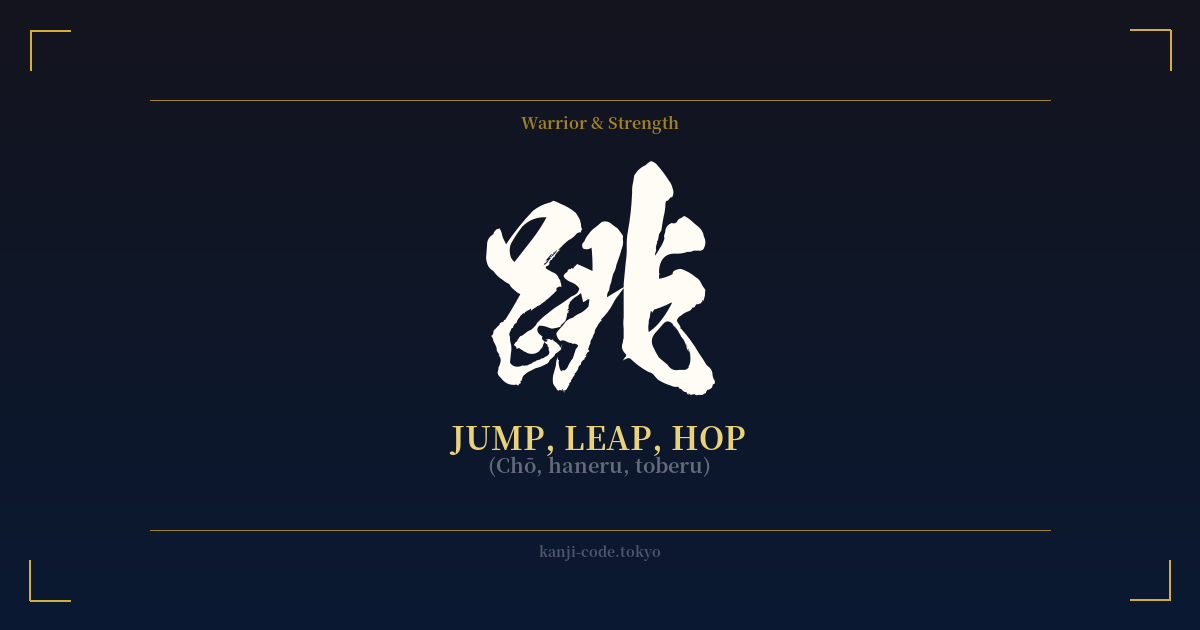
✍️ 跳 (Chō, haneru, toberu) — Cultural Context
The kanji 跳 (chō) is a vibrant character that encapsulates the very essence of dynamic movement. At its core, it means to jump, leap, or hop. Its construction offers a glimpse into its meaning: the left side is the radical 足 (ashi), meaning 'foot' or 'leg,' clearly grounding the character in physical action. The right side, 兆 (chō), is a phonetic component that also means 'omen' or 'sign,' originally depicting cracks in oracle bones used for divination. Together, they create a powerful image of a foot making a significant, almost portentous, leap.
In everyday Japanese, 跳 is found in many words related to movement. You see it in sports terminology like 高跳び (takatobi), the high jump, or in the more general term 跳躍 (chōyaku), which means a leap or bound. The verb form, 跳ねる (haneru), is wonderfully descriptive, used for everything from a rabbit hopping across a field to a fish splashing out of water or even oil splattering in a hot pan. This illustrates the character's association with sudden, energetic, and often upward motion.
Beyond its literal meaning, 跳 carries a rich metaphorical weight. It symbolizes progress, breaking through barriers, and advancing to a new stage. Taking a 'leap' into a new career, a new relationship, or a new phase of life can be represented by this kanji. It speaks to the courage required to overcome inertia and propel oneself forward, to jump over an obstacle rather than go around it. This concept is deeply resonant in a culture that values perseverance and striving for improvement.
While not directly used in the famous proverb, the spirit of 跳 is akin to the story of the carp leaping up the waterfall to become a dragon (登竜門 – tōryūmon). It embodies that same aspirational energy—the single, powerful burst of effort required to achieve transformation. Whether it represents a physical feat of athleticism or a metaphorical leap of faith, 跳 is a kanji filled with potential, energy, and the promise of what lies on the other side of the jump.
🖌️ Font Styles for 跳
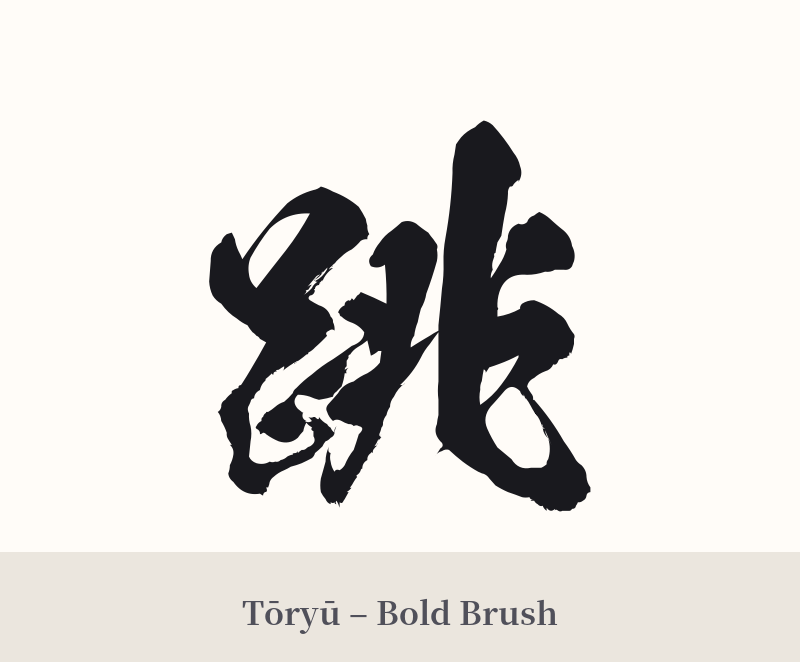
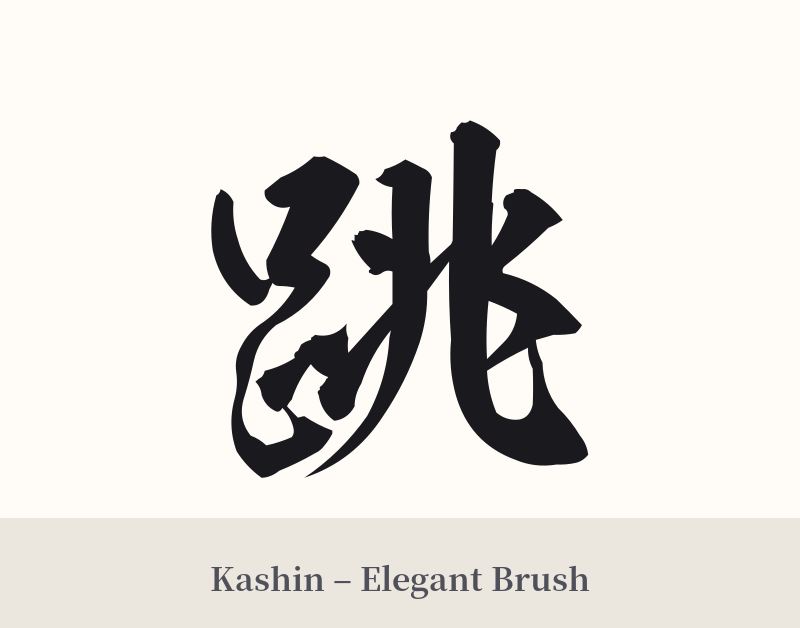
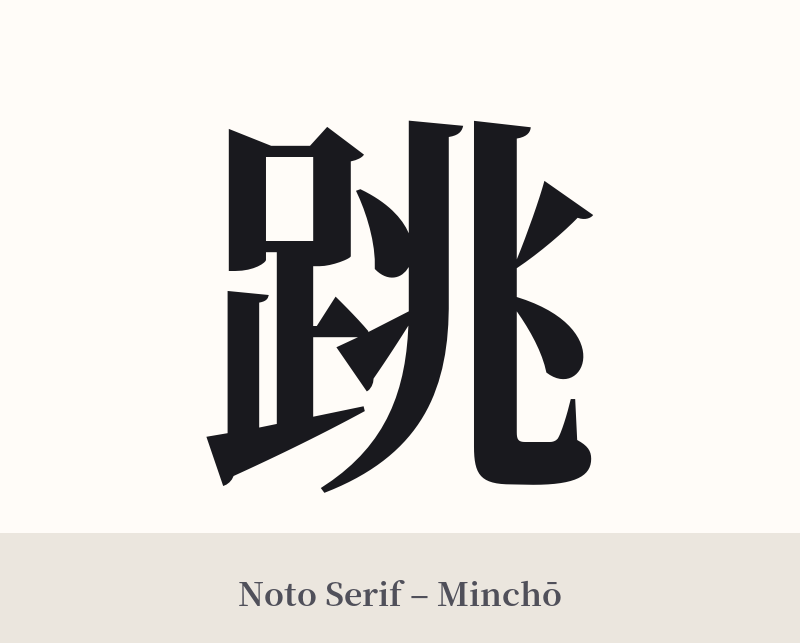
The same kanji can look dramatically different depending on the calligraphy style. Choose a font that matches the mood you want for your tattoo or design.
🎨 Tattoo Suitability
📐 Tattoo Design Guide
The kanji 跳 is visually dynamic, making it an excellent choice for a tattoo that expresses energy and forward momentum.
– Placement: Consider areas of the body associated with movement and power, such as the calf, forearm, or the back of the shoulder. These placements can enhance the feeling of propulsion inherent in the character.
– Style: A bold, semi-cursive or gyōsho calligraphy style works exceptionally well. The flowing, connected strokes can emphasize the motion of the jump. For a more modern and clean aesthetic, a crisp Mincho or Gothic font can highlight the character's architectural balance.
– Visuals: While it stands strong on its own, it can be paired with elements that amplify its meaning. A splash of water at the base can evoke the 'haneru' image of a fish leaping. Abstract lines suggesting wind or movement can also be used to frame the character and give it a sense of action.
Comments