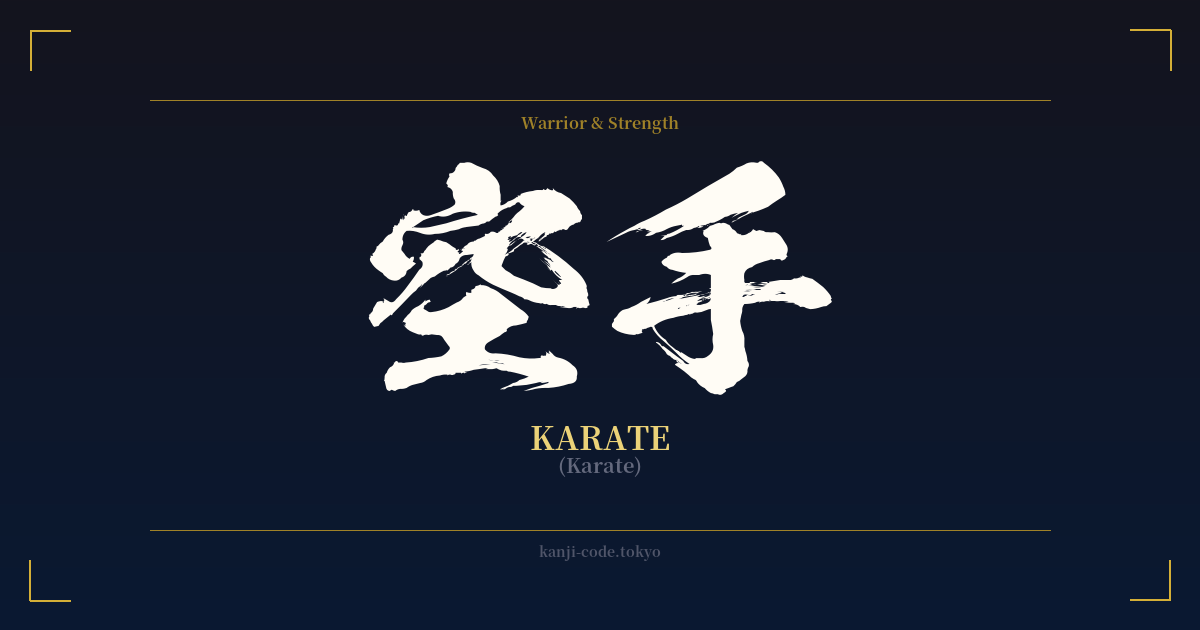
✍️ 空手 (Karate) — Cultural Context
The word 空手 (Karate) is known across the globe, instantly evoking images of disciplined martial artists in white uniforms delivering powerful strikes. The literal translation is 'empty hand,' a name that carries layers of meaning, reflecting both the physical technique and the profound philosophy behind the art.
Karate's origins do not lie in mainland Japan, but in the Ryukyu Kingdom, which is now Okinawa. Originally, the art was known as 'Tōde' (唐手), meaning 'China hand' or 'Tang hand,' acknowledging the significant influence of Chinese martial arts (kenpō) on its development. It was a practical system of self-defense developed for a people forbidden from carrying weapons.
The transformation from 'China hand' to 'empty hand' is a fascinating story of cultural assimilation and philosophical depth. In the early 20th century, as Okinawan masters like Gichin Funakoshi introduced the art to mainland Japan, the political climate was one of rising nationalism. The 'China' character (唐) was seen as foreign and potentially problematic.
Funakoshi, a key figure in modern karate, advocated for changing the character from 唐 to 空. Both characters can be pronounced 'kara.' This clever substitution served two purposes. First, it made the art sound more Japanese, removing the foreign association. Second, and more philosophically, it infused the art with a new layer of meaning drawn from Zen Buddhism.
The character 空 (kū or kara) also means 'void' or 'emptiness,' a central concept in Zen. In this context, 'empty hand' came to signify not just being unarmed, but also emptying the mind of fear, anger, and ego. A karateka should face an opponent with a clear, calm mind, reacting with pure instinct and technique. This concept is encapsulated in the term 'Karate-dō' (空手道), 'The Way of the Empty Hand,' framing it as a lifelong path (dō) of self-improvement, not just a combat sport.
Today, Karate stands as a testament to this rich history. It is a Budo (martial way) that balances physical prowess with mental and spiritual development. The words 空手 represent a journey from a practical fighting method to a global art form that teaches discipline, respect, and the pursuit of perfecting one's character.
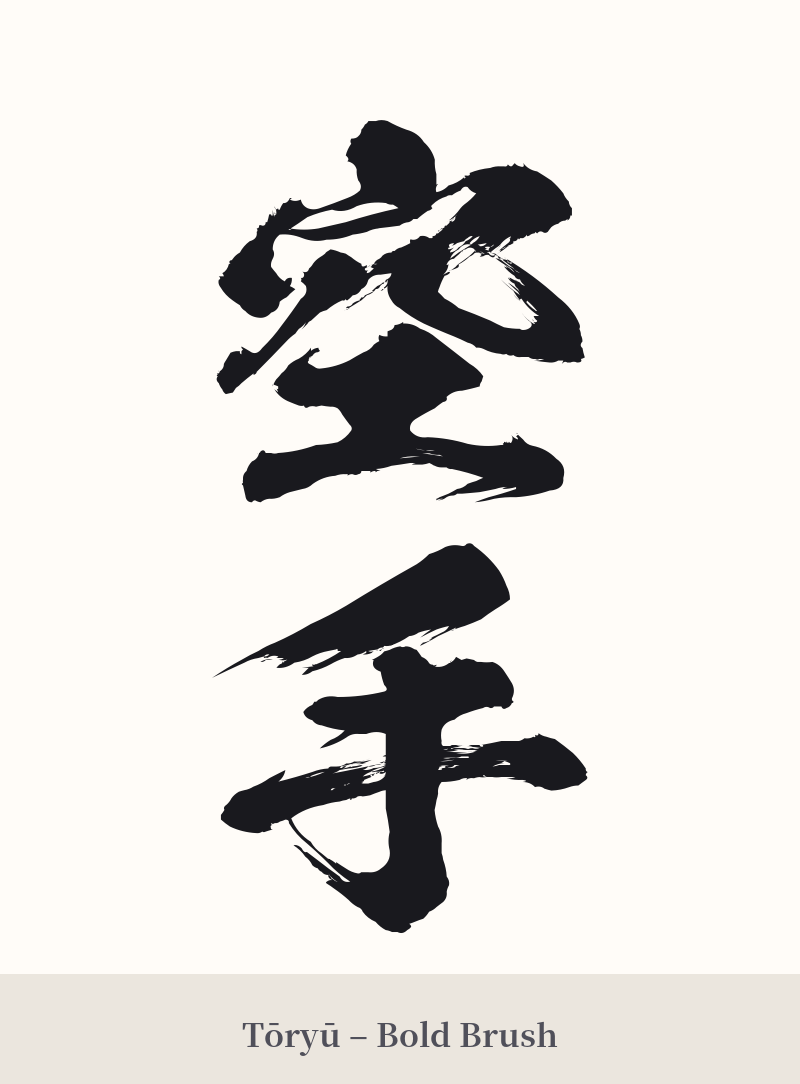
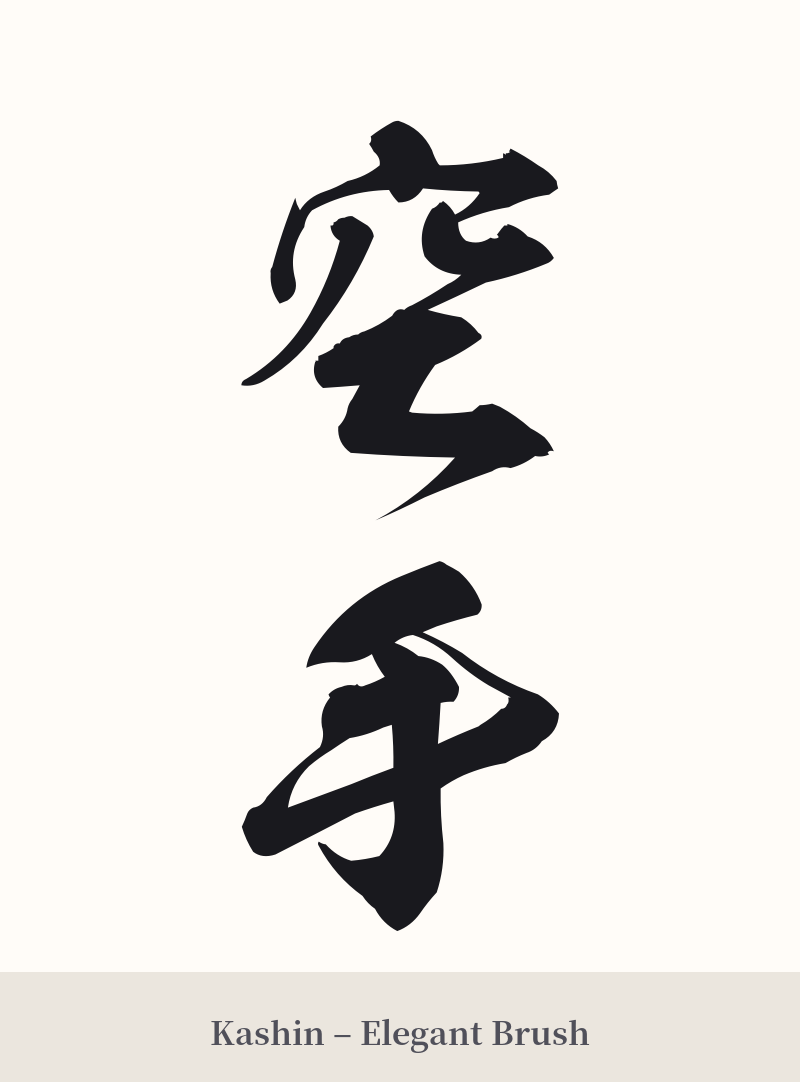
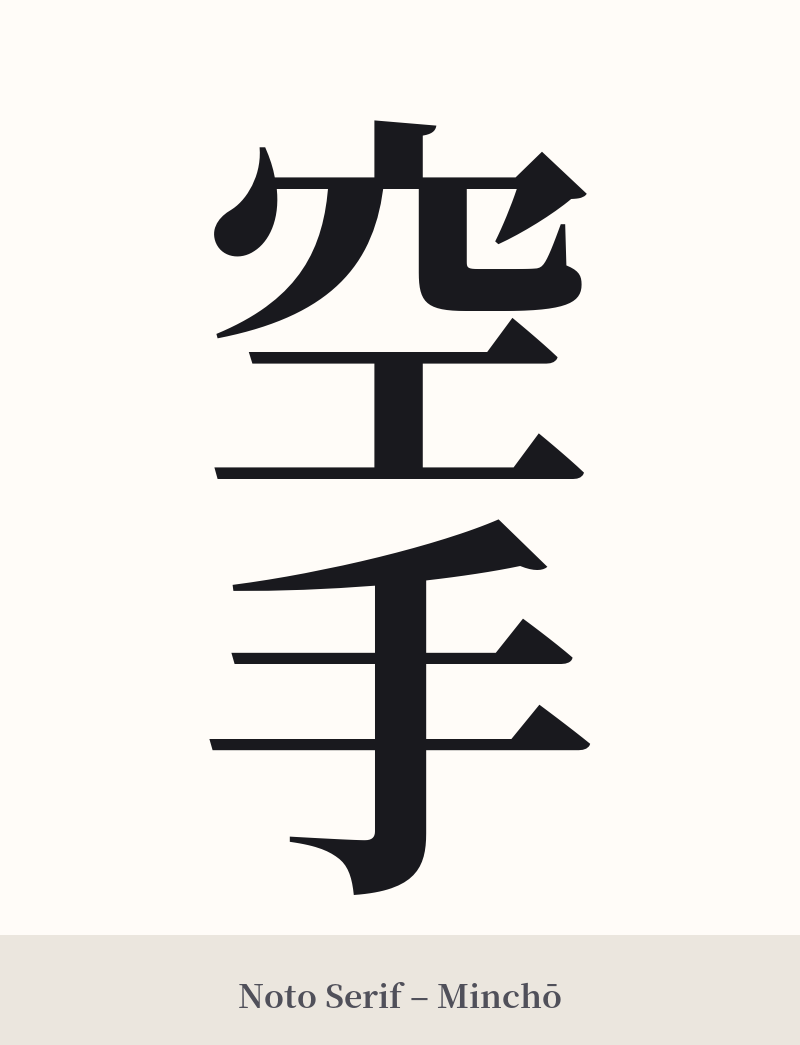
🖌️ Font Styles for 空手
The same kanji can look dramatically different depending on the calligraphy style. Choose a font that matches the mood you want for your tattoo or design.
🎨 Tattoo Suitability
📐 Tattoo Design Guide
A 空手 tattoo is a powerful statement of discipline and strength. Its two-character structure offers great versatility in design.
– Placement: The forearm, either inner or outer, is a classic choice, allowing for a vertical or horizontal layout. The calf provides a similar canvas. For a larger, more impactful piece, the back along the spine is an excellent location for a vertical script.
– Font Style: For a strong, modern, and highly legible look, consider a blocky font like Kaisho (block script) or a Mincho style. For a more artistic and dynamic feel, a semi-cursive (Gyosho) or fully cursive (Sosho) calligraphy style can capture the fluid motion and power of the art form.
– Visual Tips: A vertical orientation is the most traditional and aesthetically pleasing for these characters. Consider surrounding the kanji with a red ink stamp (hanko) design of your own initial or dojo symbol. It can also be integrated with an Ensō (Zen circle) to emphasize the philosophical aspect of 'emptiness' and enlightenment.
Comments