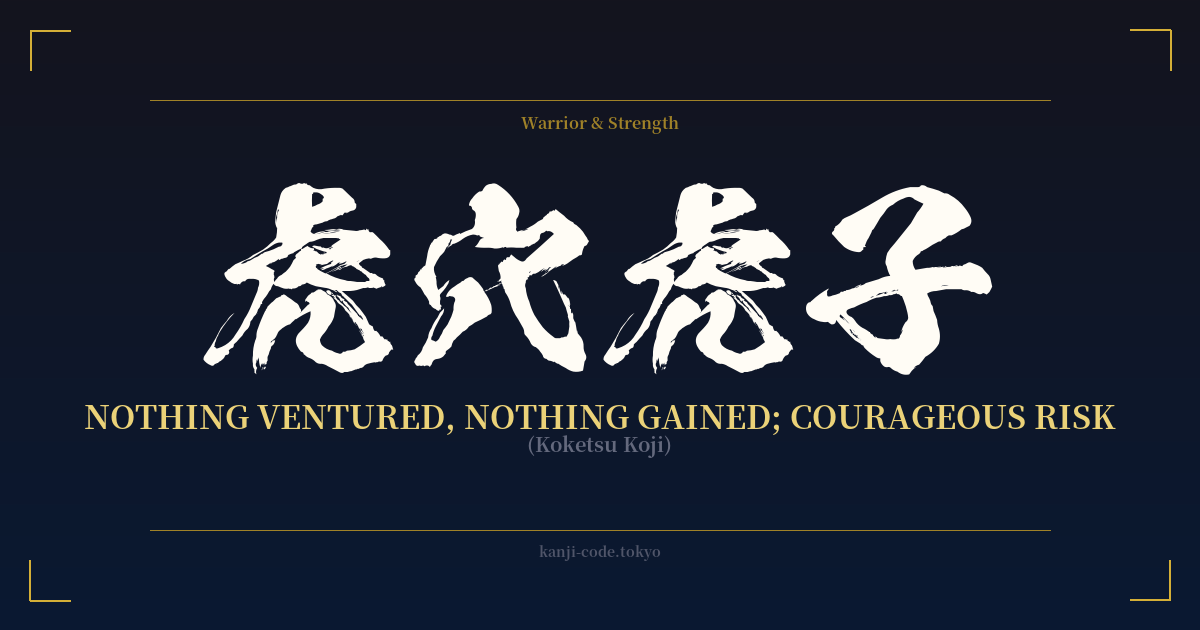
✍️ 虎穴虎子 (Koketsu Koji) — Cultural Context
虎穴虎子 (Koketsu Koji) is a powerful Japanese proverb that encapsulates the idea that great rewards require great risks. It is the abbreviated form of a longer saying, 「虎穴に入らずんば虎子を得ず」 (Koketsu ni irazunba koji o ezu), which translates literally to, “If you do not enter the tiger’s den, you cannot get the tiger’s cub.” This vivid imagery paints a clear picture: to obtain something of immense value (the cub), one must venture into a place of immense danger (the den).
The expression is the Japanese adoption of a Chinese proverb, originating from the historical text Book of the Later Han. It is attributed to the Han dynasty general Ban Chao, who was dispatched as an envoy to the kingdom of Shanshan in Central Asia. When a rival delegation from the Xiongnu arrived, threatening to sway the king, Ban Chao knew he had to act decisively.
He gathered his small contingent of 36 men and declared, “不入虎穴,不得虎子” (the original Chinese phrasing). He argued that only by taking an extreme risk could they secure their mission and their lives. That night, they launched a daring raid on the Xiongnu camp, succeeding against all odds and cementing the alliance with Shanshan. This historical event perfectly embodies the spirit of the proverb: calculated courage in the face of overwhelming danger to achieve a critical objective.
In modern Japan, Koketsu Koji is a well-known idiom used across various fields, from business to sports and personal development. It’s the Japanese equivalent of “Nothing ventured, nothing gained” or “Fortune favors the bold.” It encourages individuals to step out of their comfort zones and embrace challenges. However, it’s not about reckless abandon; like General Ban Chao’s plan, it implies a strategic and courageous risk, not a foolish one.
This makes it a popular concept in martial arts and among those who admire the principles of Bushido, the samurai code. It speaks to a mindset of determination, strategic thinking, and the will to confront adversity head-on to seize victory. It’s a timeless reminder that the greatest achievements in life often lie just beyond our greatest fears.
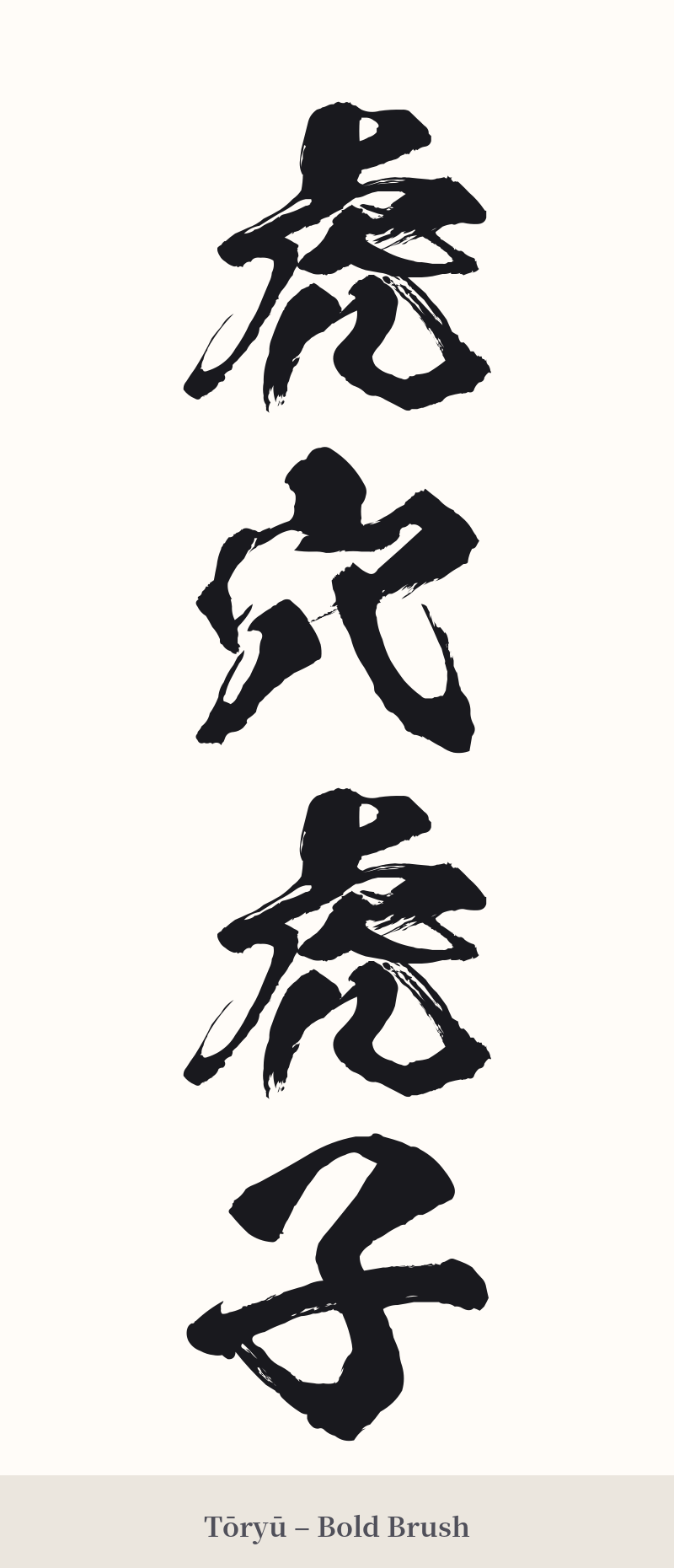
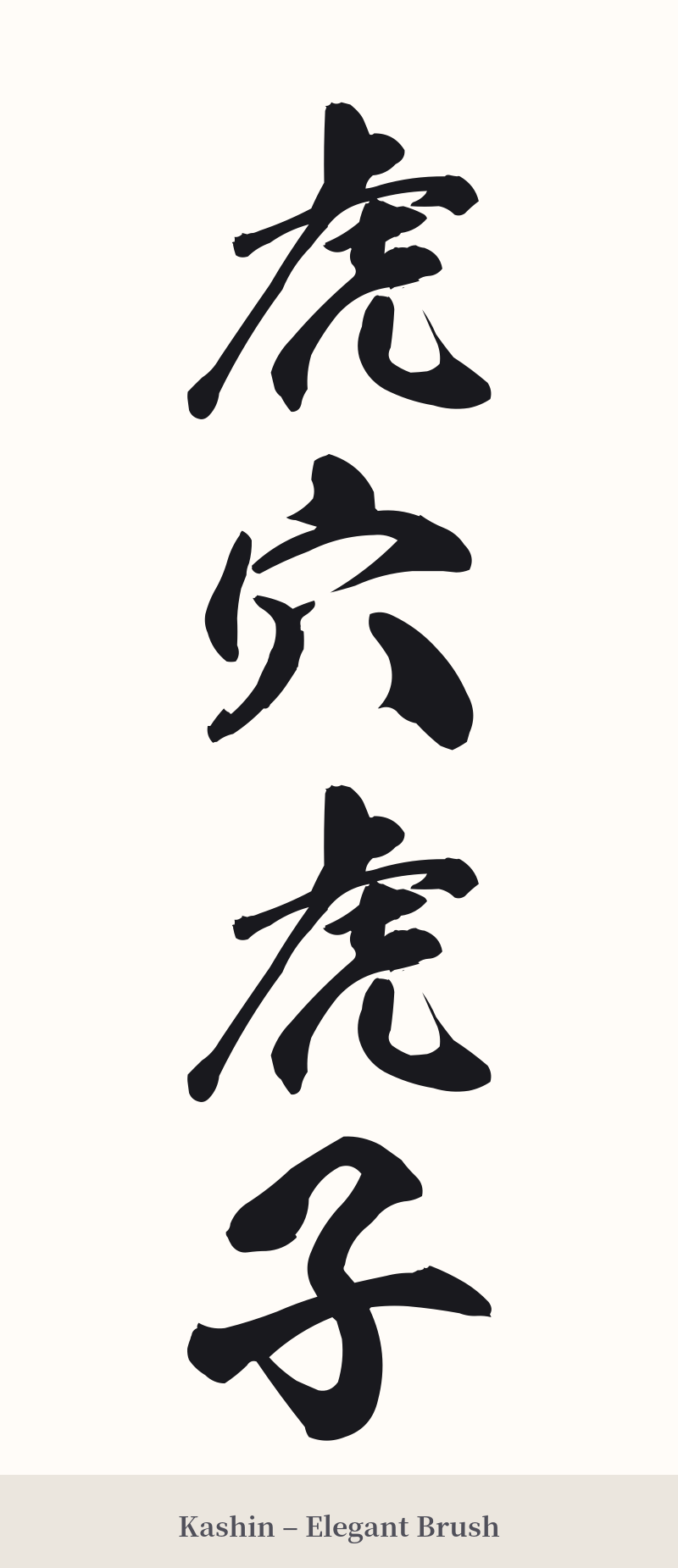
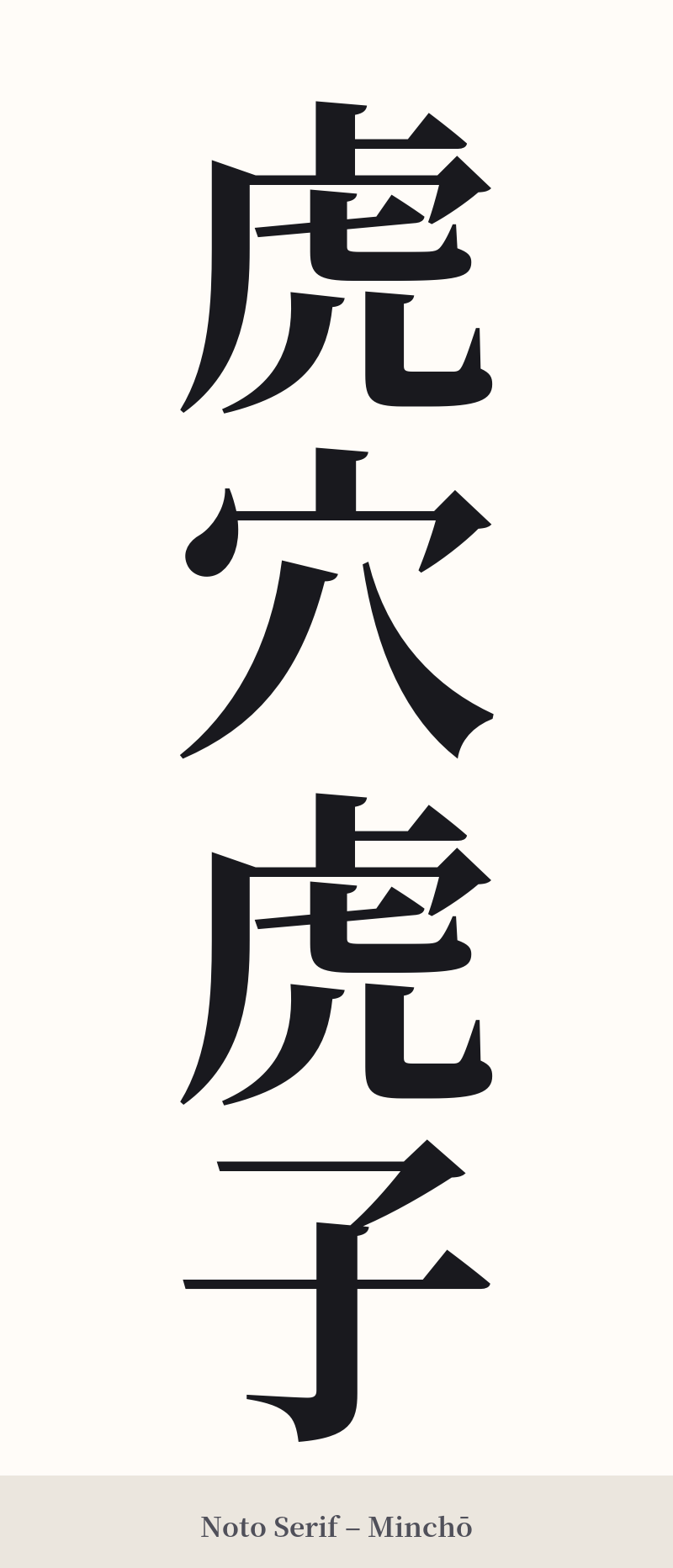
🖌️ Font Styles for 虎穴虎子
The same kanji can look dramatically different depending on the calligraphy style. Choose a font that matches the mood you want for your tattoo or design.
🎨 Tattoo Suitability
📐 Tattoo Design Guide
The four-character structure of 虎穴虎子 lends itself beautifully to tattoo designs that emphasize balance and power.
– Placement: A vertical alignment is the most traditional and visually impactful presentation for a yojijukugo. This looks particularly striking along the spine, forearm, or calf. A horizontal layout can also work well across the chest or upper back.
– Font Style: The font should match the idiom's powerful meaning. Consider a dynamic calligraphy style like Gyosho (semi-cursive) for a sense of energy and flow, or a strong, stable Kaisho (block script) for a bold and clear statement. An aggressive, custom brushstroke style can further emphasize the ferocity of the 'tiger' element.
– Visual Tips: To enhance the design, you could incorporate imagery of a tiger, or perhaps a subtle depiction of a cave opening. The key is to ensure the four kanji remain the focal point. Pay close attention to the spacing (kerning) between characters to ensure they read as a single, cohesive phrase.
Comments