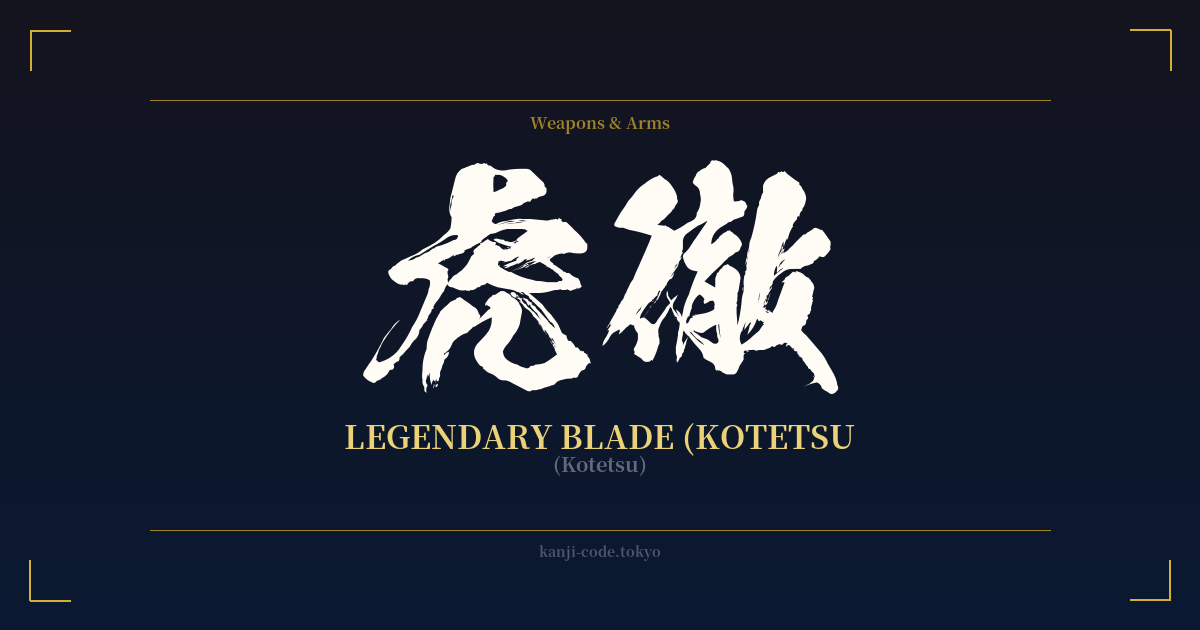
✍️ 虎徹 (Kotetsu) — Cultural Context
The name 虎徹 (Kotetsu) resonates deeply within Japanese culture, not as a concept, but as the mark of a legend. It belongs to Nagasone Kotetsu, one of the most celebrated swordsmiths of the Edo period, a man whose life and work are shrouded in tales of genius and perfection.
Born Okisato, he began his career not as a smith, but as an armorer for a prominent clan. It wasn't until he was around fifty years old that he moved to Edo (modern-day Tokyo) and shifted his focus to sword making. This late start makes his subsequent mastery all the more remarkable. He adopted the name 'Kotetsu', which translates to 'Old Tiger', a name that perfectly captured his fierce spirit and seasoned skill, emerging with formidable power late in his life.
Kotetsu's blades were renowned for their incredible sharpness and durability. Legends claimed they were so tough they could cut through a rival's helmet—an unheard-of feat. This quality, known as 'kabuto-wari' (helmet cutter), became his signature. His swords were not just functional weapons; they were works of art. He developed a unique 'hamon' (temper line) that resembled a string of beads, a testament to his innovative techniques and aesthetic sense.
The fame of Kotetsu swords grew so immense that it created a peculiar problem: a flood of forgeries. It is said that for every genuine Kotetsu, there are countless fakes. Ironically, this only amplified his legendary status. Owning a real Kotetsu was the ultimate status symbol for a samurai, a sign of both wealth and martial prowess. The name became synonymous with the highest echelon of Japanese sword craftsmanship.
In modern times, Kotetsu's legacy has been cemented through popular culture. The name appears in manga, anime, and video games, often as a powerful, named weapon sought by protagonists. From the sword wielded by Kondō Isami of the Shinsengumi in historical accounts to fictional blades in series like 'Rurouni Kenshin', the name Kotetsu continues to evoke an aura of unparalleled power and legendary skill. It stands as a tribute to a master artisan whose work transcended its time to become a permanent fixture in Japan's cultural imagination.
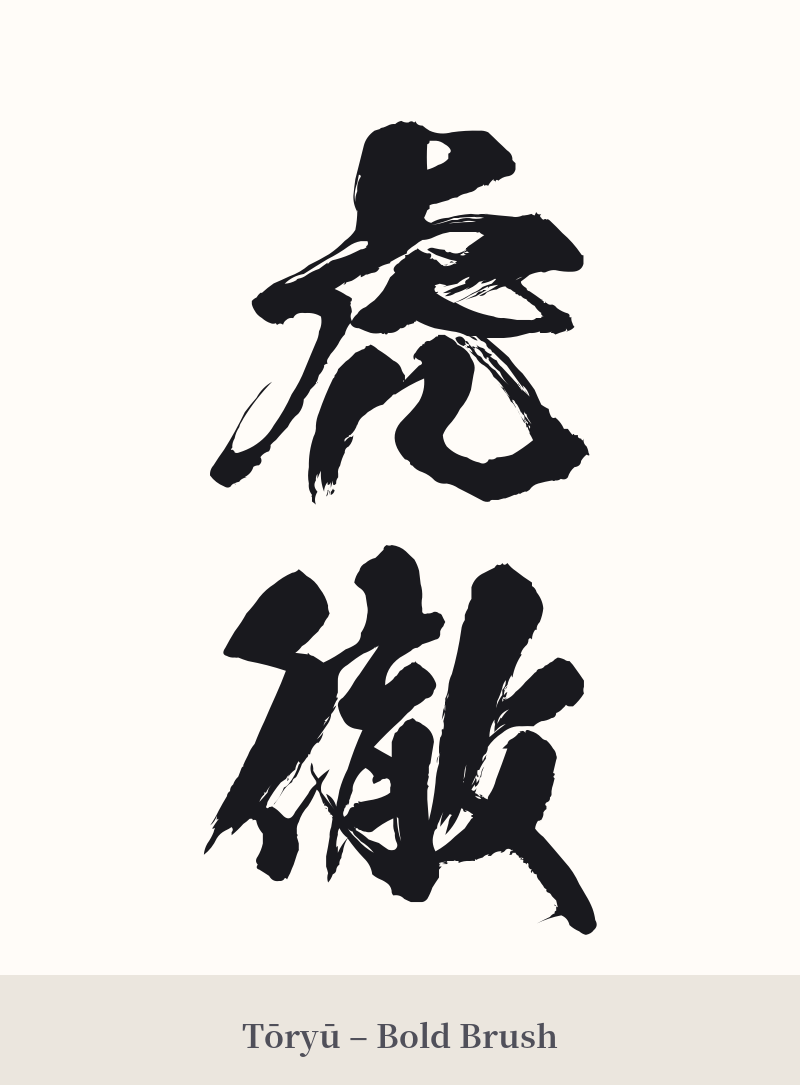
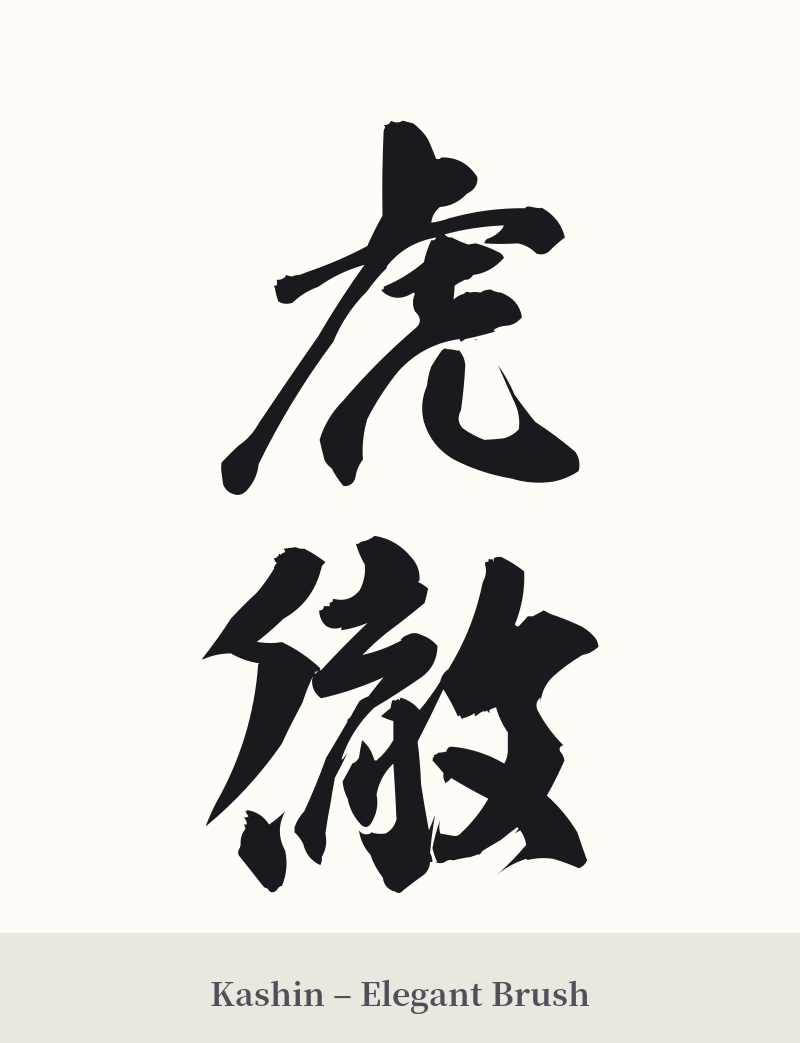
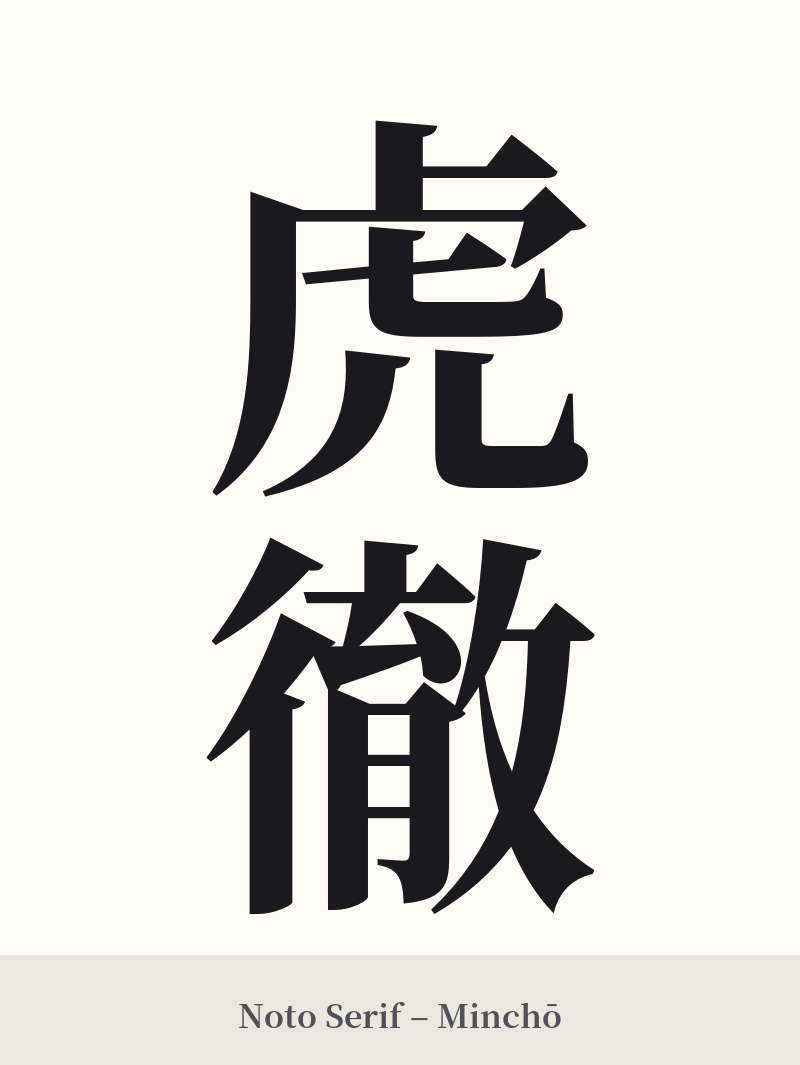
🖌️ Font Styles for 虎徹
The same kanji can look dramatically different depending on the calligraphy style. Choose a font that matches the mood you want for your tattoo or design.
🎨 Tattoo Suitability
📐 Tattoo Design Guide
A 虎徹 (Kotetsu) tattoo carries a weight of history and power, and the design should reflect that. It's a statement piece that speaks to an appreciation for craftsmanship and martial legacy.
– Placement: This two-character compound works exceptionally well in a vertical orientation. Consider placing it along the forearm, the calf, or the spine. A horizontal placement across the chest or upper back can also be very powerful.
– Style: For a raw, fierce look, a dynamic brushstroke style like Gyosho (semi-cursive) or Sosho (cursive) is ideal. This captures the 'Tiger' aspect of the name. For a design that emphasizes the precision and sharpness of the blade, a clean, angular script like Kaisho (block script) or a traditional Mincho font is more appropriate.
– Visual Embellishments: While the kanji alone is strong, you could incorporate subtle elements. Consider a background of a roaring tiger's face in a sumi-e (ink wash) style, or have the kanji integrated into the design of a katana's handle (tsuka) or guard (tsuba). Another idea is to have the kanji appear as if carved into steel or wood, adding a textural element to the design.

Comments