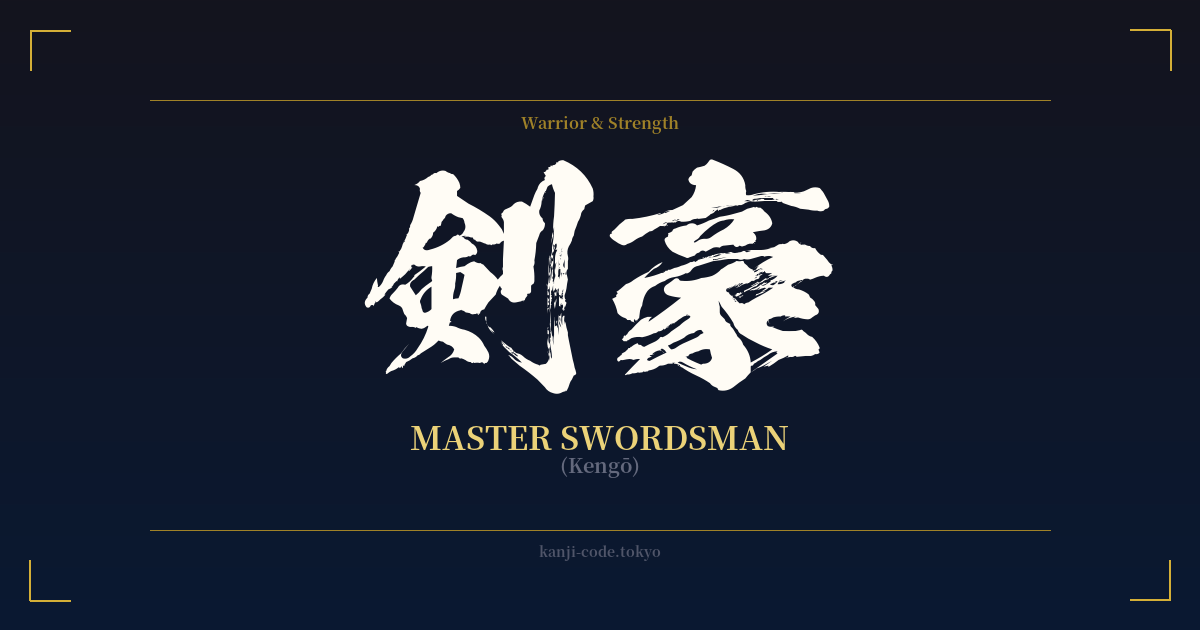
✍️ 剣豪 (Kengō) — Cultural Context
The term 剣豪 (Kengō) resonates through Japanese history with the clang of steel and the weight of legend. It is a title that transcends the simple definition of "swordsman," elevating it to the highest echelon of martial prowess and spiritual discipline. To be a Kengō was to be a "sword hero" or an "overpowering swordsman," an individual whose skill with the blade was so profound that it became an art form.
Historically, the Kengō emerged from the crucible of Japan's feudal period, a time rife with conflict where the sword was the ultimate arbiter of life and death. While the samurai (侍) class was a broad social and military stratum, the Kengō were the superstars within it. They were the masters who founded schools of swordsmanship (ryū), authored philosophical texts on strategy, and engaged in legendary duels (shinken shōbu) to prove the superiority of their techniques.
Perhaps the most famous Kengō of all is Miyamoto Musashi (c. 1584–1645). A rōnin (masterless samurai), Musashi was an undefeated duelist, a brilliant strategist, and the author of "The Book of Five Rings" (五輪書, Go Rin no Sho), a seminal text on swordsmanship and philosophy. His life story embodies the Kengō ideal: a relentless pursuit of perfection, a deep connection to strategy and psychology, and a life lived by the way of the sword.
The concept of Kengō is deeply intertwined with Zen Buddhism. For these masters, swordsmanship was not merely a physical act but a path to enlightenment. It required a state of "no-mind" (mushin), where the body moves without conscious thought, acting with pure instinct and perfect clarity. This spiritual dimension is what separates a mere killer from a true master.
In modern times, the spirit of the Kengō lives on. It is a revered concept in the world of Kendō (the modern martial art of Japanese fencing) and a popular archetype in Japanese pop culture, from the stoic swordsmen of Akira Kurosawa's films to the powerful characters in anime and video games like Roronoa Zoro from "One Piece" or the protagonists of the "Samurai Shodown" series. The word carries an aura of immense skill, unwavering discipline, and legendary status, representing the pinnacle of an art form born from conflict but perfected through spirit.
🖌️ Font Styles for 剣豪
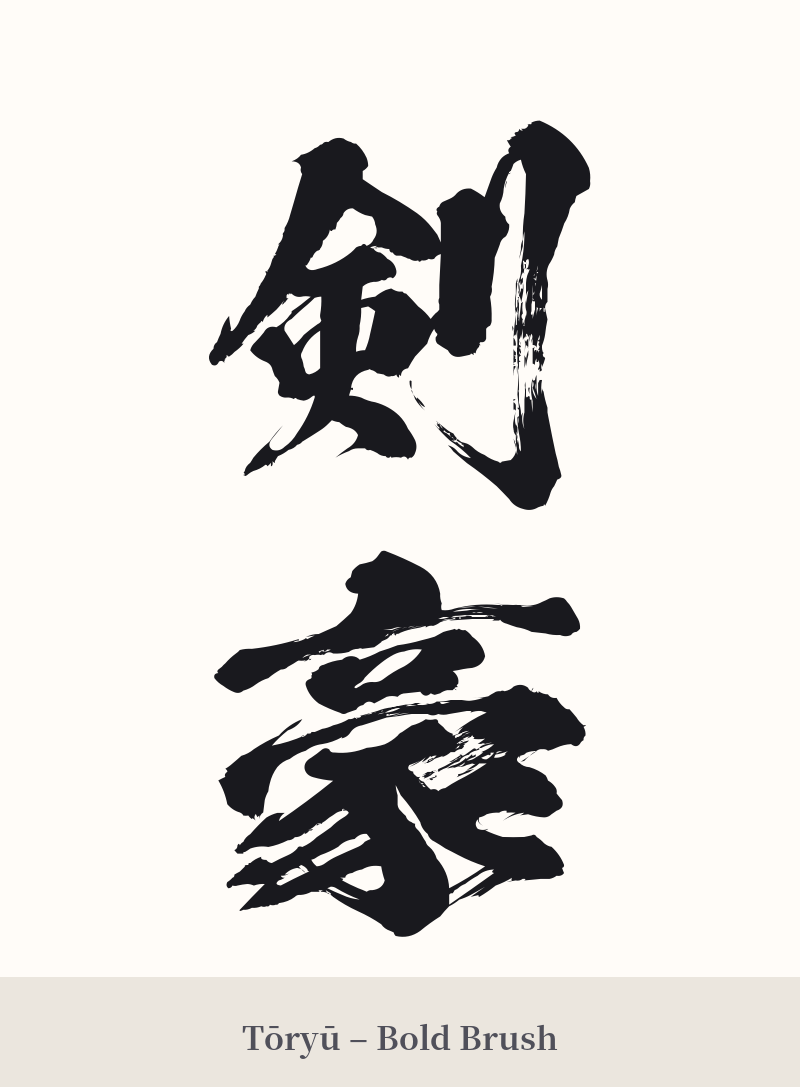
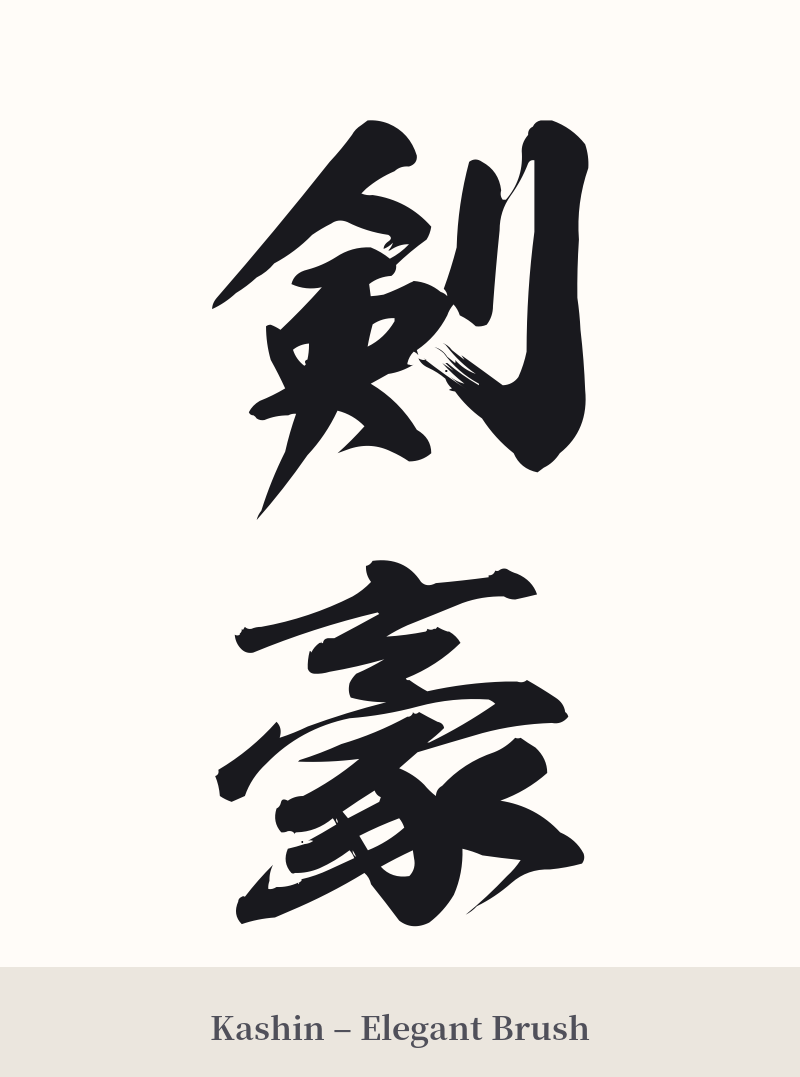
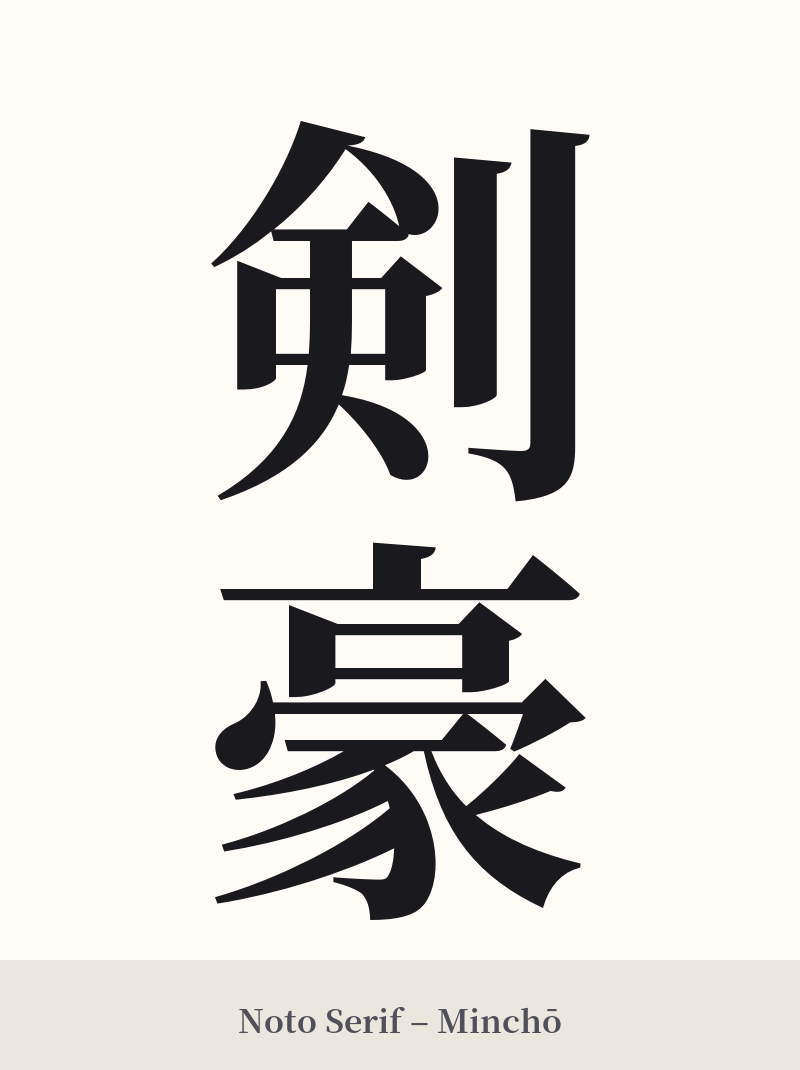
The same kanji can look dramatically different depending on the calligraphy style. Choose a font that matches the mood you want for your tattoo or design.
🎨 Tattoo Suitability
📐 Tattoo Design Guide
A tattoo of 剣豪 (Kengō) should convey power, precision, and history. The design choices can greatly enhance its impact.
– Placement: This two-character compound is well-suited for vertical alignment. Consider placing it along the forearm (to follow the line of the bone), the calf, or down the spine. For a horizontal design, the chest or upper back provides a strong canvas.
– Font Style: The style of the calligraphy can dramatically alter the feel. A dynamic, semi-cursive style (gyōsho) can evoke the fluid motion of a sword strike. Conversely, a bold, angular block script (kaisho) can emphasize the discipline and solid foundation of the master's skill.
– Visual Elements: While the kanji is powerful on its own, it can be paired with complementary imagery. Consider a subtle background of a Japanese ink wash (sumi-e), a single falling cherry blossom petal (symbolizing the transient nature of life), or a minimalist ensō (Zen circle) to represent enlightenment and the void.
Comments