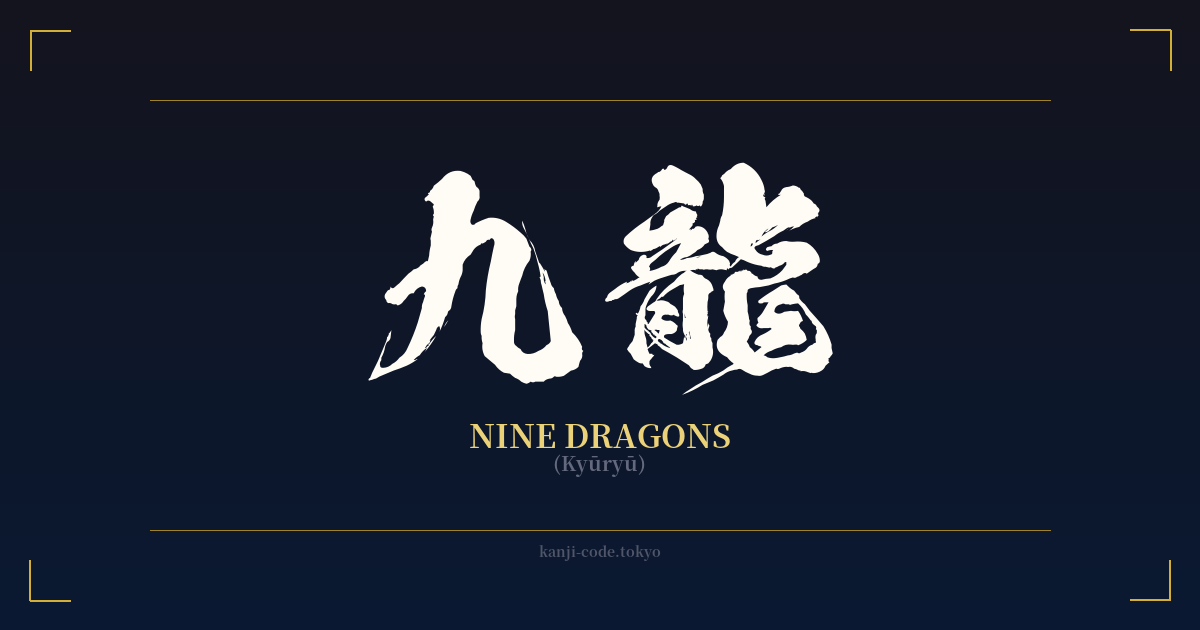
✍️ 九龍 (Kyūryū) — Cultural Context
The term 九龍 (Kyūryū), meaning 'Nine Dragons,' is a potent symbol steeped in East Asian mythology, primarily originating from China but understood and respected throughout the region, including Japan.
In Chinese cosmology, the number nine is highly significant. As the largest single digit, it represents completeness, longevity, and celestial power. It was historically associated with the Emperor of China, the 'Son of Heaven,' whose robes were often adorned with nine dragons. Thus, the 'Nine Dragons' are not just a random number of creatures; they represent the pinnacle of power and a complete, unified force.
The most famous real-world application of this term is Kowloon in Hong Kong. The name is a romanization of the Cantonese pronunciation (Gau Lung). Legend says that the young Emperor Bing of the Song dynasty, upon seeing the eight hills surrounding the area, remarked, 'I see eight dragons.' A courtier, noting the emperor himself was also a 'dragon,' replied, 'There are nine dragons.' This story perfectly encapsulates the idea that the number nine signifies a complete and royally-sanctioned set of powers.
This concept of a collective of powerful dragons also appears in the myth of the 'Nine Sons of the Dragon King.' In this folklore, the Dragon King has nine distinct offspring, each with its own personality and domain, often seen as protective guardians adorning temples, bridges, and weapons. This adds another layer of meaning, suggesting a diversity of strengths unified under one powerful banner.
In Japan, while the 'Nine Dragons' concept is less central than in China, the dragon (龍, Ryū) itself is a profoundly important creature. Japanese dragons are typically seen as benevolent water deities, guardians of temples, and symbols of strength and good fortune. Therefore, the term 九龍 is readily understood as a symbol of immense, aggregated power—a council of divine beings. It appears in modern media, company names, and occasionally in place names, carrying with it this ancient and powerful connotation.
🖌️ Font Styles for 九龍
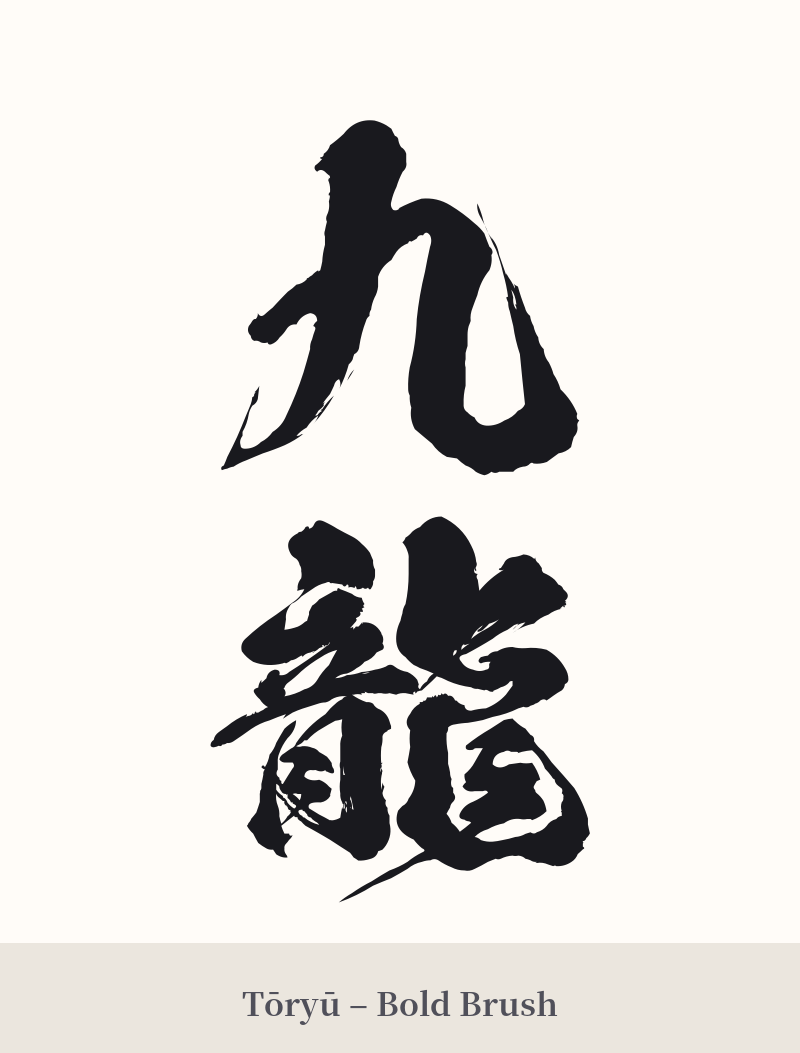
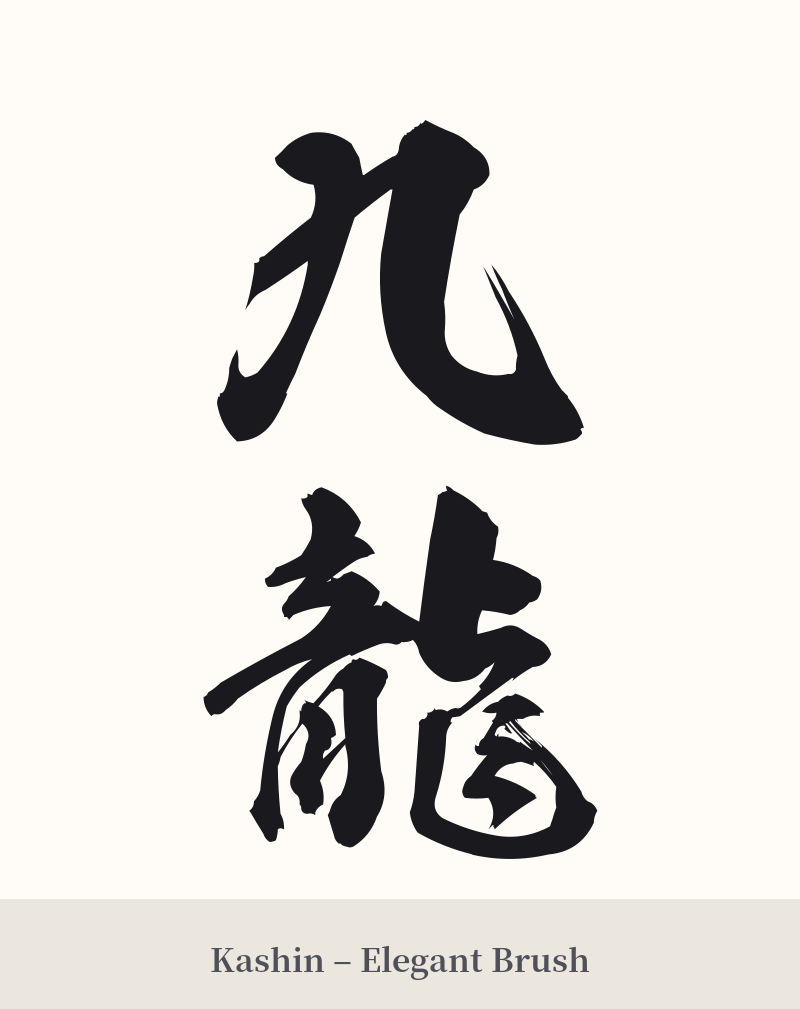
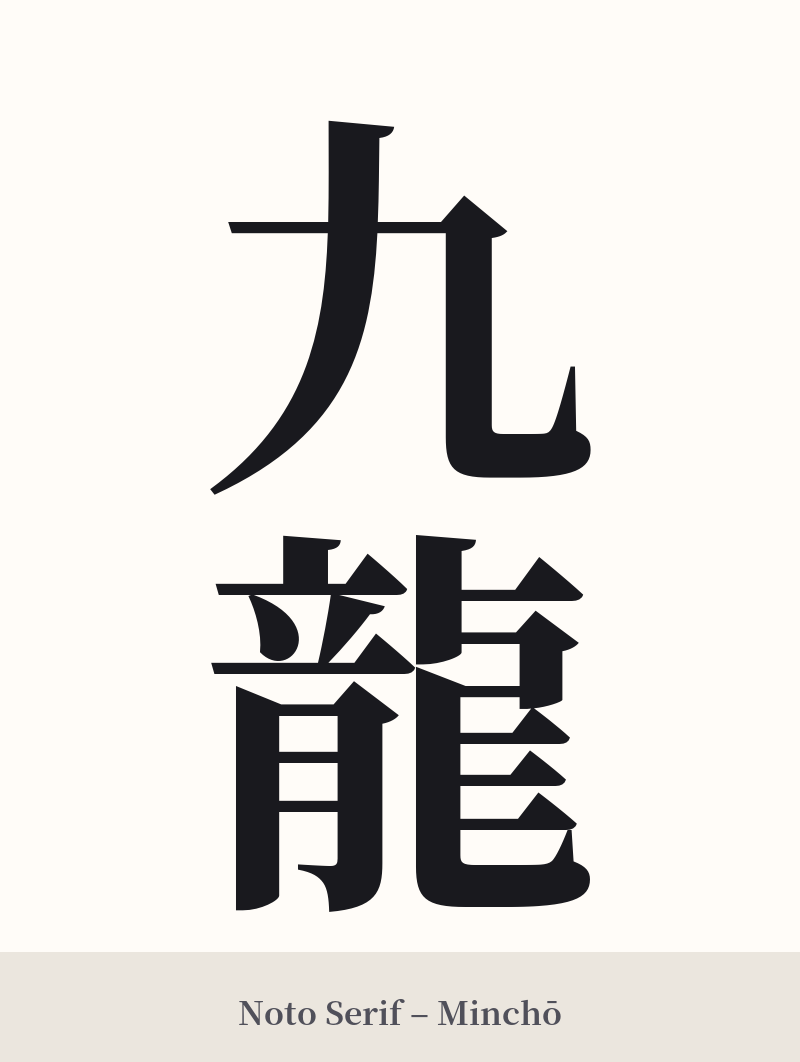
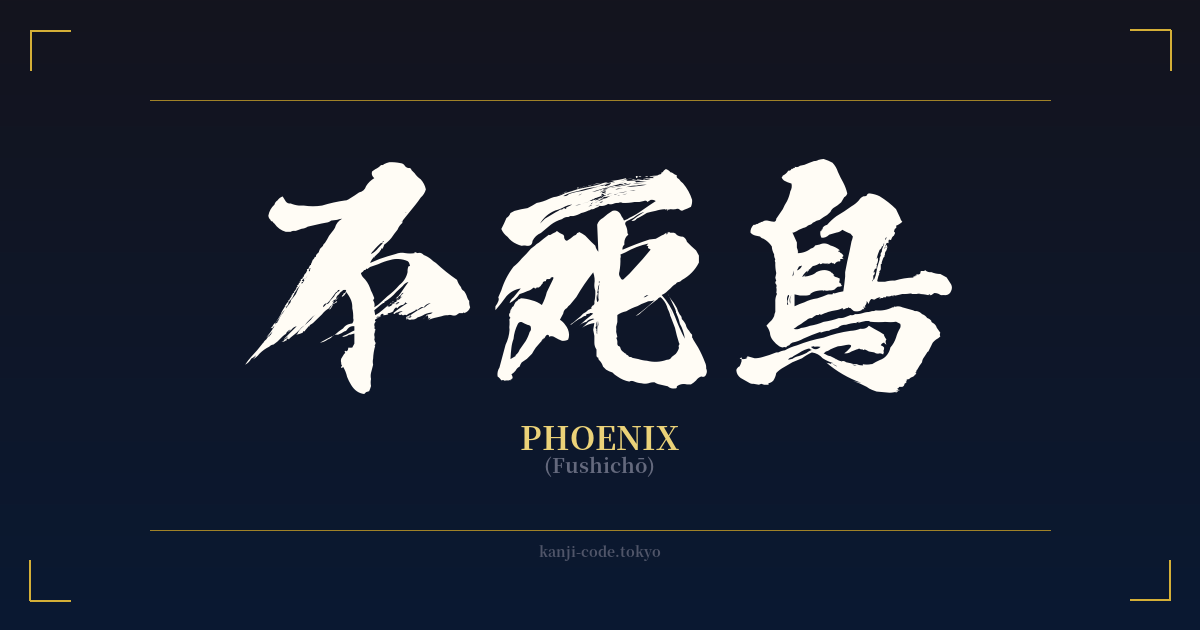
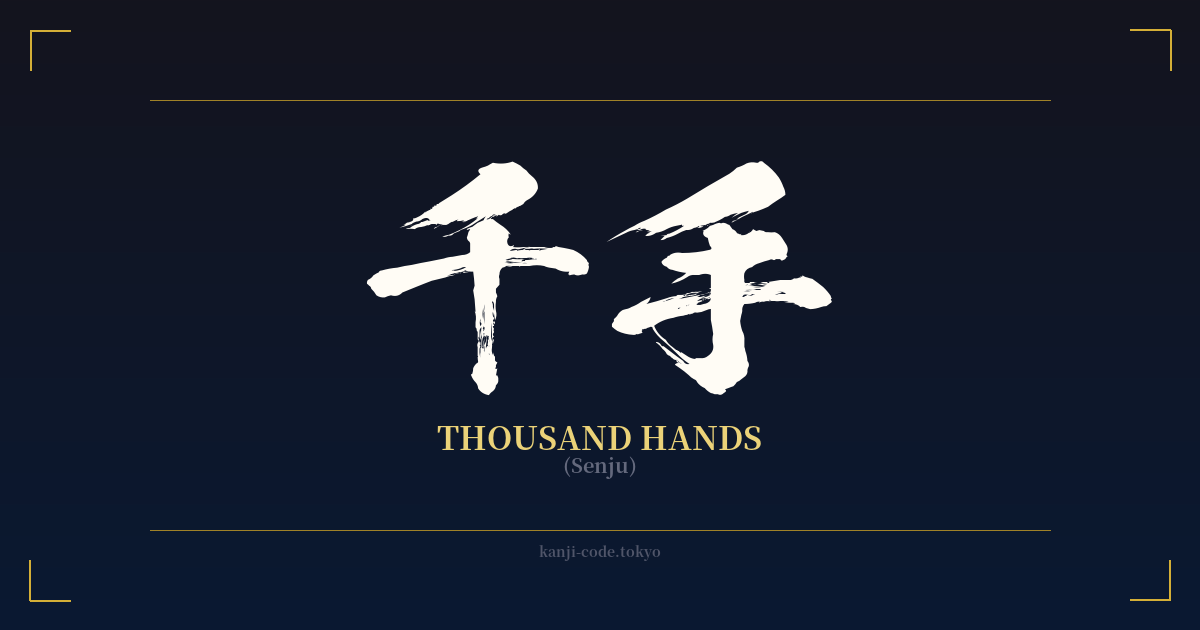
The same kanji can look dramatically different depending on the calligraphy style. Choose a font that matches the mood you want for your tattoo or design.
🎨 Tattoo Suitability
📐 Tattoo Design Guide
A 九龍 tattoo demands respect in its design and placement due to the complexity and meaning of the characters.
– Placement: This design is best suited for larger, flatter areas of the body where the detail of the 龍 character can be properly rendered. Consider a vertical placement on the spine, the length of the forearm, the thigh, or across the ribs.
– Style: A traditional shodō (calligraphy) style with bold, energetic brushstrokes would emphasize the raw power of the dragons. For a cleaner look, a crisp Kaisho (block script) font ensures legibility, especially for the intricate 龍 character.
– Visuals: This kanji pair works exceptionally well on its own due to the visual contrast between the simple 九 and the complex 龍. You could also consider having the kanji as the centerpiece of a larger piece, with an illustrative Japanese dragon weaving around or behind the characters.
Comments