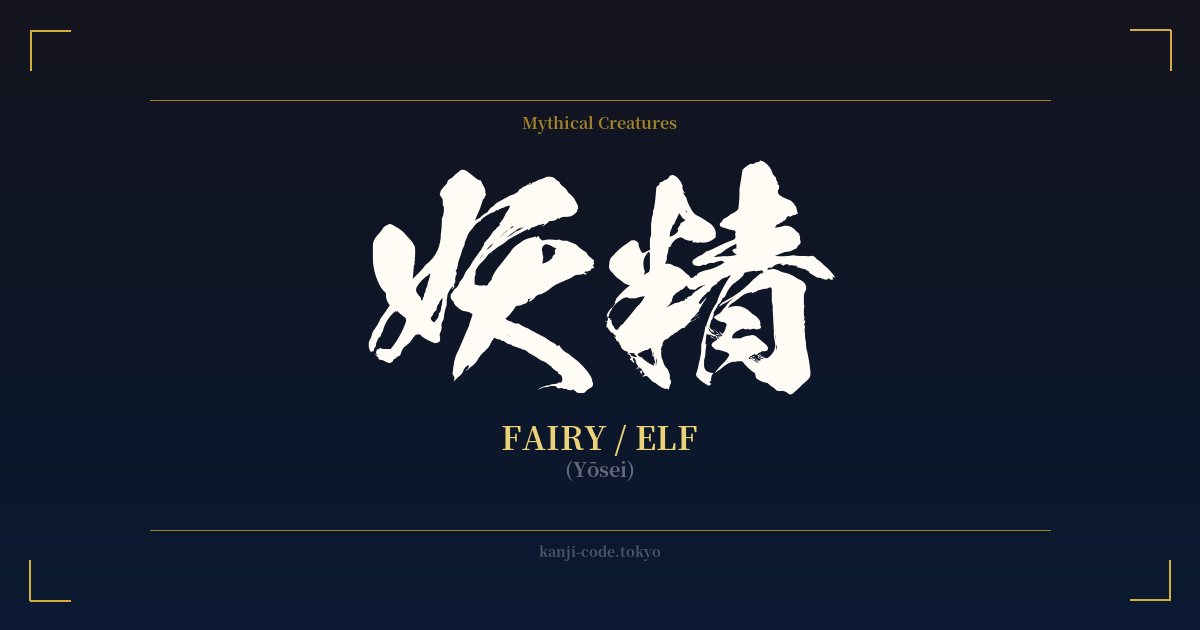
✍️ 妖精 (Yōsei) — Cultural Context
The Japanese word 妖精 (Yōsei) is the modern term for supernatural beings from Western folklore, such as fairies, elves, pixies, and sprites. It is a direct translation that captures the essence of these creatures, but it's important to understand that they are not native to traditional Japanese mythology.
Historically, Japan has its own rich pantheon of supernatural entities known as 妖怪 (yōkai). Yōkai are incredibly diverse, ranging from mischievous animal spirits like the Kitsune (fox) and Tanuki (racoon dog) to more monstrous or terrifying beings like the Oni (demon) and Kappa (river imp). Unlike the often delicate and benevolent image of Western fairies, yōkai can be dangerous, grotesque, or morally ambiguous, reflecting a different cultural perspective on the spirit world.
The term 妖精 itself was largely adopted and popularized during the Meiji Period (1868-1912). This era saw Japan open its borders to the West, leading to a massive influx of Western culture, science, and literature. As works like Shakespeare's "A Midsummer Night's Dream" and European fairy tales by the Brothers Grimm and Hans Christian Andersen were translated into Japanese, a new vocabulary was needed to describe these unfamiliar beings. 妖精 became the go-to term.
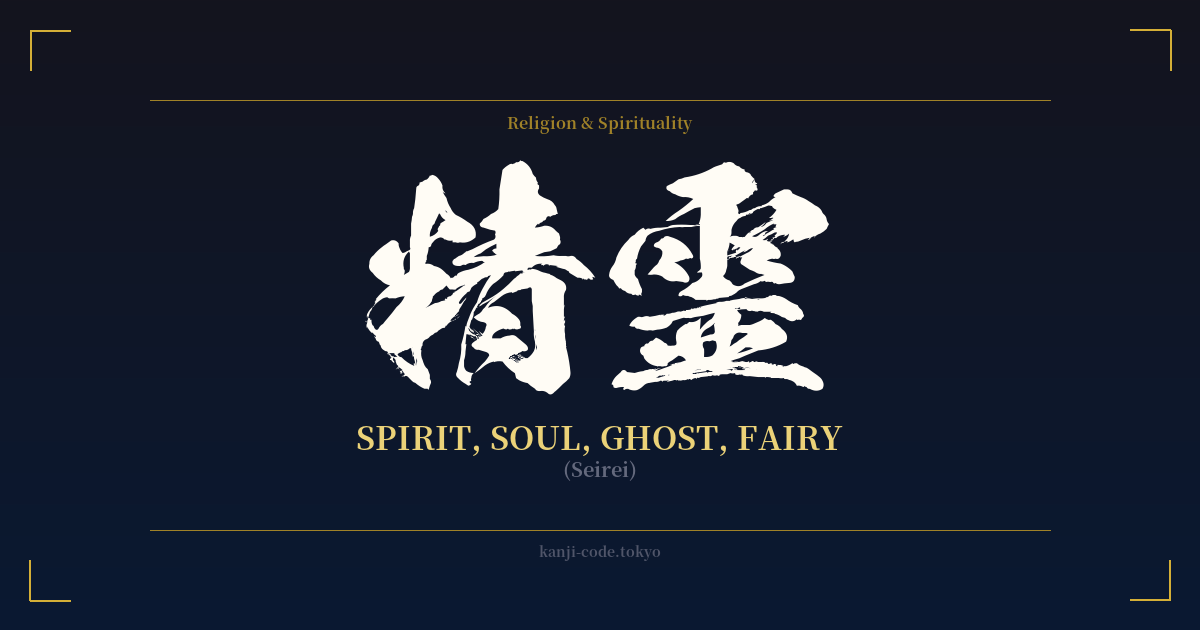
Breaking down the kanji gives us a clearer picture. 妖 (yō) means 'bewitching,' 'mysterious,' or 'calamity,' often associated with the supernatural. 精 (sei) means 'spirit,' 'essence,' or 'energy.' Together, they form "bewitching spirit," a fitting description for the enchanting and otherworldly nature of fairies and elves.
In contemporary Japan, the concept of Yōsei is deeply ingrained in popular culture, primarily through fantasy anime, manga, and video games. Franchises like "The Legend of Zelda," "Final Fantasy," and countless others feature characters explicitly identified as Yōsei, often with designs that mirror Western fantasy archetypes—from the small, winged fairy companions to the tall, graceful, pointy-eared elves. This has solidified the word's meaning in the modern consciousness, making it instantly recognizable to any fan of the fantasy genre.
🖌️ Font Styles for 妖精
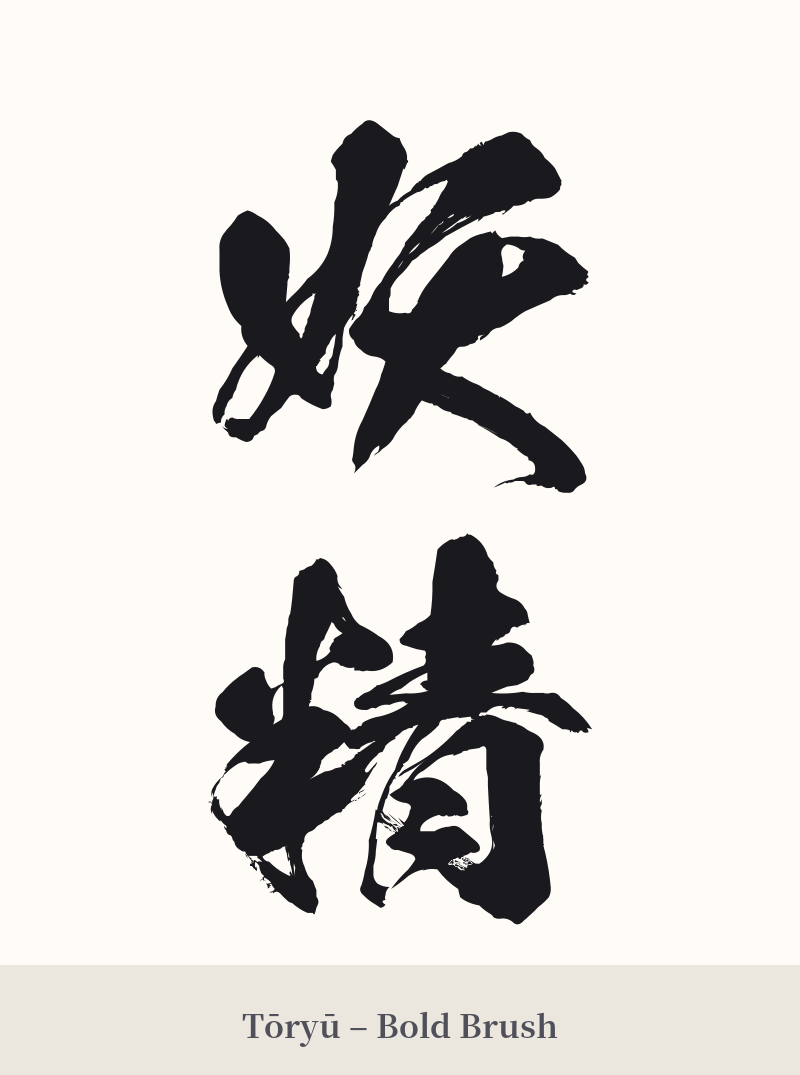
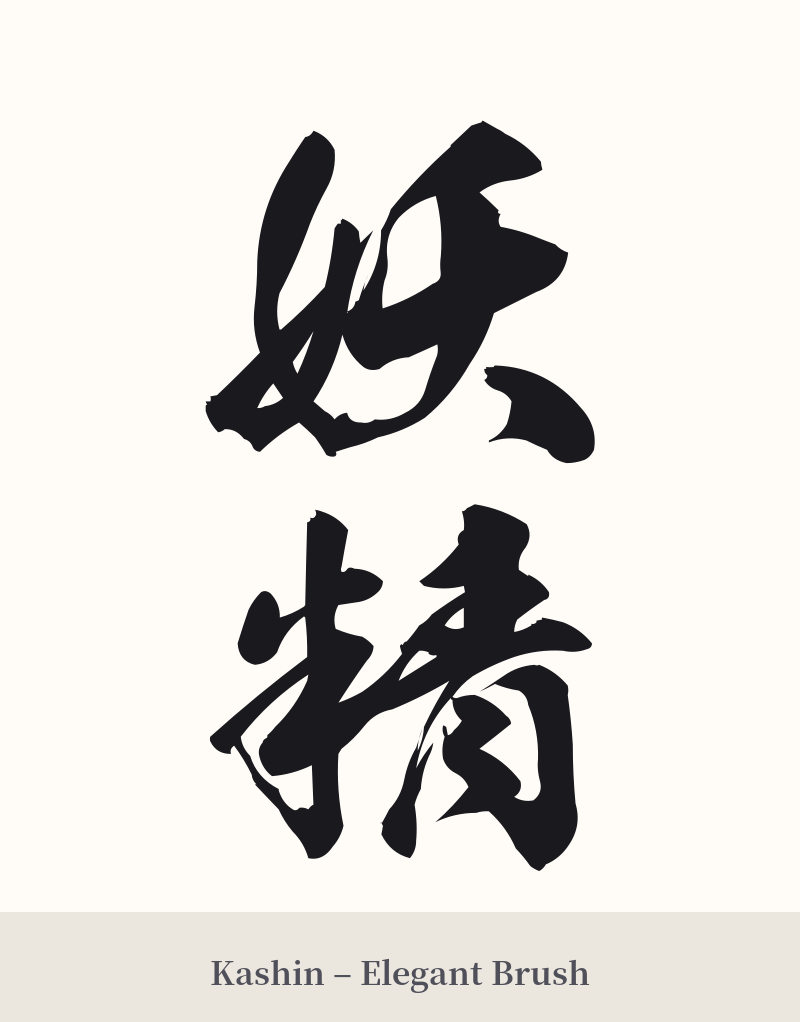
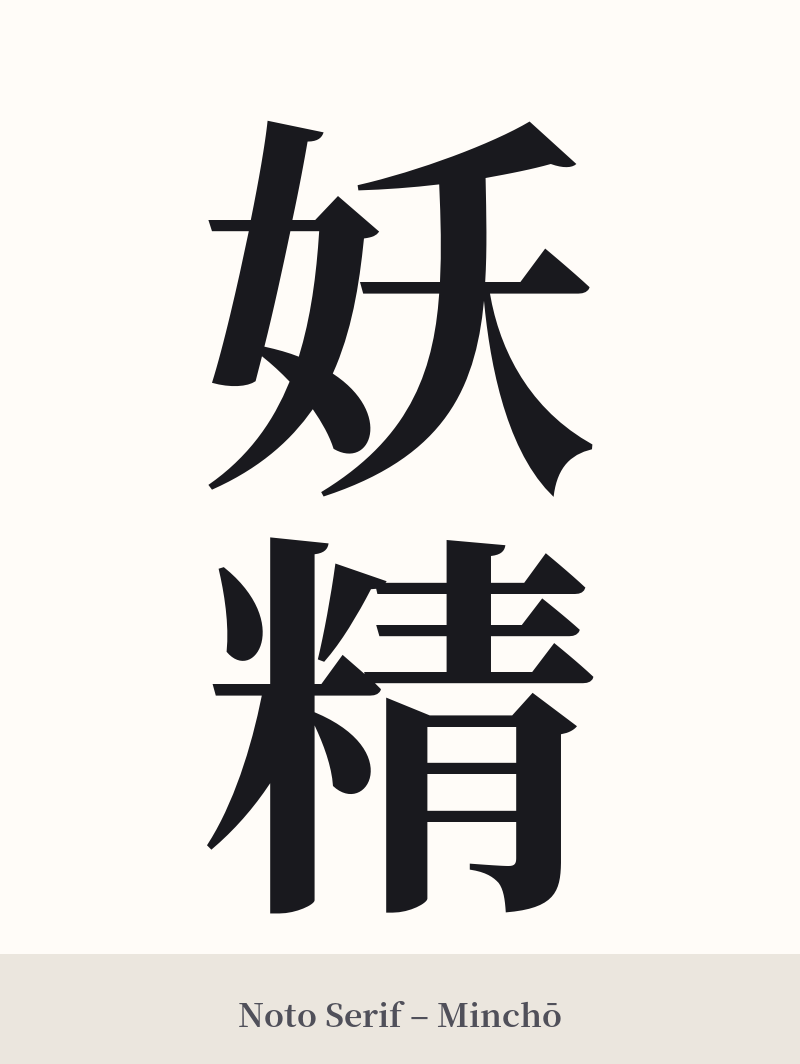
The same kanji can look dramatically different depending on the calligraphy style. Choose a font that matches the mood you want for your tattoo or design.
🎨 Tattoo Suitability
📐 Tattoo Design Guide
For a 妖精 tattoo, the design should evoke a sense of magic and elegance. The two characters have a nice visual balance, with the simpler 妖 followed by the more detailed 精.
– Placement: A vertical orientation is highly recommended. It looks fantastic running down the forearm, along the calf, or on the spine. This allows the characters to flow naturally. Horizontal placement on the chest, upper back, or across the ribs also works well.
– Font Style: Consider a flowing, semi-cursive script like Gyosho to capture the whimsical, 'fairy-like' feel. For a more refined and elegant 'elfin' look, a crisp Mincho (serif) font would be an excellent choice. Avoid overly blocky or aggressive styles, as they clash with the word's delicate meaning.
– Visual Tips: Enhance the design by incorporating subtle thematic elements. You could have delicate swirls, sparkles, or wisps of magic winding around the kanji. Adding small, stylized wings, leaves, or floral patterns can also tie the design directly to the nature-based imagery of fairies and elves.
Comments