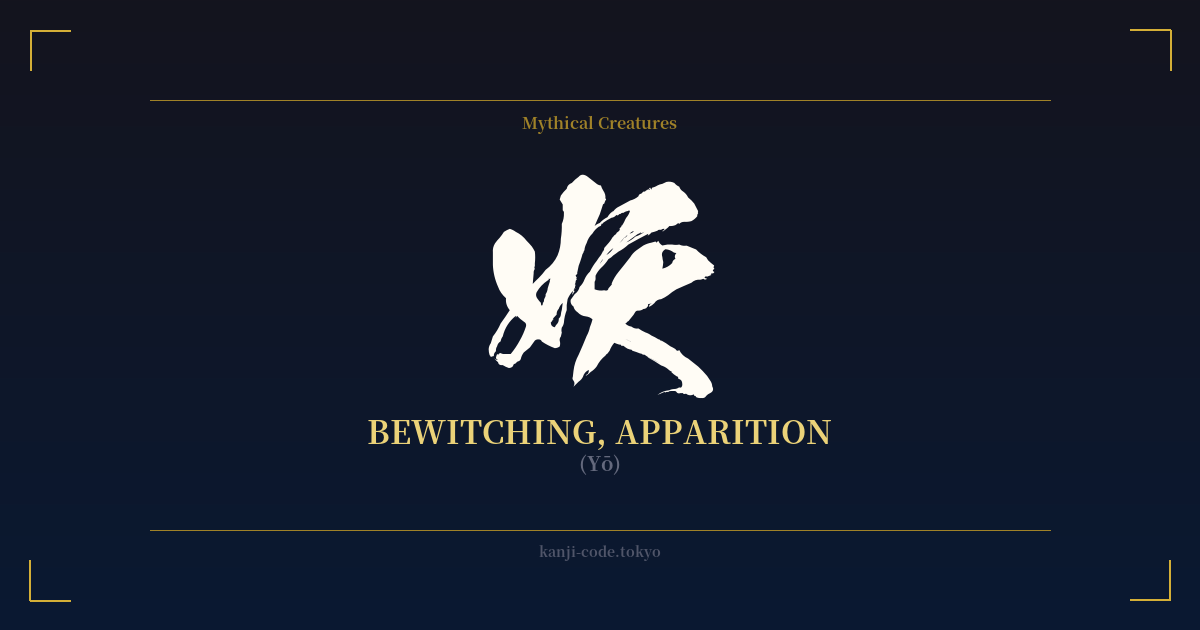
✍️ 妖 (Yō) — Cultural Context
The kanji 妖 (yō) is a portal into the vast and mysterious world of Japanese folklore. Its primary meaning, 'bewitching' or 'apparition,' is the very essence of the supernatural beings known as yōkai (妖怪). This single character encapsulates a sense of otherworldly charm, unnatural phenomena, and the eerie feeling that something is not quite right.
The character's construction offers a clue to its deep-seated meaning. It combines the radical for 'woman' (女) with the phonetic component 夭, which means 'young and tender' or 'to die prematurely.' This fusion suggests something that is alluring and beautiful, yet transient, unnatural, or calamitous. It speaks to a beauty that is deceptive, a charm that can lead one astray—a core theme in many Japanese folk tales.
妖 is the heart of the word yōkai (妖怪), a term that covers a massive spectrum of ghosts, monsters, spirits, and goblins. From the cunning Kitsune (fox spirits) who use their bewitching powers to trick humans, to the hauntingly beautiful Yuki-onna (snow woman) who freezes travelers in snowstorms, the concept of 'yō' is central to their nature. It's not about brute force, but about a captivating, often dangerous, supernatural aura.
Beyond literal monsters, the character is used in words to describe a specific kind of unsettling beauty. The adjective 'ayashii' (妖しい) means suspicious, strange, or mysterious. It can describe a flickering light in a dark forest or a person whose smile doesn't quite reach their eyes. Similarly, the word 'yōen' (妖艶) describes a captivating, almost dangerously seductive charm, often associated with a femme fatale archetype.
In modern pop culture, this kanji's influence is everywhere. Anime, manga, and video games are filled with characters who embody the spirit of 妖. They are the charismatic demons, the alluring spirits, and the powerful beings whose nature is both enchanting and terrifying. This has kept the kanji relevant, breathing new life into its ancient, folkloric roots.
Ultimately, 妖 represents the liminal space between the known and the unknown, the beautiful and the terrifying. It is the strange allure of the supernatural, a warning that what is most captivating can also be the most dangerous.
🖌️ Font Styles for 妖
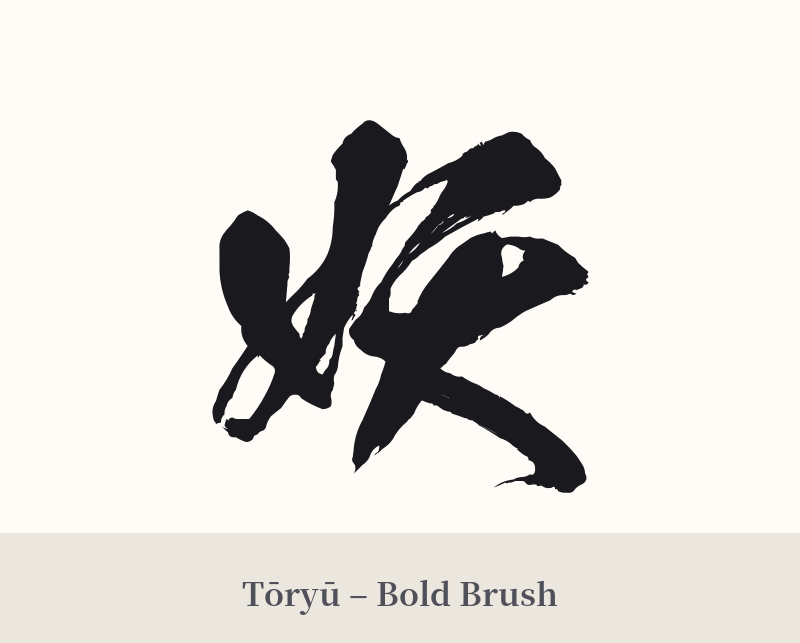
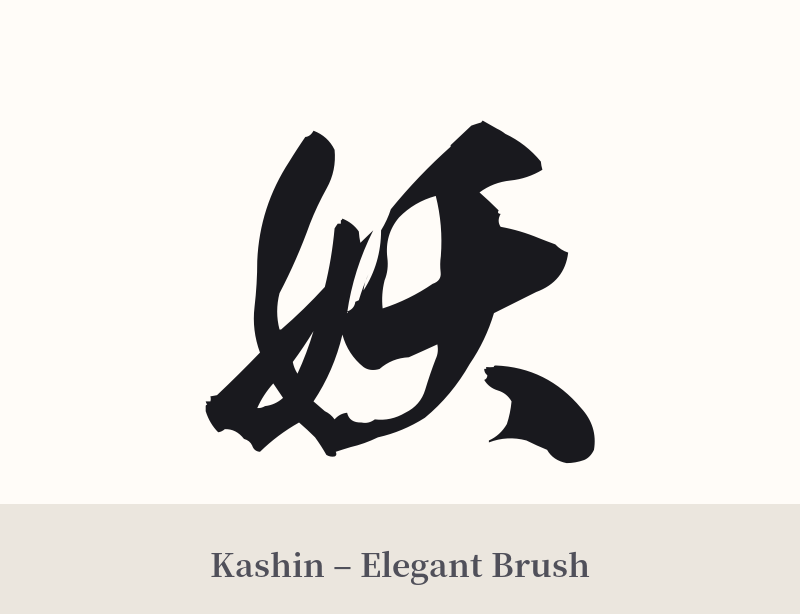
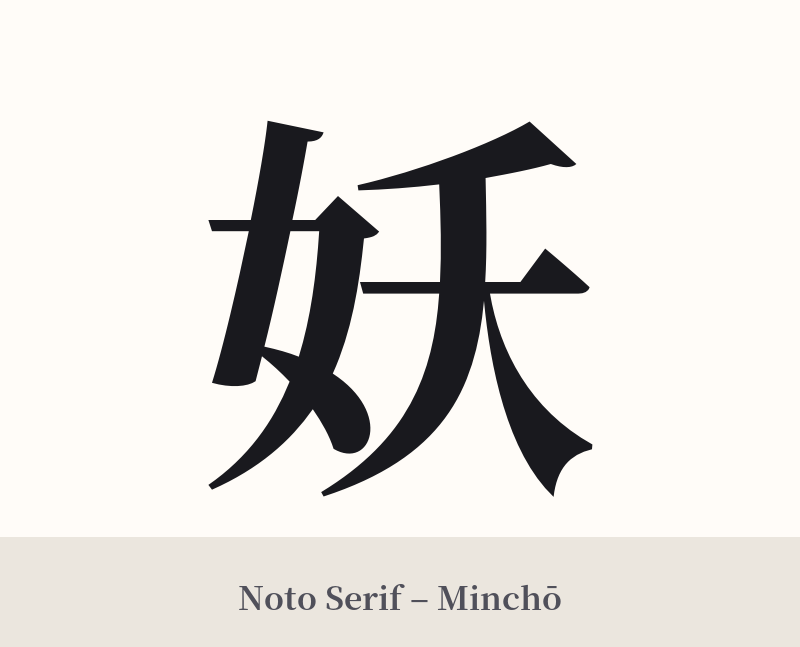
The same kanji can look dramatically different depending on the calligraphy style. Choose a font that matches the mood you want for your tattoo or design.
🎨 Tattoo Suitability
📐 Tattoo Design Guide
A tattoo of 妖 works best when the design choices enhance its mysterious and ethereal nature. It's a character that tells a story, so the style and placement should support that narrative.
– Placement: Consider areas that can be partially hidden or revealed, playing into the kanji's secretive vibe. The inner forearm, the back of the neck under the hairline, the ribs, or the calf are all excellent choices. These spots allow the tattoo to be a personal secret or a public statement.
– Font Style: The font is crucial for conveying the right feeling. A flowing, cursive calligraphy style (草書, sōsho) can evoke the image of smoke, mist, or a fleeting spirit. Conversely, a sharp, angular brushstroke or a classic Mincho font can emphasize the dangerous, 'bewitching' aspect of the character.
– Visual Tips: While 妖 is strong on its own, pairing it with other elements can create a richer design. Consider incorporating traditional Japanese imagery associated with yōkai, such as spider lilies (higanbana), fox masks (kitsune-men), wisps of spirit fire (hitodama), or a faint crescent moon. These additions provide context and deepen the tattoo's connection to Japanese folklore.
Comments