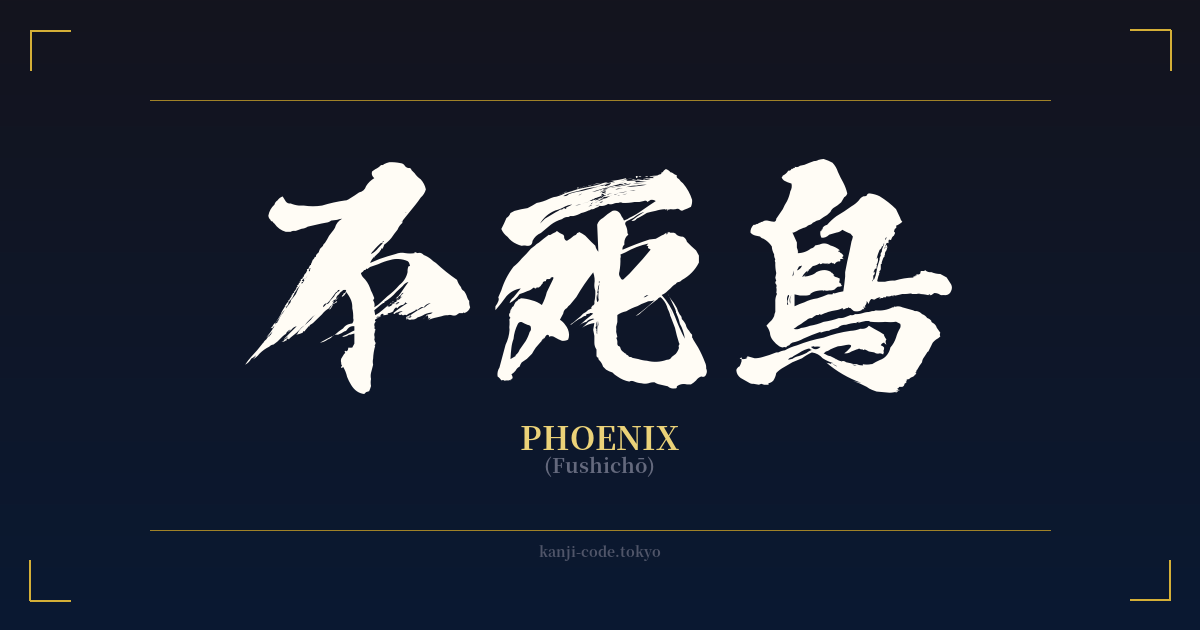
✍️ 不死鳥 (Fushichō) — Cultural Context
不死鳥 (Fushichō) is the Japanese word for the Phoenix, the legendary bird that is reborn from its own ashes. The name itself is a masterpiece of linguistic elegance, literally translating to 'not-death-bird' (不 – fu, not; 死 – shi, death; 鳥 – chō, bird). This direct and powerful construction perfectly captures the essence of a creature that defies mortality.
Interestingly, the concept of the Phoenix as a bird of fire and rebirth is not native to Japan. It is largely an imported idea, adopted from Western and Middle Eastern mythology, which was then given a Japanese name. The Fushichō embodies the cycle of destruction and creation, symbolizing the power to rise from adversity, stronger than before. It represents an ultimate form of resilience and the promise of a new beginning after a great loss or failure.
It's crucial to distinguish the Fushichō from a similar, yet distinct, creature in East Asian mythology: the 鳳凰 (Hō-ō). While both are often translated as 'phoenix,' their symbolism differs significantly. The Hō-ō is a creature of peace and prosperity, a sacred bird said to appear only during times of virtuous rule and good fortune. It does not die in flames or get reborn; it is a symbol of harmony and imperial authority. The Fushichō, by contrast, is intrinsically linked to the concepts of death and resurrection.
In modern Japan, the Fushichō has been fully embraced by popular culture. It appears frequently in anime, manga, and video games as a powerful symbol of an indomitable spirit. Characters associated with the Fushichō often possess the ability to heal, return from seemingly fatal wounds, or inspire others to never give up. This has cemented the Fushichō not just as a mythical creature, but as a potent metaphor for personal struggle and ultimate triumph.
For anyone who has overcome immense hardship, experienced a profound personal transformation, or simply believes in the power of starting over, the Fushichō serves as a powerful and inspiring emblem. It is a testament to the idea that even from the ashes of our darkest moments, we can emerge renewed and ready to fly again.
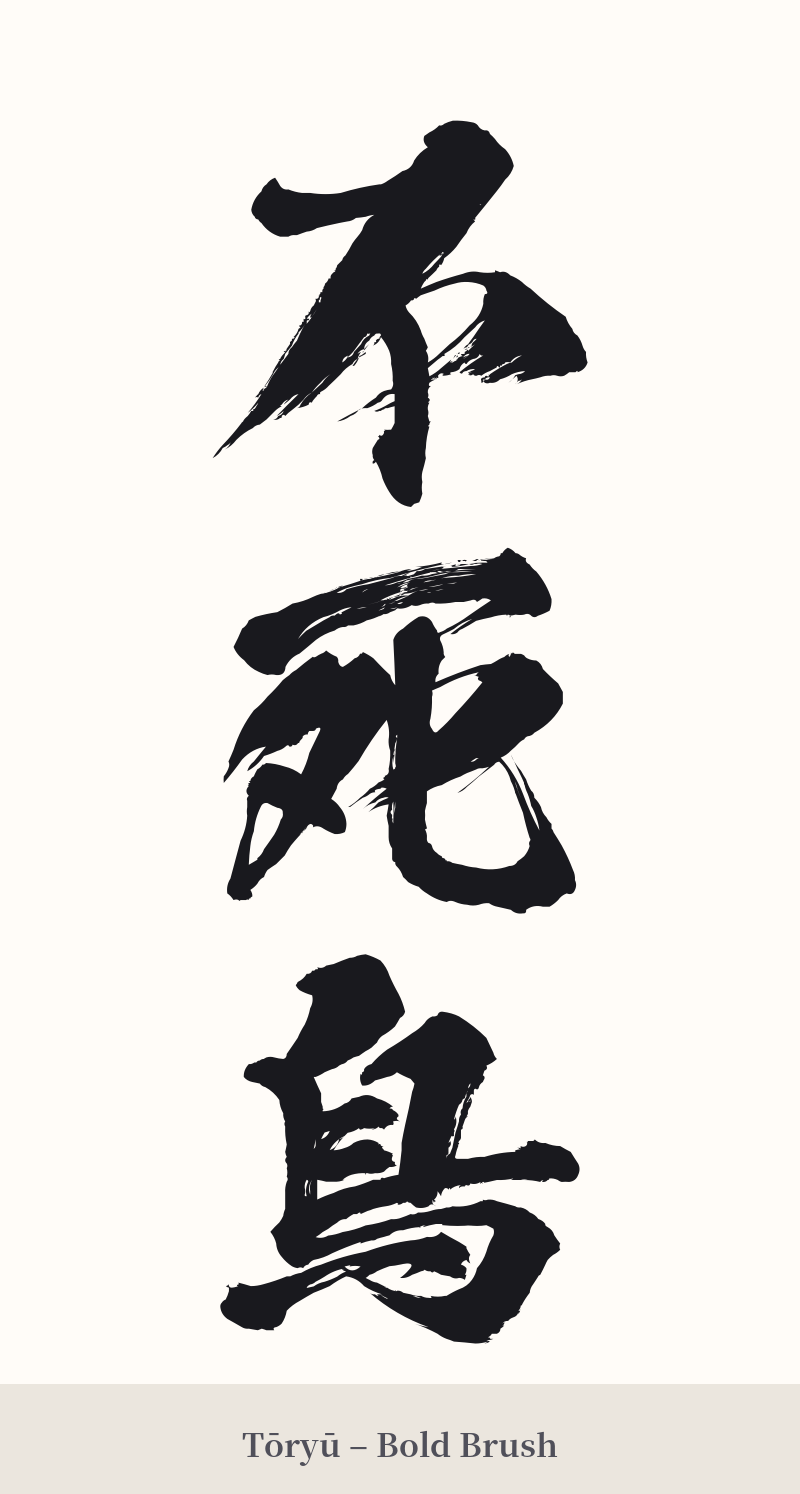
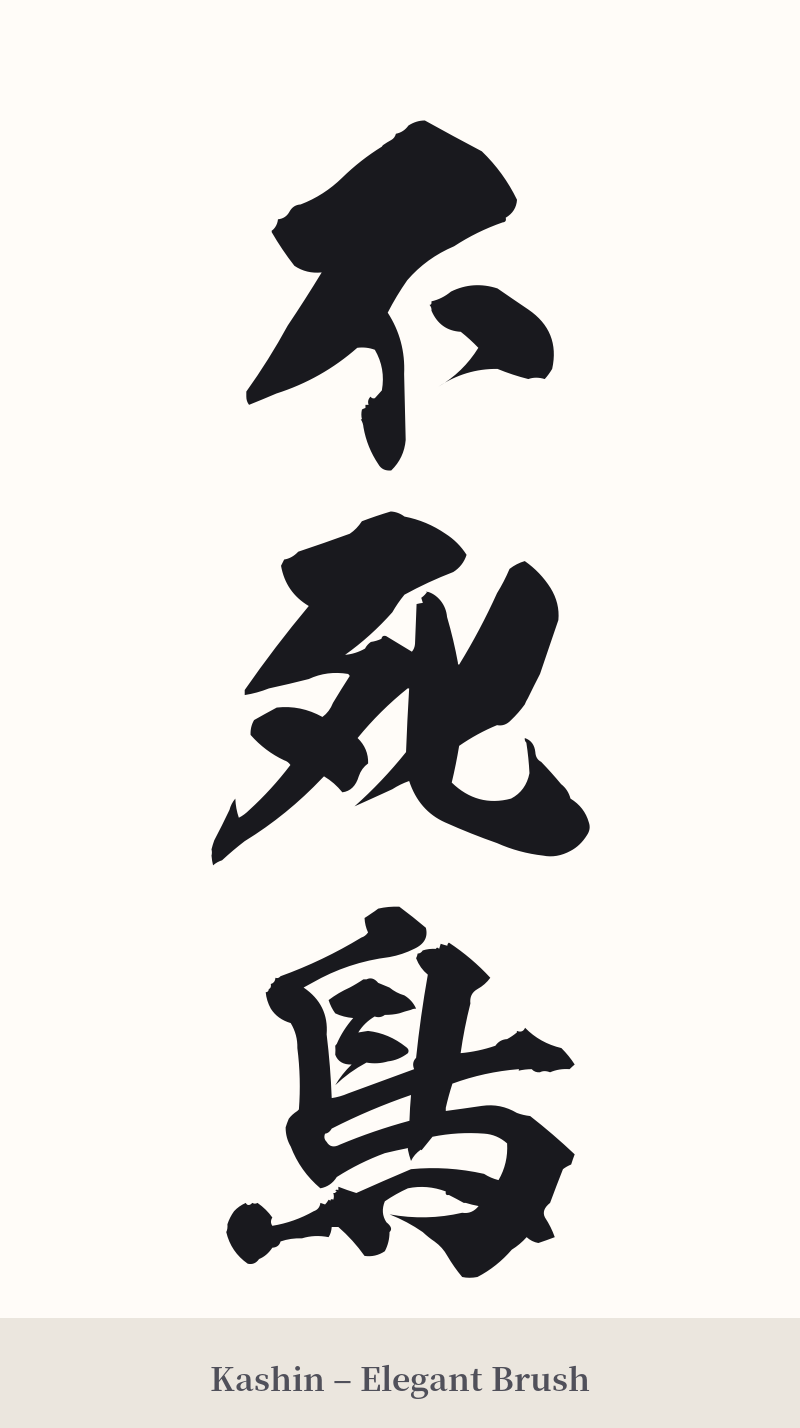
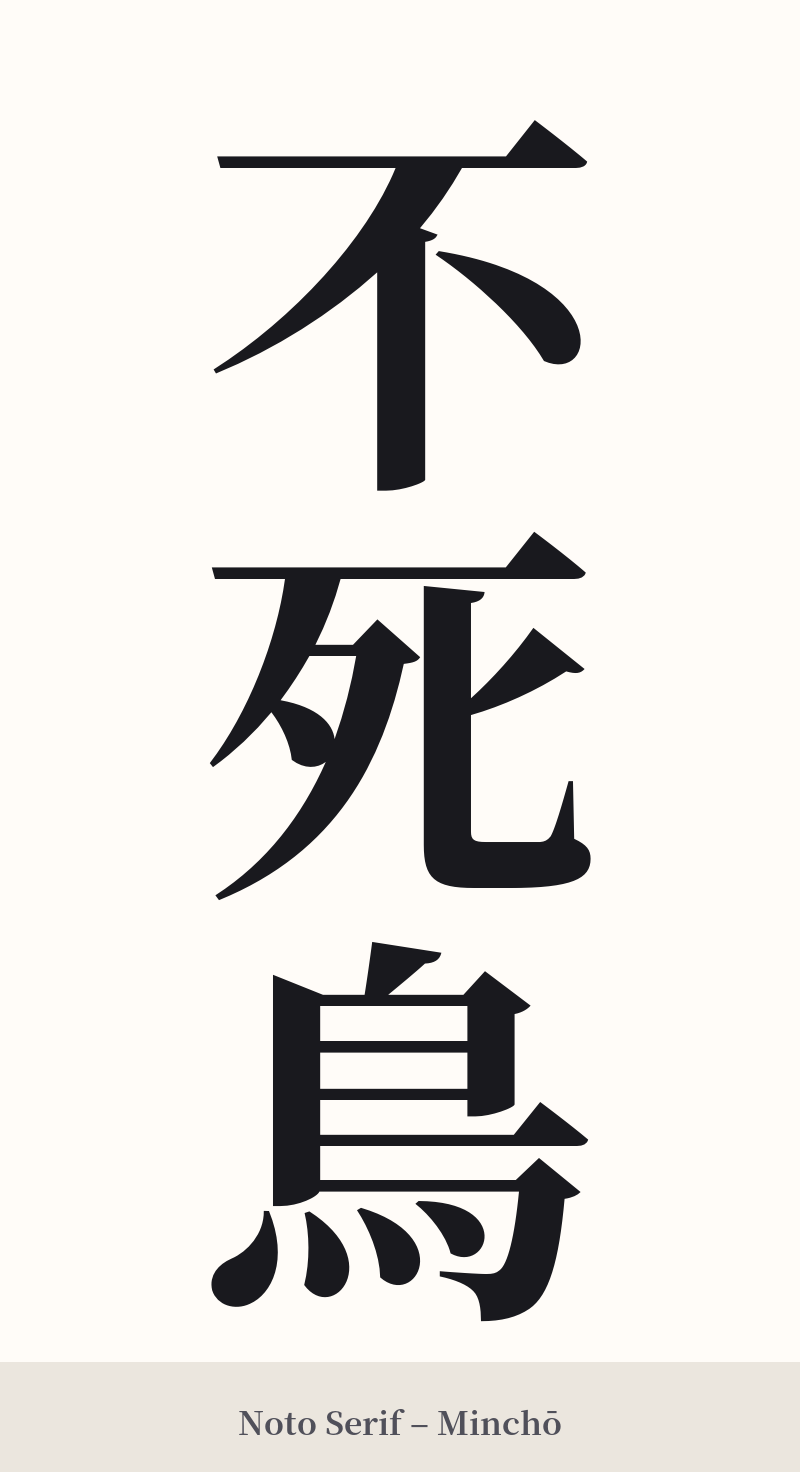
🖌️ Font Styles for 不死鳥
The same kanji can look dramatically different depending on the calligraphy style. Choose a font that matches the mood you want for your tattoo or design.
🎨 Tattoo Suitability
📐 Tattoo Design Guide
The three characters of 不死鳥 offer a balanced and aesthetically pleasing composition for a tattoo.
– Placement: This design works exceptionally well vertically. Popular placements include the spine, down the forearm, or on the back of the calf. For a horizontal layout, the chest or upper back provides a strong canvas.
– Style: For a powerful and clear look, a bold kaisho (block script) or gyōsho (semi-cursive) style is recommended. These styles emphasize strength and clarity. For a more dynamic and elemental feel, a fluid sōsho (cursive script) can evoke the image of flames and movement.
– Visuals: Consider integrating the kanji with imagery of a phoenix, wings, or flames. The characters could be designed to look as if they are rising from ashes or wreathed in fire to visually reinforce the meaning of rebirth.
Comments