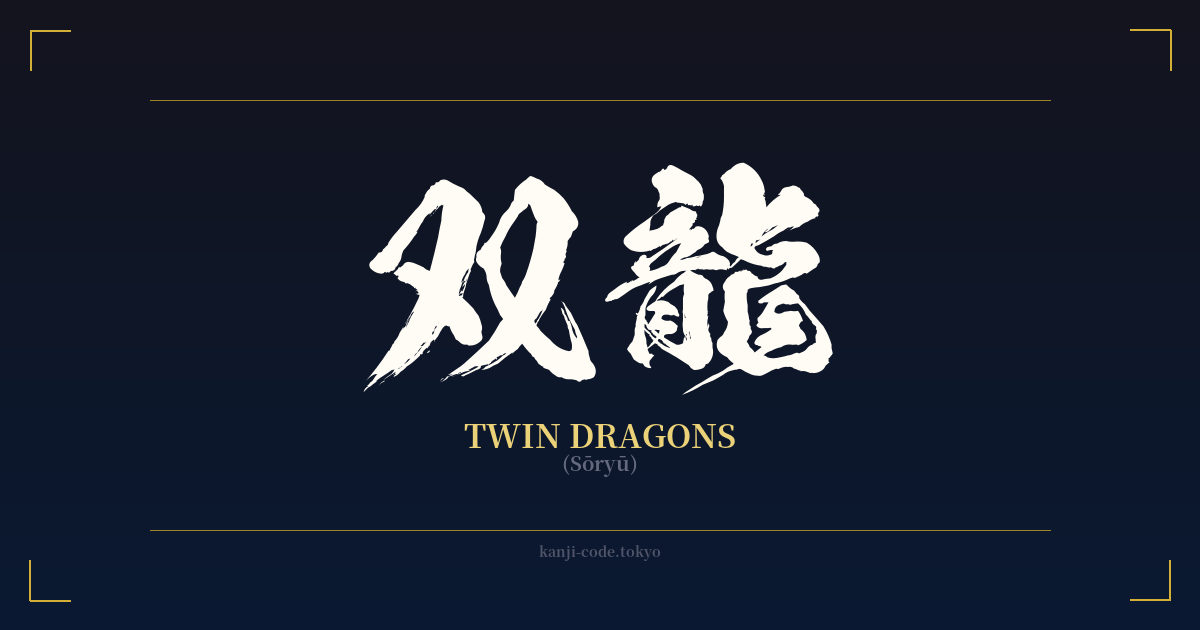
✍️ 双龍 (Sōryū) — Cultural Context
双龍 (Sōryū), translating to 'Twin Dragons' or 'Pair of Dragons,' is a powerful and visually stunning motif deeply rooted in East Asian mythology and art. While a single dragon is already a symbol of immense power and wisdom, the presence of two dragons amplifies and complicates this symbolism, introducing themes of balance, duality, and partnership.
In Japanese culture, dragons (龍, Ryū) are not the fire-breathing, malevolent beasts of Western lore. Instead, they are benevolent water deities, associated with rivers, oceans, and rainfall. They are seen as wise, powerful guardians who can bring fortune and protect the worthy. The concept of twin dragons often taps into the philosophy of yin and yang (陰陽, In'yō in Japanese), representing the harmony of opposing forces. One dragon might embody the celestial and the other the terrestrial, or one creation and the other destruction, existing not in conflict but in a necessary and eternal balance.
This theme of duality is a cornerstone of their depiction in art. You will often see twin dragons flanking a central object of great importance, such as a temple gate, a sacred jewel (宝珠, hōju), or the Buddha himself. In this role, they act as powerful protectors, their combined strength creating an impenetrable barrier against evil spirits. Their intertwined bodies can symbolize the union of two powerful forces or entities, making it a popular symbol for strong alliances or partnerships.
A magnificent real-world example is the ceiling painting at Kennin-ji Temple in Kyoto. Created in 2002 to commemorate the temple's 800th anniversary, the massive ink painting depicts two powerful dragons swirling across the ceiling of the Dharma Hall. This artwork, titled 'Sōryū-zu' (Painting of Twin Dragons), captures their dynamic energy and serves as a modern masterpiece continuing a centuries-old tradition. The dragons watch over the hall, symbolizing the protection of Buddhist law and teachings.
Beyond religious and mythological contexts, the Sōryū motif represents an ultimate form of power. It signifies not just singular strength, but the compounded, overwhelming force that comes from a perfect union. It is a symbol of intertwined destiny, where two powerful elements come together to create something greater than the sum of their parts.
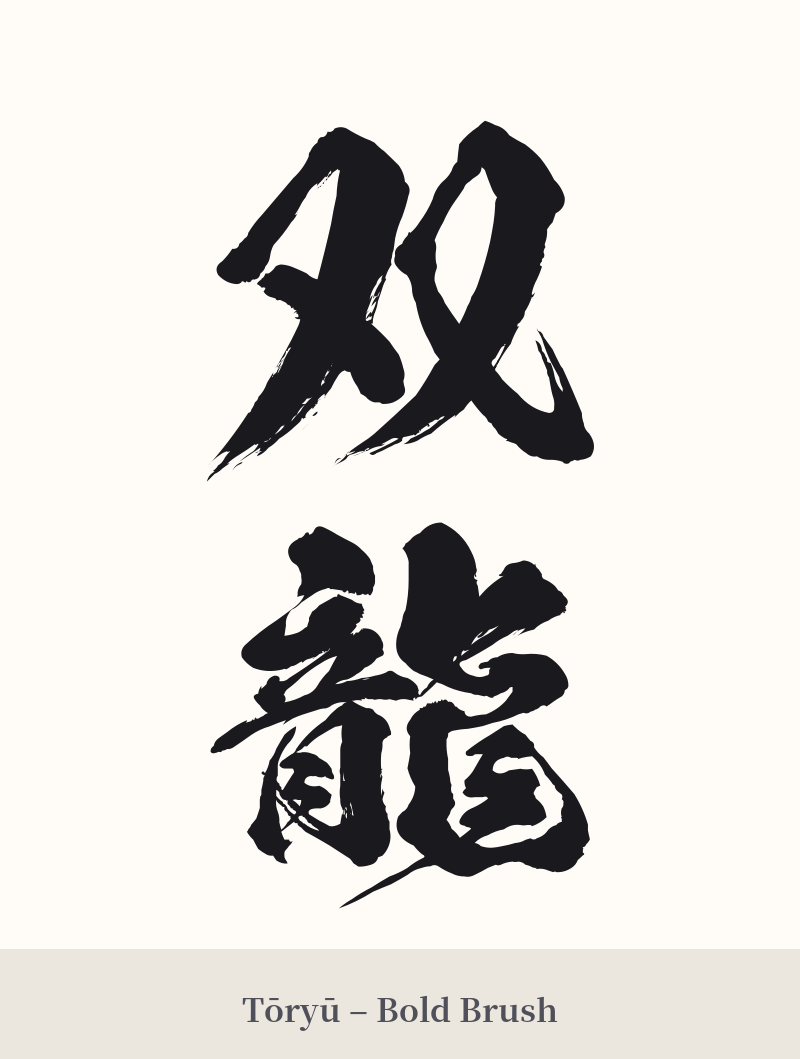
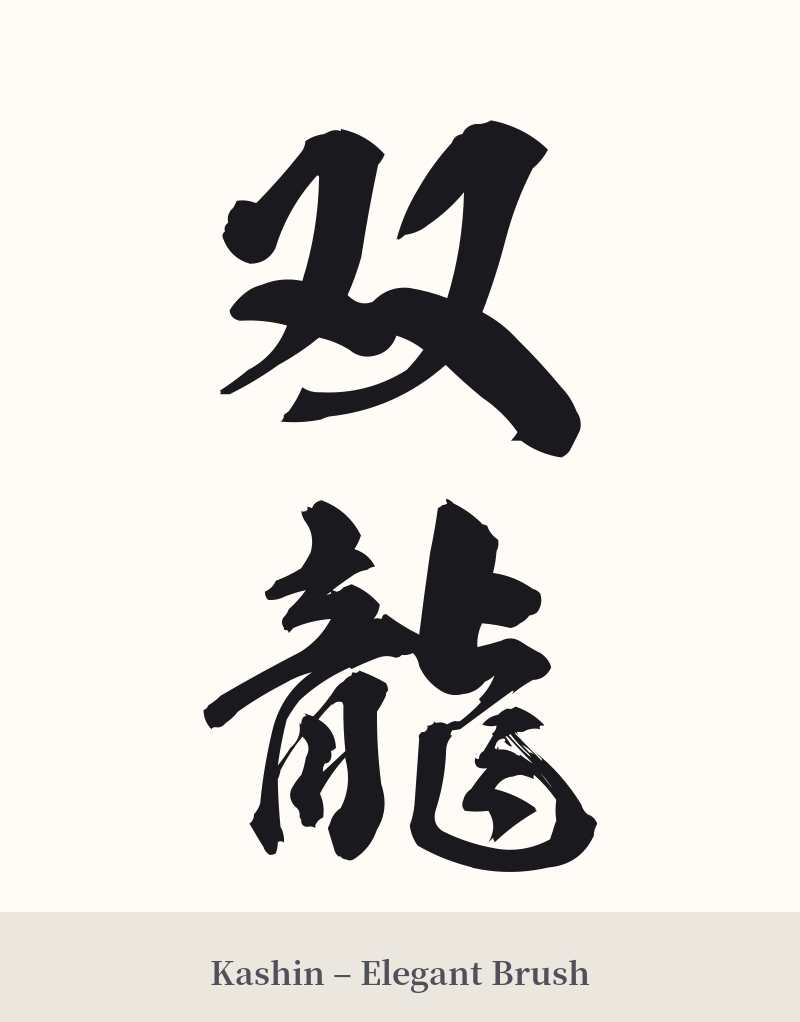
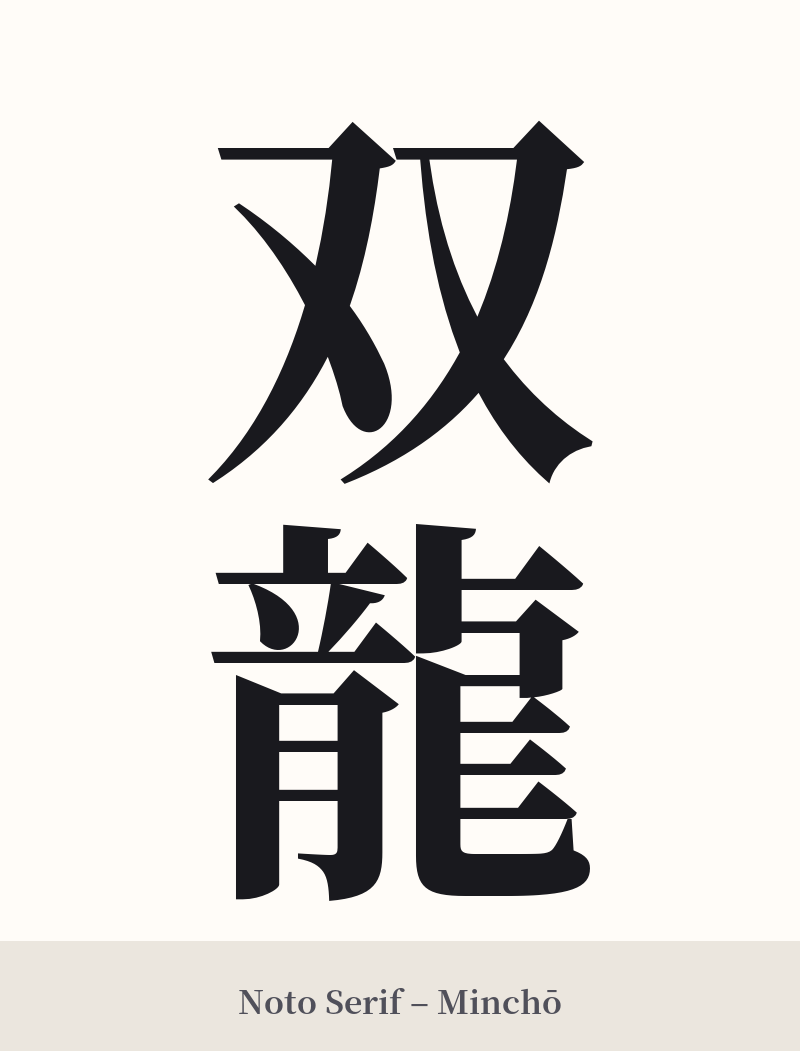
🖌️ Font Styles for 双龍
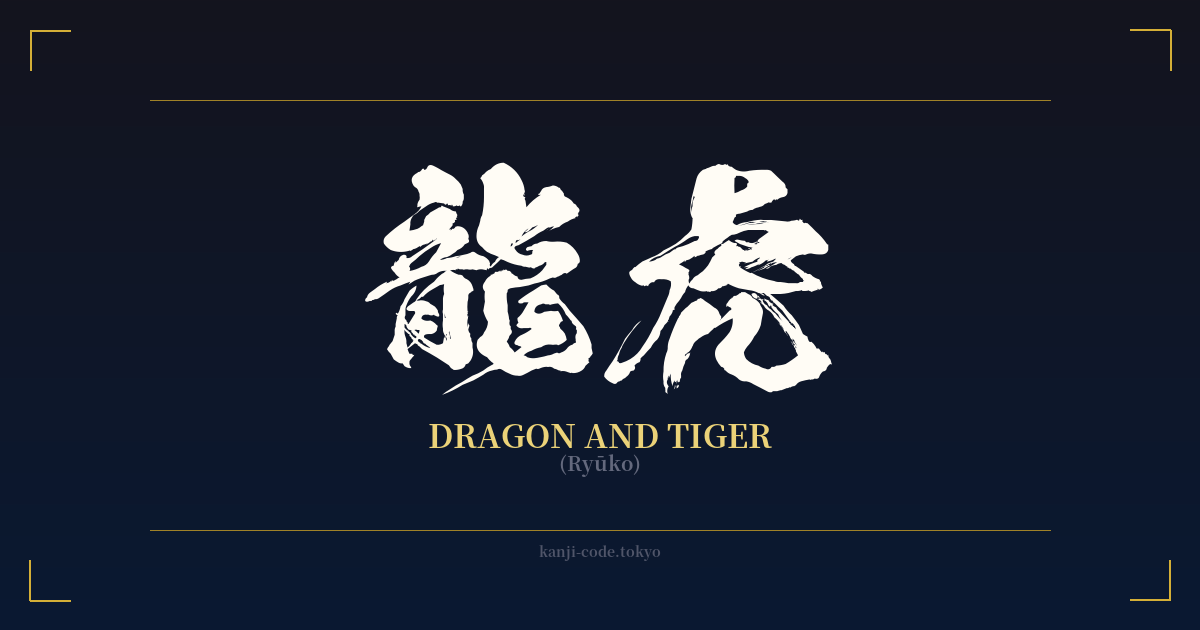
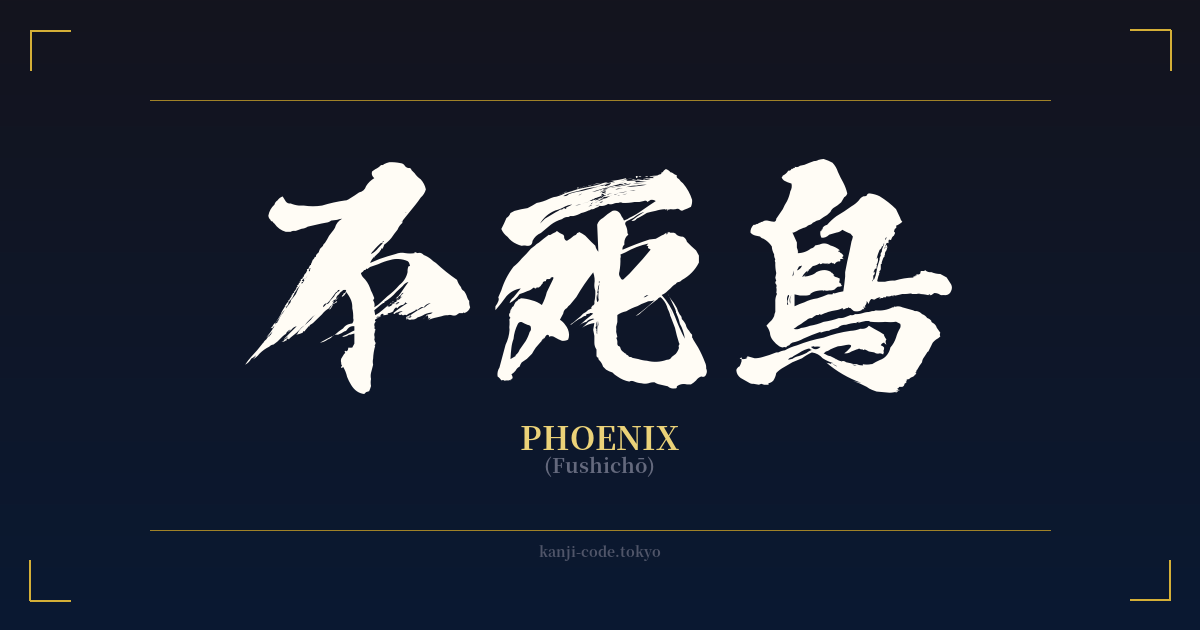
The same kanji can look dramatically different depending on the calligraphy style. Choose a font that matches the mood you want for your tattoo or design.
🎨 Tattoo Suitability
📐 Tattoo Design Guide
For a 'Sōryū' tattoo, the design should convey power and balance. The complexity of the '龍' character demands careful consideration.
– Placement: This design works best on larger, flatter areas of the body. The back is an ideal canvas, allowing the kanji to be rendered large and vertically. The chest or thigh are also excellent choices that provide enough space for detail.
– Style: A dynamic, semi-cursive or brushstroke (shodō) style is highly recommended. This captures the fluid, energetic movement associated with dragons. Avoid rigid, blocky fonts which can make the '龍' character look cramped and illegible.
– Composition: The kanji can be arranged vertically (双 above 龍), which is the traditional and most common orientation. You could also have the kanji integrated into a larger piece featuring two intertwined Japanese dragons, with the characters themselves forming the heart of the design.
Comments