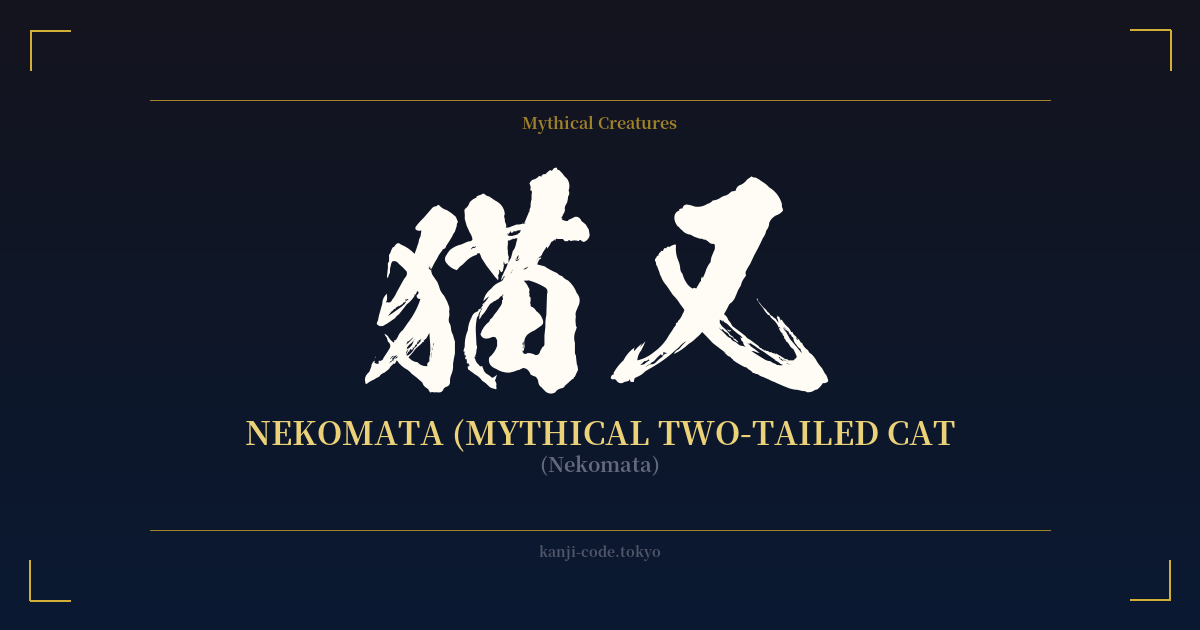
✍️ 猫又 (Nekomata) — Cultural Context
In the vibrant world of Japanese yōkai, or supernatural beings, the Nekomata (猫又) holds a special place. These are not ordinary felines but cats that have lived to a great age and undergone a supernatural transformation, their most defining feature being a tail that has split into two. The name itself, written as 猫又, literally translates to 'forked cat,' a direct reference to this physical change.
Folklore describes two primary types of Nekomata. The first are wild, mountain-dwelling creatures, said to be the size of a large dog or even a leopard, who prey on humans. These more bestial Nekomata are forces of nature, embodying the untamed and dangerous aspects of the wilderness.
The second, and more commonly depicted type, originates from domestic cats. When a beloved pet grows very old, it can transform into a Nekomata. It gains immense supernatural powers, including the ability to speak human languages, walk on its hind legs, and manipulate the dead like puppets, a power known as necromancy. They can also create ghostly fireballs (onibi) and shapeshift, often into the form of an old woman.
This transformation is not always benevolent. While some tales depict Nekomata remaining loyal to their households, many stories portray them as developing a grudge against their owners or humanity in general. They might cause fires, curse humans, or orchestrate hauntings. This duality—the cherished pet turned powerful, potentially vengeful spirit—reflects a deep-seated respect and slight fear of the hidden power within the seemingly mundane.
The Nekomata is often confused with the Bakeneko (化け猫), or 'monster cat.' While they share many abilities like shapeshifting and speaking, the key distinction lies in the tail. A Nekomata always has two tails, whereas a Bakeneko may have one long tail or none at all. The Nekomata is generally considered the more powerful and ancient of the two.
From classical ukiyo-e woodblock prints by artists like Toriyama Sekien and Utagawa Kuniyoshi to modern anime, manga, and video games, the Nekomata remains a captivating figure. It represents longevity, transformation, and the ambiguous boundary between the natural and supernatural, the domestic and the wild.
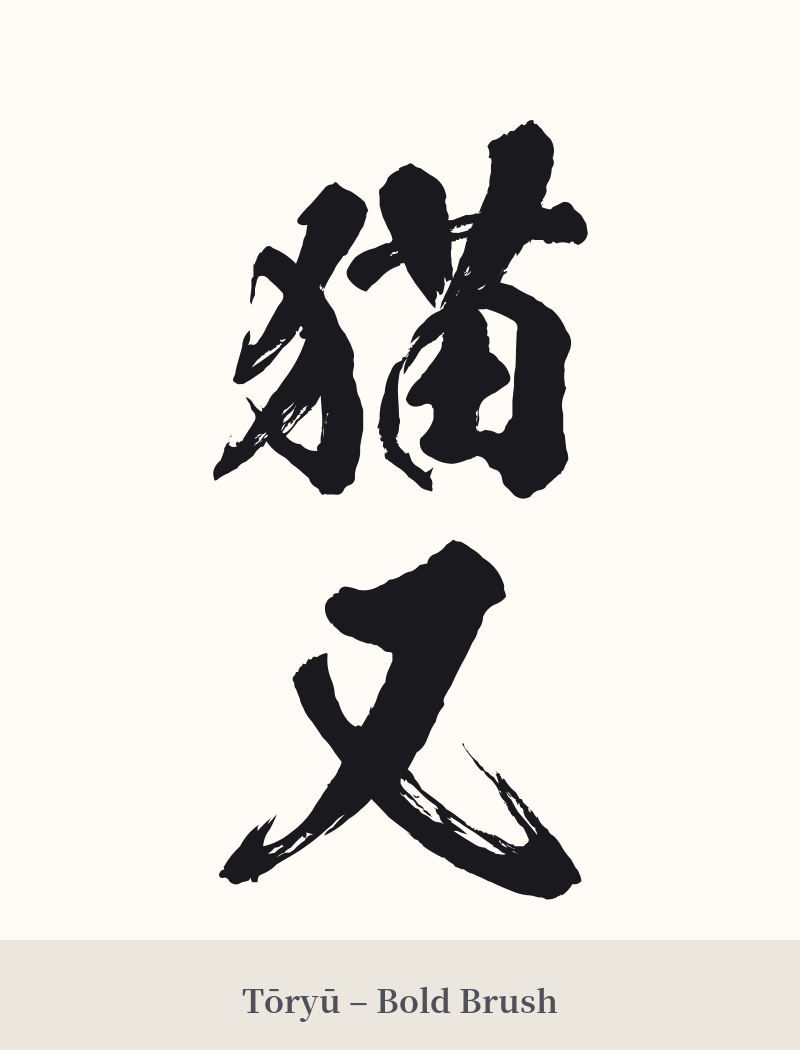
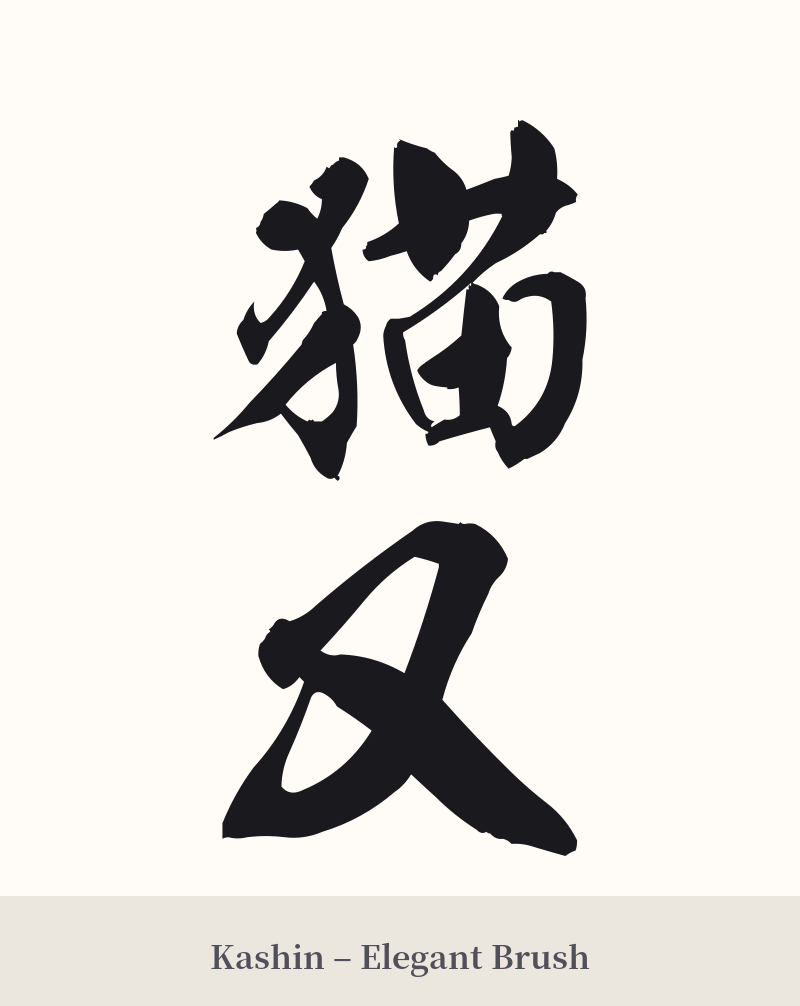
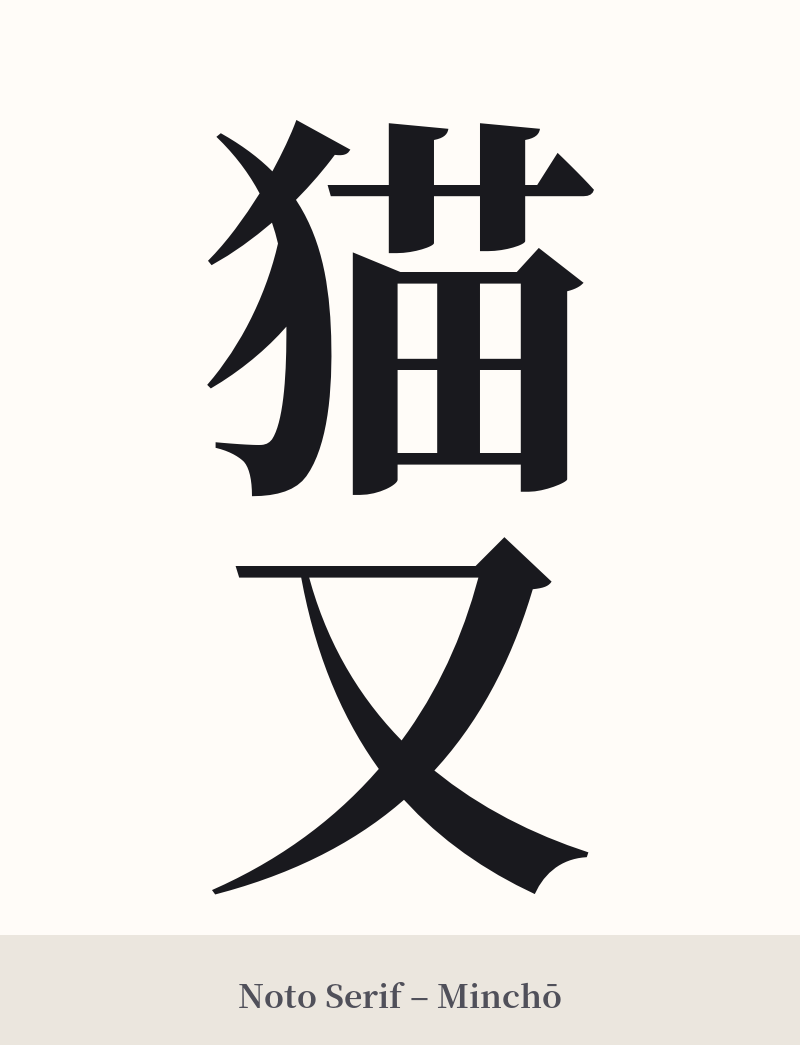
🖌️ Font Styles for 猫又
The same kanji can look dramatically different depending on the calligraphy style. Choose a font that matches the mood you want for your tattoo or design.
🎨 Tattoo Suitability
📐 Tattoo Design Guide
The kanji for Nekomata, 猫又, offers a visually compelling and meaningful design for a tattoo.
– Placement: This two-character compound works well vertically. Consider placements like the forearm, calf, or along the spine, allowing the characters to flow downwards. For a horizontal design, the back of the neck or across the chest are strong options.
– Font Style: The choice of font can dramatically alter the tattoo's vibe. A bold, angular Kaisho (block script) emphasizes the creature's power. A flowing Gyosho (semi-cursive script) can evoke a more ghostly, supernatural feel. For a classic look, consider an Edo-moji style reminiscent of old woodblock prints.
– Visual Elements: Enhance the kanji by pairing it with imagery. A tattoo of the two-tailed cat itself, with the kanji integrated nearby, is a popular choice. You could also incorporate elements associated with the Nekomata, such as ghostly blue flames (onibi), a crescent moon, or spider lilies (higanbana), which are associated with the afterlife.
Comments