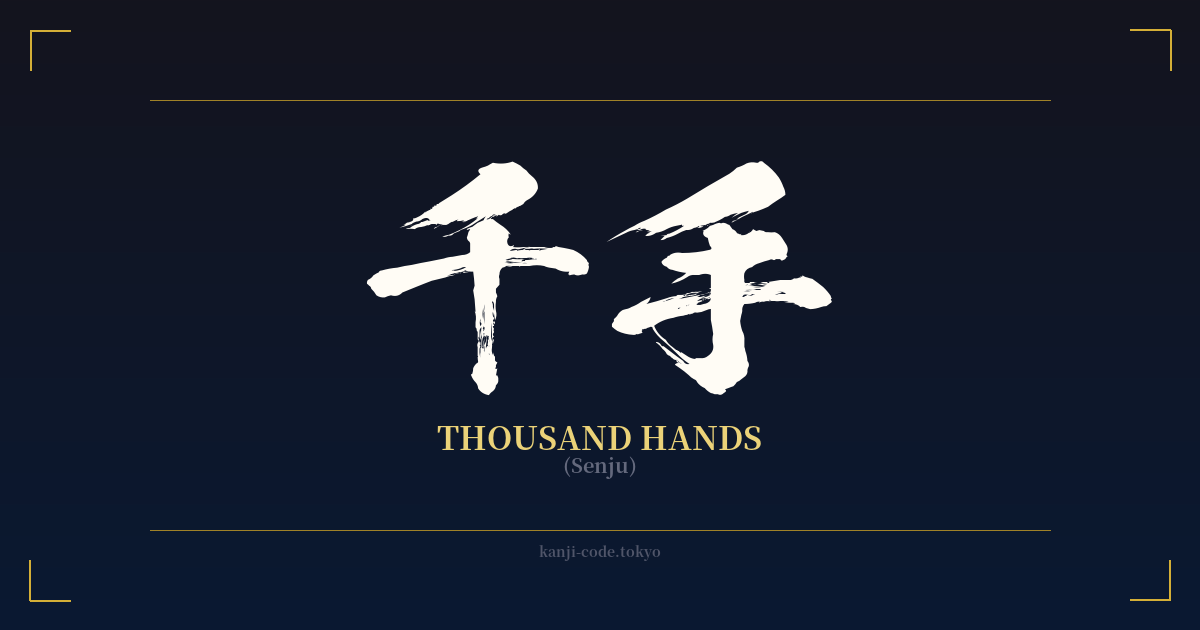
✍️ 千手 (Senju) — Cultural Context
The Japanese word 千手 (Senju) literally translates to "Thousand Hands." While simple on the surface, this term is deeply woven into the fabric of Japanese Buddhism, evoking powerful imagery of divine compassion and boundless aid.
Its primary and most significant association is with 千手観音 (Senju Kannon), the Thousand-Armed Bodhisattva of Compassion. Kannon is the Japanese interpretation of the Sanskrit Bodhisattva Avalokiteshvara, a being who has achieved enlightenment but postpones their own nirvana to help all sentient beings achieve theirs. The story behind the "thousand hands" is a powerful allegory for this mission.
According to legend, Kannon vowed to save all living things from suffering. Upon witnessing the endless scope of this task, Kannon’s head split into eleven pieces from the sheer despair. The Buddha Amida, seeing Kannon's plight, reassembled the pieces into a head with eleven faces, allowing Kannon to see suffering in all directions. To fulfill the vow of helping everyone, Kannon was then granted one thousand arms.
Each of these thousand hands represents the ability to reach out and offer salvation in countless ways. In many artistic depictions, each palm holds an eye, symbolizing the ability to both see the suffering and have the means (the hand) to alleviate it. These hands often hold various symbolic implements—such as a lotus blossom for purity, a bow and arrow for overcoming negativity, or a vase of holy water for healing—each representing a specific tool for helping humanity.
One of the most breathtaking representations of Senju Kannon is the main hall of Sanjūsangen-dō, a temple in Kyoto. The central statue is flanked by 1,000 life-sized statues of the deity, creating an overwhelming and humbling sea of golden figures, each subtly different. This artistic masterpiece powerfully conveys the concept of infinite, all-encompassing compassion.
For someone to choose 千手 as a symbol, it is to embrace the ideals of empathy, active help, and unwavering compassion. It is more than just "a thousand hands"; it is a symbol of a promise to see the needs of others and to act, a profound expression of humanity's highest aspirations for kindness and salvation.
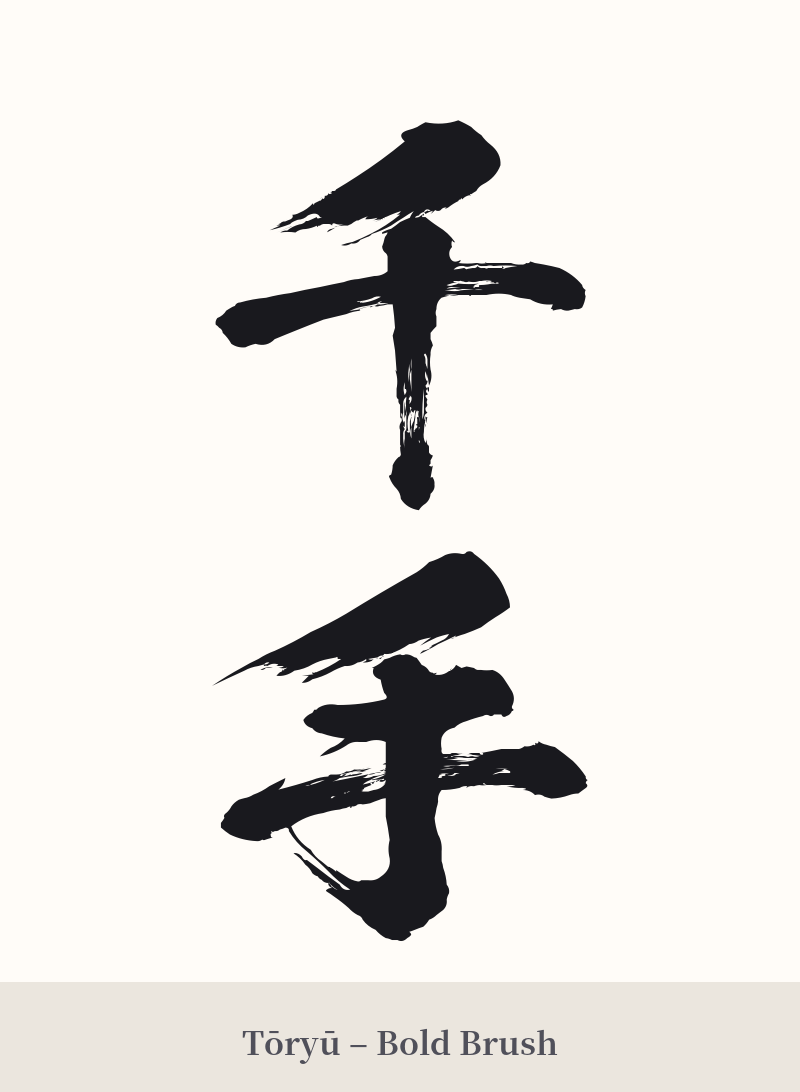
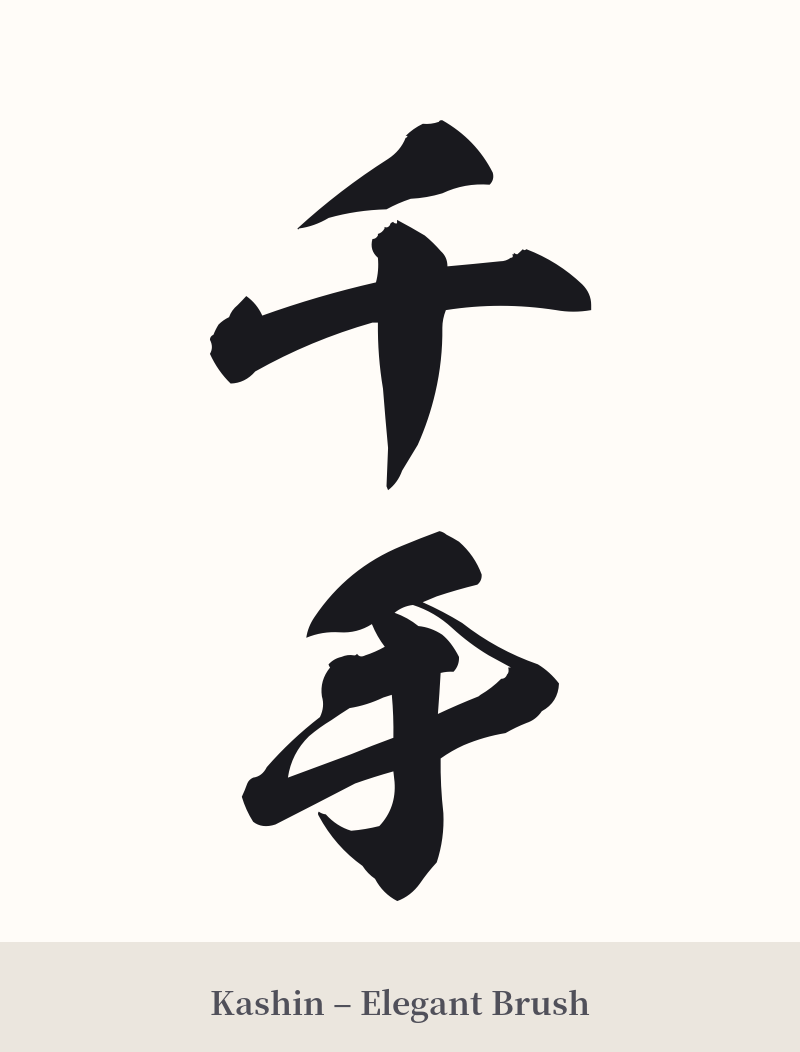
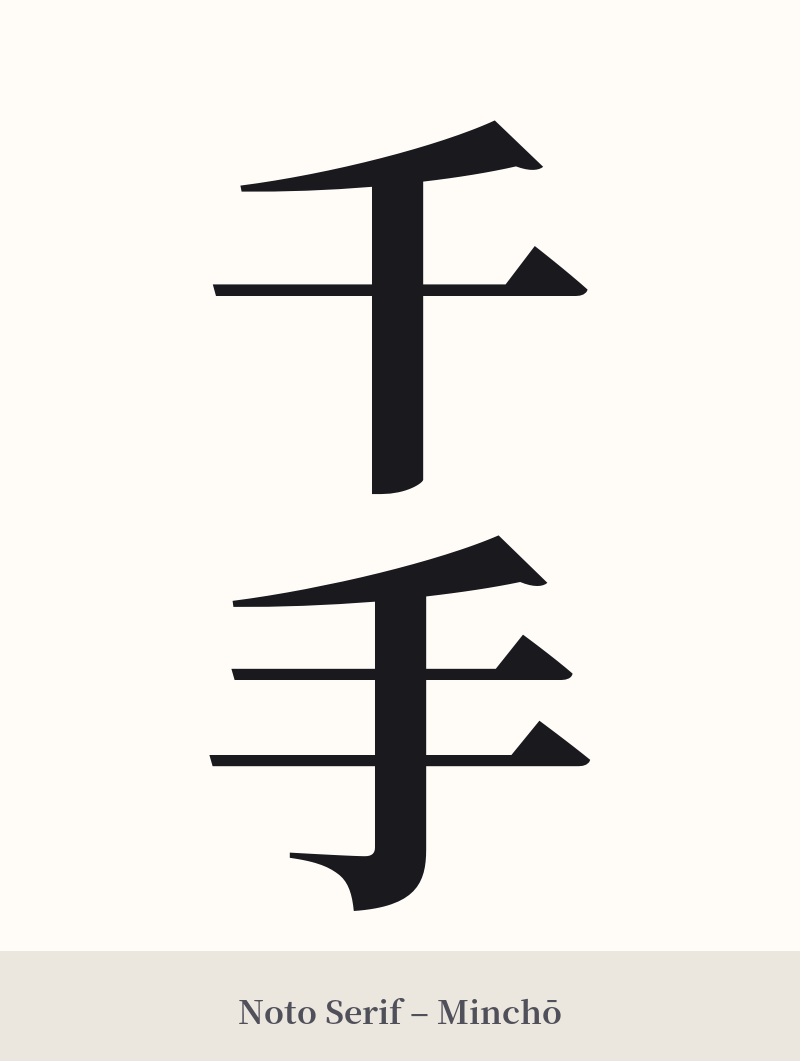
🖌️ Font Styles for 千手
The same kanji can look dramatically different depending on the calligraphy style. Choose a font that matches the mood you want for your tattoo or design.
🎨 Tattoo Suitability
📐 Tattoo Design Guide
The word 千手 offers a blend of simplicity and profound meaning, making it versatile for tattoo design.
– Placement: Vertical alignment is highly recommended to honor traditional Japanese calligraphy. It looks elegant along the spine, forearm, or down the calf. For a horizontal design, the chest or upper back provides a strong canvas.
– Font Style: A classic Kaisho (block script) emphasizes the clarity and strength of the characters. For a more fluid and graceful feel, a Gyosho (semi-cursive) script is an excellent choice. A highly stylized Sosho (cursive) script can capture the dynamic and flowing nature of compassion, though legibility might be reduced.
– Visual Elements: While the kanji stands powerfully on its own, it can be paired with related Buddhist imagery. A subtle lotus flower behind or below the kanji can add a layer of meaning about purity and enlightenment. Some may consider incorporating an abstract image of a hand with an eye in the palm, but this should be done with care to avoid a cluttered design.
Comments