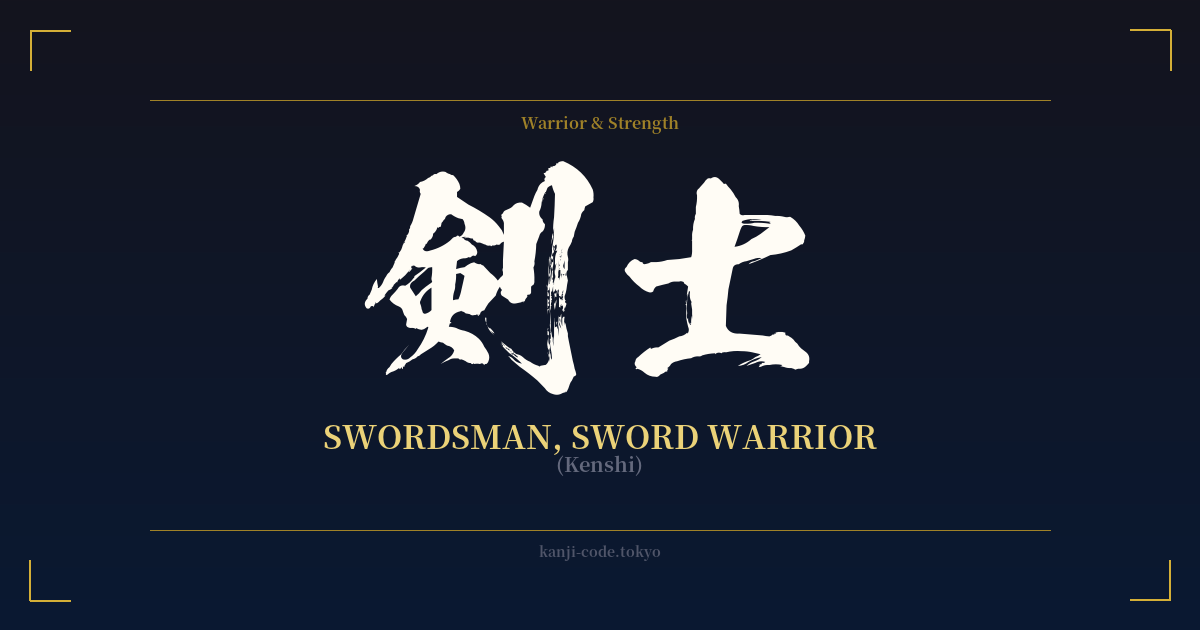
✍️ 剣士 (Kenshi) — Cultural Context
The term 剣士 (Kenshi) translates directly to 'swordsman' or 'sword master,' but this simple definition barely scratches the surface of its profound cultural weight. It conjures a powerful image in the Japanese psyche, one deeply intertwined with the history of the samurai, the philosophy of Bushido, and the relentless pursuit of perfection.
Historically, the Kenshi was the martial expert, the individual whose life was dedicated to mastering the way of the blade. While often associated with the samurai (武士, Bushi), the term Kenshi is more specific. A samurai was a member of a social class who served a lord; a Kenshi is defined purely by their unparalleled skill with the sword. The legendary Miyamoto Musashi, arguably Japan's most famous Kenshi, was a rōnin (masterless samurai) whose fame came not from his rank but from his undefeated record in duels.
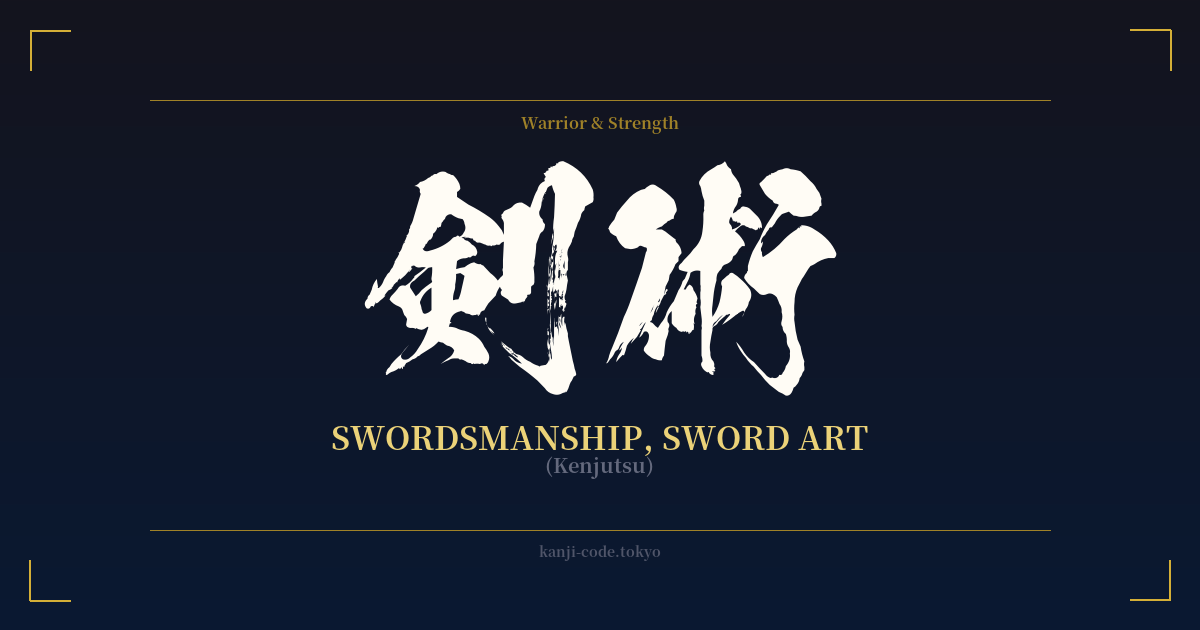
During the turbulent Sengoku period (Warring States period), a Kenshi's skill was a matter of life and death on the battlefield. However, with the unification of Japan and the relative peace of the Edo period, the role of the Kenshi transformed. The practice of sword fighting, kenjutsu (剣術), evolved into kendo (剣道), 'The Way of the Sword.' It became less about battlefield combat and more about a path to spiritual enlightenment and self-discipline. The sword became a tool for forging the soul, with every cut and stance reflecting the practitioner's inner state.
This philosophical dimension is what gives Kenshi its enduring power. It represents more than just a fighter; it embodies the ideals of focus, control, and the courage to face mortality. The Kenshi understands that true mastery is not about defeating others, but about conquering one's own fear, ego, and imperfections. This concept is central to Zen Buddhism, which heavily influenced the warrior class.
In modern times, the image of the Kenshi is kept alive through kendo practitioners and, more visibly, through popular culture. Characters like Roronoa Zoro in 'One Piece' or Himura Kenshin in 'Rurouni Kenshin' are global icons. While often romanticized, these portrayals tap into the core archetypes of the Kenshi: unwavering resolve, a strict personal code, and a power that comes from discipline. The Kenshi is a symbol of achieving greatness through a singular, focused dedication to a craft.
🖌️ Font Styles for 剣士
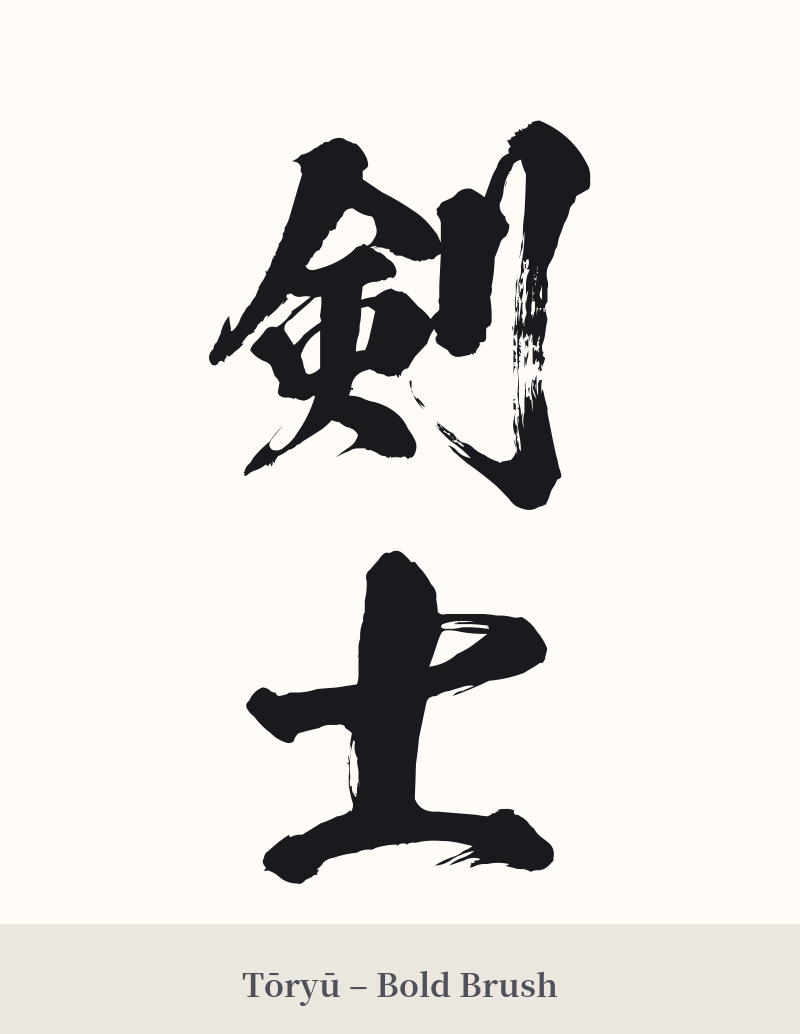
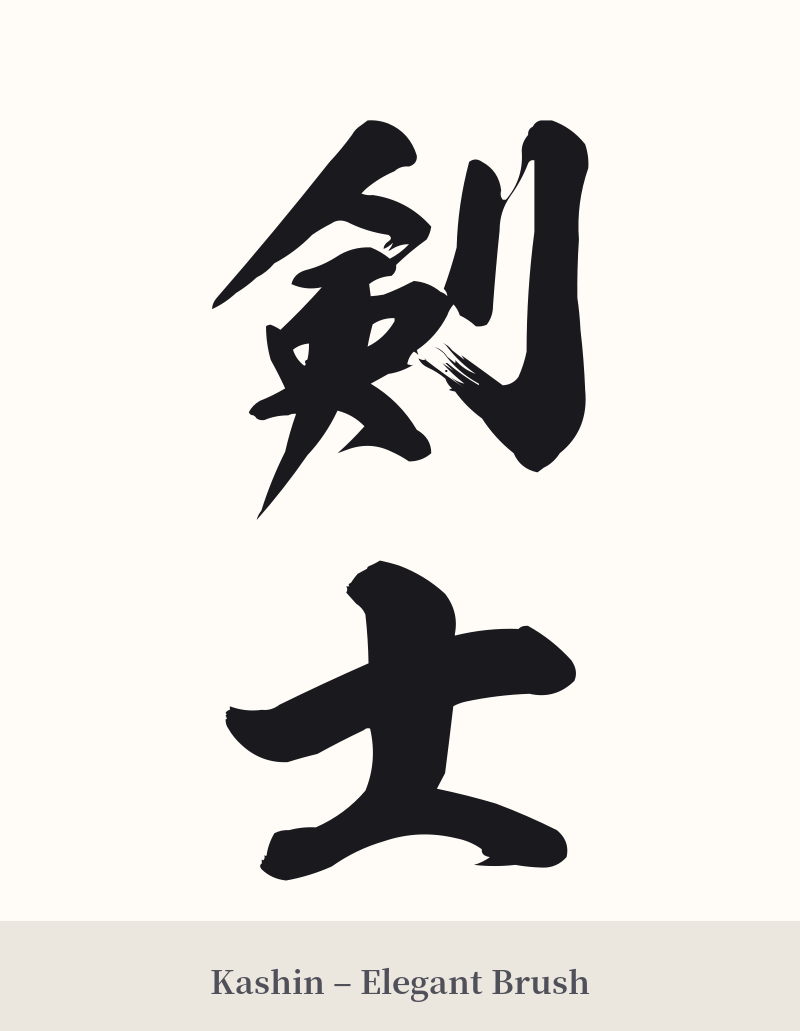
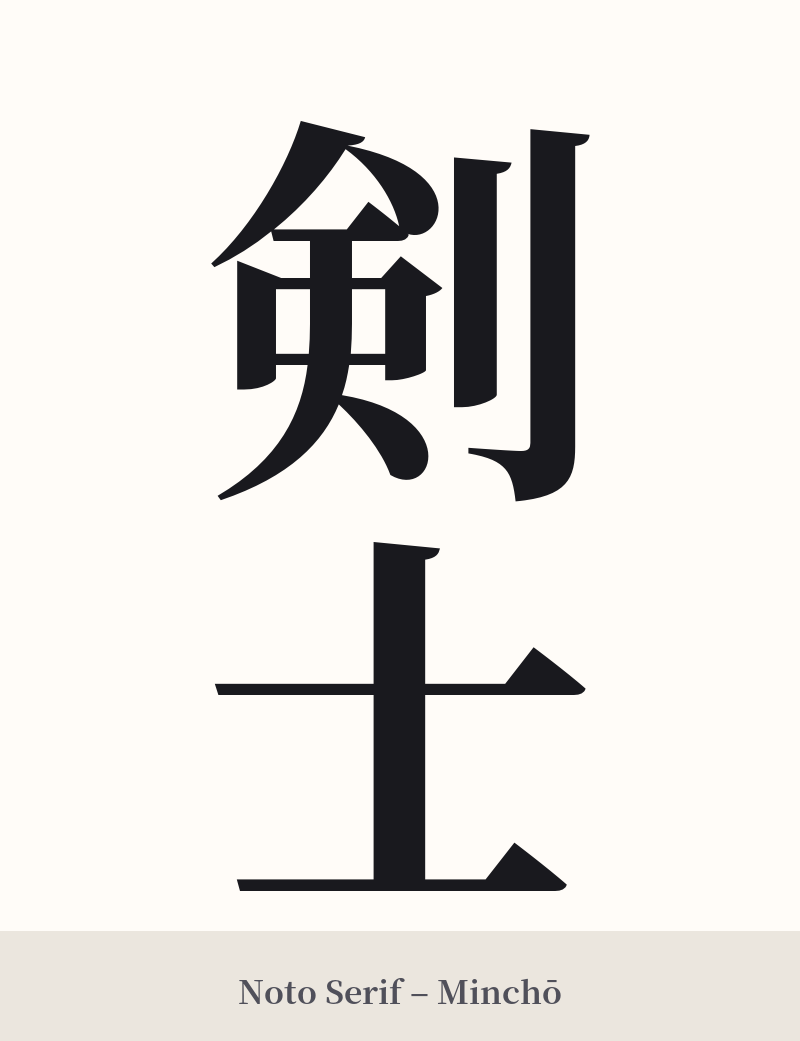
The same kanji can look dramatically different depending on the calligraphy style. Choose a font that matches the mood you want for your tattoo or design.
🎨 Tattoo Suitability
📐 Tattoo Design Guide
The kanji 剣士 (Kenshi) offers a strong and balanced visual for a tattoo, suitable for various styles and placements.
– Placement: Vertical alignment is highly recommended to complement the flow of the characters. Ideal spots include the forearm, the calf, or along the spine. For a horizontal design, the chest or upper back provides a solid canvas.
– Font Style: Consider a dynamic, semi-cursive script (Gyōsho) or a wild brushstroke style (Sōsho) to evoke the swift, fluid motion of a sword strike. Alternatively, a crisp and angular block script (Kaisho) can emphasize the discipline, precision, and formality of the swordsman's code.
– Visual Elements: While Kenshi stands powerfully on its own, it can be integrated with other imagery. Pairing it with a katana, a dragon, or a single cherry blossom branch (symbolizing the transient nature of a warrior's life) can add another layer of meaning. A background of crashing waves or a calm Zen circle (ensō) can also frame the kanji beautifully.
Comments