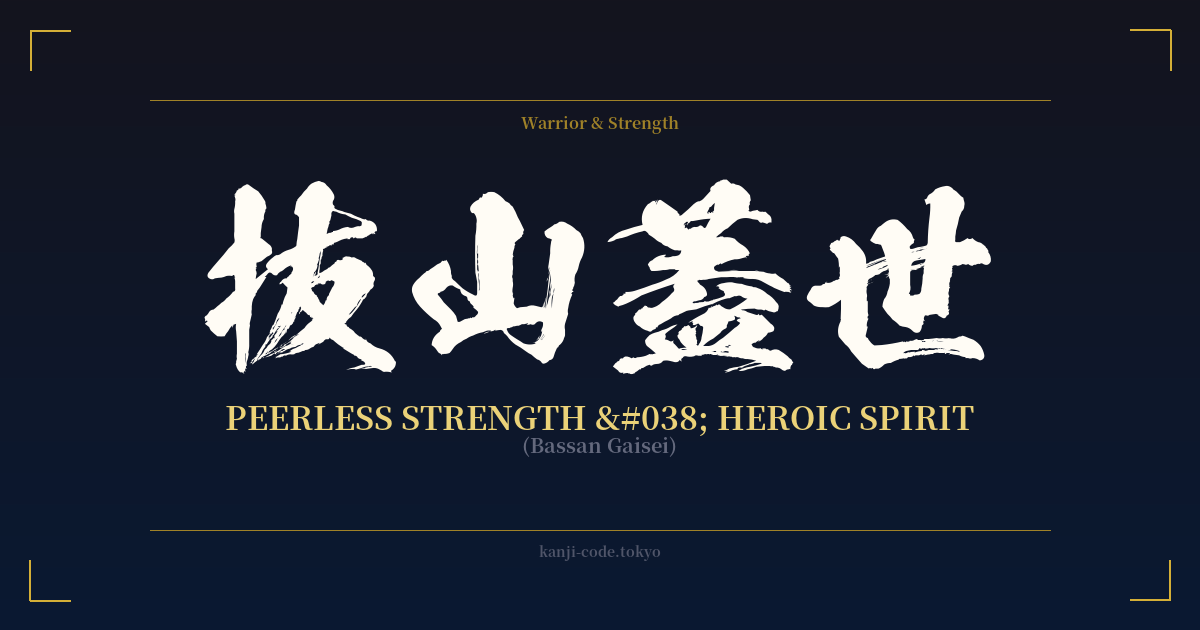
✍️ 抜山蓋世 (Bassan Gaisei) — Cultural Context
抜山蓋世 (Bassan Gaisei) is a powerful four-character idiom, known as a yojijukugo, that paints a picture of unparalleled strength and a spirit so grand it seems to envelop the world. It is not a term for simple physical prowess; it describes a force of nature, a heroic might that can achieve the impossible.
The literal translation is staggering: "To Uproot Mountains and Cover the World." This phrase is pure hyperbole, designed to convey a level of power that defies ordinary description. It speaks of a hero whose strength is so immense they could pluck mountains from the earth, and whose presence and aura are so vast they could cast a shadow over the entire world.
This idiom's origin is one of the most famous and tragic tales in Chinese history, a story well-known in Japan. It comes directly from the "Song of Gaixia," a poem composed by the great warlord Xiang Yu (項羽, pronounced Kō U in Japanese) in 202 BC. Xiang Yu was a formidable warrior who dominated the battlefields during the Chu-Han Contention, a civil war that followed the fall of the Qin dynasty.
Facing his final defeat, trapped and surrounded by the enemy forces of Liu Bang (who would go on to found the Han Dynasty), Xiang Yu composed a lament. In it, he reflected on his past glory and current despair. The famous lines are: 「力拔山兮氣蓋世」— "My strength plucked up the hills, my might overshadowed the world." This single verse perfectly captures his legendary power and heroic, larger-than-life character, even in the face of doom.
Because of this origin, 抜山蓋世 is forever linked to this image of the tragic hero. It carries a nuance of magnificent, almost defiant power. It's the strength of a legend, not just a fighter. In Japan, using this phrase evokes a deep appreciation for classical literature and history, recognizing a spirit that is both overwhelmingly powerful and profoundly human in its ultimate sorrow. It's a statement of epic, world-altering ambition and might.
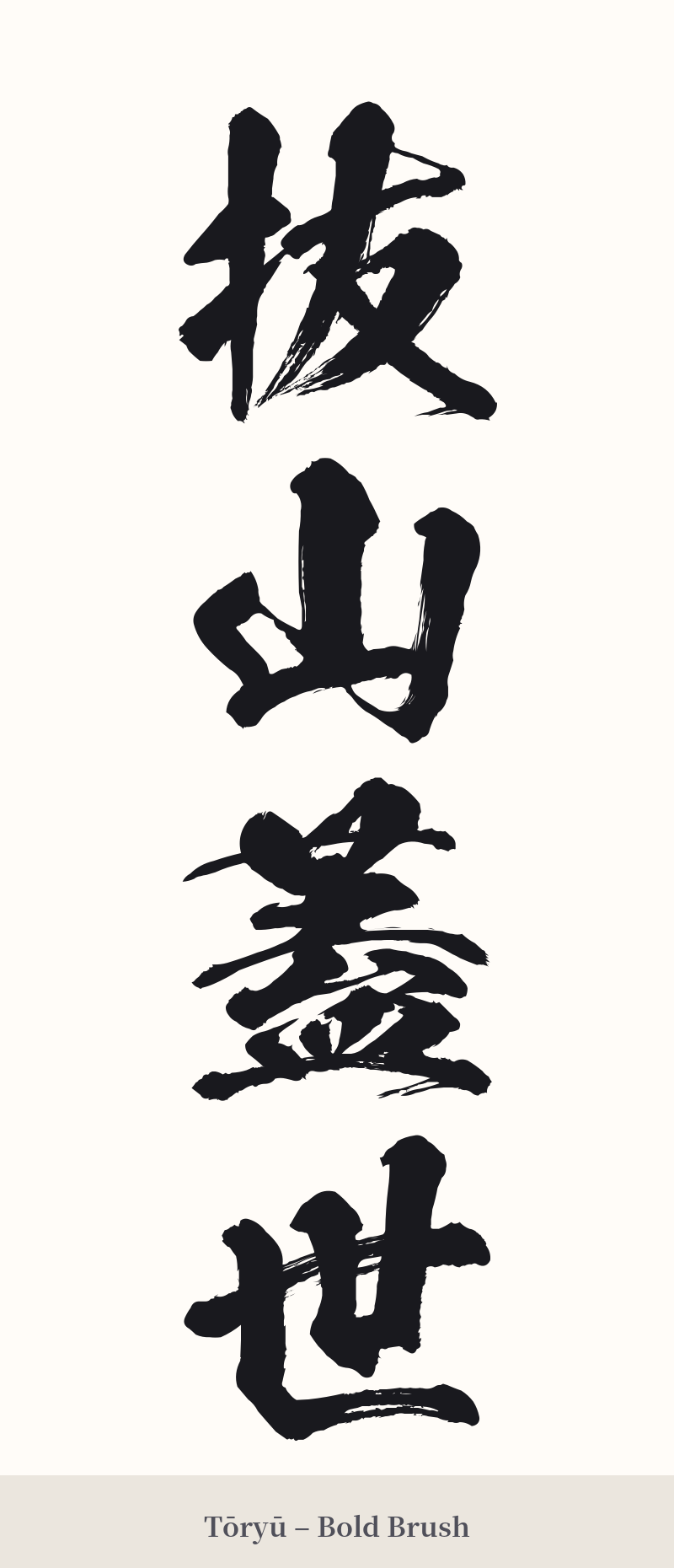
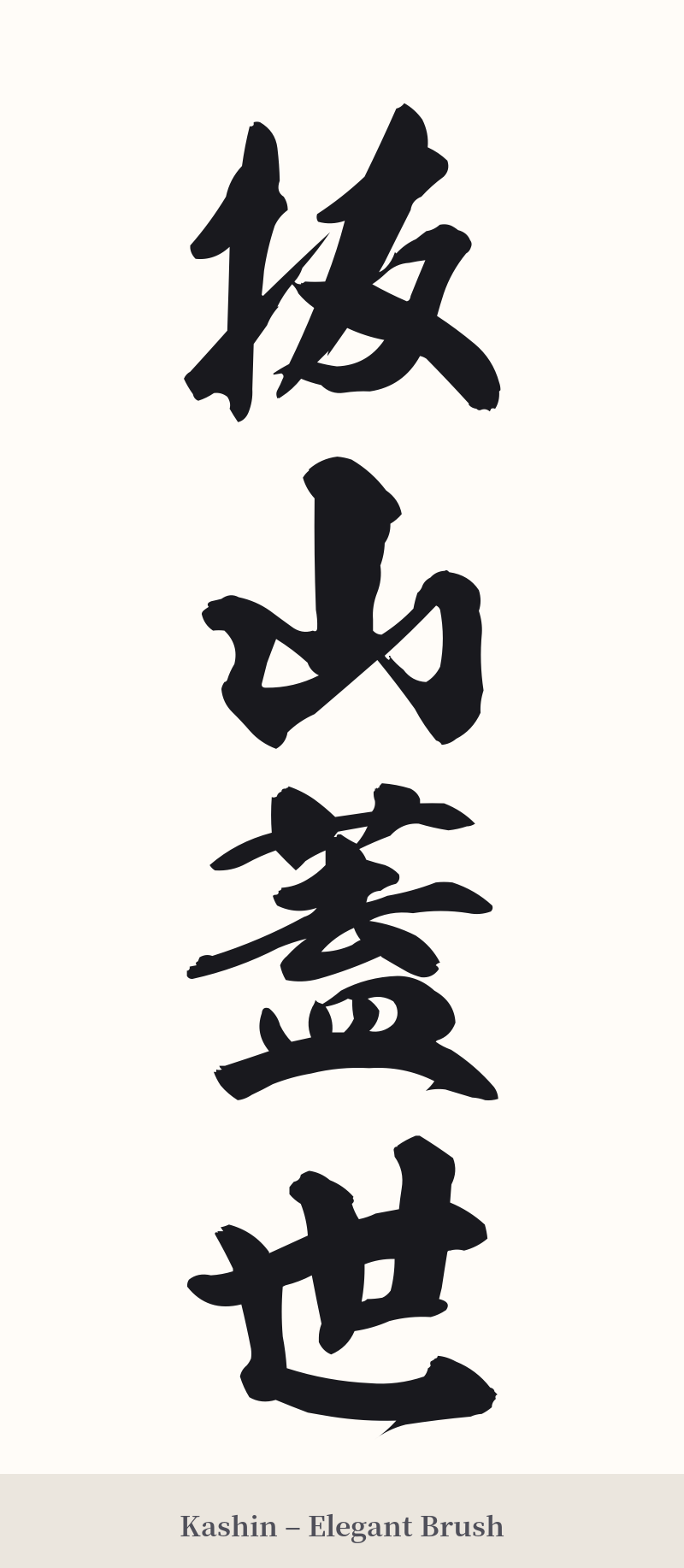
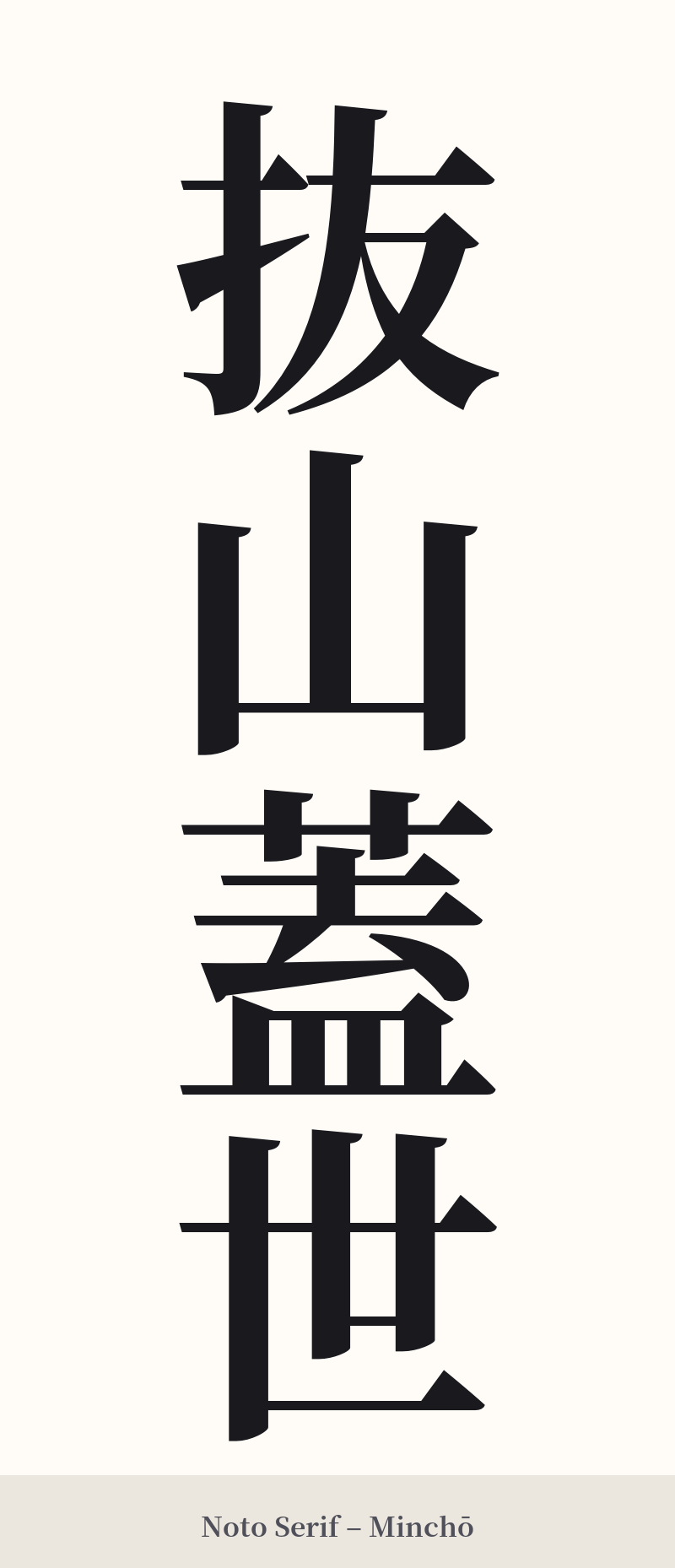
🖌️ Font Styles for 抜山蓋世
The same kanji can look dramatically different depending on the calligraphy style. Choose a font that matches the mood you want for your tattoo or design.
🎨 Tattoo Suitability
📐 Tattoo Design Guide
The four-character structure of 抜山蓋世 lends itself beautifully to tattoo designs that emphasize balance and flow.
– Placement: A vertical alignment is traditional and highly recommended. It looks powerful running down the forearm, the calf, or along the spine. A horizontal placement can also work well across the upper back or chest.
– Font Style: The choice of font can drastically alter the feel. For a sense of raw, untamed energy reflecting Xiang Yu's spirit, a dynamic, semi-cursive script like Gyosho is perfect. For a more grounded, solid feel that emphasizes the 'mountain-uprooting' power, a bold and clear block script like Kaisho is an excellent choice.
– Visual Tips: The character 蓋 (gai) is the most complex with 13 strokes. Ensure your artist can execute it with precision, especially in smaller designs, to prevent the lines from bleeding over time. The four characters should be given equal space and weight to maintain their inherent balance as an idiom. No additional imagery is necessary; the phrase itself is the centerpiece.
Comments