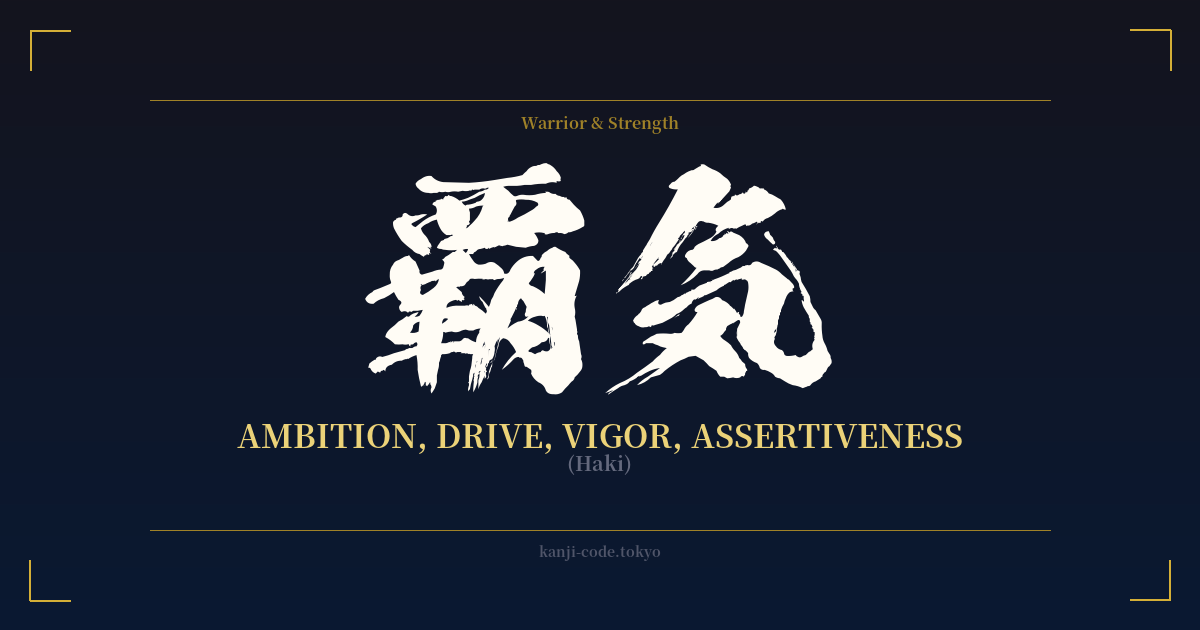
✍️ 覇気 (Haki) — Cultural Context
覇気 (Haki) is a Japanese word that packs a serious punch. It's not just simple ambition; it's the tangible aura of someone destined for greatness. Traditionally, Haki describes a spirit of ambition combined with an assertive, almost overwhelming presence. It’s the drive to get ahead, the vigor to pursue one's goals, and the commanding atmosphere a leader creates just by entering a room. Think of a charismatic CEO, a dominant athlete, or a historical warlord—they all possess Haki.
The word is a combination of two powerful kanji. The first, 覇 (Ha), means 'supremacy' or 'hegemony.' It's the character used for a champion or a ruler who achieves power through force and will. The second, 気 (Ki), is the ubiquitous concept of 'spirit,' 'energy,' or 'life force.' When you put them together, 覇気 becomes the 'spirit of supremacy'—an energy that actively seeks to dominate and lead.
Historically, this term could be used to describe the unyielding ambition of figures from the Sengoku period (Warring States period), like Oda Nobunaga, who sought to unify Japan under his rule. It’s a quality that is both admired and slightly feared, as it implies a willingness to push boundaries and assert one's will over others.
In the modern era, however, the cultural context of Haki has been irrevocably transformed by one of the biggest media franchises in history: the manga and anime series One Piece. In the world of One Piece, Haki is a latent power that exists within every living creature, allowing users to sense others, project their willpower as a weapon, and even predict the future. This depiction has propelled the word into global consciousness, making it synonymous with inner strength and supernatural ability for an entire generation.
This creates a fascinating duality. For some, Haki remains a classical term for ambition and a commanding spirit. For millions of others, it is the power of Monkey D. Luffy and the Straw Hat Pirates. This dual identity makes Haki a dynamic and layered concept, representing both the timeless human drive for greatness and a modern symbol of empowerment from popular culture.
🖌️ Font Styles for 覇気
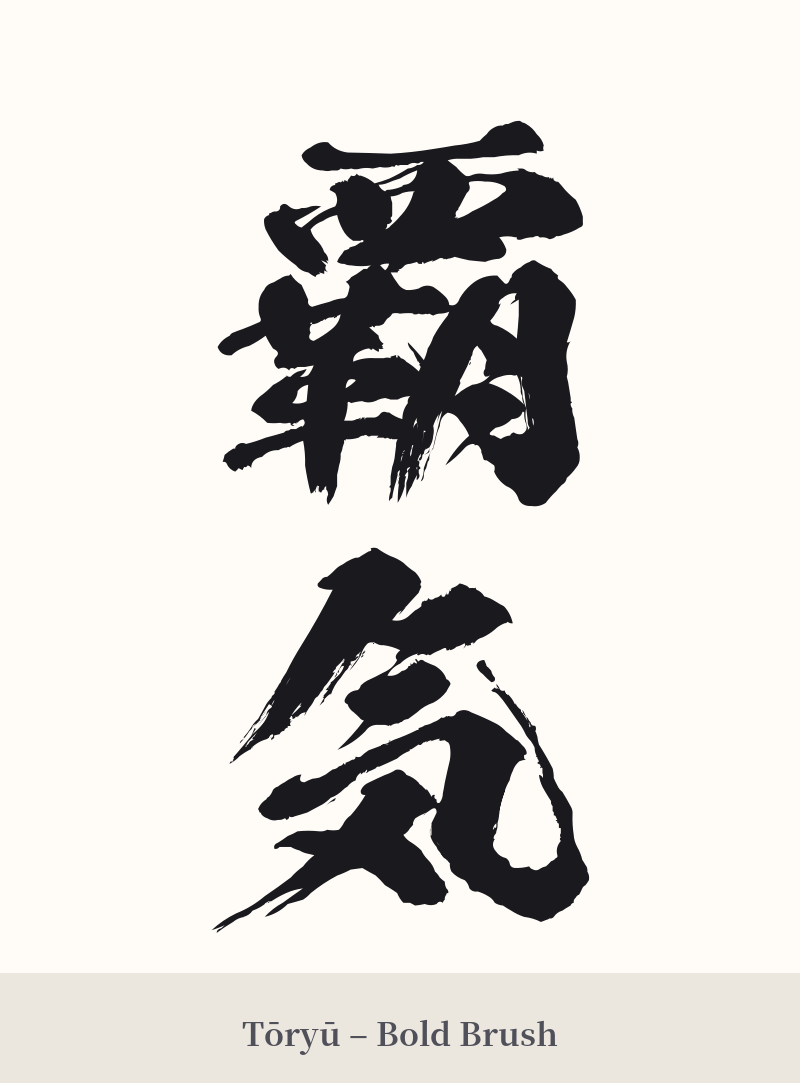
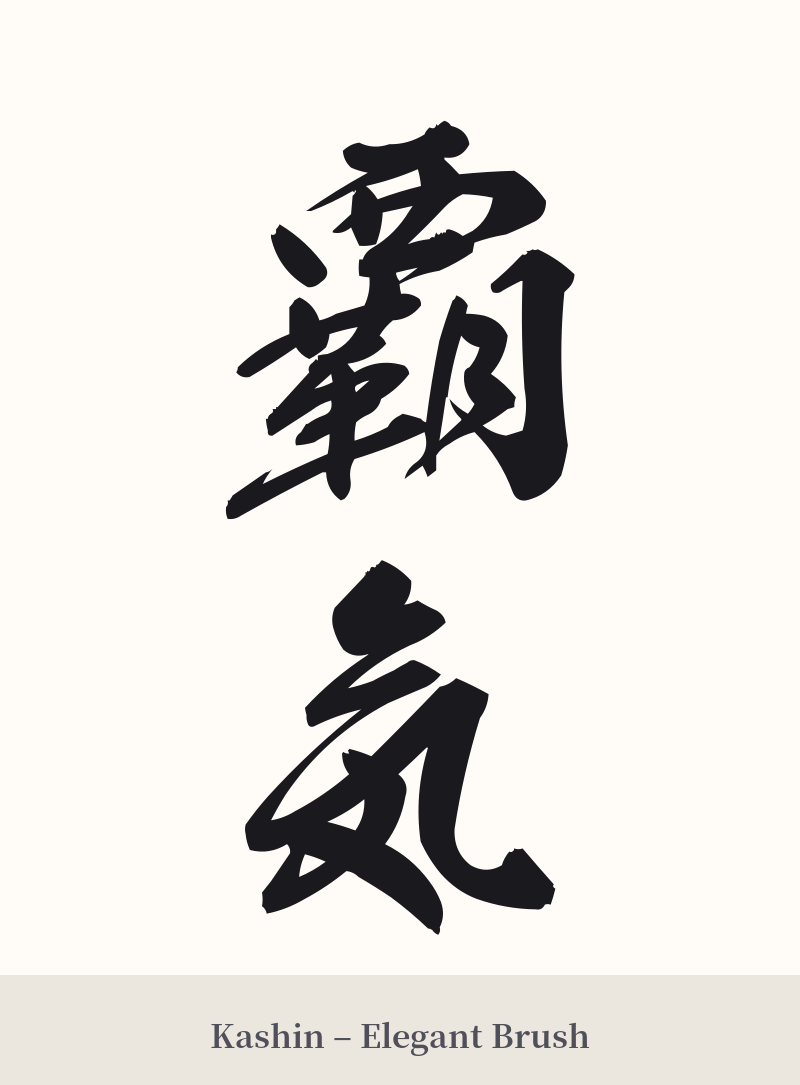
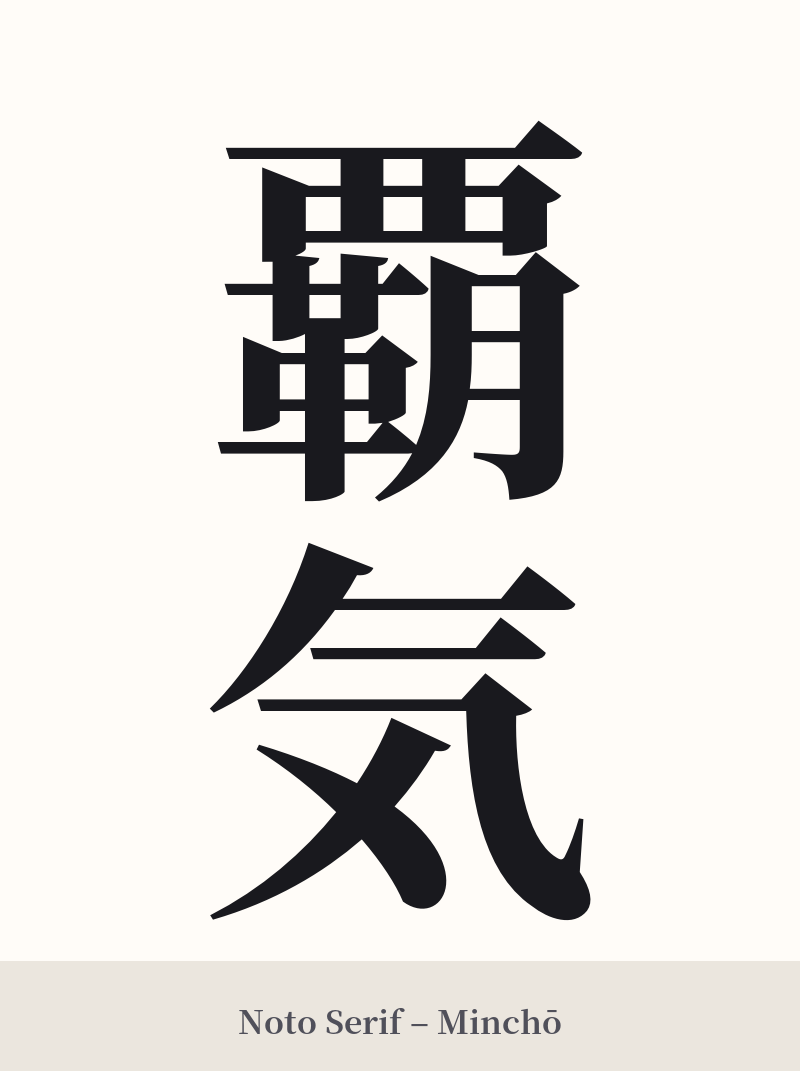
The same kanji can look dramatically different depending on the calligraphy style. Choose a font that matches the mood you want for your tattoo or design.
🎨 Tattoo Suitability
📐 Tattoo Design Guide
A tattoo of 覇気 (Haki) is a statement of power and ambition, and the design should reflect that. Given its vertical nature and the complexity of the first character, placement is key.
– Placement: Ideal spots include the forearm, calf, or along the spine, where the characters can be inked large enough to be legible and impactful. A horizontal placement on the chest or upper back also works well.
– Font Style: A bold, strong font is highly recommended. A standard Kaisho (block script) style will emphasize clarity and power. For a more fluid and energetic feel, a Gyosho (semi-cursive) or Sosho (cursive) script can capture the essence of 'Ki' (spirit). A custom brushstroke (shodo) style is also an excellent choice, as it can be designed to look as if it was painted on with raw energy.
– Visual Tips: The biggest challenge is the 19-stroke 覇 character. Do not get this tattoo done small. It needs space for the strokes to breathe, otherwise it will blur into an illegible blob over time. Discuss this with your artist to find the minimum viable size. While the two characters are powerful on their own, some choose to incorporate subtle background elements like wisps of energy or a minimalist enso circle, but be careful not to overcrowd the main kanji.
Comments